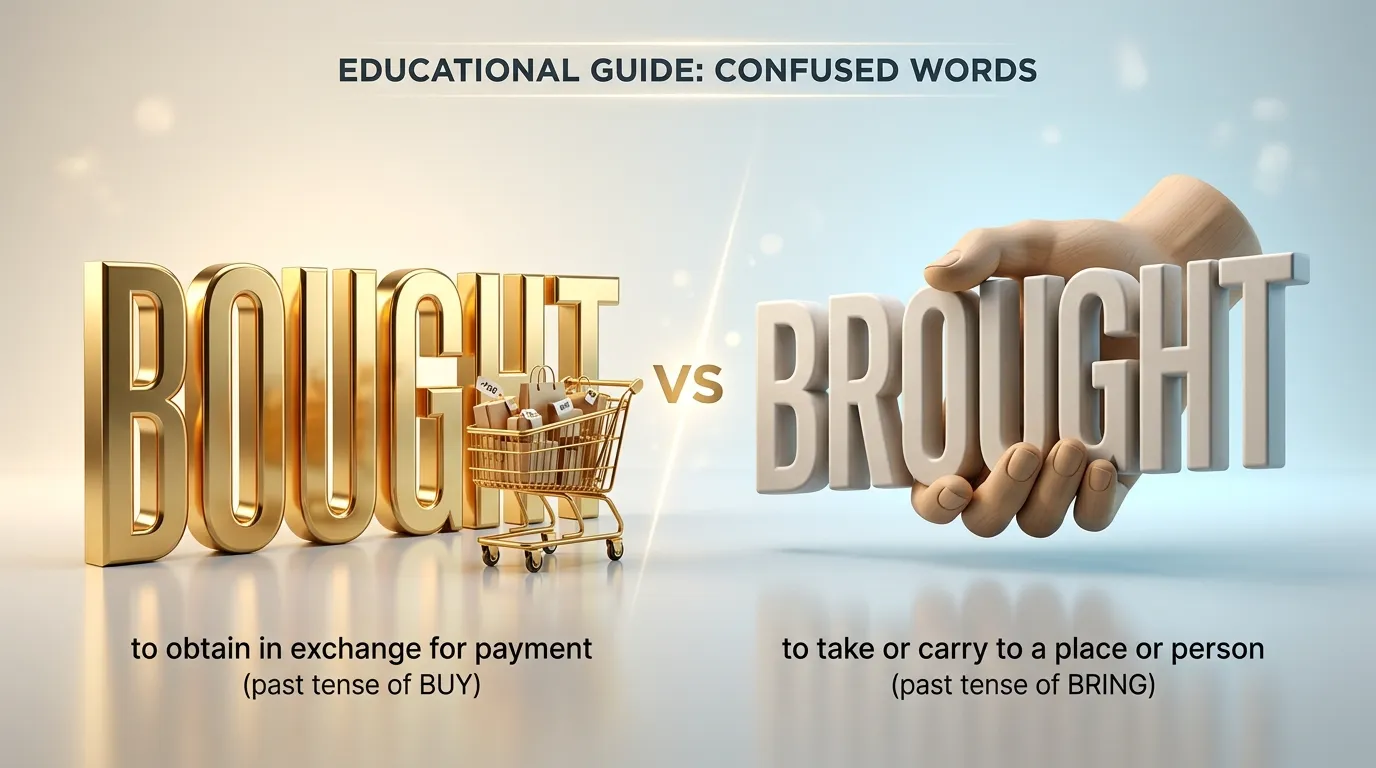
Bought means purchased something with money. Brought means carried or took something to a place. They sound similar but have completely different meanings.
I once received an email from a student that said, “I brought a new laptop yesterday.” At first, the sentence seemed fine. Then I realized the student meant they had purchased the laptop, not carried it somewhere.
This is one of the most common English mistakes. Many people mix up bought and brought because the words sound very similar. When spoken quickly, they can even seem identical.
The confusion becomes even more common among English learners and young students. After all, both words describe actions that often happen together. You might buy something and then bring it home. That overlap makes mistakes easy.
The good news is that the difference is simple once you know what to look for.
In this guide, you’ll learn the meanings of bought and brought, where the words come from, how to use them correctly, common mistakes to avoid, and practical examples from real life. By the end, you’ll never hesitate between these two words again.
Bought or Brought: Quick Answer
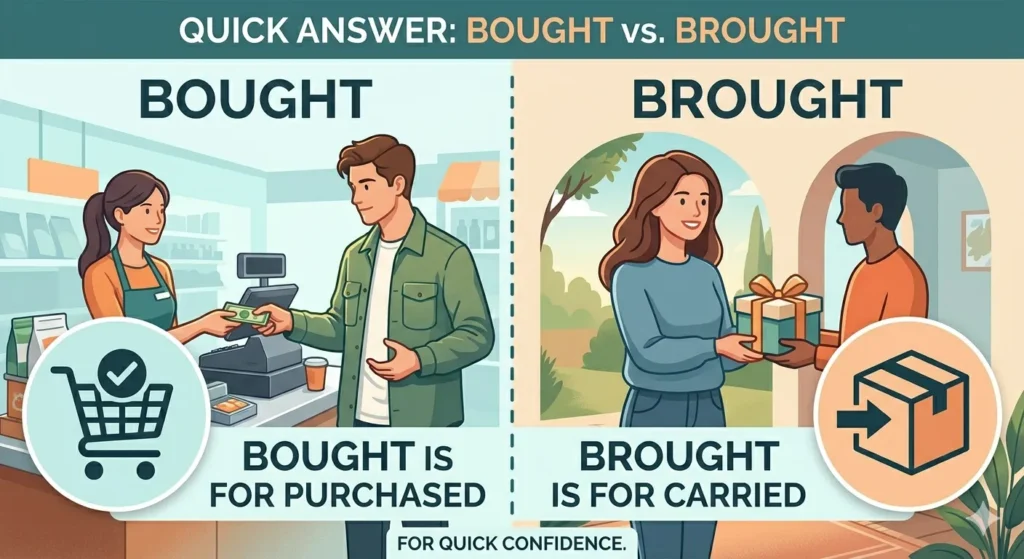
The difference comes down to one simple question:
Did you pay for it or move it?
- Bought = purchased with money.
- Brought = carried or took something somewhere.
Examples
- I bought a new phone yesterday.
- She brought her phone to school.
- We bought tickets online.
- He brought snacks to the party.
A useful memory trick is that bought relates to buying, while brought relates to bringing.
The Origin / Background of Bought or Brought
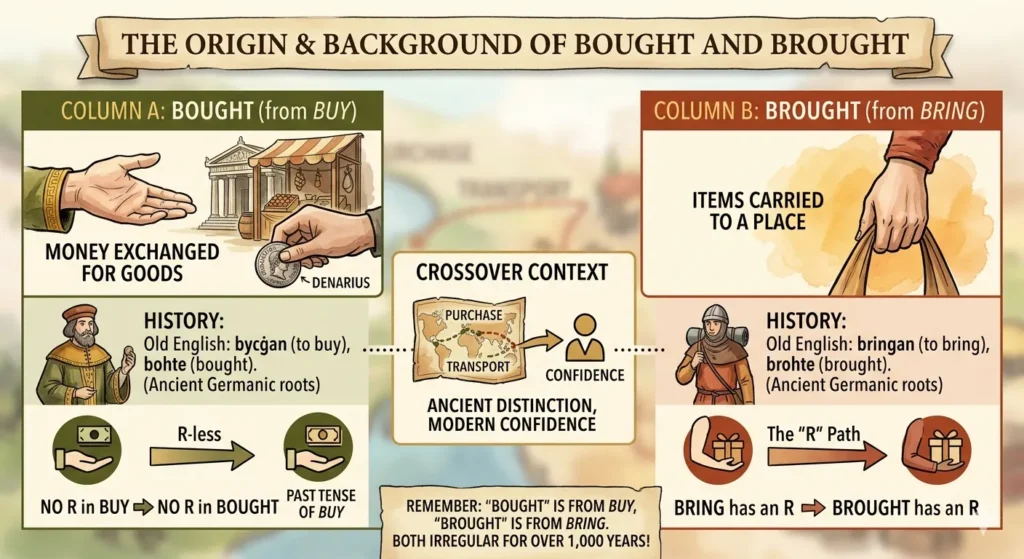
Understanding the history of these words helps explain why they are often confused.
Origin of Bought
Bought is the past tense of buy.
The word comes from Old English roots connected to obtaining goods through payment or exchange.
Examples:
- Buy → Bought
- Buy groceries → Bought groceries
Origin of Brought
Brought is the past tense of bring.
It comes from Old English words related to carrying, transporting, or leading something to a place.
Examples:
- Bring → Brought
- Bring food → Brought food
Why the Confusion Exists
Several factors cause confusion:
- Similar pronunciation
- Similar spelling
- Both are past-tense verbs
- Buying often involves bringing something afterward
Despite these similarities, the meanings are very different.
Bought or Brought Explained: Key Differences
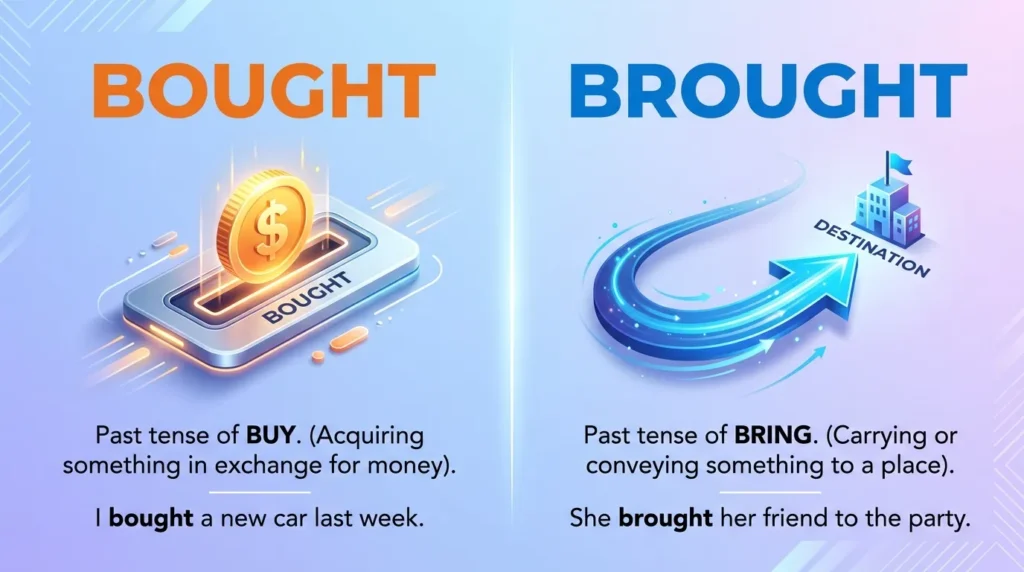
The easiest way to understand the difference is to focus on the action.
Bought involves money.
Brought involves movement.
| Term | Meaning | When to Use | Region/Context |
| Bought | Purchased something | Shopping, purchases, transactions | All English varieties |
| Brought | Carried or transported something | Movement, delivery, travel | All English varieties |
Examples of Bought
- I bought a new bicycle.
- She bought a dress online.
- We bought groceries yesterday.
- They bought a house last year.
Examples of Brought
- I brought my bicycle to the park.
- She brought dessert to dinner.
- We brought blankets for the trip.
- They brought supplies to the campsite.
Easy Memory Trick
Think:
Bought = Buy
Both words relate to spending money.
Brought = Bring
Both words relate to moving something.
Which Version Should You Use?
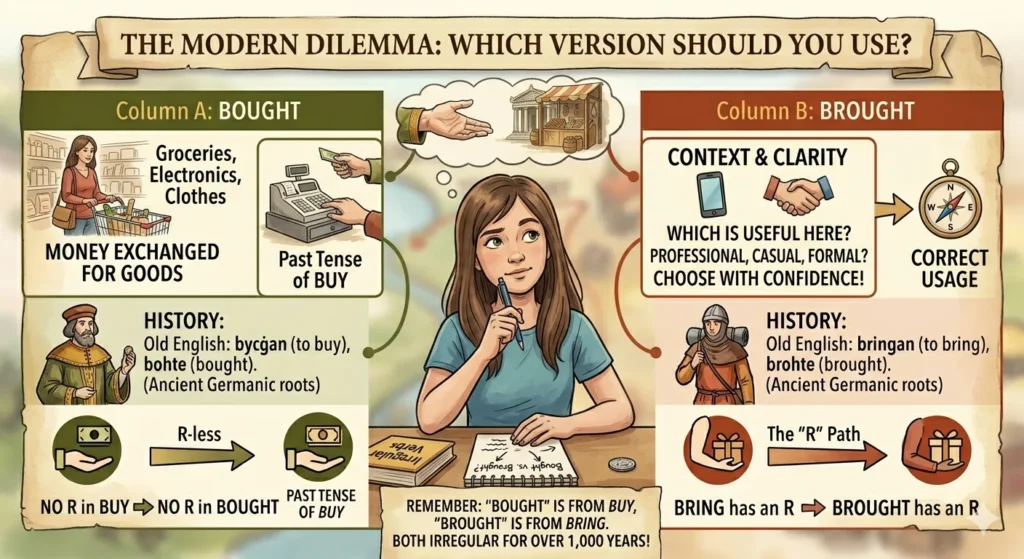
The correct choice depends on what happened.
For Students
Ask yourself:
Did someone purchase something?
If yes, use bought.
Example:
- I bought a notebook.
Did someone carry something?
If yes, use brought.
Example:
- I brought my notebook to class.
For Business Professionals
Use bought when discussing purchases.
Example:
- The company bought new equipment.
Use brought when discussing deliveries or transportation.
Example:
- The supplier brought the equipment to our office.
For Everyday Writing
Remember:
- Money = Bought
- Movement = Brought
Best Recommendation
If you can replace the word with purchased, choose bought.
If you can replace it with carried, choose brought.
Common Mistakes with Bought or Brought
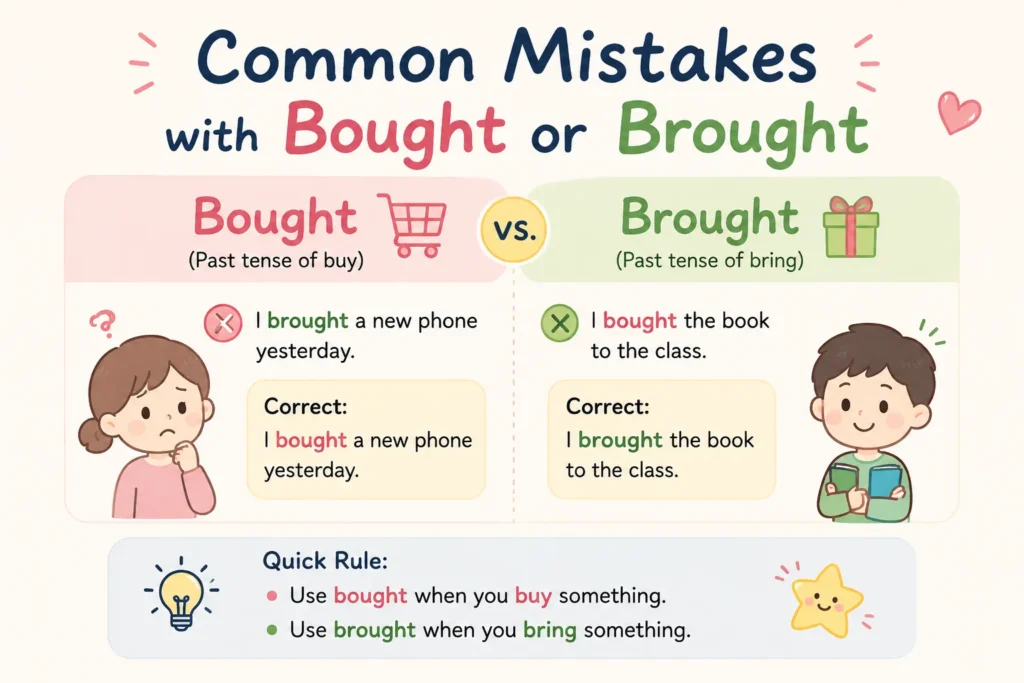
These errors appear frequently in everyday writing.
| Mistake | Correct Version |
| I brought a new car yesterday. | I bought a new car yesterday. |
| She bought her lunch to work. | She brought her lunch to work. |
| We brought a new television. | We bought a new television. |
| He bought snacks to the party. | He brought snacks to the party. |
| They brought a house last month. | They bought a house last month. |
Why These Errors Happen
1. Similar Sounds
The words sound very alike.
2. Similar Spellings
Only a few letters are different.
3. Related Actions
People often buy something and then bring it somewhere.
4. Fast Writing
Writers may type the wrong word without noticing.
Bought or Brought in Real-World Examples
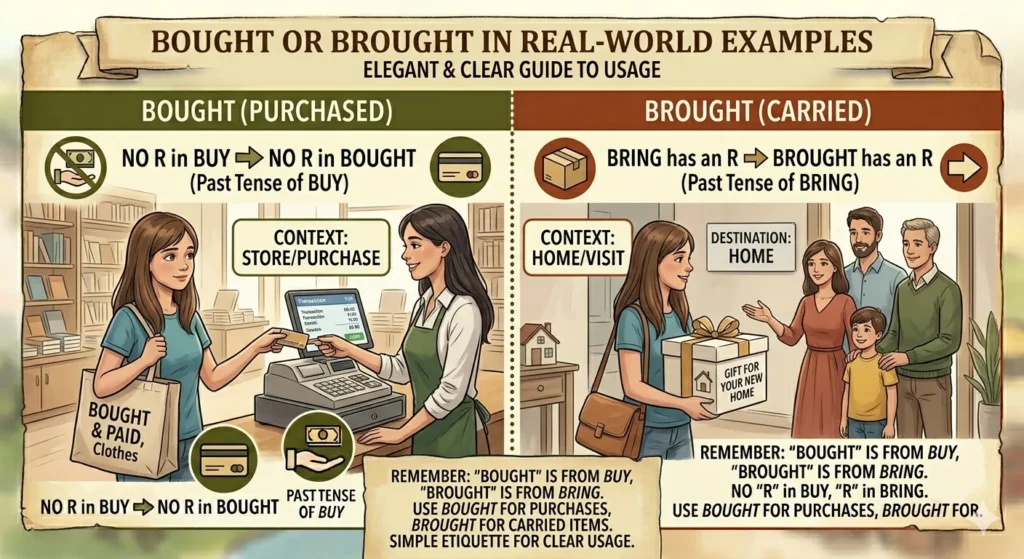
Professional Email
“I bought the software license yesterday and brought the installation files to the meeting.”
News Headline
“Local Company Bought New Manufacturing Facility.”
Social Media Post
“I bought new shoes today and brought them straight home.”
Formal Report
“The organization bought additional equipment and brought it to the project site.”
Everyday Conversation
“Who brought the cake?”
“I bought it from the bakery this morning.”
Bought or Brought: Data, Trends & Usage
The phrase bought or brought is one of the most searched grammar questions in English.
Search Intent
Primary intent:
- Informational
Users typically want to know:
- Which word is correct
- How to avoid mistakes
- The difference in meaning
Most Interested Audiences
- Students
- English learners
- Teachers
- Bloggers
- Editors
- Professional writers
Regions With High Search Interest
- United States
- United Kingdom
- Canada
- Australia
- India
Why It Matters Today
Clear communication matters. Small grammar mistakes can change the meaning of a sentence. Understanding the difference between bought and brought helps your writing appear more accurate and professional.
Bought vs Brought Comparison Table
| Term/Variant | Meaning | Region/Context | Best Used When |
| Bought | Purchased with money | Universal English | Talking about shopping, purchases, and transactions |
| Brought | Carried or transported | Universal English | Talking about moving or delivering something |
Frequently Asked Questions
Q: What does bought mean?
A: Bought is the past tense of buy. It means purchased something using money.
Q: What does brought mean?
A: Brought is the past tense of bring. It means carried or transported something to a place.
Q: Which is correct, bought or brought a new car?
A: Bought a new car is correct because purchasing involves money.
Q: How do you use brought correctly?
A: Use brought when something was carried or taken somewhere. Example: “She brought flowers to the party.”
Q: Is bought acceptable in formal writing?
A: Yes. Bought is completely acceptable in professional, academic, and formal writing.
Q: Where do bought and brought come from?
A: Bought comes from the verb buy, while brought comes from the verb bring.
Q: Can bought and brought be used interchangeably?
A: No. They have different meanings. Using the wrong one can change the meaning of a sentence.
Q: How can I remember the difference quickly?
A: Think:
- Bought = Buy = Money
- Brought = Bring = Move
This memory trick works every time.
Conclusion
The difference between bought and brought is much simpler than many people think.
Remember these key points:
- Bought means purchased with money.
- Brought means carried or transported.
- Shopping relates to bought.
- Movement relates to brought.
Whenever you’re unsure, ask yourself whether the action involved paying for something or moving something. That single question will usually give you the correct answer.
Mastering common word pairs like bought and brought can make your writing clearer and more professional. Small improvements like this help you communicate with confidence.
Now you know exactly how to use bought or brought, go try it in your next piece of writing. Bookmark this guide so you never second-guess these words again, and share it with someone who’s been confused about them.
Read More: Honoured or Honored: The Complete Usage Guide🏆 🌟

I am an English language expert dedicated to exploring the nuances of words and their meanings. Through detailed comparisons and practical insights, I help readers understand the finer points of language and use words with accuracy and confidence.