Worshiper or Worshipper: Which Spelling Is Correct?
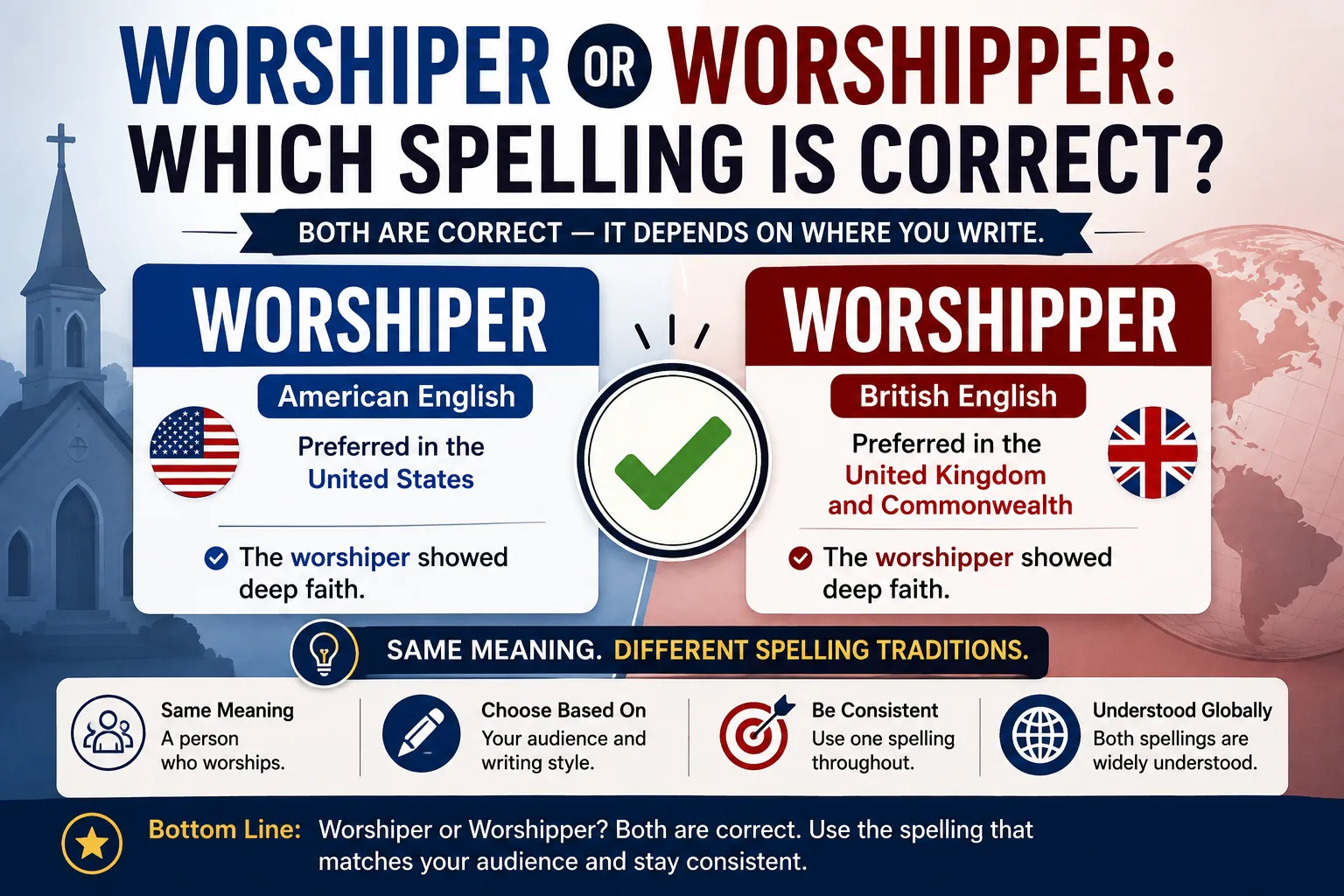
If you have ever typed “worshiper or worshipper” and stopped to wonder which spelling looks right, you are not alone. ...
Read more
Acknowledgements vs Acknowledgments: Which Is Correct?
Both “acknowledgements” and “acknowledgments” are correct spellings, with “acknowledgements” preferred in British English and “acknowledgments” in American English. You just ...
Read more
Protesters or Protestors: Which Spelling Is Correct?
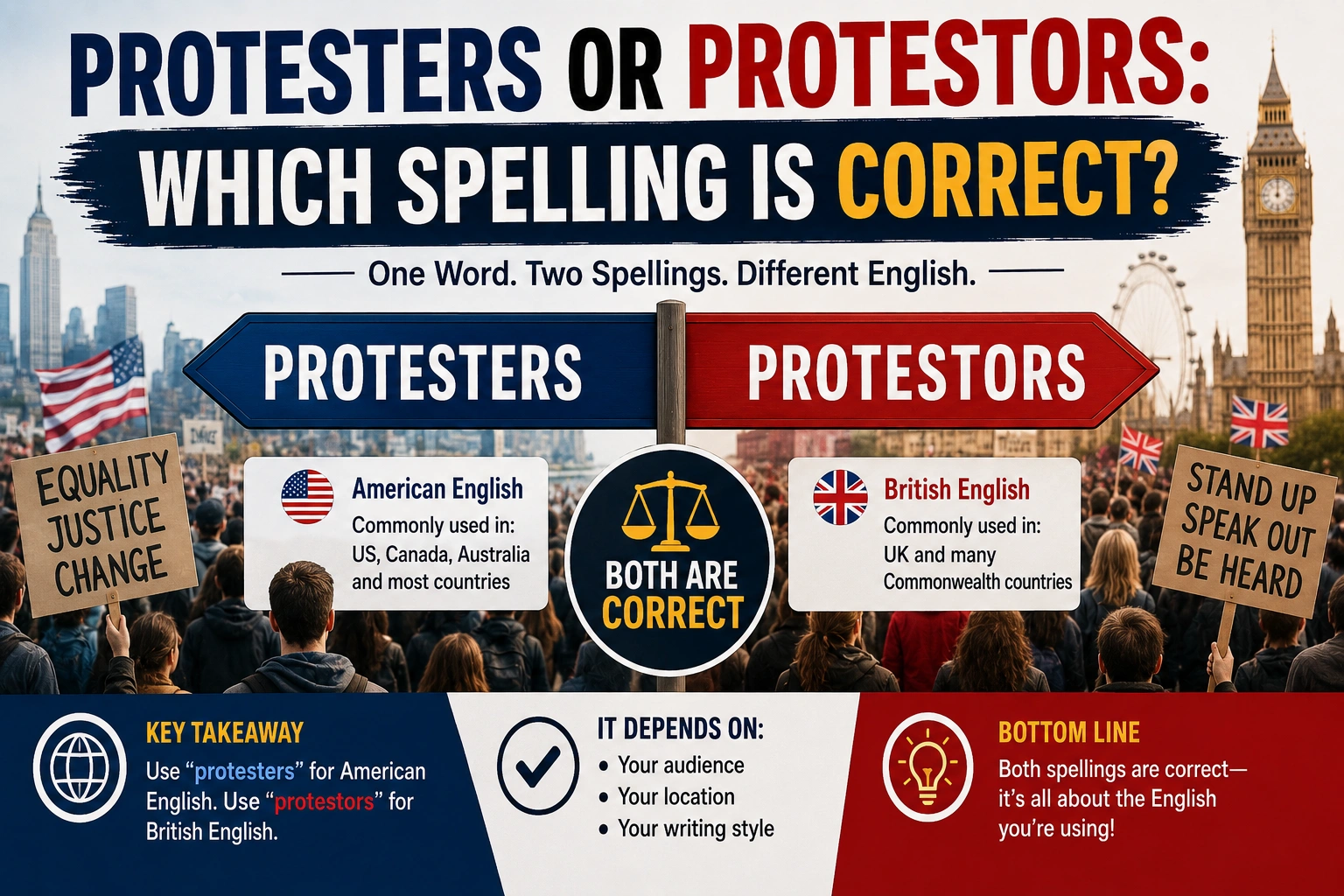
Have you ever stopped while writing and wondered whether “protesters or protestors” is the correct spelling? Both forms appear in ...
Read more
Emphasises or Emphasizes: Which Spelling Is Correct?
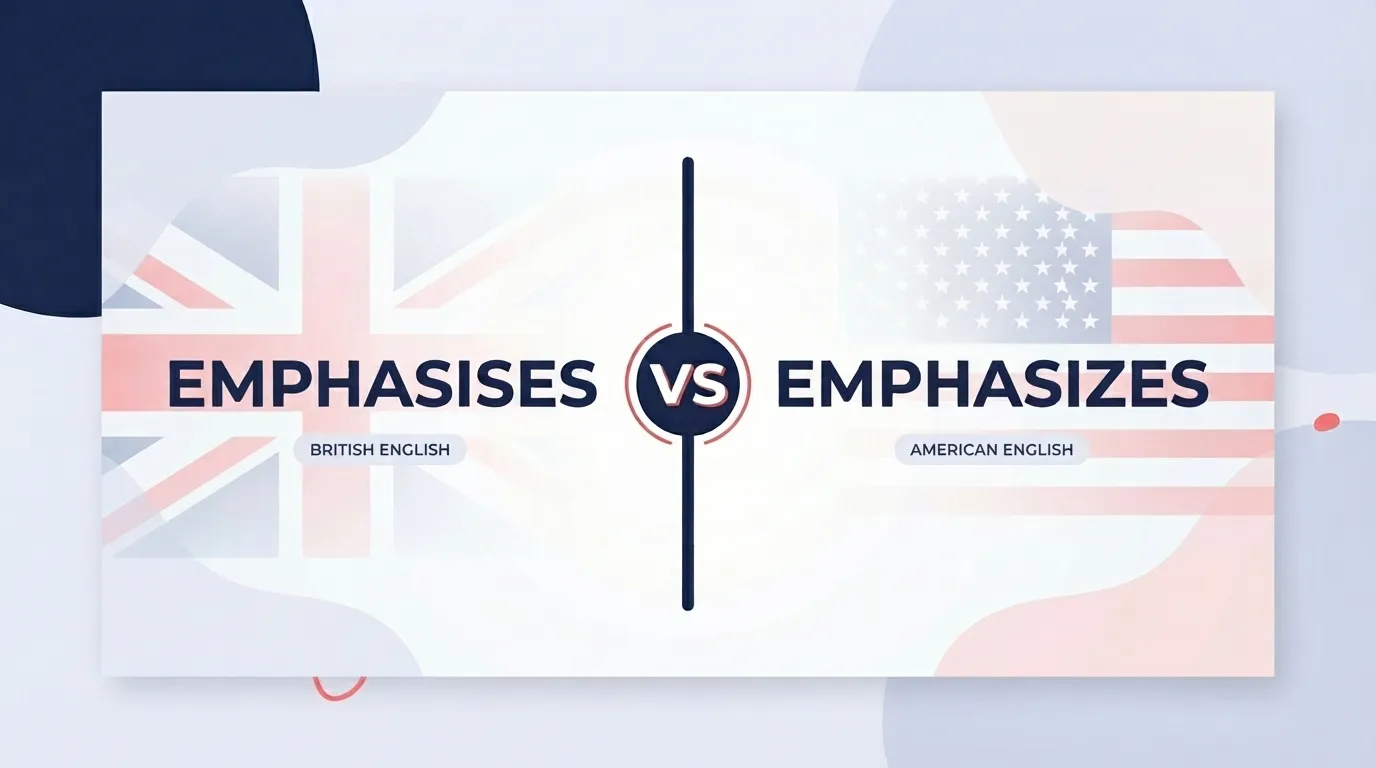
Emphasises and emphasizes are both correct spellings, with emphasises preferred in British English and emphasizes preferred in American English. You ...
Read more
Dual or Duel: What’s the Difference?
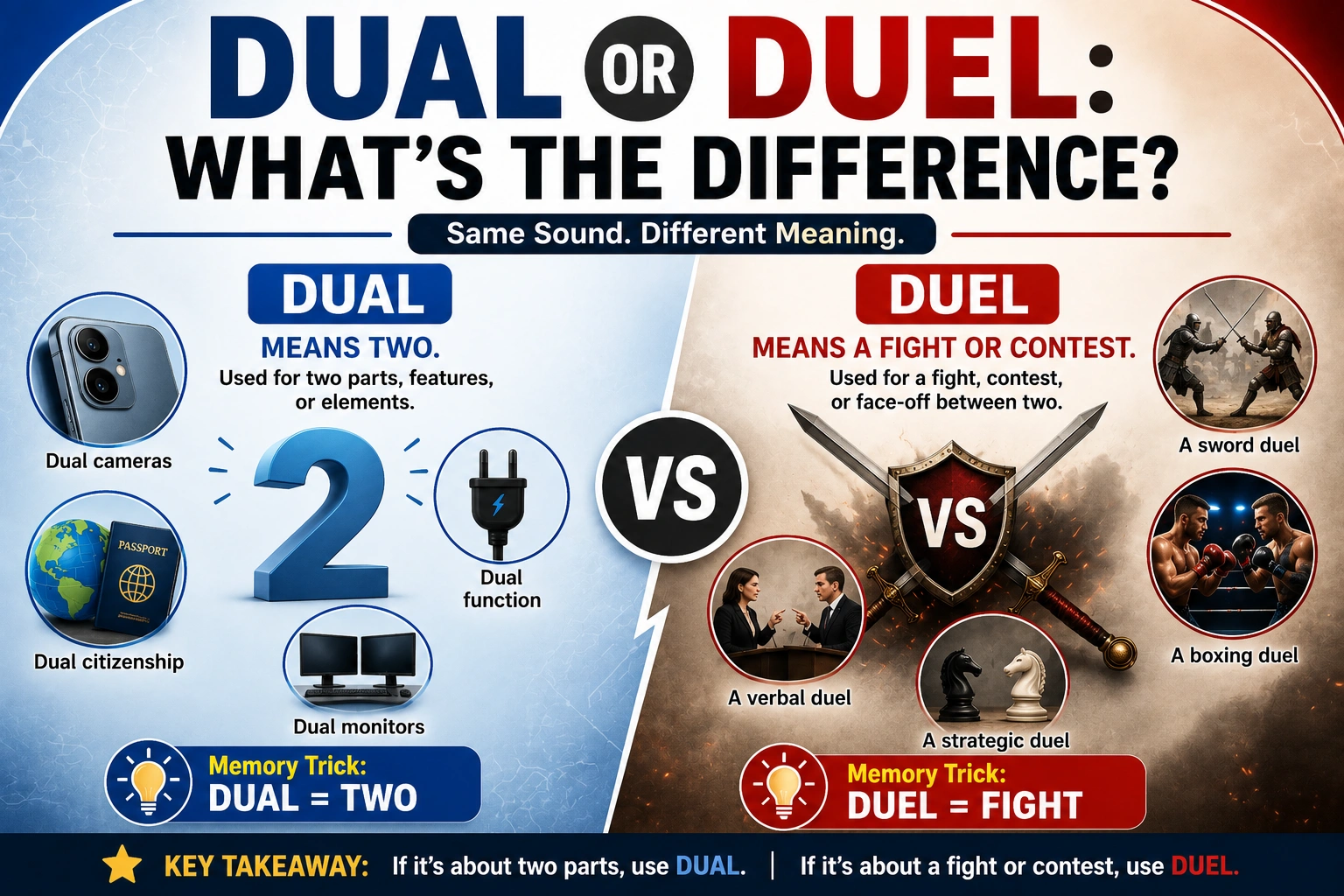
Have you ever typed “dual or duel” and stopped because you were not sure which word was correct? These two ...
Read more
Spelt or Spelled: Which One Is Correct?
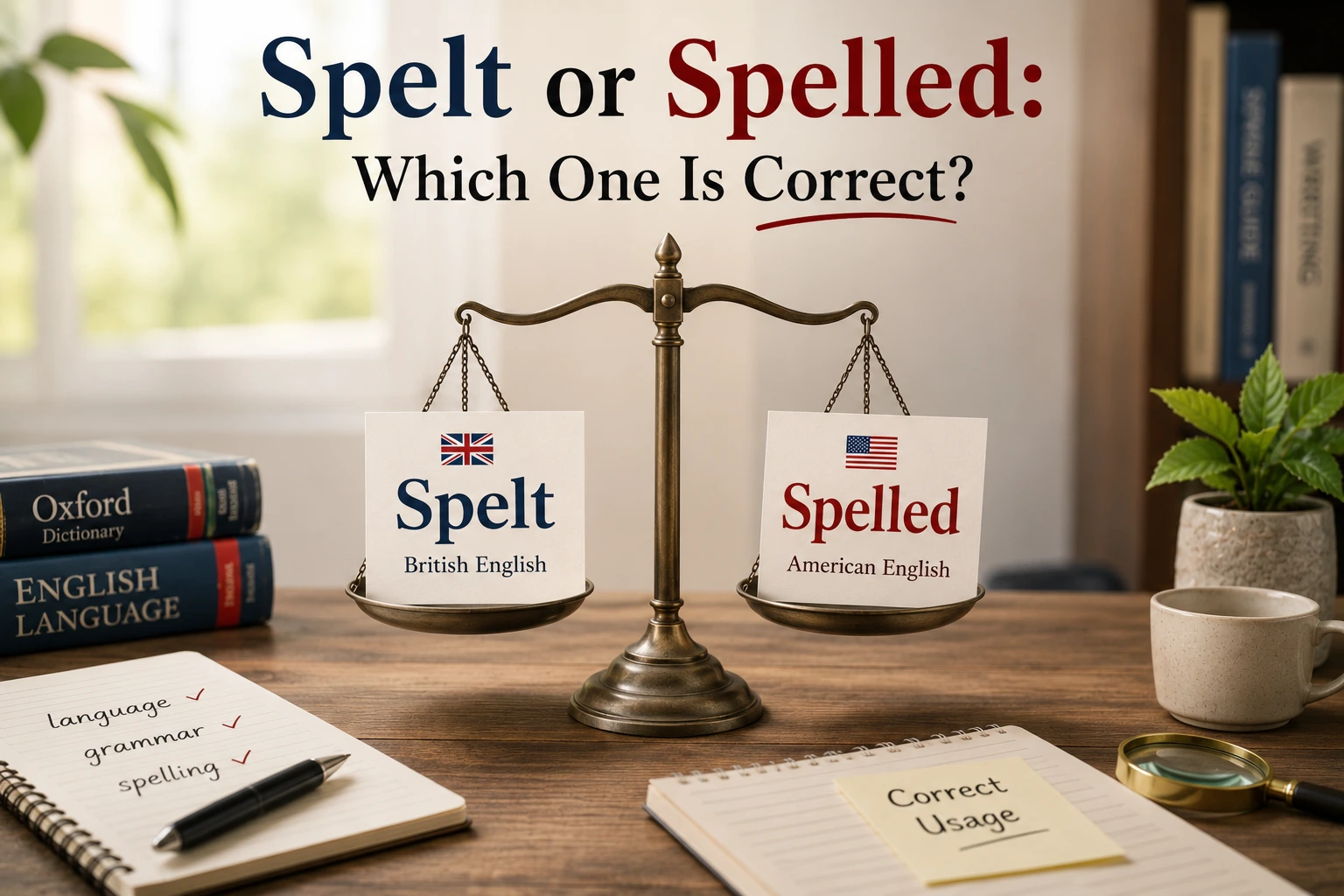
Both spelt and spelled are correct past tense forms of spell. Spelled is preferred in American English, while spelt is ...
Read more
Travelling or Traveling: Which Spelling Should You Use?

Travelling and traveling are both correct spellings. Travelling is preferred in British English, while traveling is the standard spelling in ...
Read more
Cancelation or Cancellation: Which Spelling Is Correct?
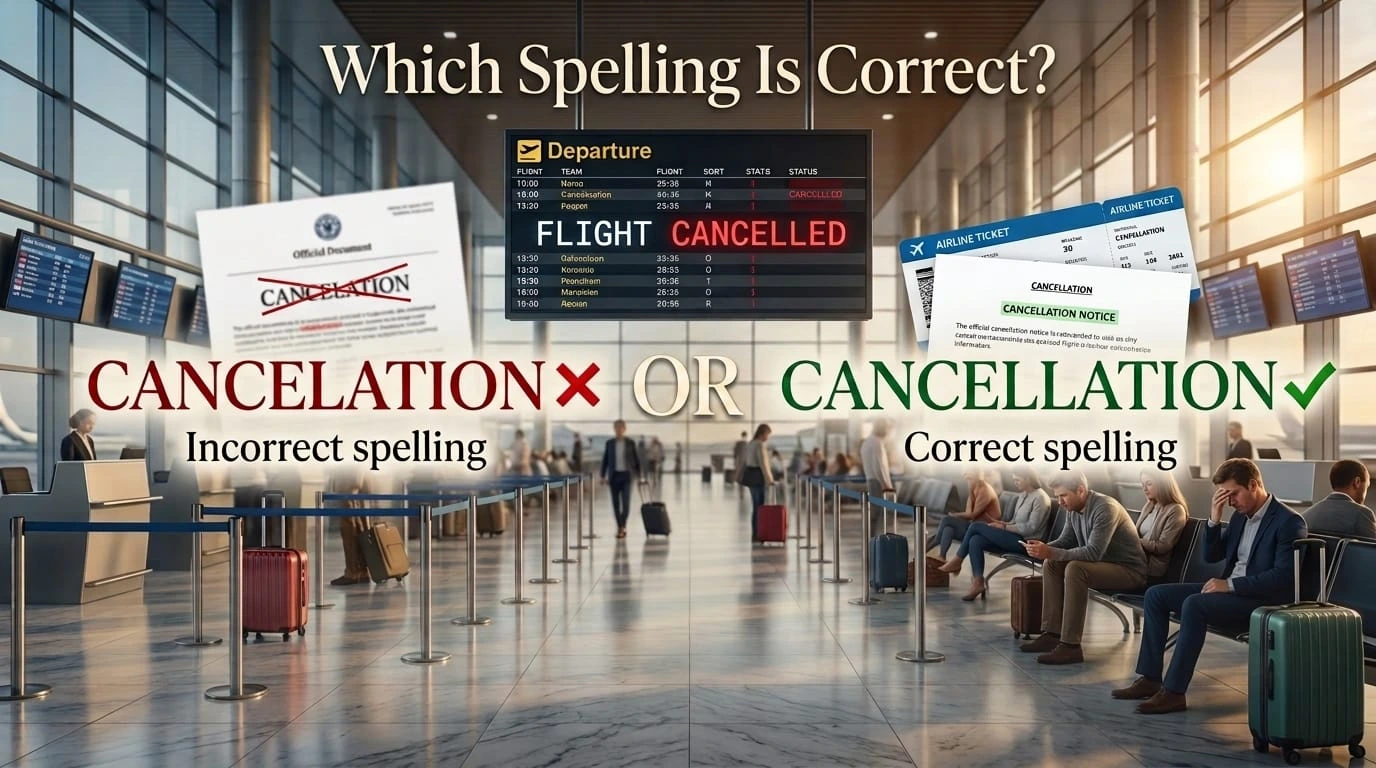
The correct spelling is cancellation with two ls. Cancelation is an accepted but much less common variant in American English. ...
Read more
Judgment or Judgement: The Correct Spelling Explained (2026)
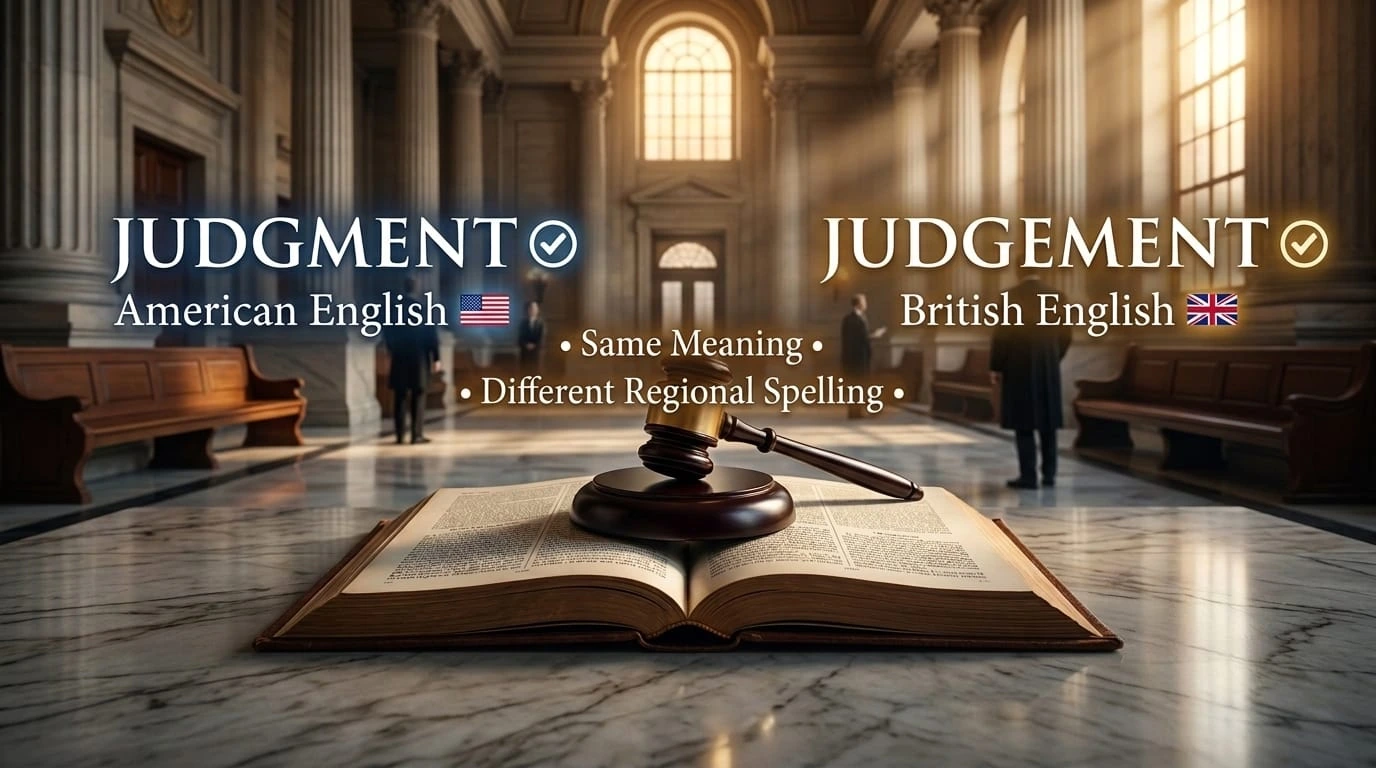
Both “judgment” and “judgement” are correct. “Judgment” is standard in American English, while “judgement” is standard in British English, though ...
Read more
Cancelling or Canceling: The Correct Spelling Explained (2026)
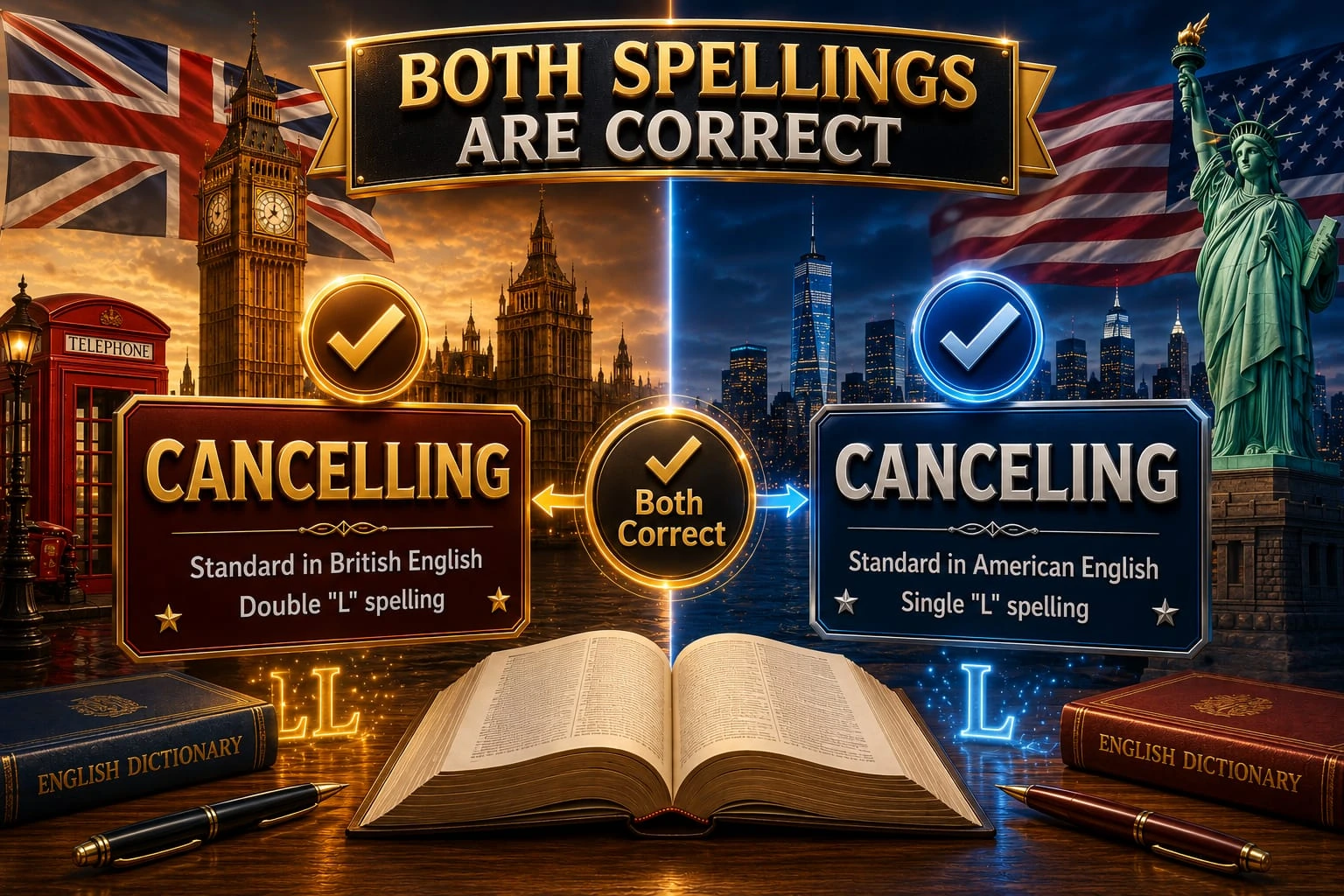
Both "cancelling" and "canceling" are correct. "Canceling" is the standard spelling in American English, while "cancelling" is standard in British ...
Read more