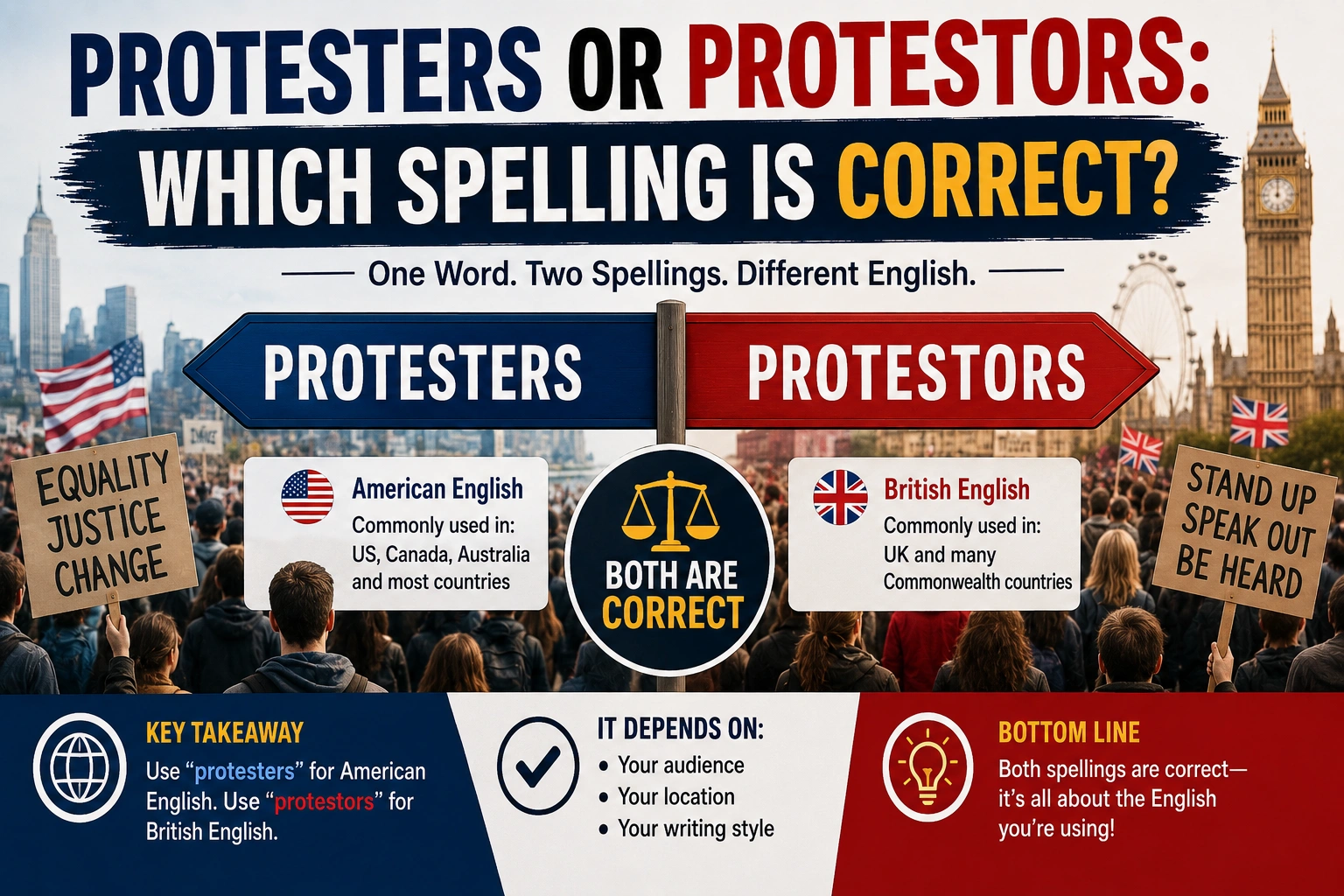
Have you ever stopped while writing and wondered whether “protesters or protestors” is the correct spelling? Both forms appear in English, so the confusion is understandable. The good news is that both “protesters” and “protestors” are accepted spellings, but protesters is the more common and widely preferred form.
A protester is a person who takes part in a public protest or expresses opposition to something. For example, you might write, “Thousands of protesters marched through the city.” Oxford lists protester as a noun meaning a person who makes a public protest. (Oxford Learner’s Dictionaries)
The spelling protestor is also found in English and has a long history. However, modern dictionaries and general writing tend to favor protester.
People often search for “protesters or protestors” when writing news articles, essays, reports, social media posts, or academic work. This guide explains the difference, history, British and American usage, common mistakes, everyday examples, and which form you should choose.
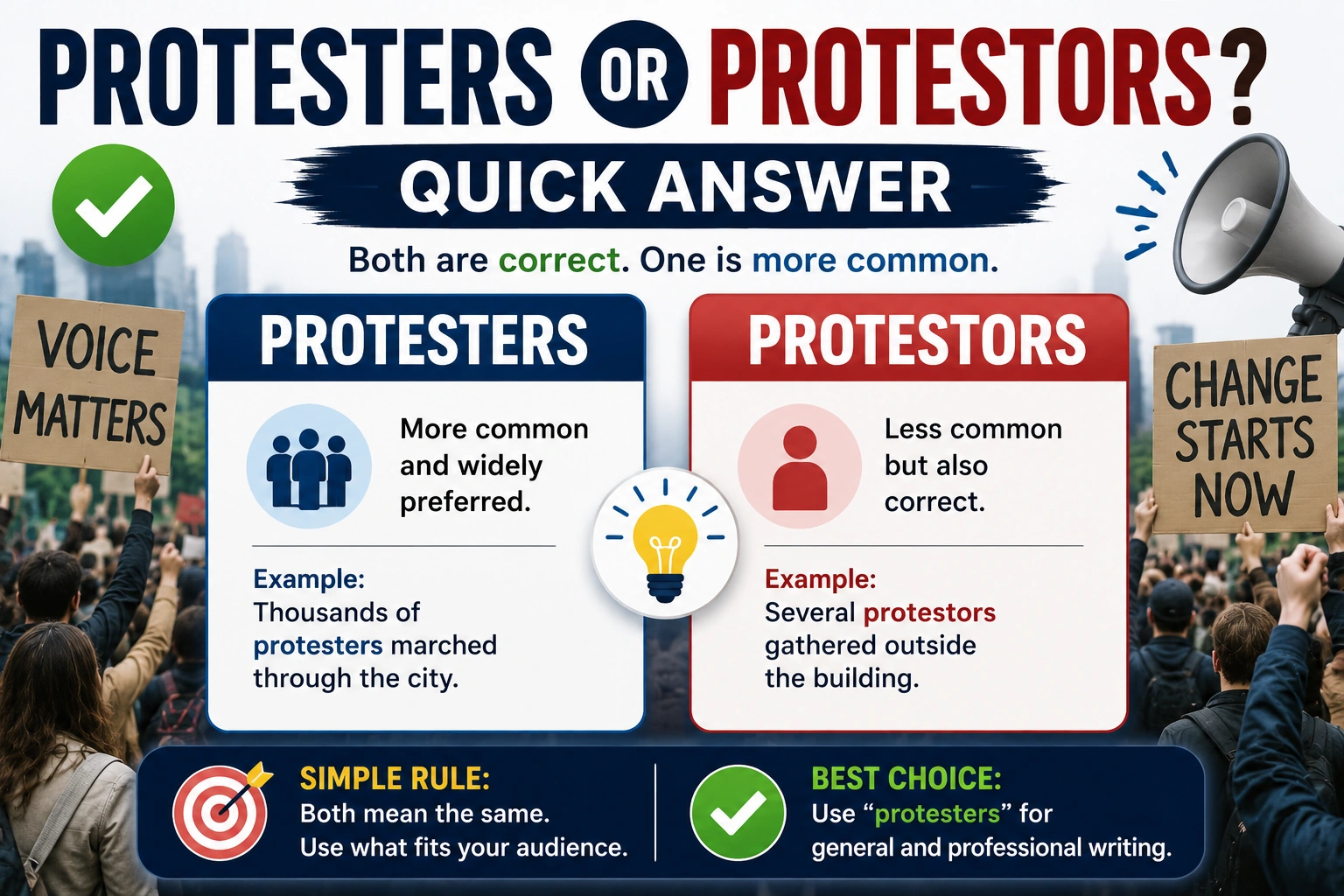
Both spellings are correct:
- ✅ protester — more common
- ✅ protestor — less common
- ✅ protesters — preferred plural
- ✅ protestors — accepted plural
If you want the safest choice for general or professional writing, use protester/protesters.
Singular
A protester stood outside the building.
Plural
Thousands of protesters marched through the city.
You can also write:
Several protestors gathered outside the building.
The sentence is understandable and the spelling is accepted, but protesters is usually the better choice.
Oxford uses protester as its main dictionary entry and defines it as a person who makes a public protest. (Oxford Learner’s Dictionaries)
Simple Rule
Remember:
Protester = preferred
Protestor = also correct
There is no major difference in meaning between the two.

The words protester and protestor come from the verb protest.
The English word protest has a long history. It entered English through Old French and Latin. The Latin protestari meant “to declare publicly” or “to testify.” (Etymology Online)
The noun forms protester and protestor developed from this verb.
Historical records show that protester and protestor were both used as early as the 1540s. The older form protestour was also found. At that time, the word referred more broadly to someone who made a formal declaration or affirmation. (Etymology Online)
The modern meaning became more closely connected with public demonstrations much later. Etymological records show that the sense of a person demonstrating against an established order dates from around 1960. (Etymology Online)
Why Are There Two Spellings?
The difference comes from English word formation.
The ending -er is a common way to create a noun for a person who performs an action:
protest → protester
The alternative -or ending also appears in English:
protest → protestor
Both forms developed historically, but protester has become the more common modern form.
Protest + er
The most straightforward modern formation is:
protest + er = protester
This pattern is common:
- teach → teacher
- work → worker
- write → writer
- protest → protester
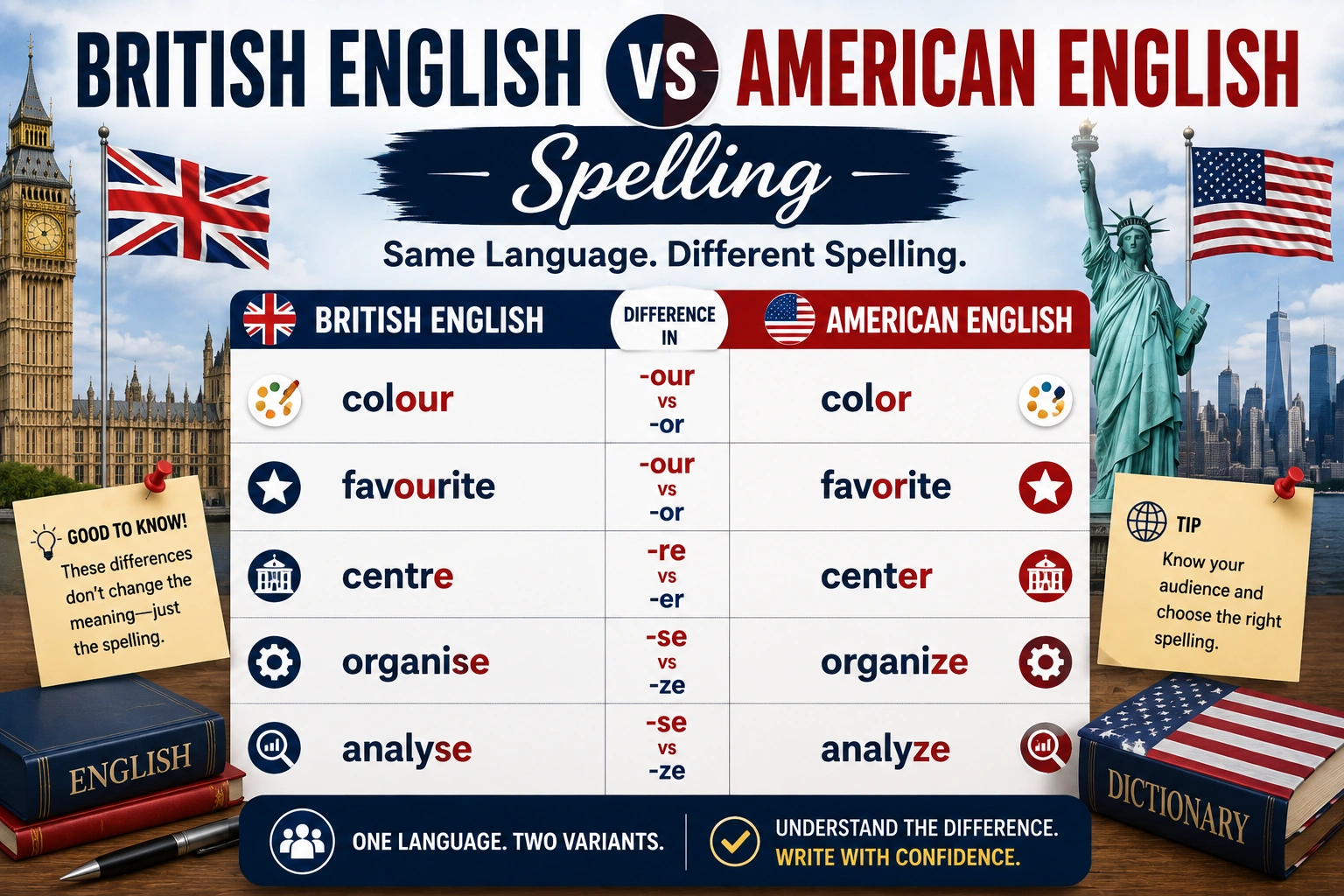
There is no major British-American spelling difference between protester and protestor.
Both forms can be found in English varieties, but protester is the standard and more common choice in major learner dictionaries.
| Form | British English | American English |
|---|---|---|
| Singular | protester | protester |
| Plural | protesters | protesters |
| Alternative singular | protestor | protestor |
| Alternative plural | protestors | protestors |
| Preferred general form | protesters | protesters |
Oxford’s American English dictionary also uses protester as its main entry. (Oxford Learner’s Dictionaries)
Does British English Use “Protestors”?
Yes. Protestors can appear in British writing. However, you do not need to use it simply because you are writing for a British audience.
For example:
Thousands of protesters gathered in London.
This is completely natural British English.
Does American English Use “Protesters”?
Yes. In fact, protesters is very common in American English.
Thousands of protesters gathered outside the building.
Oxford’s American English entry uses protester and gives examples with protesters. (Oxford Learner’s Dictionaries)
For most writers, the best choice is protester.
For American English
Use:
protester
protesters
These are clear and widely recognized forms.
For British English
Use:
protester
protesters
These are also natural British English forms.
For Commonwealth English
If you write for countries such as Canada, Australia, or New Zealand, protester/protesters is a safe general choice.
For Global English
If your audience is international, choose protester.
It is simple, familiar, and widely understood.
What About “Protestor”?
You can use protestor if you are following a particular publication’s style or if the source you are quoting uses that spelling.
But if you are starting from scratch, protester is the better option.
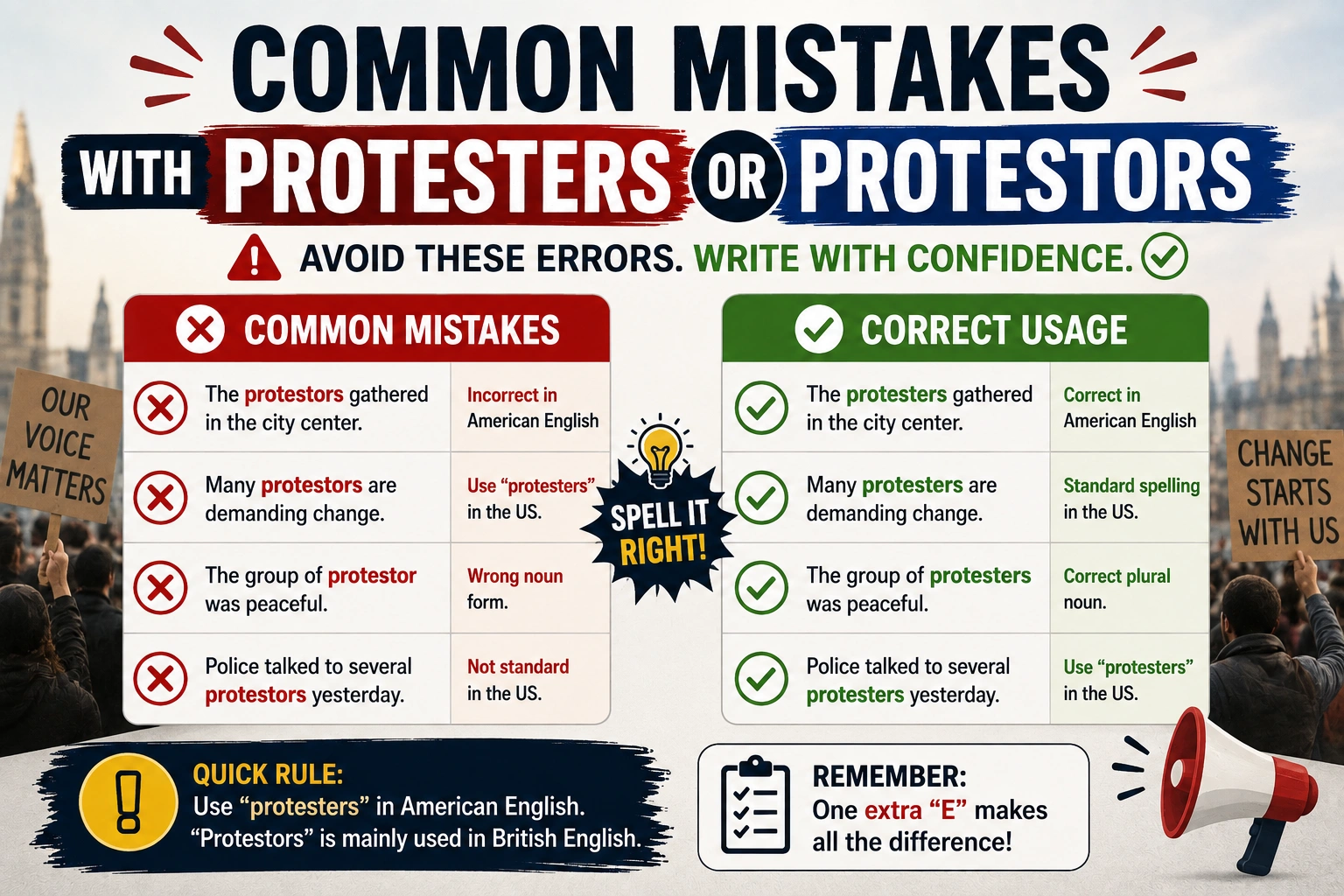
Mistake 1: Thinking “protestors” is the only correct form
❌ Protestors is the only correct spelling.
✅ Protesters is also correct and is generally more common.
Mistake 2: Thinking “protesters” is wrong
❌ The word must be spelled protestors.
✅ Protesters is a standard spelling. Oxford uses it as its main entry. (Oxford Learner’s Dictionaries)
Mistake 3: Mixing singular and plural
❌ One protesters
✅ One protester
❌ Two protester
✅ Two protesters
Mistake 4: Using “protester” when describing a group
❌ Thousands of protester marched through the city.
✅ Thousands of protesters marched through the city.
Mistake 5: Changing the spelling without a reason
If your article uses protesters, keep using that spelling throughout the article.
Do not switch randomly between:
protesters
protestors
protesters
protestors
Consistency makes your writing cleaner.
Protesters or Protestors in Everyday Examples
Both forms can appear in different types of writing.
In Emails
The event may attract several protesters.
This is the preferred general form.
In News
Thousands of protesters gathered in the city center.
News writing commonly uses protesters.
Oxford gives examples such as “Thousands of protesters marched through the city.” (Oxford Learner’s Dictionaries)
On Social Media
Hundreds of protesters joined the demonstration.
The spelling is simple and natural.
In Formal Writing
The report examined the behavior of protesters during the demonstration.
Protesters works well in academic and professional writing.
With Adjectives
You can combine the word with many adjectives:
- peaceful protesters
- student protesters
- environmental protesters
- anti-war protesters
- political protesters
- angry protesters
- young protesters
Singular Examples
The protester held a sign.
A protester spoke to reporters.
Plural Examples
The protesters marched peacefully.
Police spoke with the protesters.
Protesters or Protestors – Google Trends & Usage Data
People search for “protesters or protestors” because both spellings appear online and in published writing.
Related searches include:
- protesters or protestors
- protester or protestor
- protesters spelling
- protestors spelling
- plural of protester
- is protestors correct
- protester definition
Google Trends can help compare search interest over time and across countries. However, Google Trends uses relative values, rather than providing exact numbers of searches. (Google Trends)
For that reason, it is better not to claim an exact percentage or monthly search volume unless you have checked a specific Google Trends report for a specific time period and location.
In general usage, protester/protesters is the form most useful for writers because it is the main form presented by major dictionaries such as Oxford. (Oxford Learner’s Dictionaries)
Search interest may also increase during major political events, demonstrations, elections, labor disputes, and social movements. This is one reason the word frequently appears in news and online searches.
Protester vs Protestor Comparison Table
| Feature | Protester | Protestor |
|---|---|---|
| Correct? | ✅ Yes | ✅ Yes |
| Singular | protester | protestor |
| Plural | protesters | protestors |
| Meaning | Person who protests | Person who protests |
| Commonness | More common | Less common |
| British English | ✅ Used | ✅ Used |
| American English | ✅ Used | ✅ Used |
| Best general choice | ⭐ Yes | Acceptable alternative |
Which One Is Better?
If you want one clear answer:
Choose “protester.”
It is the more familiar and widely preferred spelling.
FAQs About Protesters or Protestors
1. Is it protesters or protestors?
Both are correct, but protesters is the more common and preferred form for general writing.
2. Is “protestors” a real word?
Yes. Protestors is an accepted spelling of the plural noun. However, protesters is more widely used.
3. Which spelling is better for SEO?
Use protesters as your primary form because it is the more common standard spelling. You can mention protestors naturally in the article as the alternative.
4. Is “protester” American or British English?
Protester is used in both American and British English.
5. What is the plural of protester?
The plural is:
protesters
6. What is the plural of protestor?
The plural is:
protestors
Both forms refer to people who protest.
7. Should I use protesters or protestors in formal writing?
Use protesters unless a particular style guide, publication, or source requires protestors. It is the safer general choice.
Conclusion
So, protesters or protestors—which spelling should you use? The answer is that both are correct, but protesters is usually the better choice. It is the main form used by major dictionaries and is widely recognized in British, American, and international English. (Oxford Learner’s Dictionaries)
The two words have the same meaning. A protester or protestor is someone who takes part in a protest or publicly expresses opposition to something. The difference is mainly in the spelling, not the meaning.
The word has a long history. Both protester and protestor were recorded in English centuries ago, while the modern connection between the word and public demonstrations became especially strong in the 20th century. (Etymology Online)
For your articles, essays, reports, emails, and SEO content, protesters is the spelling I recommend. It is simple, familiar, and professional.
The easiest rule is:
Protester = preferred
Protestor = acceptable alternative
If you choose protesters, use it consistently throughout your article.
you can also read about assure or ensure by clicking this link
https://versuswords.com/assure-or-ensure/

My name is iqbal hussain, and I am an article writer passionate about creating clear, engaging, and informative content. I specialize in SEO-friendly articles and blog posts. I enjoy researching different topics and turning complex information into simple, useful content that informs readers and provides real value.