Omelette and omelet mean the same egg dish. The difference is spelling. Omelette is preferred in British English, while omelet is more common in American English.
A few years ago, I was editing a food blog for a client. The article was all about breakfast recipes. Everything looked great until I noticed something odd. The writer used omelette in the title but switched to omelet throughout the article.
Naturally, the client asked the question many people ask:
“Which spelling is actually correct?”
If you’ve searched for omelette or omelet, you’re probably wondering the same thing.
The confusion makes sense. You may see omelette on restaurant menus, cookbooks, and food websites. Then you open an American recipe blog and find omelet everywhere.
Both spellings are common. Both refer to the same delicious dish made from beaten eggs. Yet many writers, students, and food lovers are unsure which version they should use.
The good news is simple. There is no meaning difference between the two words. The choice mainly depends on your audience and the type of English you use.
Let’s crack open the answer.
Omelette or Omelet : Quick Answer
Both omelette and omelet describe a dish made from beaten eggs cooked in a pan.
The meaning is exactly the same.
The only difference is spelling.
Examples
British English
- I ordered a cheese omelette for breakfast.
- The café serves a mushroom omelette.
American English
- I ordered a cheese omelet for breakfast.
- The diner serves a mushroom omelet.
No matter which spelling you choose, readers will understand the dish.
The Origin / Background of Omelette or Omelet
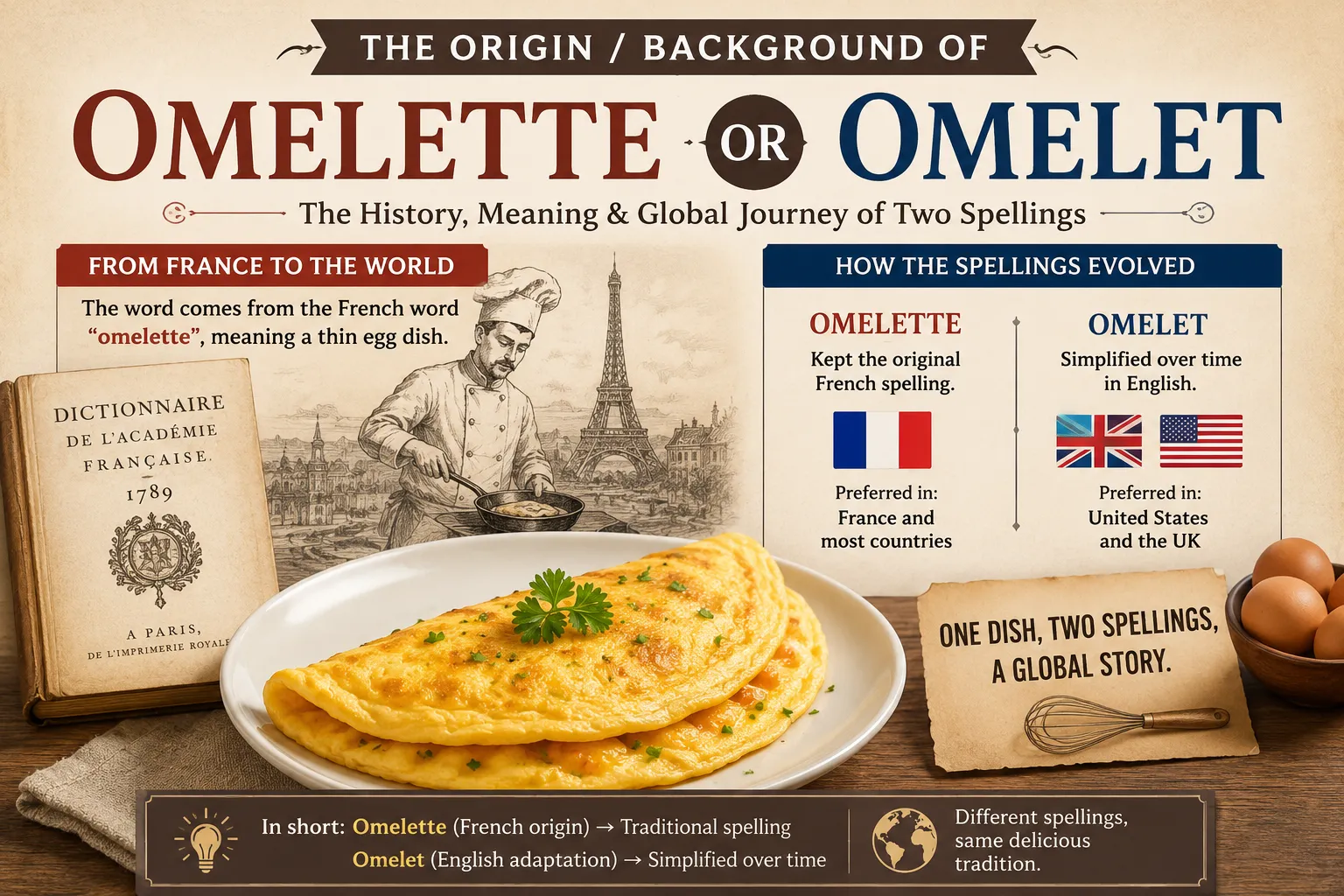
The word comes from French.
The French spelling is omelette.
The term entered English many centuries ago and became popular as French cooking influenced other countries.
Over time, spelling changes appeared.
British English stayed closer to the original French spelling and continued using omelette.
American English often favors shorter spellings. As a result, omelet became the preferred American version.
This pattern is common in English.
Many words have different spellings depending on the country.
Similar Examples
| British English | American English |
| Colour | Color |
| Favourite | Favorite |
| Traveller | Traveler |
| Omelette | Omelet |
That history explains why both spellings exist today.
Omelette or Omelet Explained : Key Differences or Variations
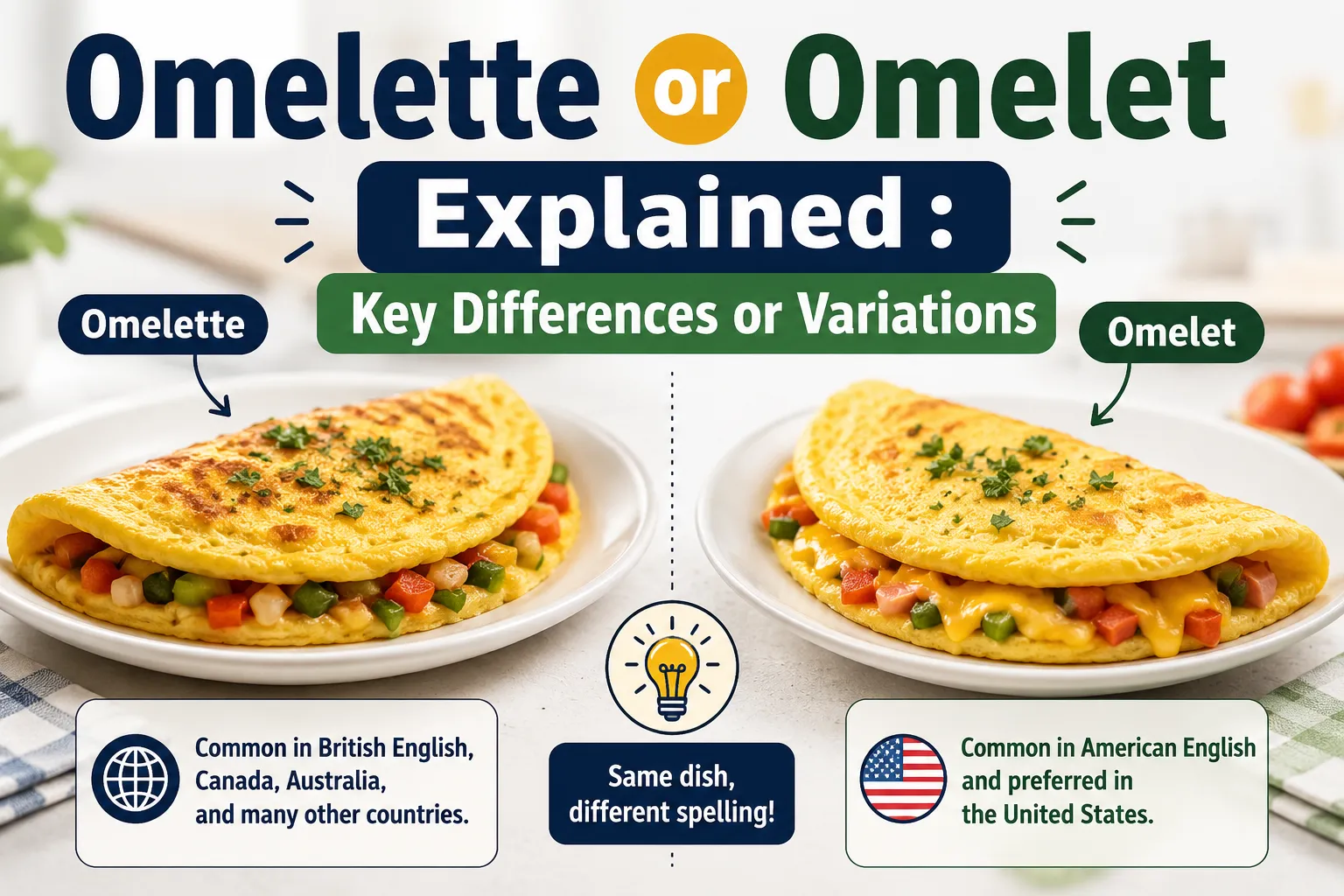
There is no difference in taste, recipe, or meaning.
The distinction is only regional.
| Term | Meaning | When to Use | Region/Context |
| Omelette | Egg dish made from beaten eggs | British-style writing | UK, Australia, New Zealand |
| Omelet | Egg dish made from beaten eggs | American-style writing | United States |
Example 1
British:
- She made a spinach omelette.
American:
- She made a spinach omelet.
Example 2
British:
- The hotel breakfast includes an omelette station.
American:
- The hotel breakfast includes an omelet station.
Example 3
British:
- My favorite meal is a cheese omelette.
American:
- My favorite meal is a cheese omelet.
The dish remains exactly the same.
Which Version Should You Use?
The best choice depends on your audience.
For Students in the UK
Use omelette.
Most schools, publishers, and style guides in Britain prefer this spelling.
For Students in the US
Use omelet.
American teachers and editors generally expect the shorter form.
For Food Bloggers
Match your readers.
- UK audience → omelette
- US audience → omelet
- Global audience → choose one and stay consistent
For Restaurant Menus
Either spelling works.
Many restaurants use omelette because it looks more French and traditional.
For International Brands
Consistency matters most.
Pick one version and use it everywhere.
Read also
Gopher or Gofer: The Complete Guide to Correct Usage
Common Mistakes with Omelette or Omelet
Mistake #1: Mixing Both Spellings
| Incorrect | Correct |
| Cheese omelette and ham omelet | Use one spelling consistently |
Why it happens: Writers use content from different sources.
Mistake #2: Thinking One Is Wrong
| Incorrect Thinking | Correct Understanding |
| Omelet is incorrect | Omelet is standard American English |
Why it happens: Many people first learn the French spelling.
Mistake #3: Switching Styles Mid-Article
| Incorrect | Correct |
| Half the recipe uses omelette and half uses omelet | Choose one version |
Why it happens: Editing is incomplete.
Mistake #4: Ignoring Audience
| Less Effective | Better Choice |
| Omelette for a US cookbook | Omelet |
| Omelet for a UK cookbook | Omelette |
Why it happens: Writers focus on preference instead of readers.
Mistake #5: Assuming the Recipes Differ
| Incorrect Assumption | Correct Fact |
| Omelet and omelette are different dishes | They are the same dish |
Why it happens: The spellings look different enough to suggest different foods.
Omelette or Omelet in Real-World Examples
Professional Email
We are pleased to add a new vegetable omelette to our breakfast menu.
British style.
We are pleased to add a new vegetable omelet to our breakfast menu.
American style.
News Headline
British:
Local Chef Wins Award for Perfect Cheese Omelette
American:
Local Chef Wins Award for Perfect Cheese Omelet
Social Media Post
British:
Sunday morning means a fluffy cheese omelette and coffee.
American:
Sunday morning means a fluffy cheese omelet and coffee.
Formal Report
British:
The most popular breakfast item was the mushroom omelette.
American:
The most popular breakfast item was the mushroom omelet.
Omelette or Omelet : Data, Trends & Usage
The keyword omelette or omelet is commonly searched by:
- Students
- English learners
- Food bloggers
- Recipe writers
- Restaurant owners
- Editors
Search Intent
Primary Search Intent: Informational
People want to know:
- Which spelling is correct
- Whether the words mean different things
- Which version they should use
Regions Most Interested
Omelette
Popular in:
- United Kingdom
- Australia
- New Zealand
- Canada
Omelet
Popular in:
- United States
Why This Matters Now
Food content travels globally.
A recipe written in London may be read in New York. A food blog from California may attract readers in Australia.
Because audiences are international, spelling consistency has become more important than ever.
Comparison Table
| Term/Variant | Meaning | Region/Context | Best Used When |
| Omelette | Egg dish made from beaten eggs | British English | Writing for UK audiences |
| Omelet | Egg dish made from beaten eggs | American English | Writing for US audiences |
| Cheese Omelette | Omelette with cheese filling | British-style menus | UK-focused content |
| Cheese Omelet | Omelet with cheese filling | American-style menus | US-focused content |
Frequently Asked Questions
Q: What does omelette or omelet mean?
A: Both words describe a dish made from beaten eggs cooked in a pan. The meaning is exactly the same.
Q: How do you use omelette or omelet correctly?
A: Use omelette in British English and omelet in American English. Match the spelling to your audience.
Q: Omelette vs omelet : what’s the difference?
A: The difference is spelling only. There is no difference in pronunciation, ingredients, or meaning.
Q: Is omelette acceptable in formal writing?
A: Yes. Omelette is the standard spelling in British English and is widely accepted in formal writing.
Q: Which version is correct : omelette or omelet?
A: Both are correct. The right choice depends on whether you are using British or American English.
Q: Where does the word come from?
A: The word comes from French. The original French spelling is closer to omelette.
Q: Can omelette or omelet be used on restaurant menus?
A: Absolutely. Restaurants use both spellings. The choice usually depends on the country and branding style.
Conclusion
The question of omelette or omelet has a simple answer.
Both spellings are correct. Both refer to the same egg dish. Neither version is more accurate than the other.
Remember these key points:
- Omelette is the preferred British spelling.
- Omelet is the preferred American spelling.
- The meaning never changes.
- Consistency matters more than personal preference.
When choosing between the two, think about who will read your content. If your audience is mainly British, use omelette. If your audience is American, use omelet.
Once you choose a style, stick with it throughout your writing.
Now you know exactly how to use omelette or omelet. Bookmark this guide so you never second-guess the spelling again, and share it with someone who has wondered about this breakfast favorite.

SEO enthusiast focused on improving website visibility and driving organic growth through effective optimization strategies.