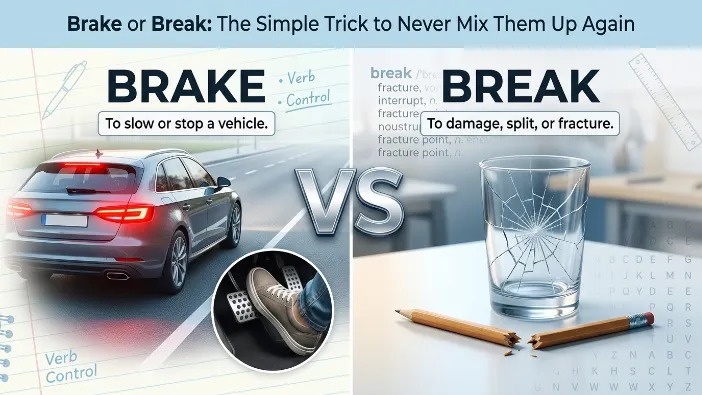
Brake means to slow down or stop a vehicle or movement. Break means to damage something, separate it into pieces, interrupt an activity, or take a pause. Although they sound exactly the same, they have very different meanings and uses.
A few years ago, I was proofreading a driving safety article when I noticed a sentence that completely changed the meaning of the advice:
“Always break before entering a sharp turn.”
At first glance, nothing seemed wrong. The sentence sounded natural when spoken aloud. But there was one small problem. The writer had used break instead of brake.
That tiny spelling mistake changed the entire meaning of the sentence.
This confusion is more common than most people realize. Students make the mistake in school assignments. Professionals accidentally use the wrong word in emails. Even native English speakers sometimes stop and think before choosing between brake and break.
The reason is simple. These two words are homophones. They sound exactly alike but have different spellings and meanings.
One word helps stop a car. The other means to damage something, separate it into pieces, interrupt an activity, or take a rest.
If you’ve ever wondered which word is correct, you’re not alone. By the end of this guide, you’ll know exactly when to use brake and break, how to remember the difference instantly, and how to avoid one of the most common spelling mistakes in English.
Brake or Break : Quick Answer
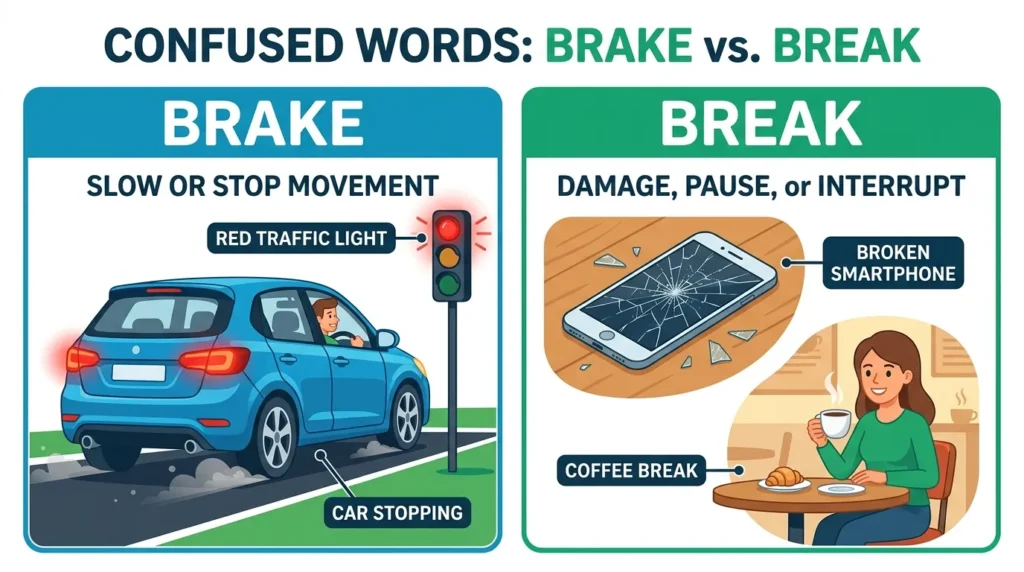
Brake means to slow down or stop a vehicle, while break means to damage something, separate it into pieces, interrupt an activity, or take a pause.
- Brake = stop or slow movement.
- Break = damage, separate, interrupt, or pause.
Quick Examples
✅ Press the brake before the traffic light.
✅ The driver braked suddenly to avoid an accident.
✅ Be careful not to break your phone.
✅ Let’s take a short break before continuing.
A simple memory rule is:
If it involves stopping a vehicle, use brake. If it involves damage or a pause, use break.
The Origin and Background of Brake or Break
Understanding where these words come from can make them easier to remember.
The Origin of Brake
The word brake comes from older European words related to restraining or slowing movement.
As transportation developed, the word became associated with mechanical systems used to stop carts, bicycles, trains, and cars.
Today, brake can be both a noun and a verb.
Examples:
- The brake needs repair. (noun)
- Please brake carefully. (verb)
The Origin of Break
The word break comes from the Old English word brecan.
It originally meant to shatter, split apart, or destroy something.
Over time, its meaning expanded to include:
- Damaging objects
- Interrupting activities
- Separating things into parts
- Taking rest periods
Examples:
- Don’t break the glass.
- Let’s take a break.
- She broke the stick.
Why Are They Confused?
The confusion exists because both words evolved differently but eventually developed the same pronunciation.
When people hear them, they sound identical.
When writing, however, the spelling matters.
Brake or Break Explained : Key Differences
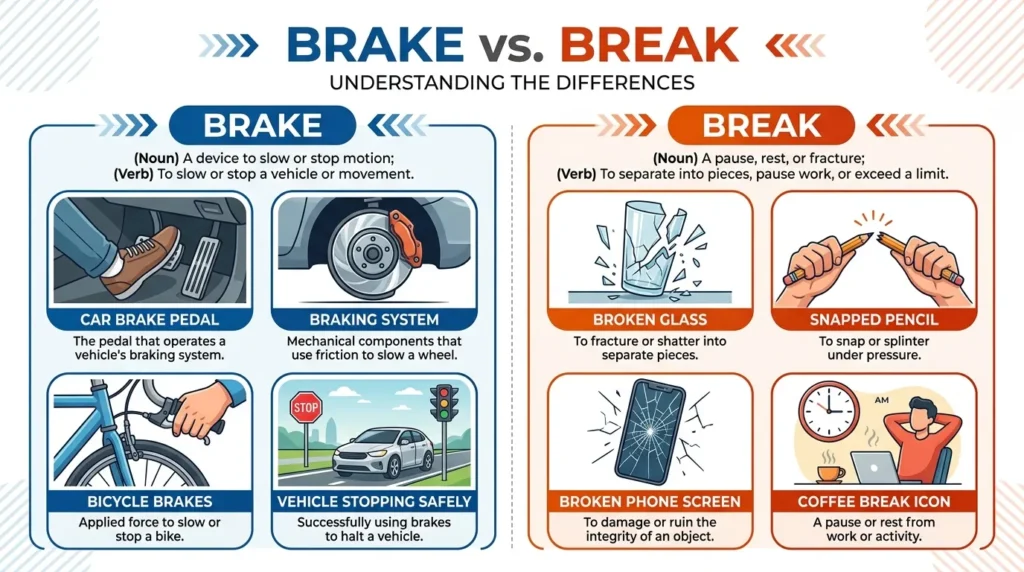
Although they sound the same, their meanings are completely different.
| Term | Meaning | When to Use | Context |
|---|---|---|---|
| Brake | To stop or slow movement | Driving, vehicles, machinery | Transportation |
| Break | To damage, separate, interrupt, or pause | Everyday situations | General English |
What Does Brake Mean?
Brake relates to stopping movement.
You use it when discussing:
- Cars
- Bicycles
- Motorcycles
- Trains
- Machines
Examples:
- The driver pressed the brake.
- My bicycle’s brakes need adjustment.
- She braked quickly when she saw the deer.
What Does Break Mean?
Break relates to damage, separation, or interruption.
Examples:
- Please don’t break the vase.
- Let’s take a coffee break.
- The child accidentally broke the toy.
- We should break the project into smaller tasks.
A Simple Memory Trick
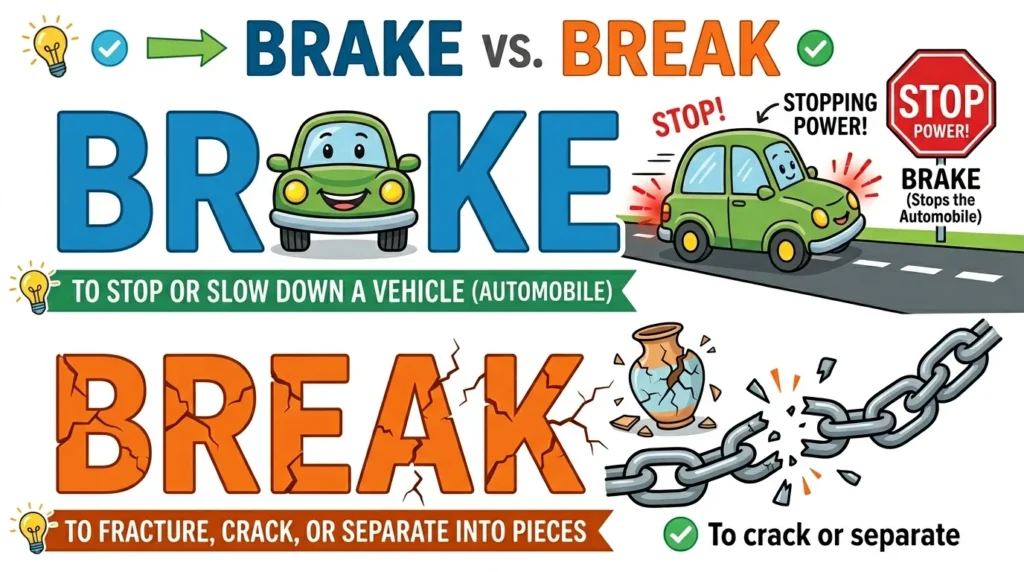
Think of the letter A in brake.
A = Automobile
If you’re talking about a vehicle, use brake.
Think of the word break as being connected to something broken.
If something can be damaged, interrupted, or separated, use break.
When Should You Use Brake or Break?
The correct choice depends entirely on the context.
For Students
Use brake when writing about:
- Driving lessons
- Road safety
- Transportation
Use break when writing about:
- Broken objects
- School breaks
- Interruptions
For Professionals
In reports, emails, and workplace communication:
- Use brake for vehicles and machinery.
- Use break for pauses and interruptions.
For Writers and Bloggers
Ask yourself one simple question:
Am I talking about stopping movement?
If yes, use brake.
If no, use break.
For Global English Users
Unlike words such as “favour” and “favor,” there is no British vs American spelling difference here.
Both varieties of English use:
- Brake
- Break
The spelling remains the same worldwide.
Common Mistakes with Brake or Break
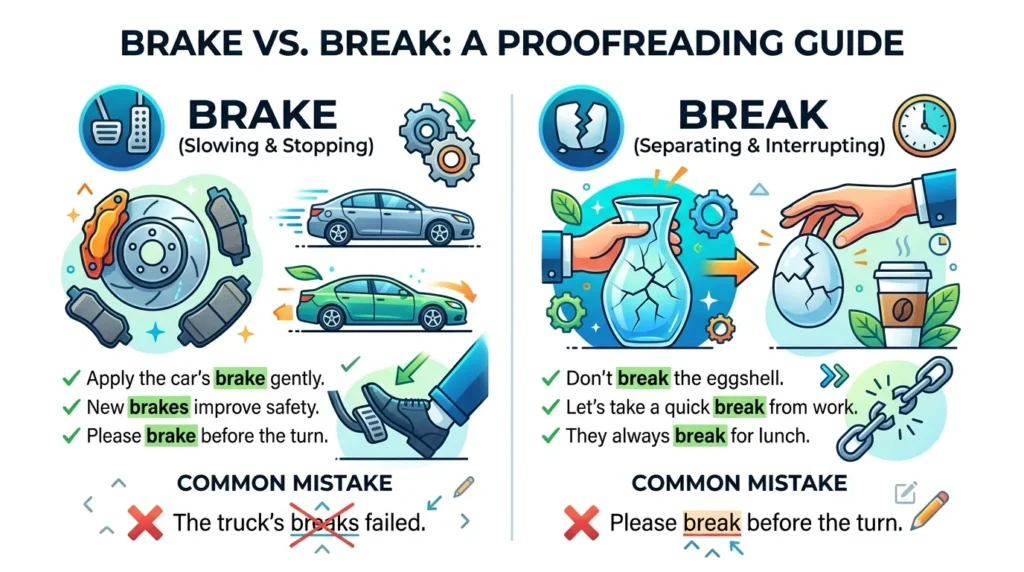
Because both words sound identical, mistakes happen frequently.
Here are the most common ones.
Mistake #1
❌ Please break before the sharp turn.
✅ Please brake before the sharp turn.
Why?
The sentence refers to slowing a vehicle.
Mistake #2
❌ I need a short brake from work.
✅ I need a short break from work.
Why?
You are talking about a rest period.
Mistake #3
❌ The car’s breaks need replacement.
✅ The car’s brakes need replacement.
Why?
Vehicle stopping systems are called brakes.
Mistake #4
❌ Don’t brake the glass bottle.
✅ Don’t break the glass bottle.
Why?
The sentence refers to damaging an object.
Mistake #5
❌ She breaked the plate.
✅ She broke the plate.
Why?
The past tense of break is broke.
Brake or Break in Real World Examples
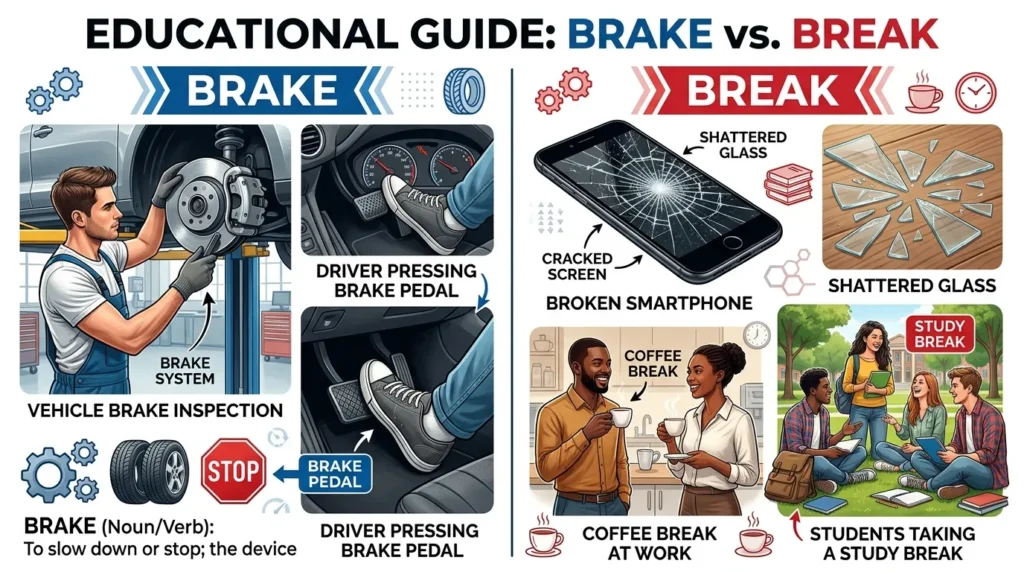
Understanding how these words appear in everyday situations can help you remember them.
Professional Email
Please inspect the vehicle’s brake system before tomorrow’s delivery schedule.
News Headline
Driver Hits the Brake Seconds Before Major Collision
Social Media Post
Finally taking a much-needed break after a busy week.
Formal Report
The inspection revealed wear in the front brake assembly.
Customer Service Message
We apologize for the service break experienced during maintenance.
Everyday Conversation
Be careful with that phone. You might break it.
School Environment
Students will have a fifteen-minute break between classes.
Brake or Break , Data, Trends & Usage
People often search for “brake or break” because these words sound identical but have completely different meanings. The confusion is especially common among students, English learners, and writers.
Search Intent
This keyword has a primarily informational search intent.
People want answers to questions such as:
- Which spelling is correct?
- What is the difference?
- How can I remember it?
- Which word should I use?
Who Searches for This Topic?
The most common audiences include:
- Students
- English learners
- Teachers
- Bloggers
- Copywriters
- Business professionals
- Job seekers
Why Does This Matter Today?
Most communication now happens through emails, messages, websites, and social media.
A small spelling mistake can change the meaning of an entire sentence.
Using the correct word helps you communicate clearly and professionally.
Why Is the Mistake So Common?
Unlike many spelling mistakes, both brake and break are real English words.
Spell-check software may not detect the error because the word itself is spelled correctly.
Only the context reveals the mistake.
Brake vs Break: Side-by-Side Comparison
| Term/Variant | Meaning | Region/Context | Best Used When |
|---|---|---|---|
| Brake | Device or action that slows movement | Transportation | Discussing vehicles or machinery |
| Brakes | Plural form of brake | Automotive context | Referring to multiple braking components |
| Brake (verb) | To slow or stop | Driving | Describing the act of stopping |
| Break | Damage, separation, interruption | General English | Discussing broken items or pauses |
| Breaks | Multiple pauses or interruptions | Daily life | Referring to rest periods |
| Broke | Past tense of break | General English | Describing something already damaged |
Frequently Asked Questions
Q: What does brake mean?
A: Brake refers to a device or action used to slow down or stop movement, especially in vehicles such as cars, bicycles, and motorcycles.
Q: What does break mean?
A: Break means to damage something, separate it into pieces, interrupt an activity, or take a pause.
Q: How do you use brake correctly?
A: Use brake whenever you are talking about stopping or slowing movement. For example, “The driver pressed the brake.”
Q: Brake vs break , what is the main difference?
A: Brake is connected to stopping movement. Break is connected to damage, separation, or interruptions.
Q: Is brake acceptable in formal writing?
A: Yes. Brake is the correct and professional term when discussing vehicles, transportation, machinery, or safety systems.
Q: Which word should I use for a rest period?
A: Use break. Examples include lunch break, coffee break, study break, and work break.
Q: Where does the word break come from?
A: It comes from the Old English word brecan, which meant to split, shatter, or destroy.
Q: Can brake be used as a verb?
A: Yes. For example, “The driver braked quickly when the light turned red.”
Q: Is there a British and American spelling difference?
A: No. Both British English and American English use the same spellings: brake and break.
Q: How can I remember the difference quickly?
A: Think of A in brake as standing for automobile. If the sentence involves a vehicle, use brake.
Conclusion
The difference between brake and break may seem confusing at first, but it becomes simple once you understand their meanings.
Remember these key points:
- Brake means to slow down or stop movement.
- Break means to damage, separate, interrupt, or pause.
- Both words sound identical but have different spellings and uses.
- Context is the easiest way to choose the correct word.
A useful memory trick is to connect brake with automobiles and driving. Whenever a sentence involves a vehicle or stopping movement, brake is usually the correct choice. For everything related to broken objects, interruptions, or rest periods, choose break.
Learning the difference improves your writing, helps you avoid embarrassing mistakes, and makes your communication clearer. Whether you’re writing an essay, a business email, a blog post, or a social media update, using the right word shows attention to detail and professionalism.
Now you know exactly how to use brake and break correctly. Bookmark this guide so you never second-guess these words again, and share it with someone who still gets them mixed up.
Read more: Chord or Cord: The Easy Way to Use the Right Word

I am an English language writer dedicated to creating clear, accurate, and easy-to-understand content. My goal is to help readers build confidence in their language and communication skills.