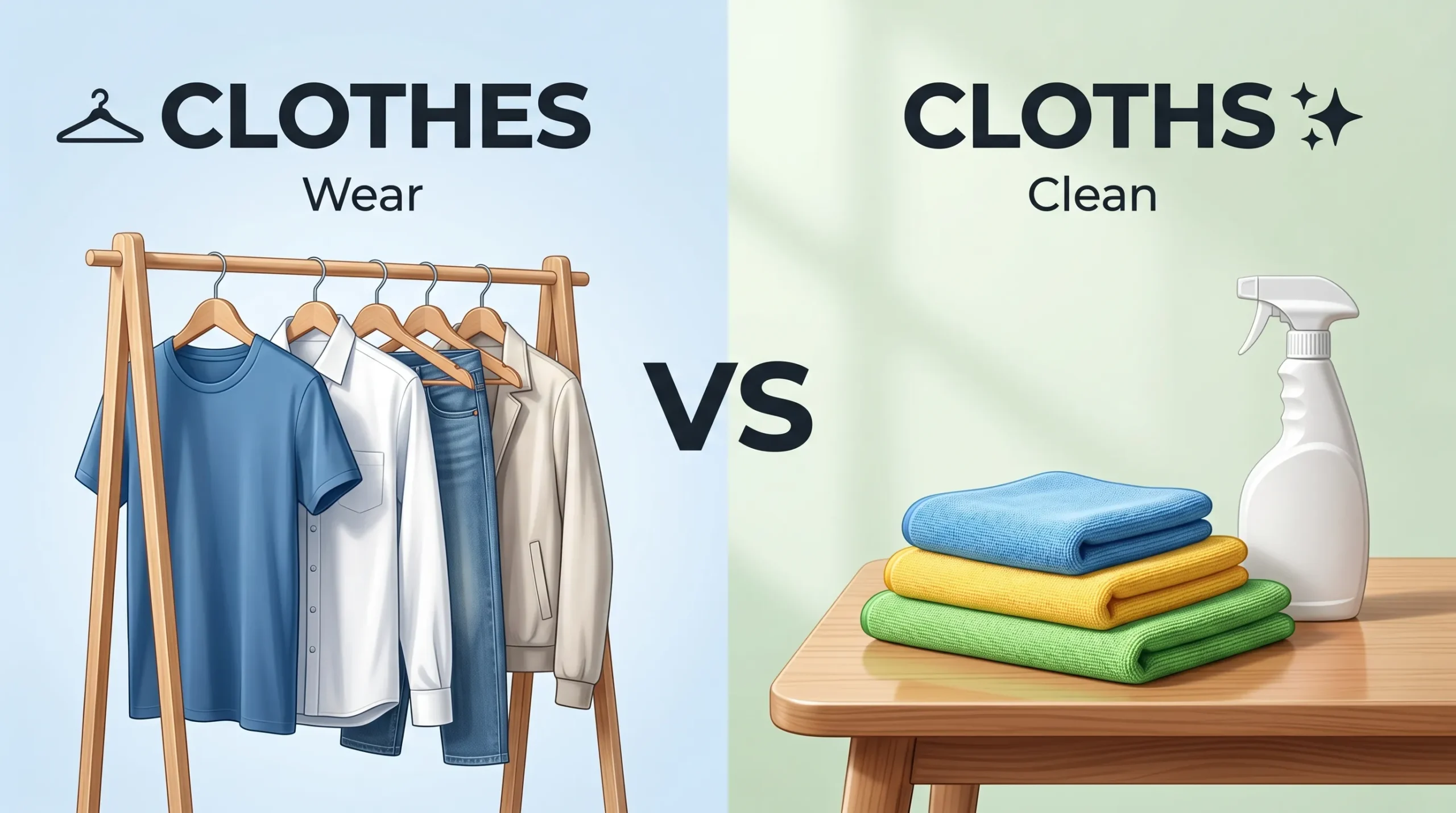
Clothes means the items you wear, such as shirts, pants, and dresses. Cloths means pieces of fabric used for cleaning, covering, or other practical purposes.
Introduction
A few years ago, one of my English students wrote, “I bought new cloths for the wedding.” At first glance, the sentence looked correct. The spelling was close. The meaning seemed obvious. Yet there was one small problem.
The correct word was clothes, not cloths.
This is one of the most common spelling mistakes in English. The two words look almost identical. They come from related roots. They even sound similar when spoken quickly.
Many English learners, students, bloggers, and writers mix them up. Spell-check tools do not always catch the mistake because both words are real English words.
The good news is that the difference is simple once you understand it.
By the end of this guide, you will know exactly when to use clothes and when to use cloths. You will also see real-world examples, common mistakes, and easy memory tricks that make the distinction impossible to forget.
Let’s clear up the confusion.
Clothes or Cloths : Quick Answer
The difference is simple:
- Clothes = things you wear.
- Cloths = pieces of fabric.
Examples
✅ I bought new clothes for school.
✅ She folded the clean clothes after laundry.
✅ Use soft cloths to clean the windows.
✅ The painter covered the furniture with protective cloths.
If you can wear it, use clothes.
If it is a piece of fabric, use cloths.
The Origin / Background of Clothes or Cloths
The words clothes and cloths share the same historical root.
The word cloth comes from Old English and originally referred to woven fabric or material.
Over time, English speakers created the word clothes to describe garments made from cloth.
That is why the words are closely related.
The confusion happens because:
- The spellings differ by only one letter.
- Their pronunciations are similar.
- Both are connected to fabric.
- Many learners encounter them in writing before hearing them spoken.
Today, however, their meanings are completely different.
Clothes refers to garments.
Cloths refers to pieces of fabric.
Understanding this distinction helps avoid many common writing errors.
Clothes or Cloths Explained : Key Differences
Although the words look alike, they serve different purposes.
| Term | Meaning | When to Use | Region/Context |
| Clothes | Garments people wear | Shirts, pants, dresses, jackets | Worldwide English |
| Cloths | Pieces of fabric | Cleaning, polishing, covering | Worldwide English |
Clothes
Clothes refers to items worn on the body.
Examples:
- My clothes are in the closet.
- She bought new clothes for her vacation.
- Winter clothes can be expensive.
Cloths
Cloths is the plural form of cloth.
Examples:
- The chef used clean cloths in the kitchen.
- We bought microfiber cloths for cleaning.
- Several cloths covered the tables.
Easy Memory Trick
Think of:
- Clothes = Closet
- Cloths = Cleaning
Both start with the same letter and can help you remember the correct word.
Which Version Should You Use?
The answer depends entirely on what you mean.
For Students
Use clothes when talking about what people wear.
Example:
- School clothes
- Sports clothes
For Writers and Bloggers
Use cloths only when discussing fabric pieces.
Example:
- Cleaning cloths
- Dusting cloths
For Business Communication
Use clothes when discussing fashion, retail, uniforms, or personal appearance.
Example:
- Casual clothes
- Work clothes
For Global Audiences
The rule is universal.
- Wearable items = clothes
- Fabric pieces = cloths
There is no regional variation between American and British English here.
Common Mistakes with Clothes or Cloths
Many mistakes happen because people assume the words mean the same thing.
Mistake 1
❌ I bought new cloths for the party.
✅ I bought new clothes for the party.
Why?
Because garments are clothes, not cloths.
Mistake 2
❌ Put the cleaning clothes in the drawer.
✅ Put the cleaning cloths in the drawer.
Why?
Cleaning tools made from fabric are cloths.
Mistake 3
❌ Her cloths look beautiful.
✅ Her clothes look beautiful.
Why?
You wear clothes.
Mistake 4
❌ We used clothes to wipe the table.
✅ We used cloths to wipe the table.
Why?
A wiping fabric is a cloth.
Mistake 5
❌ The store sells expensive cloths.
✅ The store sells expensive clothes.
Why?
Fashion stores sell clothes.
Clothes or Cloths in Real-World Examples
Seeing the words in context makes them easier to remember.
Professional Email
“Please wear formal clothes for tomorrow’s client meeting.”
News Headline
“Local Charity Collects Winter Clothes for Families in Need”
Social Media Post
“Just bought some new summer clothes. Can’t wait to wear them!”
Formal Report
“The maintenance department ordered additional cleaning cloths for equipment care.”
Retail Advertisement
“Get 30% off all children’s clothes this weekend.”
Cleaning Product Description
“These microfiber cloths remove dust without chemicals.”
Clothes or Cloths — Data, Trends & Usage
Search data shows that clothes or cloths is a common grammar-related search term.
People frequently search for it because:
- The spellings are nearly identical.
- Both words appear in everyday English.
- English learners often encounter both terms.
- Spell-check tools may not explain the difference.
Search Intent
Primary intent:
Informational
Users want a quick explanation and examples.
Audiences Most Interested
- Students
- ESL learners
- Teachers
- Writers
- Bloggers
- Content creators
Regions with High Interest
Interest comes from:
- The United States
- The United Kingdom
- Canada
- Australia
- India
- Pakistan
Why It Matters Today
Clear communication matters more than ever.
A single letter can change the meaning of a sentence. Using the correct word helps your writing appear professional, accurate, and trustworthy.
Clothes or Cloths Comparison Table
| Term/Variant | Meaning | Region/Context | Best Used When |
| Clothes | Garments people wear | Global English | Talking about outfits, fashion, uniforms, or personal appearance |
| Cloths | Pieces of fabric | Global English | Talking about cleaning, polishing, wiping, or covering surfaces |
| Cloth | A piece of fabric | Global English | Referring to a single fabric item |
| Clothing | General category of garments | Formal and general English | Discussing fashion or apparel as a group |
Frequently Asked Questions
Q: What does clothes mean?
A: Clothes means garments or items people wear, such as shirts, pants, jackets, and dresses.
Q: What does cloths mean?
A: Cloths is the plural form of cloth. It refers to pieces of fabric used for cleaning, covering, or polishing.
Q: How do you use clothes correctly?
A: Use clothes whenever you are talking about wearable items. Example: “She packed her clothes for the trip.”
Q: Clothes vs cloths — what’s the difference?
A: Clothes are garments you wear. Cloths are pieces of fabric used for practical tasks such as cleaning or covering objects.
Q: Is clothes acceptable in formal writing?
A: Yes. Clothes is a standard English word and is perfectly acceptable in formal and informal writing.
Q: Which version is correct — clothes or cloths?
A: Both are correct. The right choice depends on the meaning. Use clothes for garments and cloths for fabric pieces.
Q: Where do clothes and cloths come from?
A: Both words originate from the older English word cloth, which originally referred to woven fabric.
Q: Can cloths be used in a fashion context?
A: Usually no. Fashion discussions almost always use clothes, not cloths.
Conclusion
The difference between clothes and cloths is small in spelling but big in meaning.
Remember these key points:
- Clothes means garments that people wear.
- Cloths means pieces of fabric used for cleaning or covering.
- Both words are correct, but they are not interchangeable.
- Using the right word makes your writing clearer and more professional.
A simple memory trick can help. Think of clothes with a closet and cloths with cleaning. That quick association can save you from making the mistake again.
The next time you write about shirts, dresses, jackets, or outfits, choose clothes. If you are talking about cleaning fabric or wiping materials, choose cloths.
Now you know exactly how to use clothes or cloths. Bookmark this guide so you never second-guess the difference again, and share it with someone who still gets these words mixed up.
Read More: Witch or Which: Easy Guide to Never Mix Them Up

Professional content writer delivering insightful, accurate, and reader-friendly articles across multiple niches with a focus on quality and value.