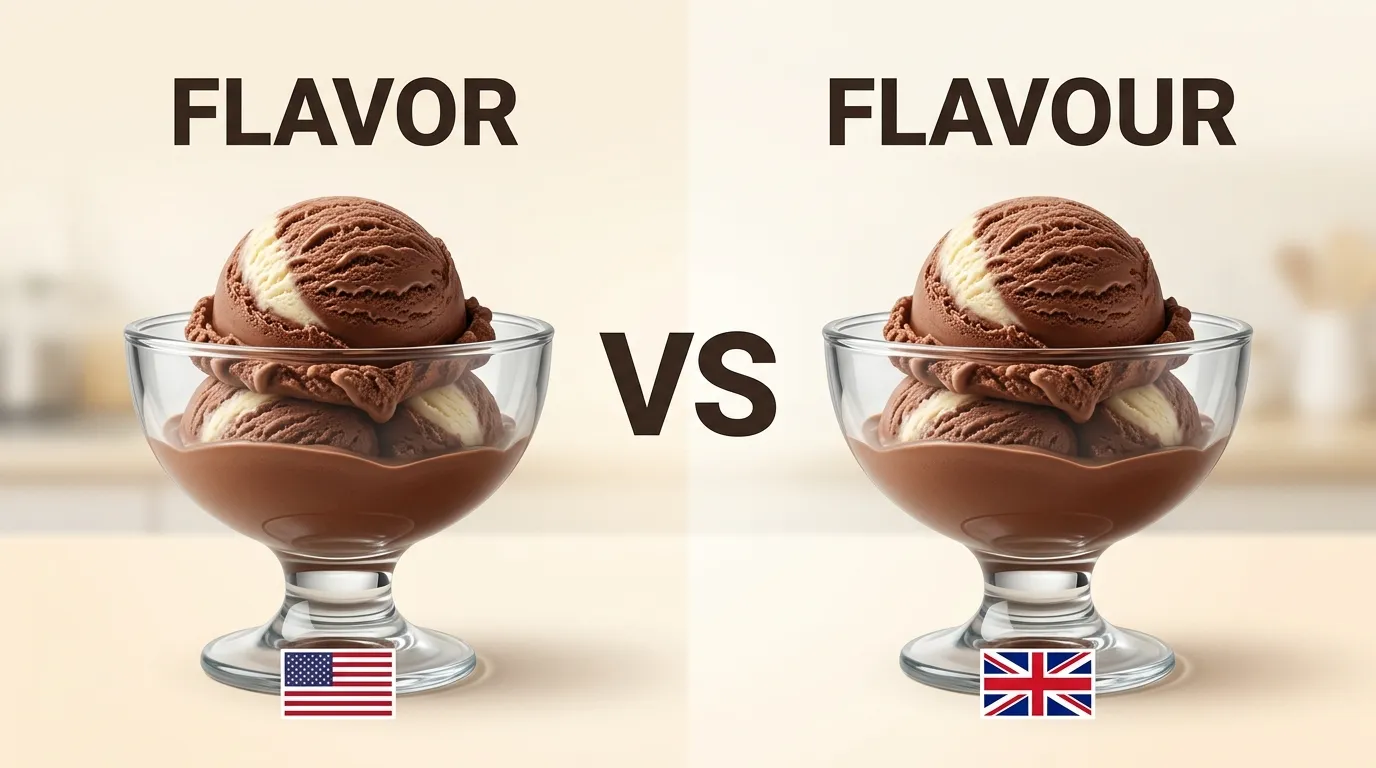
Flavor or flavour? Both words mean the taste or character of food and drinks. The only difference is spelling: flavor is American English, while flavour is British English.
I still remember reviewing an article written by one of my English students. In one paragraph, they used flavor, and a few lines later, they wrote flavour. The writing was good, but the mixed spelling made it look inconsistent.
This is a common issue for English learners, bloggers, students, and even professional writers. Both spellings are correct. Both appear in dictionaries. Yet many people are unsure which one to use.
The confusion comes from the differences between American and British English. Similar spelling variations exist with words like color and colour, honor and honour, and favorite and favourite.
The good news is that choosing the right version is simple once you understand the rule.
In this guide, you’ll learn the difference between flavor and flavour, where each spelling is used, common mistakes to avoid, and how to choose the best option for your audience.
Flavor or Flavour : Quick Answer
The meaning is exactly the same.
- Flavor = American English spelling.
- Flavour = British English spelling.
Examples
✅ The ice cream has a rich chocolate flavor.
✅ The soup has a wonderful flavour.
✅ This snack comes in several flavors.
✅ The restaurant is known for its unique flavours.
The choice depends on the type of English you are using.
The Origin / Background of Flavor or Flavour
The word comes from the Old French word flaour, which referred to smell, taste, or aroma.
As English developed, many words adopted spellings influenced by French traditions. This is why words ending in -our became common in British English.
Later, American lexicographer Noah Webster promoted spelling reforms. He simplified many words by removing the letter u.
Examples include:
- Colour → Color
- Honour → Honor
- Favourite → Favorite
- Flavour → Flavor
Over time, the simplified forms became standard in the United States, while the traditional forms remained standard in the United Kingdom and many Commonwealth countries.
Today, both spellings are correct. The key is consistency.
Flavor or Flavour Explained : Key Differences
There is no difference in meaning or pronunciation.
The only distinction is regional spelling.
| Term | Meaning | When to Use | Region/Context |
| Flavor | Taste, aroma, or character | American English writing | United States |
| Flavour | Taste, aroma, or character | British English writing | UK, Australia, New Zealand, etc. |
Flavor
Use flavor when writing for an American audience.
Examples:
- The coffee has a strong flavor.
- Which ice cream flavor do you prefer?
- The sauce adds extra flavor.
Flavour
Use flavour when writing for a British audience.
Examples:
- The tea has a delicate flavour.
- This dish offers a unique flavour.
- The chef enhanced the flavour of the soup.
Easy Memory Trick
Think of:
- Flavor = America
- Flavour = Britain
If you are writing for the United States, drop the u.
If you are writing for the United Kingdom, keep the u.
Which Version Should You Use?
Your audience should decide.
For Students
Follow the spelling style required by your school, teacher, or exam board.
For Bloggers
If your audience is mostly American, use flavor.
If your audience is mainly British, use flavour.
For Businesses
Match the spelling to your target market.
Examples:
- U.S. food brand → Flavor
- UK restaurant website → Flavour
For Global Audiences
Either version works.
However, choose one style and stay consistent throughout the content.
Mixing both spellings in the same article can look unprofessional.
Common Mistakes with Flavor or Flavour
Mistake 1
❌ Using both spellings in one article.
✅ Choose one spelling style and use it consistently.
Why?
Consistency improves readability and professionalism.
Mistake 2
❌ Thinking one spelling is wrong.
✅ Both spellings are correct.
Why?
They belong to different English varieties.
Mistake 3
❌ Changing spelling based on random preference.
✅ Match spelling to your audience.
Why?
Readers expect familiar language conventions.
Mistake 4
❌ Using British spelling on a U.S.-focused website.
✅ Use flavor for American audiences.
Why?
It aligns with local expectations.
Mistake 5
❌ Assuming pronunciation changes.
✅ Pronunciation remains essentially the same.
Why?
The difference is visual, not spoken.
Flavor or Flavour in Real-World Examples
Professional Email
“We are introducing a new vanilla flavor next month.”
News Headline
“Local Bakery Launches Seasonal Pumpkin Spice Flavour“
Social Media Post
“This new coffee flavor is amazing!”
Formal Report
“Customer surveys showed strong demand for additional product flavours.”
Product Packaging
“Natural strawberry flavor.”
Restaurant Menu
“Rich garlic butter flavour with herbs.”
Flavor or Flavour : Data, Trends & Usage
The keyword flavor or flavour receives consistent search interest because many English learners want to know which spelling is correct.
Search Intent
Primary search intent:
Informational
Users want to understand spelling differences and usage rules.
Audiences Most Interested
- Students
- English learners
- Bloggers
- Copywriters
- Editors
- Content marketers
Regions Most Interested
Flavor is dominant in:
- United States
Flavour is dominant in:
- United Kingdom
- Australia
- New Zealand
- Ireland
- South Africa
Why This Matters Today
Online content reaches global audiences.
Using the right spelling helps build trust, improves consistency, and matches reader expectations.
Flavor or Flavour Comparison Table
| Term/Variant | Meaning | Region/Context | Best Used When |
| Flavor | Taste or character of food | American English | Writing for U.S. audiences |
| Flavour | Taste or character of food | British English | Writing for UK and Commonwealth audiences |
| Flavors | Plural American form | American English | Discussing multiple tastes |
| Flavours | Plural British form | British English | Discussing multiple tastes |
Frequently Asked Questions
Q: What does flavor mean?
A: Flavor means the taste, aroma, or distinctive character of food, drinks, or other experiences.
Q: What does flavour mean?
A: Flavour has exactly the same meaning as flavor. It is simply the British English spelling.
Q: How do you use flavor correctly?
A: Use flavor when writing in American English. Example: “The cake has a delicious flavor.”
Q: Flavor vs flavour : what’s the difference?
A: There is no difference in meaning. The distinction is only regional spelling.
Q: Is flavor acceptable in formal writing?
A: Yes. Flavor is the standard spelling in American English and is widely accepted in formal writing.
Q: Which version is correct : flavor or flavour?
A: Both are correct. Choose the version that matches your audience and language style.
Q: Where does flavor come from?
A: The word originated from Old French and evolved into different spelling conventions in British and American English.
Q: Can flavor and flavour be used in business writing?
A: Yes. Use the spelling that matches the audience or market you are targeting.
Conclusion
The debate over flavor or flavour is not about right versus wrong. Both spellings are correct and widely accepted.
Remember these key points:
- Flavor is the American English spelling.
- Flavour is the British English spelling.
- The meaning and pronunciation are the same.
- Consistency matters more than the specific version you choose.
When writing for American readers, use flavor. When writing for British readers, use flavour. For international audiences, either option works as long as you stay consistent throughout your content.
A single letter may seem small, but it can influence how professional and polished your writing appears.
Now you know exactly how to use flavor or flavour. Bookmark this guide so you never second-guess the spelling again, and share it with anyone confused by English spelling differences.
Read More: Llama or Alpaca: What’s the Difference?

Professional content writer delivering insightful, accurate, and reader-friendly articles across multiple niches with a focus on quality and value.