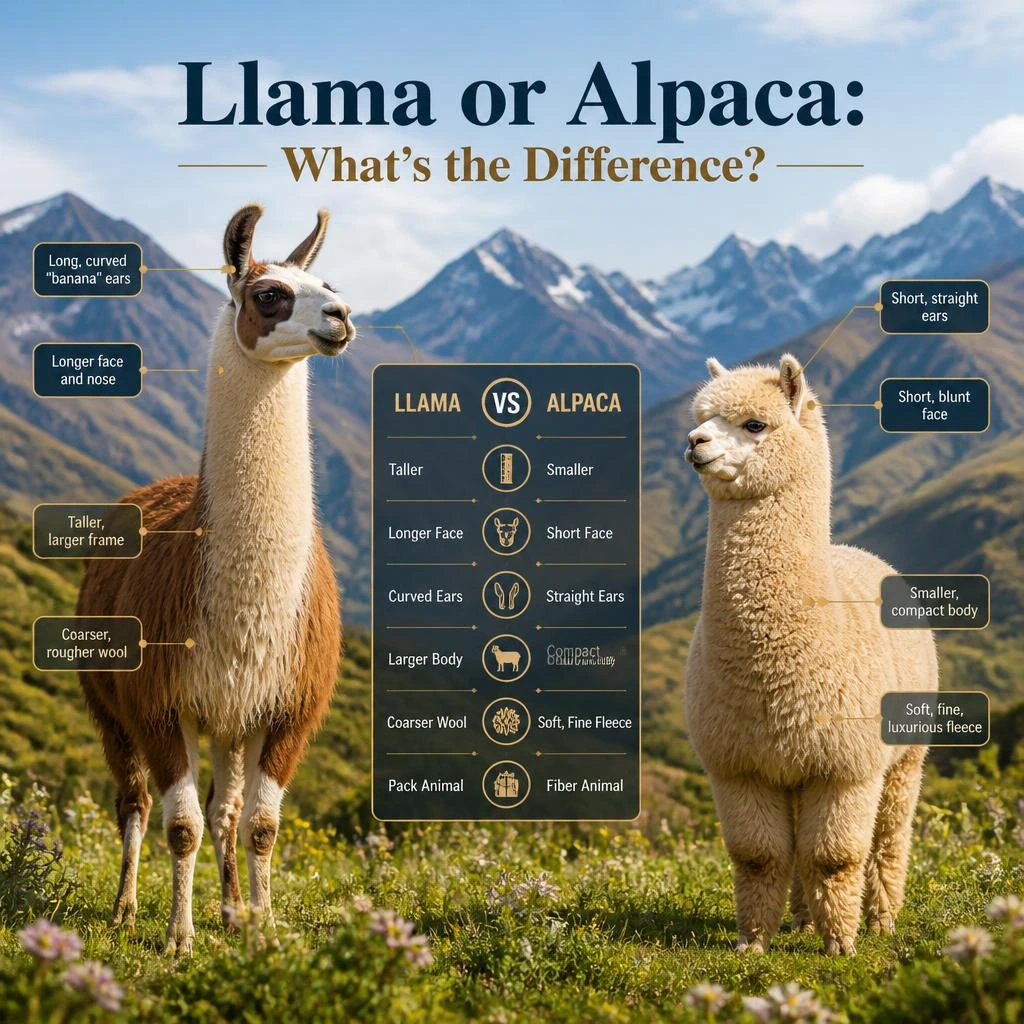
A llama is a large, domesticated South American animal known for its long face, larger size, and curved ears. It is mainly used to carry heavy loads and as a pack animal in the Andes. An alpaca is a smaller, gentle South American animal raised mainly for its soft, warm, and high-quality wool. It has a shorter face, straight ears, and is valued for its fleece.
Have you ever looked at a fluffy South American animal and wondered whether it was a llama or an alpaca? You are not alone. Many people search for “llama or alpaca” because these animals look similar at first glance. Both belong to the camel family, both come from the Andes Mountains, and both have soft woolly coats.
The confusion often happens because llamas and alpacas share a common history and appearance. However, they are different animals with different sizes, personalities, and uses. Knowing the difference can help when reading articles, visiting farms, talking about animals, or creating educational content.
This guide explains the key differences between llamas and alpacas in simple language. You will learn their origins, physical traits, common uses, and how people refer to them in different English-speaking countries. By the end, you will know exactly when to use “llama” and when to use “alpaca.”
Llama or Alpaca: Quick Answer✍🏻
A llama is larger, stronger, and often used as a pack animal.
An alpaca is smaller and mainly raised for its soft, valuable fleece.
Examples
- The farmer used a llama to carry supplies across the mountain trail.
- The sweater was made from soft alpaca wool.
Quick Comparison
| Feature | Llama | Alpaca |
| Size | Larger | Smaller |
| Weight | 250–450 lbs | 100–200 lbs |
| Ears | Long, banana-shaped | Short, pointed |
| Main Use | Carrying loads | Producing fleece |
| Face | Longer | Shorter and flatter |
📚The Origin of Llama or Alpaca
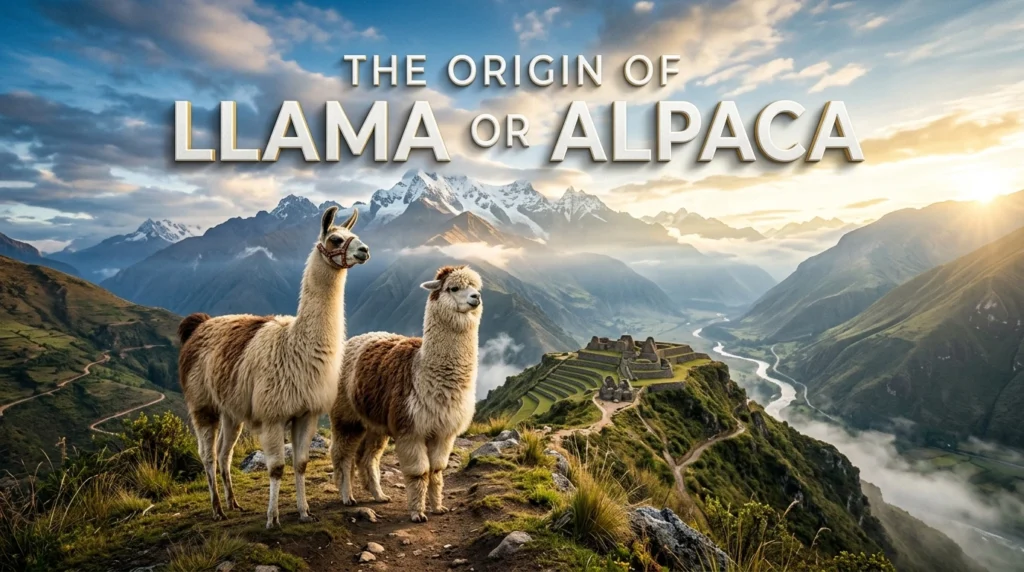
The words “llama” and “alpaca” come from the languages spoken by Indigenous peoples of South America.
Llama
The word llama comes from the Quechua language, spoken by the ancient Inca people. Llamas were domesticated thousands of years ago and were used to transport goods across mountain regions.
Alpaca
The word alpaca likely comes from the Aymara language. Alpacas were bred mainly for their soft fleece, which remains one of the most prized natural fibers in the world.
Unlike many English word pairs, there are no spelling differences between llama and alpaca. They are names for two different animals rather than alternate spellings of the same word.
British English vs American English Spelling📖
Unlike words such as “color” and “colour,” the names llama and alpaca are spelled the same in both British and American English.
Comparison Table
| English Variant | Llama | Alpaca |
| American English | Llama | Alpaca |
| British English | Llama | Alpaca |
| Canadian English | Llama | Alpaca |
| Australian English | Llama | Alpaca |
Examples
American English
- The zoo recently welcomed a new llama.
British English
- The farm keeps several alpacas for wool production.
The spelling remains unchanged worldwide.
See more:Proved or Proven: The Complete Guide to Correct Usage
Which Spelling Should You Use?
Since there are no spelling variations, choosing the correct word depends on the animal you are describing.
Use “Llama” When:
- Talking about pack animals
- Describing larger camelids
- Referring to animals with long curved ears
Use “Alpaca” When:
- Talking about fleece production
- Describing smaller camelids
- Referring to animals with fluffy wool
Audience-Based Advice
| Audience | Recommended Usage |
| United States | Use the correct animal name |
| United Kingdom | Use the correct animal name |
| Australia | Use the correct animal name |
| Global Audience | Use llama or alpaca based on the animal discussed |
⚠️Common Mistakes with Llama or Alpaca
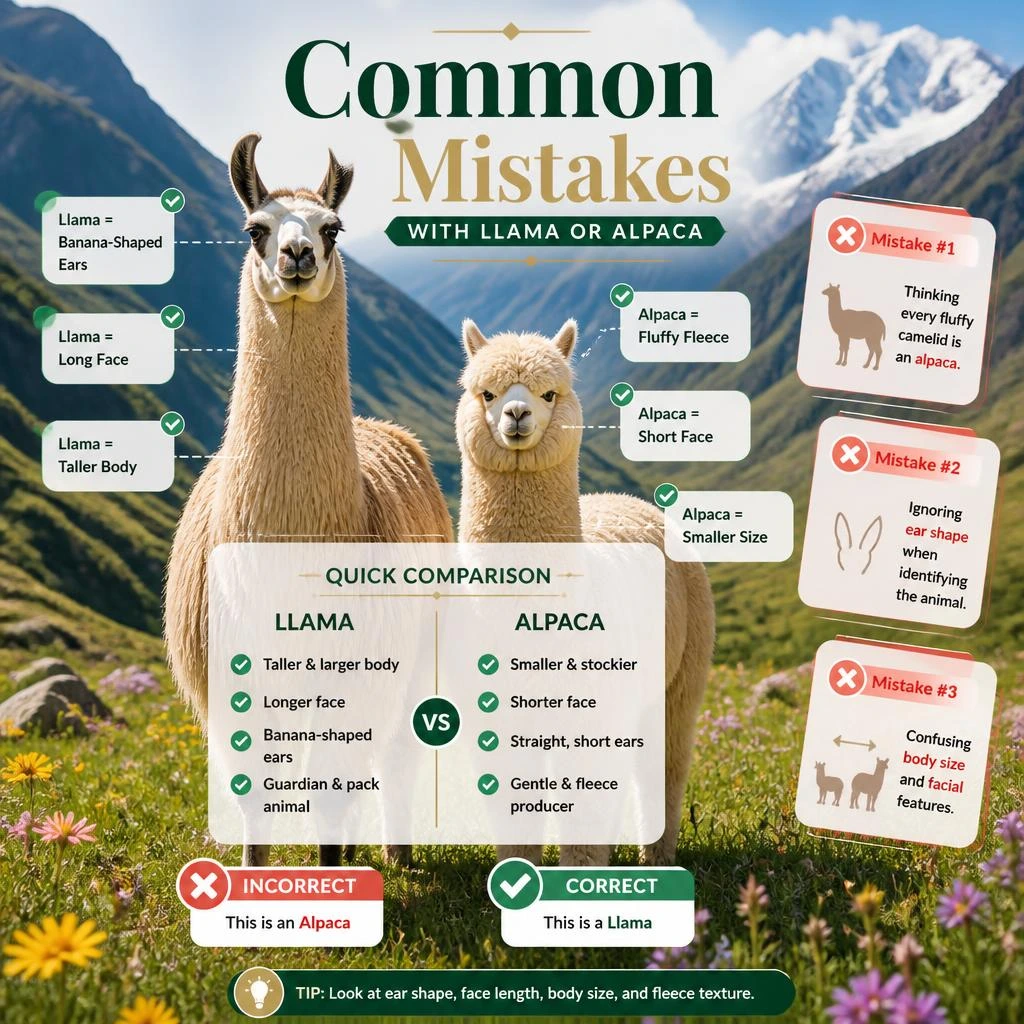
Many people confuse these animals because they look similar.
Mistake #1: Calling Every Woolly Camelid an Alpaca
❌ That llama has very soft fleece.
✅ That alpaca has very soft fleece.
Mistake #2: Using Alpaca for Pack Animals
❌ The alpaca carried supplies up the mountain.
✅ The llama carried supplies up the mountain.
Mistake #3: Assuming They Are the Same Animal
❌ Llamas and alpacas are identical.
✅ Llamas and alpacas are related but different species.
Llama or Alpaca in Everyday Examples
“Our farm recently added two alpacas to improve fleece production.”
News Article
“A local hiking company uses llamas to carry equipment on mountain trails.”
Social Media
“Just met the cutest alpaca today!”
Formal Writing
“The llama remains an important pack animal throughout many Andean regions.”
Llama or Alpaca: Google Trends & Usage Data📉
Search interest for llamas and alpacas often rises when people:
- Visit petting zoos
- Research farm animals
- Shop for alpaca wool products
- Learn about South American wildlife
General Usage Trends
| Country | More Common Search |
| United States | Alpaca |
| United Kingdom | Alpaca |
| Australia | Alpaca |
| Peru | Llama |
| Bolivia | Llama |
Alpaca searches are often connected to clothing and wool products. Llama searches are commonly related to tourism, hiking, and animal facts.
Llama vs Alpaca Comparison Table
| Characteristic | Llama | Alpaca |
| Scientific Name | Lama glama | Vicugna pacos |
| Height | Taller | Shorter |
| Weight | Heavier | Lighter |
| Ears | Banana-shaped | Straight and short |
| Fiber Quality | Coarser | Softer |
| Purpose | Pack animal | Fiber production |
| Temperament | Independent | Herd-oriented |
FAQs
1. What is the main difference between a llama and an alpaca?
Llamas are larger and used as pack animals, while alpacas are smaller and raised mainly for fleece.
2. Which animal has softer wool?
Alpacas have softer and finer fleece than llamas.
3. Are llamas and alpacas related?
Yes. Both belong to the camelid family.
4. Can llamas and alpacas live together?
Yes. They often live together on farms.
5. Which animal is bigger?
Llamas are significantly larger than alpacas.
6. Do llamas and alpacas spit?
Yes. Both animals can spit, usually when annoyed or stressed.
7. Is alpaca wool expensive?
Yes. Alpaca fleece is highly valued because it is soft, warm, and durable.
🎯Conclusion
Understanding the difference between a llama and an alpaca is easier than many people think. Although both animals belong to the camelid family and come from South America, they serve different purposes and have distinct physical traits. Llamas are larger, stronger, and traditionally used as pack animals. Alpacas are smaller and are famous for their exceptionally soft fleece.
Unlike many English word comparisons, there is no British or American spelling difference between llama and alpaca. The key is simply choosing the correct animal’s name based on what you are describing. If you are talking about carrying loads, a llama is usually the right choice. If you are discussing wool, clothing, or fleece production, alpaca is generally correct.
By understanding these differences, you can write more accurately, communicate more clearly, and avoid common mistakes. Whether you are a student, writer, traveler, or animal lover, knowing when to use “llama” or “alpaca” helps ensure your message is both correct and professional.
See more:Miralax or Metamucil: Which Works Best?

I am an English author, language explorer dedicated to analyzing words, phrases, and idioms. Through my writing, I uncover subtle language differences and help readers improve their communication skills. My content helps readers navigate English with clarity and confidence.