
Yay” means yes, approval, excitement, or agreement, while “nay” means no, refusal, or disagreement.
A few years ago, I was editing a student paper when I noticed something odd. The student wrote, “I vote yay,” in one sentence and then asked if “nay” was just a misspelling of “no.”
That question comes up more often than you might think.
Many people hear the phrase “yay or nay” in movies, meetings, social media posts, and even government voting. Yet they are not always sure what these words mean or when to use them. Some wonder if “yay” is simply a happy cheer. Others think “nay” sounds old-fashioned and no longer belongs in modern English.
The truth is that both words are still useful today. They have clear meanings and appear in many situations, from casual conversations to formal votes.
If you have ever paused before writing “nay” or “yay,” this guide will clear up the confusion. By the end, you will know what each word means, where it came from, and exactly when to use it.
Let’s get started.
Nay or Yay : Quick Answer
Yay expresses approval, agreement, happiness, or support.
Nay expresses disagreement, refusal, or opposition.
Examples
- “Should we order dessert?” ……….Yay!
- “Do you want to cancel the trip?”……Nay.
A simple way to remember:
- Yay = Yes
- Nay = No
The Origin ; Background of Nay or Yay
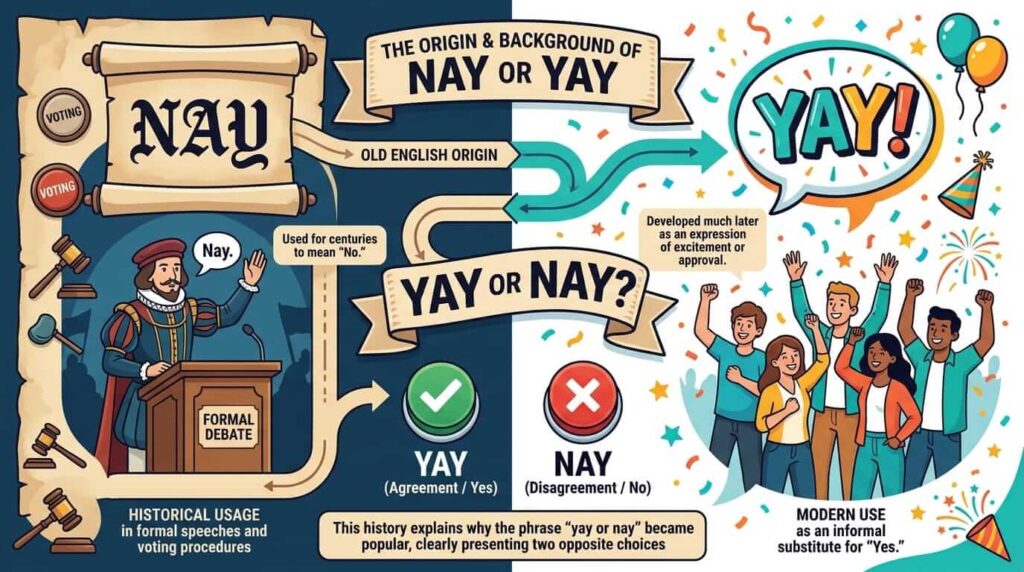
The word nay is much older than most people realize.
It comes from Old English and has been used for centuries to mean “no.” Historically, it appeared in formal speeches, debates, and voting procedures.
The word yay developed much later. It became popular as an expression of excitement, celebration, or approval. Over time, people also started using it as an informal substitute for “yes.”
This history explains why the two words often appear together today.
The phrase “yay or nay” became popular because it sounds catchy and clearly presents two opposite choices.
One means agreement.
The other means disagreement.
Nay or Yay Explained : Key Differences or Variations
Although these words are opposites, they are used in different ways.
| Term | Meaning | When to Use | Region/Context |
| Yay | Yes, approval, excitement | Casual conversations, votes, celebrations | Common worldwide |
| Nay | No, refusal, disagreement | Formal votes, debates, discussions | More formal or traditional |
Example of Yay
- “Yay! We passed the exam.”
- “The team voted yay on the proposal.”
Example of Nay
- “The board voted nay on the budget.”
- “I say nay to that idea.”
The biggest difference is tone.
Yay sounds positive and enthusiastic.
Nay sounds formal and negative.
Which Version Should You Use?
The right choice depends on your audience and situation.
For Students
Use yay when showing excitement or agreement.
Example:
- “Yay! School is closed tomorrow.”
Use nay when discussing voting or formal decisions.
For Writers
Use yay in casual content, blogs, and social posts.
Use nay when describing opposition or rejection.
For Business Professionals
Use nay when referring to official votes or decisions.
Use yay only if the tone is informal.
For Global Audiences
Use yay and nay together when presenting two options.
Example:
- “Leave your yay or nay vote below.”
This phrase is widely understood.
Common Mistakes with no or yes
Many writers make the same errors.
Mistake 1
❌ “Nay means yes.”
✅ “Nay means no.”
Why?
The word has always represented disagreement.
Mistake 2
❌ “Yay means maybe.”
✅ “Yay means yes or approval.”
Why?
It expresses support or excitement.
Mistake 3
❌ “Nay is outdated and never used.”
✅ “Nay is still used in voting and debates.”
Why?
Many organizations continue to use it officially.
Mistake 4
❌ “Yay and yeah mean exactly the same thing.”
✅ They are similar but not identical.
Why?
“Yeah” is a casual version of yes.
“Yay” often shows excitement.
Mistake 5
❌ “Use nay in every negative response.”
✅ Use “no” in everyday conversation.
Why?
“Nay” sounds more formal and traditional.
Liter or Litre: Which Spelling Should You Use?
Nay or Yay in Real-World Examples
Professional Email
“Please reply with a yay or nay regarding the proposed meeting date.”
News Headline
“City Council Votes Nay on New Tax Proposal”
Social Media Post
“New logo design is ready!”
Formal Report
“The committee recorded seven yay votes and three nay votes.”
These examples show how flexible the words can be.
Nay or Yay : Data, Trends & Usage
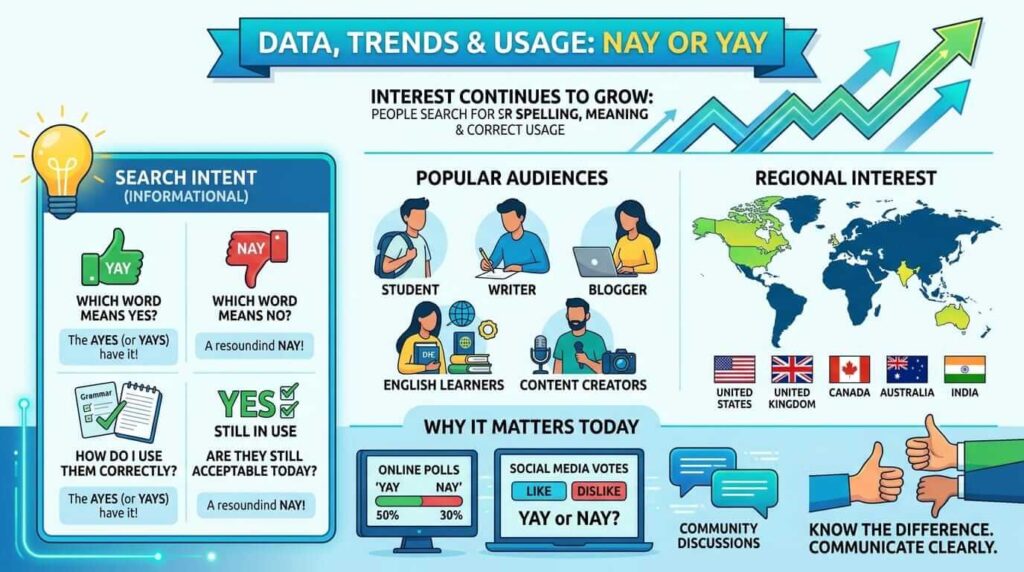
Interest in “nay or yay” continues to grow because people often search for spelling, meaning, and correct usage.
Search Intent
The primary search intent is:
Informational
People want to know:
- Which word means yes?
- Which word means no?
- How do I use them correctly?
- Are they still acceptable today?
Popular Audiences
The topic is commonly searched by:
- Students
- Writers
- Bloggers
- English learners
- Content creators
Regional Interest
Interest comes from:
- United States
- United Kingdom
- Canada
- Australia
- India
Why It Matters Today
Online polls, social media votes, and community discussions often use the phrase “yay or nay.”
Knowing the difference helps you communicate clearly.
Nay or Yay Comparison Table
| Term/Variant | Meaning | Region/Context | Best Used When |
| Yay | Approval, agreement, excitement | Informal and general use | Expressing support or happiness |
| Nay | Refusal, disagreement, opposition | Formal votes and discussions | Showing rejection or opposition |
Frequently Asked Questions
Q: What does nay or yay mean?
A: “Yay” means yes or approval. “Nay” means no or disagreement. Together, they represent opposite choices.
Q: How do you use nay or yay correctly?
A: Use yay when showing support or excitement. Use nay when expressing opposition or rejection.
Q: Nay or no ; what’s the difference?
A: Both mean a negative response. However, nay sounds more formal and is often used in voting contexts.
Q: Is nay acceptable in formal writing?
A: Yes. It is commonly used in reports, meeting minutes, legislative voting records, and official decisions.
Q: Which version is correct : nay or yay?
A: Both are correct. They simply have opposite meanings. Yay means yes, while nay means no.
Q: Where does nay come from?
A: Nay comes from Old English and has been used for centuries as a formal way to say no.
Q: Can yay be used in professional communication?
A: Yes, but only in casual settings. Formal documents usually use words such as “approve” or “agree.”
Conclusion
The difference between nay and yay is simple once you know what each word represents.
Remember these key points:
- Yay means yes, approval, or excitement.
- Nay means no, disagreement, or rejection.
- Both words remain correct in modern English.
- The phrase “yay or nay” is a popular way to ask for an opinion or vote.
When writing casually, yay adds energy and enthusiasm. When discussing formal decisions, nay remains a useful and respected term.
Nay or yay explained: meanings, correct usage, examples, differences, and tips to choose the right word every time.
Sent vs Send: A Simple Trick to Never Mix Them Up Again

As an English language enthusiast, I love diving into the tricky details of word differences and spelling variations. My mission is to explain confusing terms and make them accessible to everyone, helping readers to communicate with clarity and confidence.