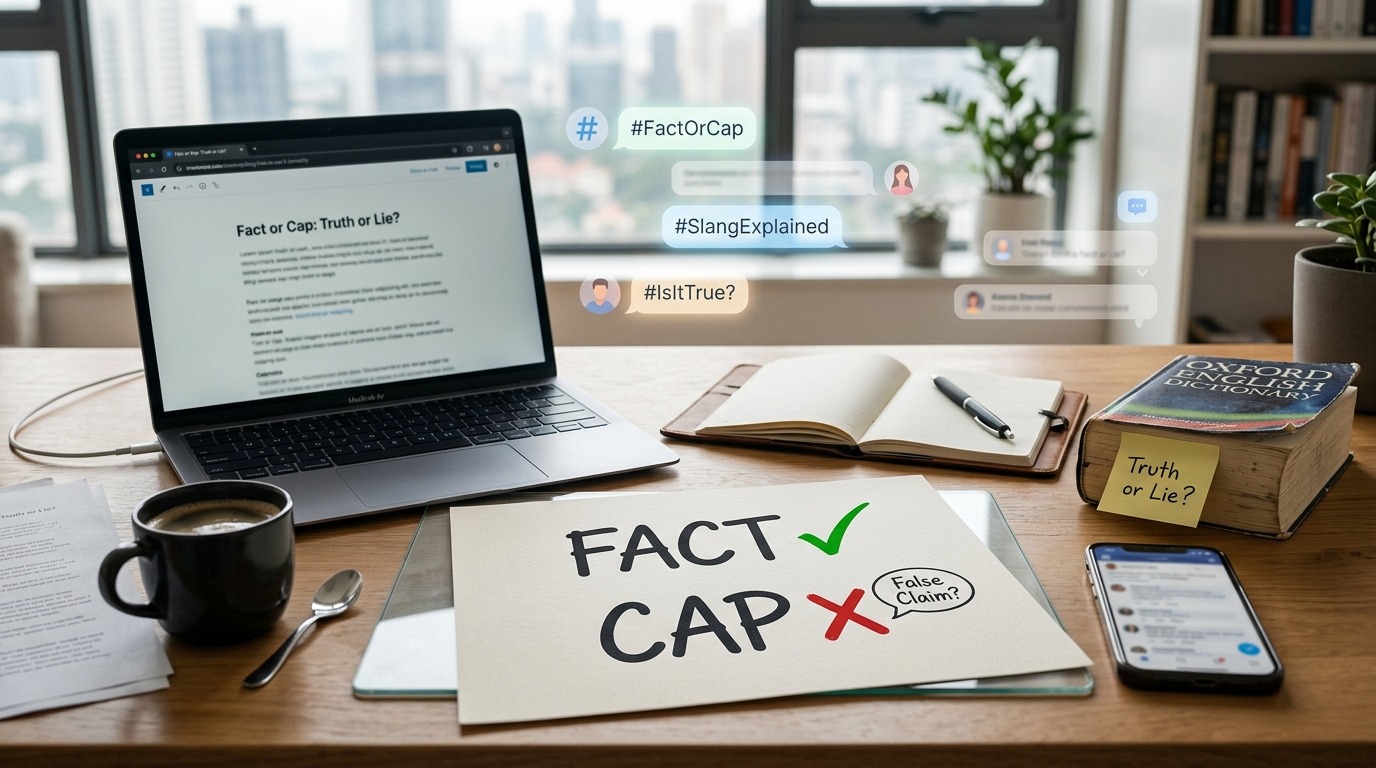
Quick Answer: Fact means something that is true and can be proven with evidence. Cap is modern slang that means a lie, exaggeration, or something that is not true. Use fact in formal writing and cap only in casual conversations or on social media.
Have you ever heard someone say, “That’s cap,” and wondered what they meant? I remember the first time I saw the phrase “Fact or Cap?” in a social media post. At first, I thought it was a typing mistake. After asking a younger colleague, I discovered that cap is popular internet slang for “lie” or “false statement.” Since then, I’ve noticed it everywhere—from TikTok videos to YouTube comments and text messages.
Many English learners and even native speakers get confused because fact is a standard English word, while cap is informal slang. Knowing the difference helps you avoid awkward mistakes, especially when switching between professional writing and casual conversations.
By the end of this guide, you’ll know exactly what fact and cap mean, when to use each one, common mistakes to avoid, and real-world examples that make the difference easy to remember.
Fact or Cap – Quick Answer
A fact is something that is true, accurate, and supported by evidence. Cap means a lie or an exaggeration in modern slang.
Examples
- “The Earth revolves around the Sun.” → Fact
- “I can run 100 miles without stopping.” → Probably Cap
The Origin and Background of Fact or Cap
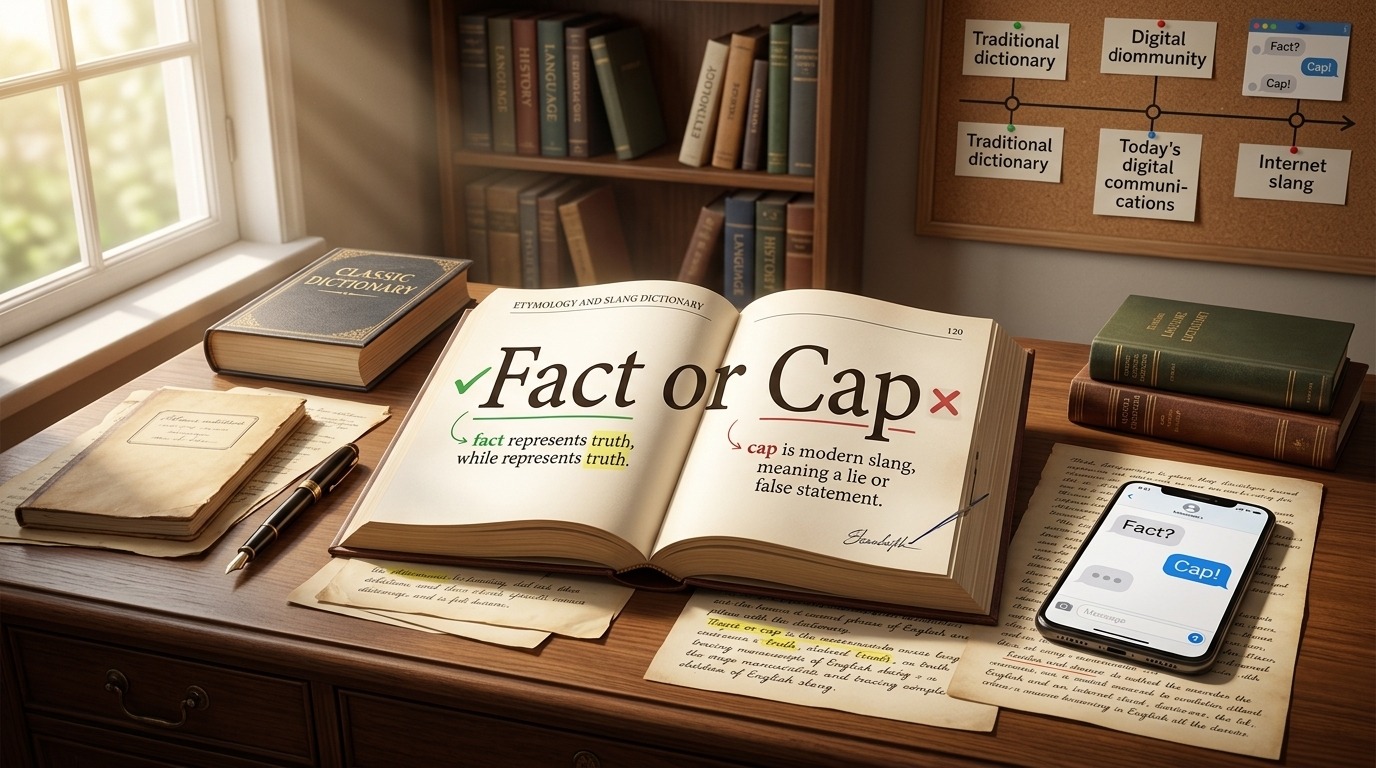
The word fact comes from the Latin factum, meaning “something done” or “a deed.” Over time, it came to mean information that is real and can be verified.
The slang word cap became popular in American hip-hop culture before spreading through social media platforms like TikTok, Instagram, Snapchat, and X. Today, people use cap to call out statements they believe are false or exaggerated.
The phrase “Fact or Cap?” simply asks whether a statement is true or a lie.
Fact or Cap Explained — Key Differences
| Term | Meaning | When to Use | Region/Context |
|---|---|---|---|
| Fact | Something true and provable | Formal and informal writing | Worldwide |
| Cap | A lie or exaggeration | Casual conversations, texting, social media | Internet slang |
Examples
Fact
- Water boils at 100°C at sea level.
- Reading regularly improves vocabulary.
Cap
- I finished ten books in one hour.
- That story sounds like cap.
Which Version Should You Use?
For Students
Use fact in homework, essays, reports, and exams because teachers expect standard English.
For Professionals
Always use fact, false, or incorrect in emails, reports, and workplace communication. Avoid slang like cap.
For Social Media Users
Cap is perfectly acceptable in casual posts, memes, gaming chats, and conversations with friends.
For Global Communication
Choose fact whenever you’re unsure. It is understood everywhere and works in every setting.
Common Mistakes with Fact or Cap
Mistake 1
❌ The report is cap.
✅ The report is false.
Why? Slang is inappropriate in professional writing.
Mistake 2
❌ That’s a fact. (When the statement is clearly false.)
✅ That’s cap.
Why? Don’t call something a fact unless it can be verified.
Mistake 3
❌ Cap means hat in this sentence.
✅ Cap means “lie” only when used as slang.
Why? The meaning depends on the context.
Mistake 4
❌ Fact and cap are synonyms.
✅ They have opposite meanings.
Fact or Cap in Real-World Examples
Professional Email
After reviewing the evidence, we confirmed the facts before publishing the report.
News Headline
Scientists Confirm New Facts About Climate Patterns
Social Media Post
No way you met that celebrity yesterday. That’s cap.
Formal Report
All facts included in this document have been independently verified.
Fact or Cap — Data, Trends & Usage
The phrase “Fact or Cap” is searched most often by:
- Teenagers
- College students
- English learners
- Social media users
- Content creators
Search Intent
Informational
People usually want to know what the phrase means and whether cap is proper English.
Why It Matters Today
As internet slang becomes more common, understanding words like cap helps you communicate naturally online while knowing when to switch to formal English.
Standalone Comparison Table
| Term | Meaning | Region/Context | Best Used When |
|---|---|---|---|
| Fact | A true statement supported by evidence | Global English | School, work, journalism, research |
| Cap | A lie or exaggeration (slang) | Internet and social media | Texting, memes, casual conversations |
Frequently Asked Questions
Q: What does “Fact or Cap” mean?
A: It asks whether a statement is true (fact) or a lie/exaggeration (cap).
Q: Is “cap” a real English word?
A: Yes. It is modern slang widely used online, but it is not suitable for formal writing.
Q: What does “no cap” mean?
A: No cap means “I’m telling the truth” or “I’m being honest.”
Q: Can I use “cap” in business emails?
A: No. Use words like false, incorrect, or untrue instead.
Q: Is “Fact or Cap” grammatically correct?
A: Yes. It’s a popular slang expression asking whether something is true or false.
Q: What’s the difference between “fact” and “truth”?
A: A fact is something that can be proven with evidence. Truth is a broader concept that refers to what is real or accurate.
Q: Can adults use the word “cap”?
A: Yes. Anyone can use it in casual conversations, but it should be avoided in professional or academic settings.
Conclusion
Understanding the difference between fact and cap is simple once you know their meanings. A fact is something that is true and supported by evidence, while cap is slang for a lie or exaggeration. The right choice depends on your audience. Use fact in school, work, and professional writing. Save cap for conversations with friends or social media posts.
Learning modern slang is useful, but knowing when not to use it is just as important. When in doubt, choose standard English for clear and professional communication.
Now you know exactly how to use fact and cap correctly. Bookmark this guide so you never second-guess the phrase “Fact or Cap” again, and share it with someone who’s curious about modern internet slan
Fact or Cap: The Complete Guide to Meaning, Usage, and Differences

I am an English language enthusiast who enjoys exploring word differences and spelling variations.
My work focuses on making confusing English terms easier to understand for everyday readers.
I believe clear language helps people communicate with confidence.