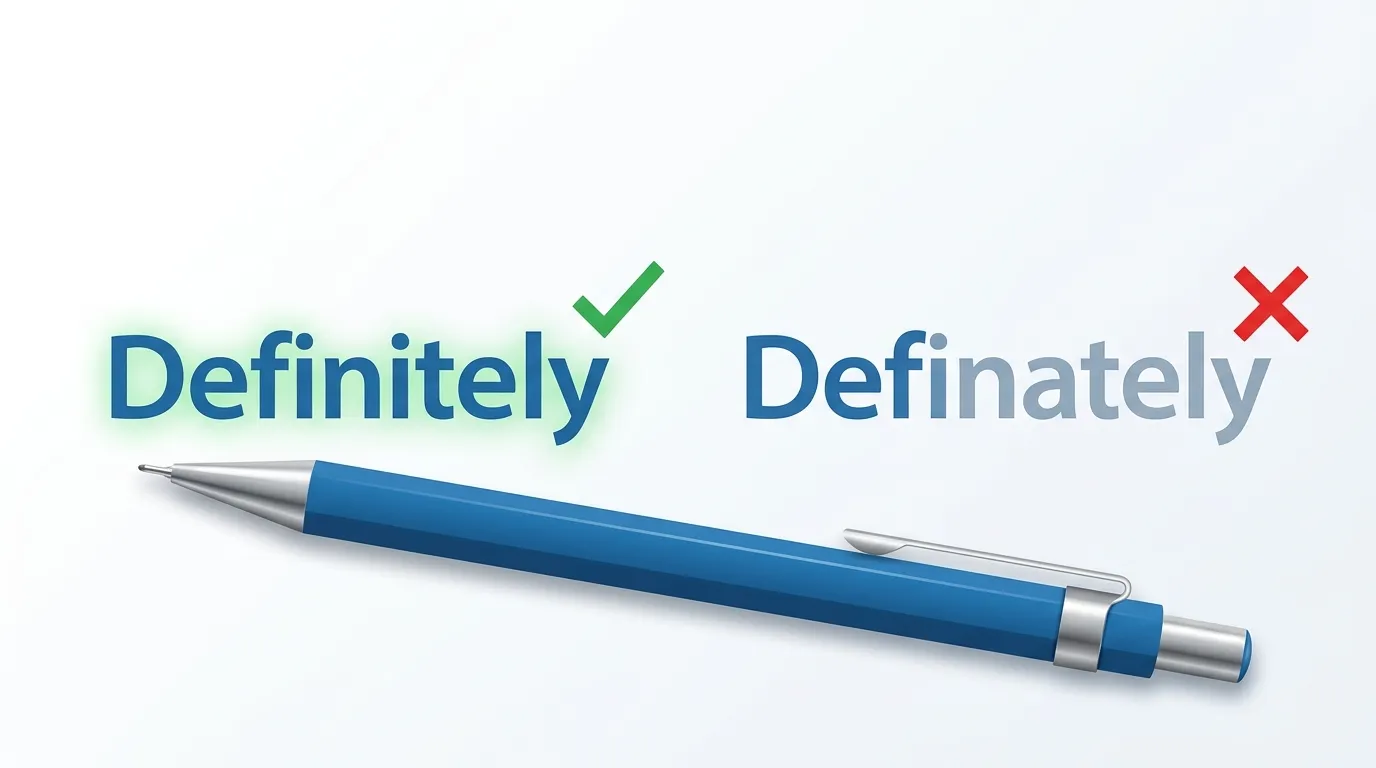
Definitely is the correct spelling. Definately is a common misspelling and should be avoided in all types of writing, from texts to formal documents.
A few years ago, I was proofreading an important email before sending it to a client. Everything looked perfect. Then I noticed one small mistake: I had written “definately” instead of “definitely.”
It seemed like a tiny error. Yet it instantly made the message look less professional.
If you’ve ever paused while typing this word, you’re not alone. In fact, “definitely” is one of the most commonly misspelled words in English. Many people write “definately” because it sounds similar when spoken aloud.
That confusion is exactly why so many people search for “definitely or definately.” They want to know which spelling is right and how to remember it.
The good news is that the answer is simple. Once you understand where the mistake comes from, you’ll be much less likely to make it again.
Let’s clear up the confusion once and for all.
Definitely or Definately: Quick Answer
The correct spelling is definitely.
The spelling definately is incorrect and is considered a spelling mistake in standard English.
Examples
✅ I will definitely attend the meeting.
✅ She is definitely the best candidate for the job.
❌ I will definately attend the meeting.
❌ She is definately the best candidate.
A simple memory trick is this:
Definitely = definite + ly
The word comes from definite, not definate.
The Origin / Background of Definitely or Definately
The word definitely comes from the adjective definite.
The term definite has roots in the Latin word definitus, which means “limited,” “fixed,” or “clearly determined.”
When the suffix ly is added to definite, it becomes definitely, meaning:
- Certainly
- Without doubt
- Clearly
- Absolutely
Why Does the Confusion Exist?
The confusion happens because English pronunciation can be tricky.
When people say “definitely” quickly, it may sound like:
“definitly”
Some writers mistakenly assume there is an “a” sound in the middle and type definately.
Another reason is habit. Once someone sees the wrong spelling online, they may repeat it without realizing it is incorrect.
Definitely or Definately Explained: Key Differences
The difference is simple.
One spelling is correct.
The other is not.
| Term | Meaning | When to Use | Region/Context |
|---|---|---|---|
| Definitely | Certainly; without doubt | All writing situations | Worldwide English |
| Definately | Misspelling of definitely | Never | Incorrect spelling |
Example Sentences
Definitely
- I am definitely interested.
- We will definitely finish today.
- This is definitely worth reading.
Definately
- Considered incorrect in academic writing.
- Considered incorrect in business writing.
- Considered incorrect in exams and reports.
Which Version Should You Use?
The answer is easy.
For Students
Use definitely because teachers, examiners, and grading software recognize it as the correct spelling.
For Professionals
Use definitely in emails, reports, presentations, and business communication.
For Content Writers and Bloggers
Use definitely to maintain credibility and avoid spelling errors that may hurt reader trust.
For Social Media Users
Even in casual posts, definitely is the correct choice.
For Global English
Whether you use American English, British English, Canadian English, Australian English, or any other major variety, definitely is the standard spelling.
Recommendation: Always use definitely.
Common Mistakes with Definitely or Definately
Here are some frequent errors.
| Mistake | Correct Version |
|---|---|
| Definately | Definitely |
| Definatly | Definitely |
| Definetly | Definitely |
| Definatley | Definitely |
| Defanitely | Definitely |
Why These Mistakes Happen
1. Pronunciation Confusion
People spell the word based on how they hear it.
2. Typing Too Fast
Fast typing often causes letters to be dropped or rearranged.
3. Weak Word Association
Many writers forget that the base word is definite.
4. Autocorrect Dependence
Some people rely on spell check tools and never learn the correct spelling themselves.
5. Habit
A repeated mistake can become automatic over time.
Definitely or Definately in Real World Examples
Seeing the word in context helps you remember it.
Professional Email
Dear Sarah,
I will definitely complete the project by Friday.
Best regards,
Michael
News Headline
Experts Say Inflation Will Definitely Influence Consumer Spending
Social Media Post
I am definitely trying that new restaurant this weekend!
Formal Report
The findings definitely support further research into customer behavior.
Academic Essay
The evidence definitely suggests a strong relationship between the two variables.
Definitely or Definately: Data, Trends & Usage
Search Intent
The primary search intent is informational.
People want to know:
- Which spelling is correct
- Why the confusion exists
- How to remember the correct version
- Whether both spellings are acceptable
Who Searches for This Most?
Common audiences include:
- Students
- ESL learners
- Writers
- Bloggers
- Job seekers
- Professionals
Why Is It So Popular?
“Definitely” consistently appears on lists of the most misspelled English words.
The mistake happens because pronunciation does not clearly reveal the correct spelling.
Current Trend
As more communication happens online, spelling accuracy matters more than ever. Emails, social posts, resumes, and professional messages are often judged quickly. A simple spelling error can affect first impressions.
Why This Matters Today
Grammar checking tools are improving, but employers, teachers, and readers still notice obvious spelling mistakes. Learning the correct spelling helps you communicate with confidence.
Comparison Table
| Term/Variant | Meaning | Region/Context | Best Used When |
|---|---|---|---|
| Definitely | Certainly; without doubt | Standard English worldwide | Always |
| Definately | Misspelling of definitely | Incorrect usage | Never |
| Definetly | Misspelling of definitely | Incorrect usage | Never |
| Definatly | Misspelling of definitely | Incorrect usage | Never |
| Definatley | Misspelling of definitely | Incorrect usage | Never |
Frequently Asked Questions
Q: What does definitely mean?
A: Definitely means certainly, absolutely, or without any doubt. It is used when you want to express confidence about something.
Q: How do you use definitely correctly?
A: Use definitely when you want to show certainty. For example: “I will definitely be there tomorrow.”
Q: Definitely vs definately: what’s the difference?
A: Definitely is the correct spelling. Definately is a spelling mistake and should not be used in formal or informal writing.
Q: Is definitely acceptable in formal writing?
A: Yes. Definitely is perfectly acceptable in professional emails, academic papers, reports, and business communication.
Q: Which version is correct: definitely or definately?
A: Definitely is the only correct spelling. Dictionaries and style guides do not recognize definately as a standard word.
Q: Where does definitely come from?
A: It comes from the word definite, which has Latin roots. Adding ly creates the adverb definitely.
Q: Can definitely be used in business communication?
A: Yes. It is commonly used in emails, reports, presentations, and workplace conversations when expressing certainty.
Q: How can I remember the correct spelling?
A: Think of the phrase definite + ly = definitely. If you can spell definite, you can spell definitely.
Conclusion
The debate between definitely or definately has a very clear answer. Definitely is the correct spelling, while definately is a common mistake.
Remember these key points:
- Definitely means “certainly” or “without doubt.”
- Definately is not a correct English word.
- The correct spelling comes from definite + ly.
- Using the right spelling helps you appear more professional and credible.
The next time you hesitate while typing this word, think of the root word definite. That simple trick can save you from one of English’s most common spelling mistakes.
Now you know exactly how to use definitely correctly. Bookmark this guide so you never second guess definitely or definately again, and share it with someone who still gets caught by this tricky spelling.
Read more: Separate or Seperate: The Correct Spelling Explained

I am an English language writer dedicated to creating clear, accurate, and easy-to-understand content. My goal is to help readers build confidence in their language and communication skills.