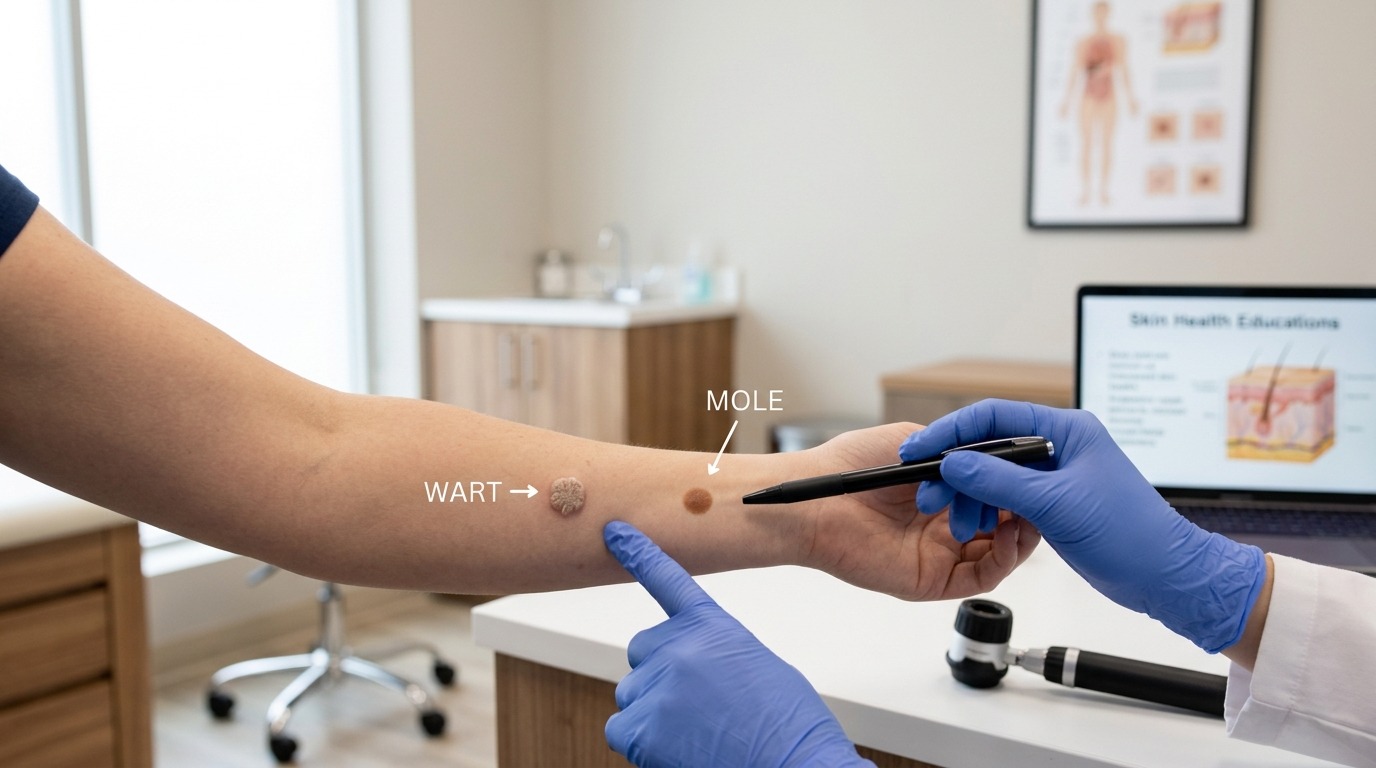
A wart is a rough, raised skin growth caused by a virus (HPV) and is contagious. A mole is a pigmented spot on the skin made of clustered skin cells and is not contagious. They look similar but have very different causes, risks, and treatments.
The Bump I Almost Ignored for Two Years
A few years ago, I noticed a small dark bump on my forearm. I assumed it was a mole something I’d had since childhood and never worried about. My doctor took one look and said, “That’s a wart. Completely different thing.”
I felt equal parts embarrassed and relieved. Embarrassed because I’d dismissed it. Relieved because I finally had an answer.
Most people can’t tell a wart from a mole at a glance. They’re both bumps on the skin. Both can be flat or raised. Both can appear almost anywhere on your body. But the causes, risks, and treatment options are completely different and confusing the two can mean ignoring something that needs attention.
This guide breaks down exactly what separates a wart from a mole. You’ll know what to look for, when to see a doctor, and what to do next.
Wart or Mole : Quick Answer
Here’s the core difference in plain language.
- Wart a rough, often flesh-colored skin growth caused by the human papillomavirus (HPV). Warts are contagious and can spread through touch. “She had a small wart on her thumb from sharing gym equipment.”
- Mole a pigmented skin spot (usually brown or black) formed by a cluster of melanocytes, the cells that give skin its color. Moles are not contagious. “He had a small dark mole on his shoulder since birth.”
The fastest visual clue: warts are rough and textured. Moles are smooth and evenly colored. That single observation rules out one or the other in most cases.
The Origin of the Confusion
Warts have been documented for thousands of years. Ancient Egyptians and Romans wrote about them. For most of history, people thought warts came from handling toads a myth that stuck around for centuries. The real cause, HPV, wasn’t confirmed until the 20th century.
Moles have an equally long history. The word “mole” comes from the Old English māl, meaning a spot or mark on the skin. Moles were once considered signs of beauty in many cultures — hence the term “beauty mark.”
The confusion between them persists for two reasons:
- Both appear as spots or bumps on the skin.
- Neither is painful in most cases, so people tend to ignore them.
The real problem comes when someone dismisses a changing mole as “just a wart” or panics over a harmless wart because they fear it might be something worse.
Wart vs Mole : Key Differences
| Feature | Wart | Mole |
|---|---|---|
| Cause | Human papillomavirus (HPV) | Cluster of melanocytes (pigment cells) |
| Contagious? | Yes spreads through touch | No |
| Color | Flesh-colored, white, or slightly pink | Brown, black, tan, or skin-colored |
| Texture | Rough, bumpy, or cauliflower-like | Smooth, flat, or slightly raised |
| Borders | Irregular, rough edges | Usually defined, rounded edges |
| Changes over time | May grow or spread | Should stay stable (changes = see a doctor) |
| Common locations | Hands, feet, knees, face | Anywhere on the body |
| Treatment needed? | Often treated or removed | Monitored; removed if changing or suspicious |
| Cancer risk | Very low | Can become melanoma if certain changes occur |
The biggest medical distinction: moles that change shape, color, or size need immediate medical attention. Warts almost never become cancerous. That difference alone is worth remembering.
Which One Do You Actually Have?
Use these practical guidelines to help you figure it out but remember, only a doctor can give you a definitive answer.
You likely have a wart if:
- The bump appeared suddenly (often within weeks)
- The surface feels rough or bumpy like a tiny cauliflower
- It’s on your hands, feet, or around your nails
- You recently used shared towels, gym equipment, or walked barefoot in a locker room
- You can see tiny black dots inside it (these are clotted blood vessels)
You likely have a mole if:
- The spot has been there for years, possibly since childhood
- It’s evenly colored one consistent shade of brown or black
- The edges are smooth and well-defined
- It’s flat or only slightly raised
- No one around you has a similar spot that appeared around the same time
See a doctor immediately if:
- A mole has changed in color, shape, or size
- A mole is larger than 6mm (roughly the size of a pencil eraser)
- Any spot bleeds without injury or itches persistently
- You’re unsure because guessing wrong isn’t worth the risk
Common Mistakes People Make
1. Assuming all dark spots are moles
- ❌ “That dark bump must be a mole I’ll leave it alone.”
- ✅ Check the texture. Dark, rough, or dotted spots can be warts too.
- Why it happens: people associate dark color with moles and overlook texture.
2. Treating a mole like a wart
- ❌ Using over-the-counter wart remover on a mole.
- ✅ Never apply wart treatments (like salicylic acid) to a mole without a doctor’s approval.
- Why it happens: both look similar, and wart removers are easy to buy without a prescription.
3. Ignoring a changing mole
- ❌ “It’s probably just a wart it’ll go away on its own.”
- ✅ Any skin growth that changes needs a professional evaluation.
- Why it happens: people avoid doctors, especially for something that doesn’t hurt.
4. Thinking warts are permanent
- ❌ “I’ve had this wart for years nothing can be done.”
- ✅ Warts can be treated and removed through freezing, salicylic acid, or dermatologist procedures.
- Why it happens: untreated warts sometimes persist for years, making people give up.
5. Assuming warts are dirty or shameful
- ❌ Hiding a wart and never treating it out of embarrassment.
- ✅ Warts come from a very common virus millions of people get them. They’re medical, not moral.
- Why it happens: old myths and social stigma still follow warts around.
Wart and Mole in Real World Contexts
Medical Consultation:
“The dermatologist confirmed it was a wart caused by HPV and recommended cryotherapy to freeze it off.”
Health Blog Headline:
“How to Tell a Mole from a Wart And When to See a Doctor”
Social Media Post:
“Finally got that little bump on my hand checked. Turns out it was a wart, not a mole. Treatment starts next week. 🙌”
Formal Medical Report:
“Patient presents with a 4mm rough, flesh-colored papule on the right index finger, consistent with a common wart (verruca vulgaris). No pigmented moles of concern were noted during examination.”
Wart vs Mole : Data, Trends & Usage
Searches for “wart or mole” spike heavily in summer months, when people wear less clothing and notice skin spots they’d previously ignored. The search is overwhelmingly informational people aren’t shopping for a product, they’re looking for clarity before deciding whether to see a doctor.
The topic also sees surges after skin cancer awareness campaigns, particularly around Melanoma Awareness Month (May), when the public is reminded to check their moles.
The most at-risk groups for confusion are adults aged 25–50, who are old enough to have accumulated new spots but not yet in the habit of regular dermatology checkups. Young people tend to search about warts; older adults tend to search about moles and cancer risk.
Understanding this distinction matters now more than ever. Early detection of melanoma which starts in moles dramatically improves survival rates. Knowing which bump to monitor and which to treat is genuinely life-saving information.
Wart vs Mole : At a Glance
| Term/Variant | Meaning | Region/Context | Best Used When |
|---|---|---|---|
| Wart | Viral skin growth caused by HPV | Medical and everyday use, worldwide | Describing a rough, contagious skin bump |
| Common wart | Most frequent type, usually on hands | Dermatology and general use | Referring to the classic raised, rough wart |
| Plantar wart | Wart on the sole of the foot | Medical and podiatry contexts | Describing foot warts that grow inward |
| Mole | Pigmented spot made of melanocytes | Medical and everyday use, worldwide | Referring to a stable, colored skin mark |
| Beauty mark | Informal term for a small, attractive mole | Social and cosmetic contexts | Describing a mole on the face or visible skin |
| Atypical mole | A mole with irregular features; higher melanoma risk | Medical and dermatology contexts | When a mole shows unusual characteristics |
Frequently Asked Questions
Q: What is the main difference between a wart and a mole? A: A wart is caused by a virus (HPV) and is contagious, with a rough texture. A mole is a pigmented skin growth made of clustered cells it’s not contagious and usually smooth. The cause, risk level, and treatment are completely different.
Q: Can a wart look like a mole? A: Sometimes, yes. Dark warts can be mistaken for moles, especially on the face or scalp. The key differences are texture (warts are rough, moles are smooth) and whether the spot has been there your whole life or appeared recently.
Q: Are warts dangerous? A: Most warts are harmless and not cancerous. They can be uncomfortable, especially on the feet, and they can spread to other parts of your body or to other people. Treatment is usually recommended for that reason.
Q: Are moles dangerous? A: Most moles are benign and never cause problems. However, some moles can develop into melanoma, a serious form of skin cancer. Any mole that changes in size, shape, or color or bleeds should be checked by a doctor immediately.
Q: How do you get rid of a wart? A: Common treatments include over-the-counter salicylic acid products, cryotherapy (freezing by a doctor), or minor surgical removal. Most warts respond to treatment, though some take several weeks.
Q: Should I see a doctor for a mole or wart? A: See a doctor if: a mole changes in any way, a wart grows rapidly or bleeds, you’re unsure which one you have, or any skin spot causes pain or discomfort. When in doubt, always get it checked early diagnosis is always better.
Q: Can warts be prevented? A: You can lower your risk by avoiding direct contact with warts, not sharing towels or personal items, wearing footwear in communal showers and locker rooms, and keeping skin cuts clean. The HPV vaccine also protects against some strains that cause genital warts.
Final Takeaway
Here’s what to hold onto: warts come from a virus and can spread. Moles come from your own skin cells and stay put unless they start changing, which is the warning sign you should never ignore.
If the bump is rough, appeared recently, and is on your hands or feet it’s likely a wart, and treatment is straightforward. If the spot has been there for years, is smooth and evenly colored it’s likely a mole, and monitoring is your job.
When something changes, don’t guess. See a dermatologist. Bookmark this guide so you have a reliable reference whenever you or someone you care about notices something new on their skin.
Wart or Mole: How to Tell the Difference for Good

I am an English language enthusiast who enjoys exploring word differences and spelling variations.
My work focuses on making confusing English terms easier to understand for everyday readers.
I believe clear language helps people communicate with confidence.