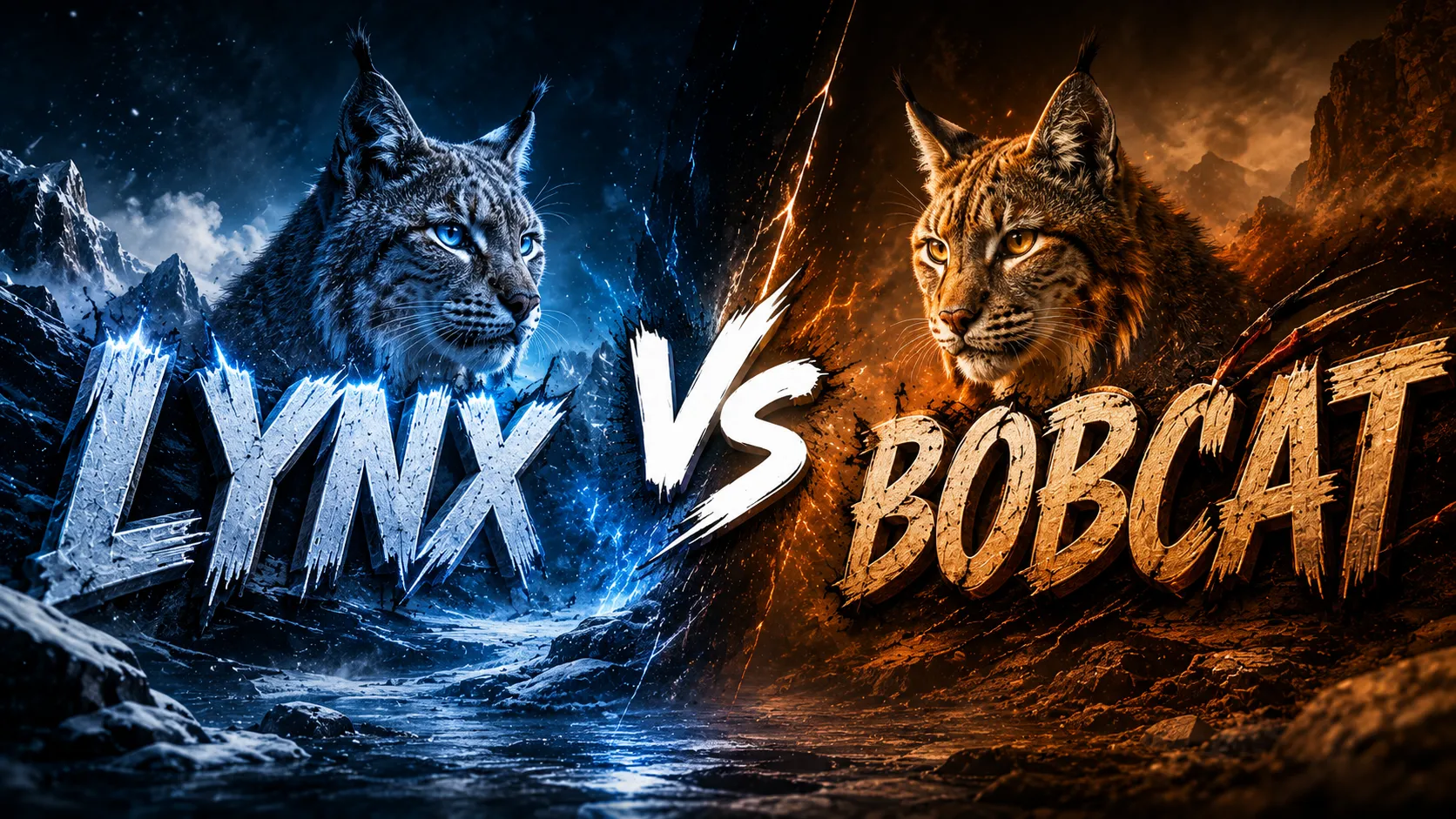
A lynx and a bobcat are closely related wild cats, but they are not the same animal. Lynx are usually larger, have longer ear tufts and bigger paws, while bobcats are smaller, more adaptable, and found across much of North America
A few years ago, I was hiking through a snowy forest when I spotted tracks that looked far too large for an ordinary cat. At first, I thought they belonged to a bobcat. Later, a wildlife guide explained they were likely from a lynx. That moment taught me something surprising: many people confuse these two wild cats.
The mix-up makes sense. Both animals have short tails, spotted coats, and pointed ears. Photos online often make them look nearly identical. Yet they live differently, hunt differently, and even survive in different environments.
Many readers search for “lynx vs bobcat” because they want a simple answer. Maybe they saw a picture. Maybe they found tracks outdoors. Or perhaps they are simply curious about wildlife.
If you’ve ever wondered how to tell these fascinating cats apart, you’re in the right place. By the end of this guide, you’ll know the key differences, common mistakes people make, and exactly how to identify each animal with confidence.
Lynx vs Bobcat : Quick Answer
The easiest way to tell them apart is by looking at their size, feet, and ears.
A lynx usually has:
- Larger body
- Longer ear tufts
- Bigger paws
- Longer legs
A bobcat usually has:
- Smaller body
- Shorter ear tufts
- Smaller paws
- Wider habitat range
Real-World Example
If you see a wild cat walking through deep snow with huge furry feet, it is probably a lynx.
If you see a wild cat near forests, deserts, or suburban areas in North America, it is more likely a bobcat.
The Origin / Background of Lynx vs Bobcat
The word lynx comes from an ancient Greek word linked to brightness and sharp sight. For centuries, people admired the animal’s excellent vision.
The name bobcat comes from its short “bobbed” tail. Unlike many other wild cats, its tail appears cut short.
Confusion exists because both animals belong to the same genus, Lynx. In fact, the bobcat’s scientific name is Lynx rufus.
That means a bobcat is technically a type of lynx. However, in everyday language, people use “lynx” and “bobcat” as separate animals.
This difference in scientific and common naming often causes misunderstandings.
Lynx vs Bobcat Explained : Key Differences or Variations
The biggest differences involve size, habitat, and physical features.
| Term | Meaning | When to Use | Region/Context |
| Lynx | Larger wild cat with long ear tufts and snow-adapted paws | Discussing Eurasian, Canadian, Iberian, or other lynx species | Europe, Asia, North America |
| Bobcat | Smaller North American wild cat | Discussing Lynx rufus specifically | North America |
| Canada Lynx | Snow specialist with oversized paws | Northern forests | Canada, Alaska, northern U.S. |
| Eurasian Lynx | Largest lynx species | European and Asian wildlife discussions | Europe and Asia |
Physical Appearance
Lynx
- Long black ear tufts
- Very large paws
- Long legs
- Thick fur
- Usually larger overall
Bobcat
- Smaller paws
- More varied coat patterns
- Shorter ear tufts
- More compact body
Habitat
Lynx thrive in colder areas with heavy snow.
Bobcats adapt to:
- Forests
- Mountains
- Swamps
- Deserts
- Suburban edges
This adaptability helps bobcats survive across a wider area.
Which Version / Approach Should You Use?
Different audiences need different levels of detail.
For Beginners
Use bobcat when referring specifically to the common North American wild cat.
Why?
Because that is the animal most people recognize.
For Students
Use the exact species name whenever possible.
Examples:
- Canada Lynx
- Eurasian Lynx
- Iberian Lynx
- Bobcat
This improves accuracy.
For Wildlife Enthusiasts
Learn the physical markers:
- Ear tufts
- Paw size
- Leg length
- Habitat
These features provide the most reliable identification.
For Global Audiences
Use the full animal name instead of simply saying “lynx.”
This prevents confusion between different lynx species.
Common Mistakes with Lynx vs Bobcat
Many people make the same identification errors.
| Mistake | Correction |
| Assuming every tufted-ear cat is a lynx | Some bobcats also have ear tufts |
| Judging by size alone | Distance can make animals appear larger or smaller |
| Ignoring paw size | Lynx paws are often the strongest clue |
| Looking only at coat color | Coat colors vary greatly |
| Assuming location doesn’t matter | Habitat provides major identification clues |
Why These Mistakes Happen
Photos often lack scale.
Snow, lighting, and camera angles can hide important details.
That’s why wildlife experts use multiple clues before identifying the animal.
Lynx vs Bobcat in Real-World Examples
Professional Email
“The wildlife survey confirmed the presence of a Canada lynx in the protected forest area.”
News Headline
“Rare lynx population shows signs of recovery after conservation efforts.”
Social Media Post
“Just spotted a bobcat near the hiking trail today. What an amazing sight!”
Formal Report
“Researchers recorded six separate bobcat sightings during the monitoring period.”
These examples show how the terms appear naturally in different situations.
Lynx vs Bobcat : Data, Trends & Usage
Search Intent
The primary search intent is:
Informational
Readers want to know:
- What each animal is
- How they differ
- How to identify them
Regions with High Interest
Interest is strongest in:
- United States
- Canada
- Northern Europe
- Wildlife tourism regions
Who Searches Most?
- Hikers
- Nature lovers
- Students
- Hunters
- Wildlife photographers
Why It Matters Now
Wildlife cameras and social media have increased public interest in animal identification.
People often share photos of wild cats online and ask whether they are seeing a lynx or a bobcat.
Lynx vs Bobcat Comparison Table
| Term/Variant | Meaning | Region/Context | Best Used When |
| Bobcat | Small North American wild cat | United States, Canada, Mexico | Referring specifically to Lynx rufus |
| Canada Lynx | Snow-adapted lynx species | Canada and Alaska | Discussing northern forests |
| Eurasian Lynx | Largest lynx species | Europe and Asia | Discussing European wildlife |
| Iberian Lynx | Rare endangered lynx | Spain and Portugal | Conservation topics |
| Lynx (general) | Group of related wild cat species | Worldwide | General wildlife discussions |
Frequently Asked Questions
Q: What does lynx vs bobcat mean?
A: It refers to comparing two closely related wild cats. People usually want to know how they differ in appearance, habitat, and behavior.
Q: How do you identify a lynx correctly?
A: Look for large paws, long legs, thick fur, and prominent ear tufts. Habitat also provides useful clues.
Q: Lynx vs bobcat : what’s the biggest difference?
A: The biggest difference is adaptation to snow. Lynx have much larger paws that help them move through deep snow efficiently.
Q: Is a bobcat actually a type of lynx?
A: Yes. Scientifically, the bobcat belongs to the genus Lynx. However, people usually treat bobcats and lynx as separate animals in everyday language.
Q: Which animal is larger?
A: Most lynx species are larger than bobcats. The Eurasian lynx is especially large compared to a typical bobcat.
Q: Where does the name bobcat come from?
A: The name comes from its short, “bobbed” tail, which looks cut off compared to the tails of many other cats.
Q: Can lynx and bobcats live in the same area?
A: Yes. In some parts of North America, Canada lynx and bobcats share portions of their range, although they often prefer different habitats.
Conclusion
Understanding lynx vs bobcat becomes much easier once you focus on a few key traits. First, lynx are generally larger and have oversized paws built for snowy conditions. Second, bobcats are smaller and far more adaptable, living in everything from forests to deserts. Third, location and habitat often provide some of the strongest clues when identifying these animals.
If you only remember one thing, remember this: big paws usually point to a lynx, while greater habitat flexibility usually points to a bobcat.
The next time you see a wildlife photo, a set of tracks, or a wild cat crossing a trail, you’ll have the knowledge to make a much more accurate identification.
Bookmark this guide so you never second-guess lynx vs bobcat again, and share it with someone who loves wildlife.
Read More: Agree or Agreed: The Complete Guide to Using Them Correctly

SEO enthusiast focused on improving website visibility and driving organic growth through effective optimization strategies.