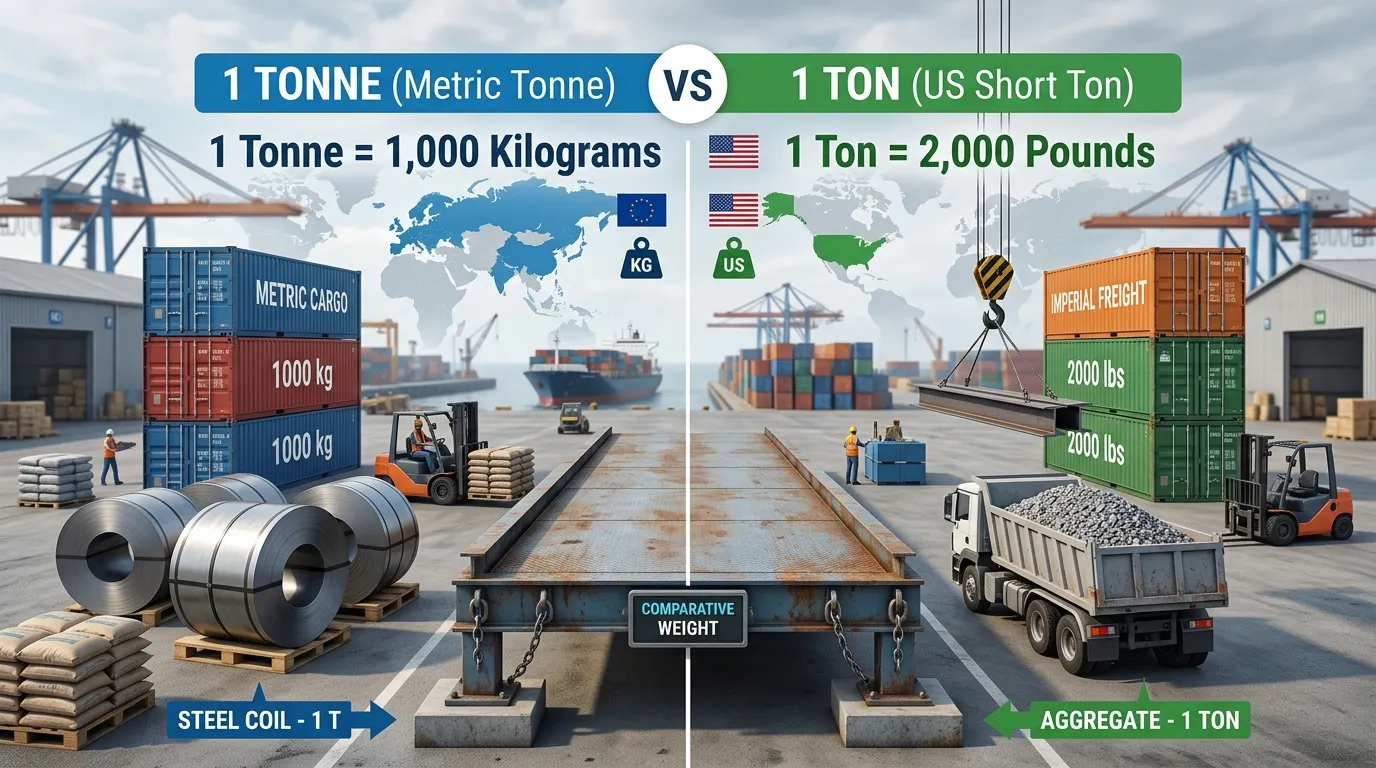
Tonnes and tons are both units of weight, but they are not always the same size. A tonne equals 1,000 kilograms, while a ton can mean different weights depending on the country and measurement system.
A few years ago, I was reading a news report about a cargo ship carrying thousands of tonnes of steel. Later that day, I saw another article talking about tons of steel. That made me stop and wonder: were they talking about the same amount of weight?
Many people run into this confusion. The words tonnes and tons look almost identical. They both describe heavy weights. Yet they do not always mean the same thing.
The confusion becomes even bigger when you read international news, shipping reports, construction documents, or environmental studies. One source uses tonnes. Another uses tons. Without knowing the difference, it is easy to misunderstand the actual weight being discussed.
The good news is that the difference is simple once you understand the measurement systems behind each term.
By the end of this guide, you will know exactly what tonnes and tons mean, when to use each one, and how to avoid common mistakes.
Tonnes or Tons: Quick Answer
A tonne is a metric unit of weight equal to 1,000 kilograms.
A ton is usually an imperial or U.S. customary unit of weight.
Simple Examples
- A small car may weigh about 1.5 tonnes.
- In the United States, a truck might be described as carrying 5 tons of gravel.
The correct term depends on the country and measurement system being used.
The Origin / Background of Tonnes or Tons
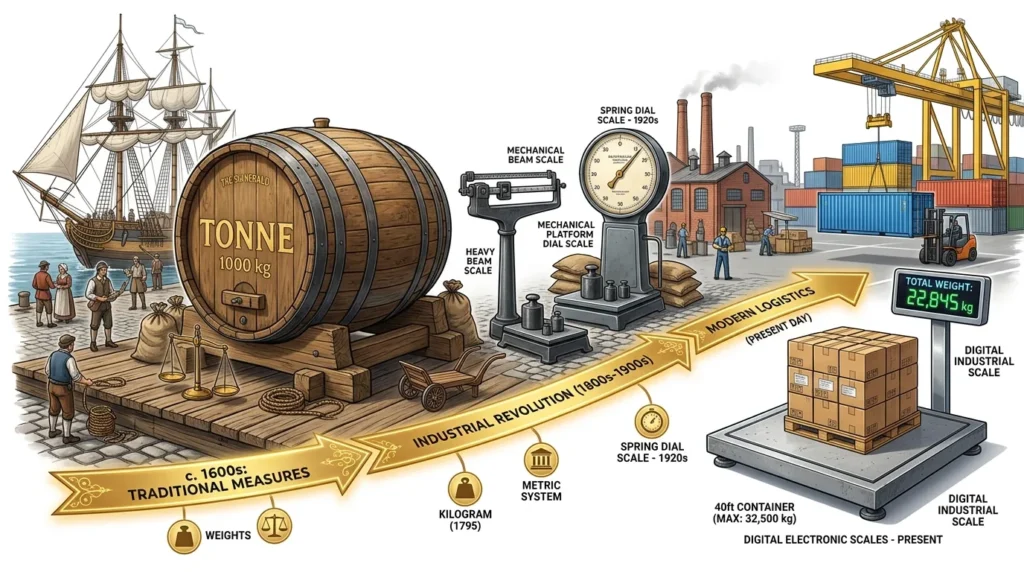
The word ton comes from an old French word called tonne, which originally referred to a large barrel used for storing wine.
As trade grew across Europe, the term became linked to weight measurements. Different countries eventually created their own standards for what a ton should weigh.
Later, the metric system introduced the tonne, which was defined as exactly 1,000 kilograms.
Today, both words remain in use because different regions follow different measurement systems:
- Most countries use the metric tonne.
- The United States commonly uses the short ton.
- Some industries still use the long ton in specific situations.
This historical development is the main reason people get confused.
Tonnes or Tons Explained: Key Differences
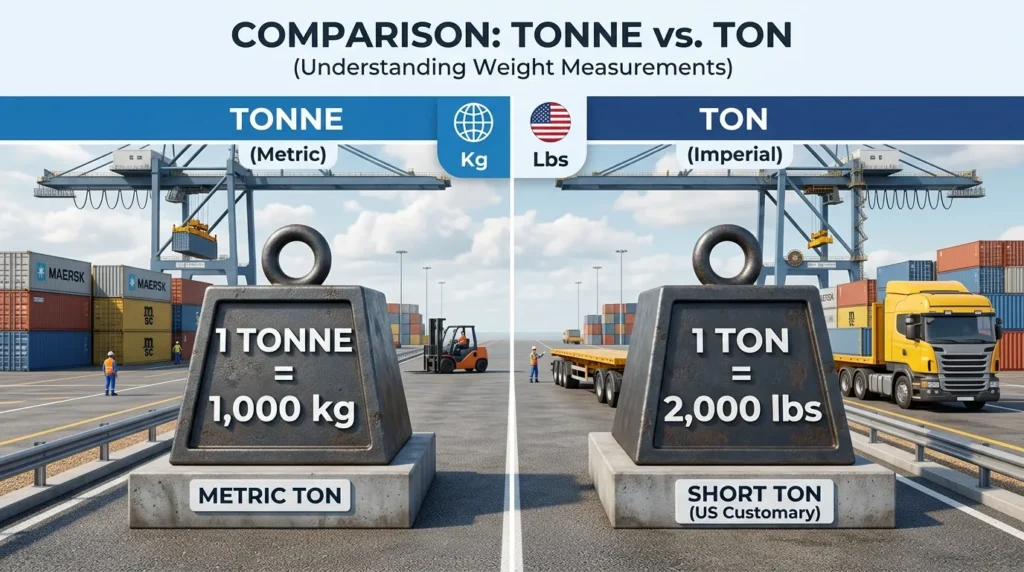
Although the words look similar, they can represent different weights.
| Term | Meaning | When to Use | Region/Context |
|---|---|---|---|
| Tonne | 1,000 kilograms | Metric measurements | Most countries |
| Short Ton | 2,000 pounds (907 kg) | U.S. customary system | United States |
| Long Ton | 2,240 pounds (1,016 kg) | Traditional imperial system | Some UK industries |
Understanding the Difference
Tonne
A tonne equals:
- 1,000 kilograms
- 2,204.62 pounds
Example:
“The factory produced 500 tonnes of steel this year.”
Short Ton
A short ton equals:
- 2,000 pounds
- About 907 kilograms
Example:
“The company shipped 20 tons of coal.”
In the United States, this usually means short tons.
Long Ton
A long ton equals:
- 2,240 pounds
- About 1,016 kilograms
Example:
“The vessel carried 3,000 long tons of cargo.”
This version is less common today.
Which Version Should You Use?
The best choice depends on your audience.
For International Readers
Use tonne.
Most countries use the metric system. Readers around the world generally understand tonnes more easily.
For U.S. Readers
Use ton if discussing American measurements.
Many industries in the United States still use short tons.
For Academic Writing
Use tonne whenever possible.
Scientific and technical publications often prefer metric measurements.
For Business Reports
Follow the measurement system used by your organization or industry.
Always be consistent throughout the document.
For Global Communication
Use tonne and clearly state metric measurements.
This reduces confusion.
Common Mistakes with Tonnes or Tons
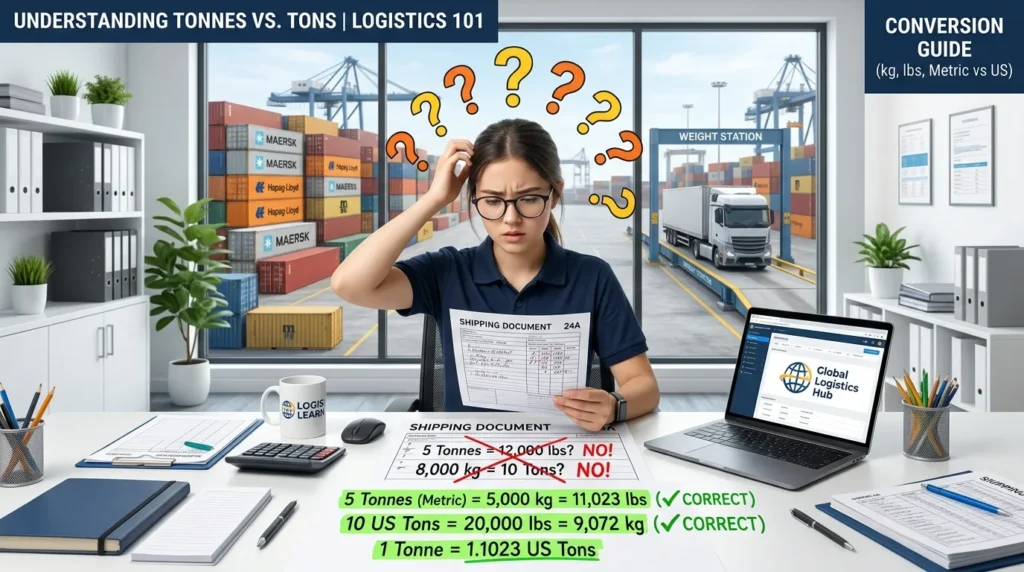
Many writers accidentally mix these terms.
Mistake #1: Assuming They Mean the Same Weight
❌ 1 ton = 1 tonne
✅ 1 tonne = 1,000 kg
Explanation:
A tonne is heavier than a U.S. short ton.
Mistake #2: Mixing Measurement Systems
❌ The shipment weighed 500 tonnes and 200 pounds.
✅ The shipment weighed 500 tonnes and 91 kilograms.
Explanation:
Try to stay within one measurement system.
Mistake #3: Using “Ton” Without Clarification
❌ The machine weighs 10 tons.
✅ The machine weighs 10 short tons.
Explanation:
Readers may not know which type of ton you mean.
Mistake #4: Confusing British and American Usage
❌ UK reports always use tons.
✅ Modern UK documents often use tonnes.
Explanation:
The United Kingdom now commonly uses metric measurements.
Mistake #5: Ignoring Your Audience
❌ Using tonnes for readers unfamiliar with metric units.
✅ Choosing the measurement system your audience understands.
Explanation:
Clear communication matters more than technical accuracy alone.
Tonnes or Tons in Real World Examples

Professional Email
The project will require approximately 50 tonnes of concrete for the foundation work.
News Headline
Recycling Plant Processes 20,000 Tonnes of Waste Each Year
Social Media Post
Our team removed over 5 tons of debris from local beaches this month.
Formal Report
Annual production increased by 1.2 million tonnes compared with the previous year.
These examples show how the term changes depending on audience and context.
Tonnes or Tons: Data, Trends & Usage
Interest in tonnes vs tons continues to grow because global communication has increased.
People often search this topic when they:
- Read international news
- Work in logistics
- Study engineering
- Compare shipping costs
- Review environmental reports
Regions Most Interested
- United States
- United Kingdom
- Canada
- Australia
- European countries
Search Intent
The primary search intent is informational.
Readers want to know:
- Which term is correct
- Whether the measurements are equal
- Which version they should use
Why It Matters Today
International trade is larger than ever. Businesses, governments, and media organizations regularly exchange information across borders. Understanding the difference between tonnes and tons helps prevent costly misunderstandings.
Tonnes vs Tons Comparison Table
| Term/Variant | Meaning | Region/Context | Best Used When |
|---|---|---|---|
| Tonne | 1,000 kilograms | Metric countries | International communication |
| Short Ton | 2,000 pounds | United States | U.S. industries and reports |
| Long Ton | 2,240 pounds | Traditional imperial usage | Historical or specialized contexts |
| Metric Ton | Another name for tonne | Global trade | Scientific and commercial writing |
Frequently Asked Questions
Q: What does tonnes or tons mean?
A: Both terms describe units of weight. However, a tonne equals 1,000 kilograms, while a ton may refer to different weights depending on the measurement system.
Q: How do you use tonnes correctly?
A: Use tonnes when working with metric measurements. It is the standard unit in most countries outside the United States.
Q: Tonnes vs tons: what’s the difference?
A: The main difference is size and measurement system. A tonne equals 1,000 kilograms, while a U.S. ton equals 2,000 pounds.
Q: Is tonne acceptable in formal writing?
A: Yes. In fact, tonne is often preferred in scientific, technical, and international documents.
Q: Which version is correct: tonne or ton?
A: Both are correct. The right choice depends on the measurement system and audience.
Q: Where does the word tonne come from?
A: It comes from the same historical root as ton and was later adopted as part of the metric system.
Q: Can tonnes be used in shipping and logistics?
A: Absolutely. Tonnes are widely used in international shipping, manufacturing, construction, and trade.
Conclusion
The difference between tonnes and tons is simple once you understand the measurement systems behind them.
Remember these key points:
- A tonne equals exactly 1,000 kilograms.
- A U.S. ton equals 2,000 pounds.
- A long ton equals 2,240 pounds.
- The best choice depends on your audience and location.
For international communication, scientific writing, and global business, tonne is usually the safest option. If you are writing for a U.S. audience, ton may be more familiar.
Whenever weight measurements matter, take a moment to confirm which unit is being used. A small difference in wording can represent hundreds of kilograms.
Now you know exactly how to use tonnes or tons. Bookmark this guide so you never second-guess the difference again, and share it with someone who has been confused by these terms.
Read more: Broth or Stock: The Easy Guide to Knowing the Difference

I am an English language writer dedicated to creating clear, accurate, and easy-to-understand content. My goal is to help readers build confidence in their language and communication skills.