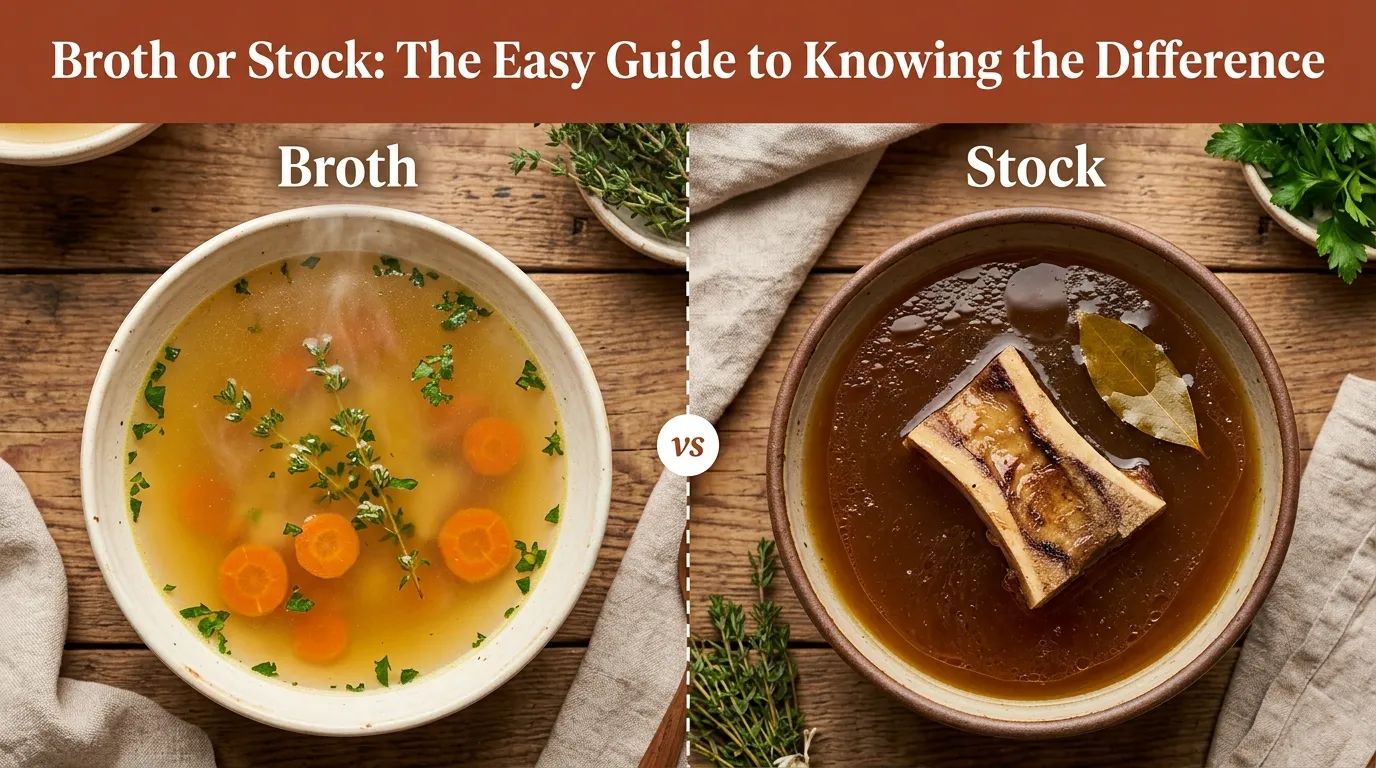
Broth is a flavorful liquid made mostly from meat and vegetables, while stock is made mainly from bones and is richer in texture. Both are used in cooking, but they serve different purposes.
A few years ago, I was following a soup recipe that called for stock. I opened my refrigerator, saw a carton labeled broth, and thought, “They’re basically the same thing, right?”
The soup tasted good. But it lacked the rich texture the recipe promised.
That small kitchen mistake taught me something many home cooks learn sooner or later. Broth and stock are similar, but they are not exactly the same.
Many people use the terms interchangeably. Grocery stores place them side by side. Recipes often switch between them. That makes it easy to get confused.
If you have ever wondered whether broth or stock is the better choice, you are in the right place.
By the end of this guide, you will know the difference, understand when to use each one, avoid common mistakes, and cook with more confidence.
Broth or Stock: Quick Answer
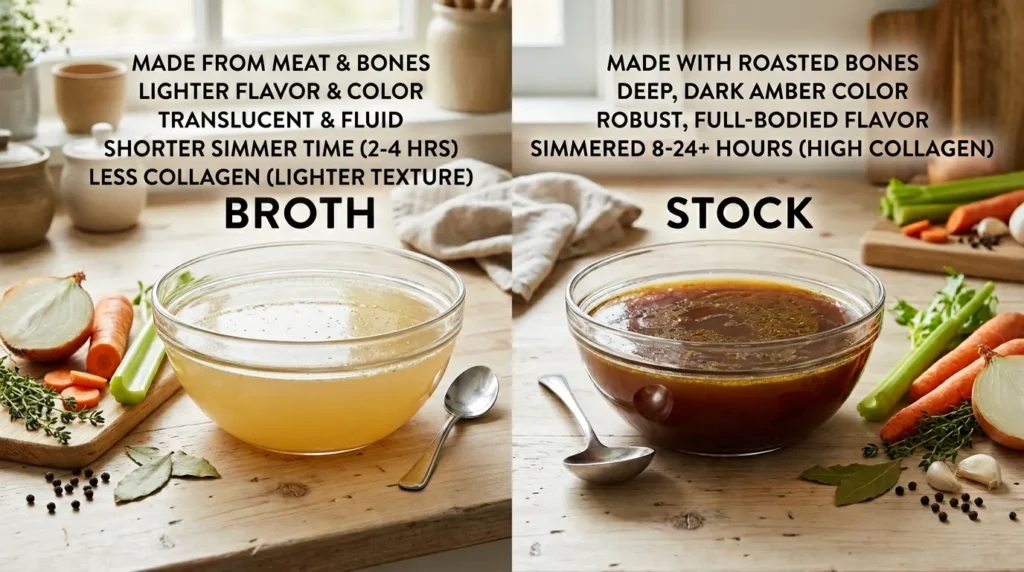
The simplest way to remember the difference is this:
- Broth is usually made from meat, vegetables, and seasonings.
- Stock is usually made from bones and cooked for a longer time.
Simple Examples
- Chicken noodle soup often uses chicken broth.
- A rich gravy or sauce often starts with chicken stock.
Broth is generally lighter and ready to drink. Stock is usually thicker and used as a cooking foundation.
The Origin / Background of Broth or Stock
The history of both terms goes back hundreds of years.
The word broth comes from old Germanic languages and originally referred to liquid created by boiling food.
The word stock developed later in professional kitchens. Chefs used it as the “stock” or foundation for many recipes.
Before modern supermarkets existed, cooks made both at home.
They would:
- Simmer meat to create broth.
- Simmer leftover bones to create stock.
- Use every part of the animal to reduce waste.
Over time, the distinction became more important in professional cooking. Today, however, many people still use the terms interchangeably.
Broth or Stock Explained: Key Differences
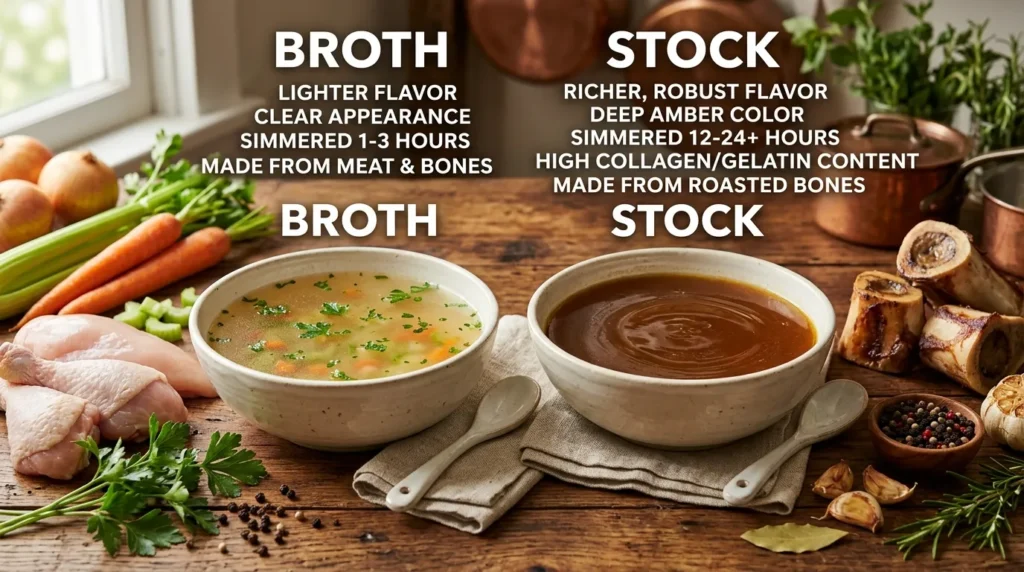
Although they look similar, several differences separate broth from stock.
| Term | Meaning | When to Use | Region/Context |
|---|---|---|---|
| Broth | Liquid made mainly from meat and vegetables | Soups, sipping, light recipes | Home cooking and everyday recipes |
| Stock | Liquid made mainly from bones | Sauces, gravies, rich dishes | Professional kitchens and culinary training |
Ingredients
Broth typically contains:
- Meat
- Vegetables
- Herbs
- Seasonings
Stock typically contains:
- Bones
- Connective tissue
- Vegetables
- Few seasonings
Cooking Time
Broth is usually cooked for a shorter period.
Stock often simmers for several hours. This allows collagen from the bones to dissolve into the liquid.
Texture
Broth is thinner.
Stock has a richer mouthfeel and may become slightly gelatinous when chilled.
Flavor
Broth usually has a stronger ready-to-eat flavor because it contains more seasoning.
Stock is often less seasoned because it serves as a base ingredient.
Which Version Should You Use?

The right choice depends on your goal.
For Beginners
Use broth if:
- You are making soup.
- You want something ready to eat.
- You prefer convenience.
For Home Cooks
Use stock if:
- You want richer flavor.
- You are making gravy.
- You are cooking sauces.
For Professional Chefs
Stock is usually preferred because it offers greater control over seasoning and texture.
For Everyday Cooking
Either option often works.
If a recipe is not highly technical, swapping broth and stock usually will not ruin the dish.
Quick Recommendation
- For drinking → Broth
- For cooking foundations → Stock
- For maximum flexibility → Stock
Common Mistakes with Broth or Stock

Many cooks make the same errors.
| Mistake | Correction |
|---|---|
| Using broth when a rich stock is needed | Use stock for deeper flavor |
| Assuming they are identical | Understand their ingredient differences |
| Adding extra salt to broth recipes | Check seasoning first |
| Using stock as a drink without seasoning | Add herbs and spices |
| Ignoring recipe requirements | Follow the recipe when possible |
Why These Mistakes Happen
Most store-bought products look similar.
Packaging often emphasizes convenience rather than explaining the differences clearly.
As a result, shoppers assume broth and stock are interchangeable in every situation.
Broth or Stock in Real World Examples
Professional Email
“Please prepare the sauce using beef stock rather than beef broth to achieve a richer texture.”
News Headline
“Restaurants Turn to Homemade Stock for Better Flavor and Lower Costs.”
Social Media Post
“I made chicken soup with homemade broth today. The flavor was amazing!”
Formal Report
“The recipe development team tested both broth and stock to evaluate flavor differences.”
Broth or Stock: Data, Trends & Usage
Interest in broth and stock has grown in recent years.
Several factors contribute to this trend:
- More people cook at home.
- Bone broth has become popular.
- Cooking shows teach professional techniques.
- Health-conscious consumers seek nutrient-rich foods.
Search Intent
The primary search intent is informational.
People want to know:
- What broth means
- What stock means
- Which one is better
- Whether they can substitute one for the other
Who Searches Most?
Common audiences include:
- Beginner cooks
- Home chefs
- Culinary students
- Health-conscious consumers
Why It Matters Today
Modern recipes often focus on flavor and nutrition. Understanding the difference between broth and stock helps cooks make better choices in the kitchen.
Broth vs Stock Comparison Table
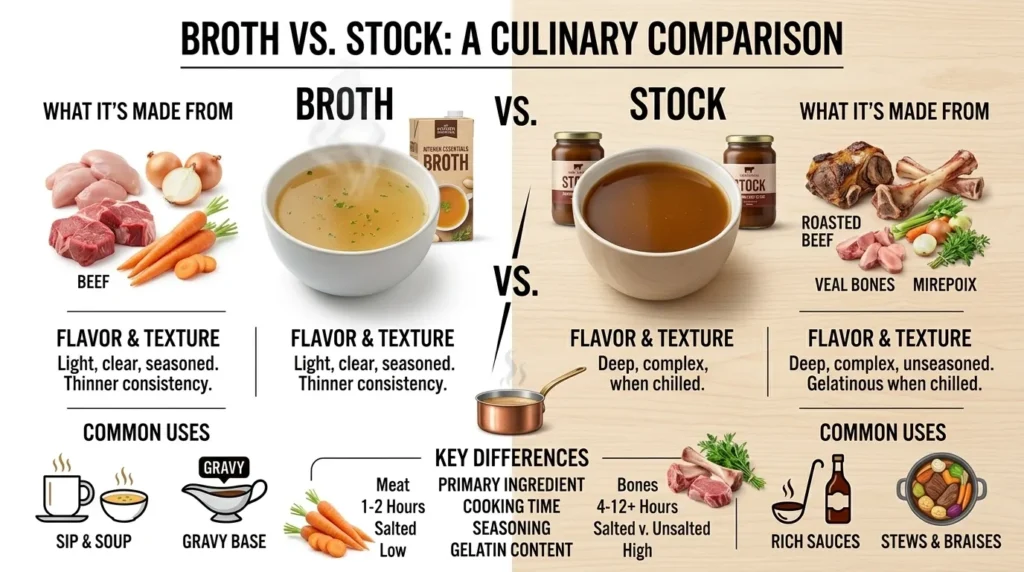
| Term/Variant | Meaning | Region/Context | Best Used When |
|---|---|---|---|
| Broth | Meat-based flavored liquid | Everyday cooking | Soups and sipping |
| Stock | Bone-based cooking liquid | Professional cooking | Sauces and gravies |
| Chicken Broth | Made primarily from chicken meat | Home kitchens | Light soups |
| Chicken Stock | Made primarily from chicken bones | Culinary use | Rich recipes |
| Vegetable Broth | Vegetables and seasonings | Vegetarian cooking | Soups and stews |
| Vegetable Stock | Vegetables simmered for cooking base | Professional kitchens | Flavor foundations |
Frequently Asked Questions
Q: What does broth mean?
A: Broth is a seasoned liquid usually made by simmering meat, vegetables, and herbs. It is often ready to eat on its own.
Q: What does stock mean?
A: Stock is a liquid made mainly from bones and connective tissue. It is commonly used as a base for recipes.
Q: Can broth replace stock?
A: Yes. In many recipes, broth can replace stock. However, the final dish may be slightly less rich.
Q: Can stock replace broth?
A: Yes. Stock can replace broth. You may need to add seasoning because stock is often less salty.
Q: Which is better for soup, broth or stock?
A: Both work well. Broth provides ready-made flavor, while stock creates a richer texture.
Q: Is stock healthier than broth?
A: Neither is automatically healthier. Nutritional value depends on ingredients, sodium levels, and preparation methods.
Q: Is broth or stock better for sauces?
A: Stock is usually preferred because its collagen content helps create a richer and smoother sauce.
Conclusion
The debate between broth or stock becomes much easier once you understand their purpose.
Remember these key points:
- Broth is usually made from meat and vegetables.
- Stock is usually made from bones.
- Broth is often ready to drink.
- Stock is often used as a cooking foundation.
- Both can work in many recipes, but each has strengths.
If you want a flavorful soup, broth is a great choice. If you need a rich sauce or gravy, stock is usually the better option.
The good news is that you do not need to be a professional chef to use them correctly. A basic understanding can improve your cooking right away.
Bookmark this guide so you never second-guess broth or stock again, and share it with someone who loves cooking.
Read more: Bogey or Bogie: The Easy Guide to Using the Right Word

I am an English language writer dedicated to creating clear, accurate, and easy-to-understand content. My goal is to help readers build confidence in their language and communication skills.