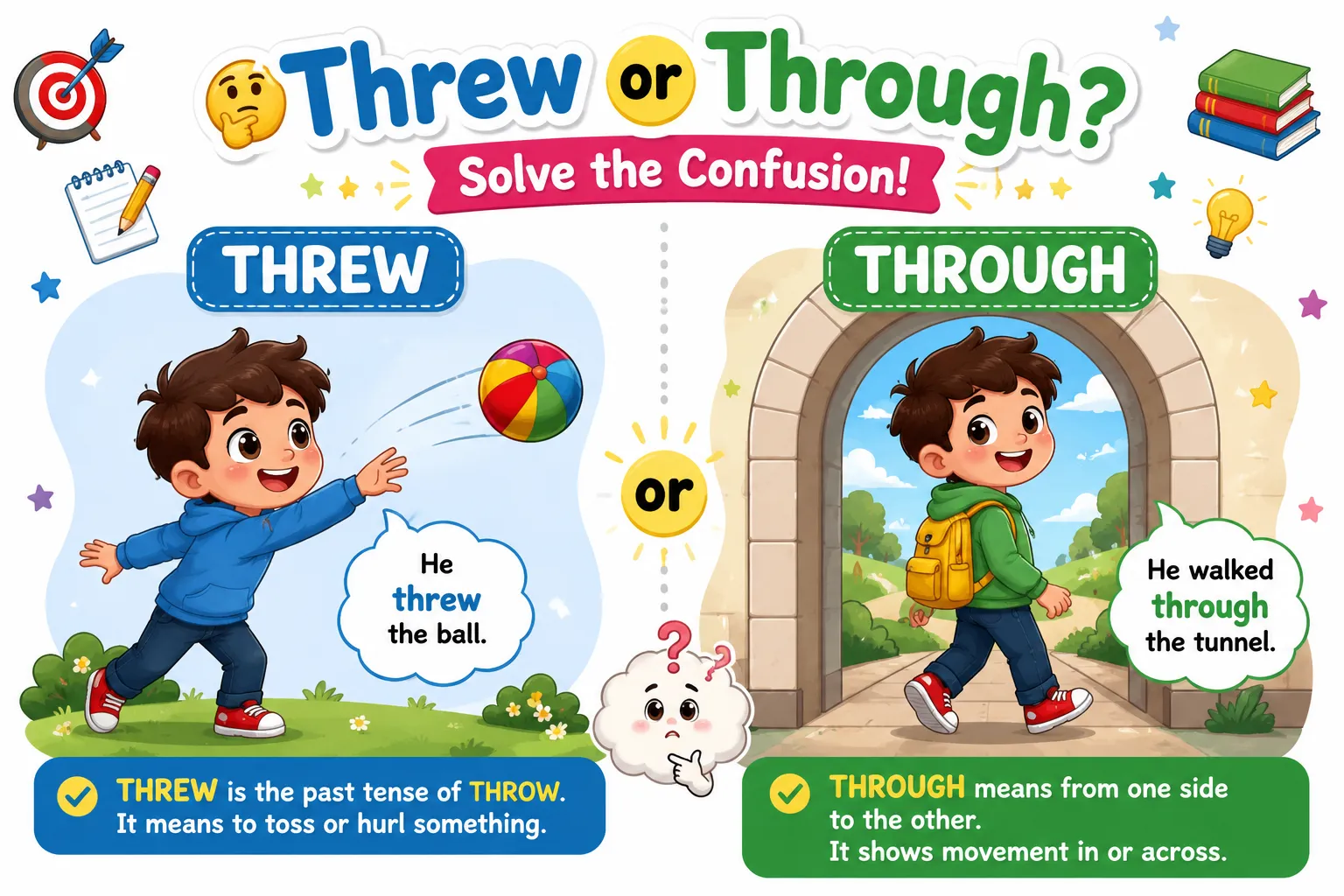
Threw is the past tense of throw, meaning to toss or send something. Through is usually a preposition or adverb that means moving from one side to another or completing something.
I still remember reading a student’s essay that said, “She through the ball across the field.” At first glance, it looked fine. Yet one small word changed the whole meaning of the sentence.
Words like threw and through confuse many writers because they sound almost the same. They are examples of homophones. These are words that share a similar pronunciation but have different meanings and spellings.
If you’ve ever stopped mid-sentence and wondered which one to use, you’re not alone. Students, bloggers, professionals, and even native English speakers mix them up from time to time.
The good news is that the difference is actually very simple once you understand it. A small trick can help you remember the correct word every time.
In this guide, you’ll learn the meaning of both words, where these words came from, their key differences, common mistakes, real-world examples, and how to use each one with confidence.
Threw or Through: Quick Answer
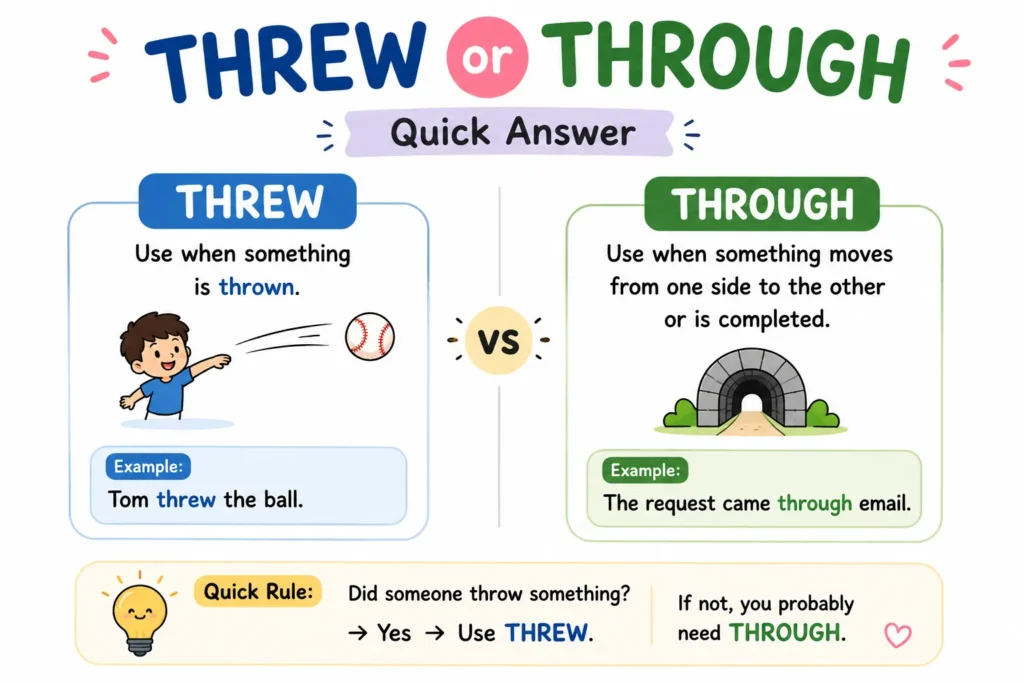
The easiest way to remember the difference is this:
- Threw = tossed, launched, or sent something.
- Through = from one side to another, by means of, or completed.
Examples
- He threw the football to his friend.
- Through the tunnel, they walked slowly.
- She threw the keys onto the table.
- As we watched,the train passed through the city.
The Origin / Background of Threw or Through
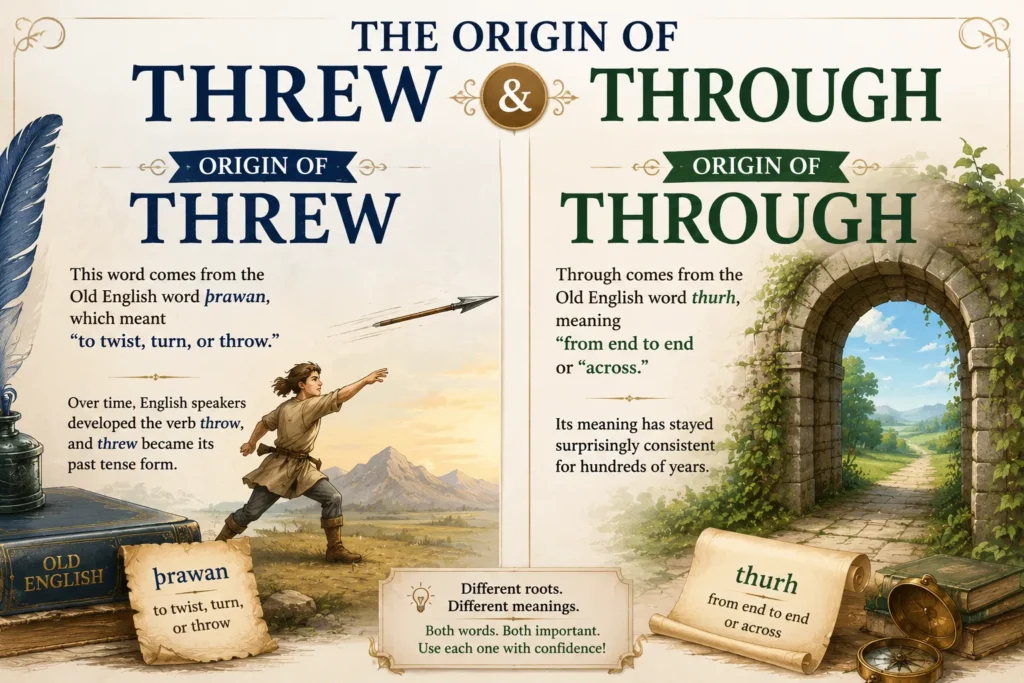
Although these words sound alike today, they come from different roots.
Origin of Threw
This word comes from the Old English word þrawan, which meant “to twist, turn, or throw.”
Over time, English speakers developed the verb throw, and threw became its past tense form.
Origin of Through
Through comes from the Old English word thurh, meaning “from end to end” or “across.”
Its meaning has stayed surprisingly consistent for hundreds of years.
Why the Confusion Exists
The confusion happens because:
- They sound very similar.
- English spelling is not always phonetic.
- Both words are common in everyday writing.
Despite sounding alike, they serve completely different purposes in a sentence.
Threw or Through Explained: Key Differences
The main difference is simple.
Threw is a verb.
Through is usually a preposition, adverb, or adjective.
| Term | Meaning | When to Use | Region/Context |
| Threw | Past tense of throw | When something was tossed or launched | All English varieties |
| Through | Moving from one side to another, by means of, completed | When describing passage, completion, or movement | All English varieties |
Examples of Threw
- He threw a stone into the river.
- The pitcher threw a fast ball.
- She threw her hands in the air.
Examples of Through
- We drove through the mountains.
- I read through the report.
- She worked through the night.
Easy Memory Trick
Think:
THREW = THROW
Both words share most of the same letters.
If you’re talking about tossing something, choose threw.
Which Version Should You Use?
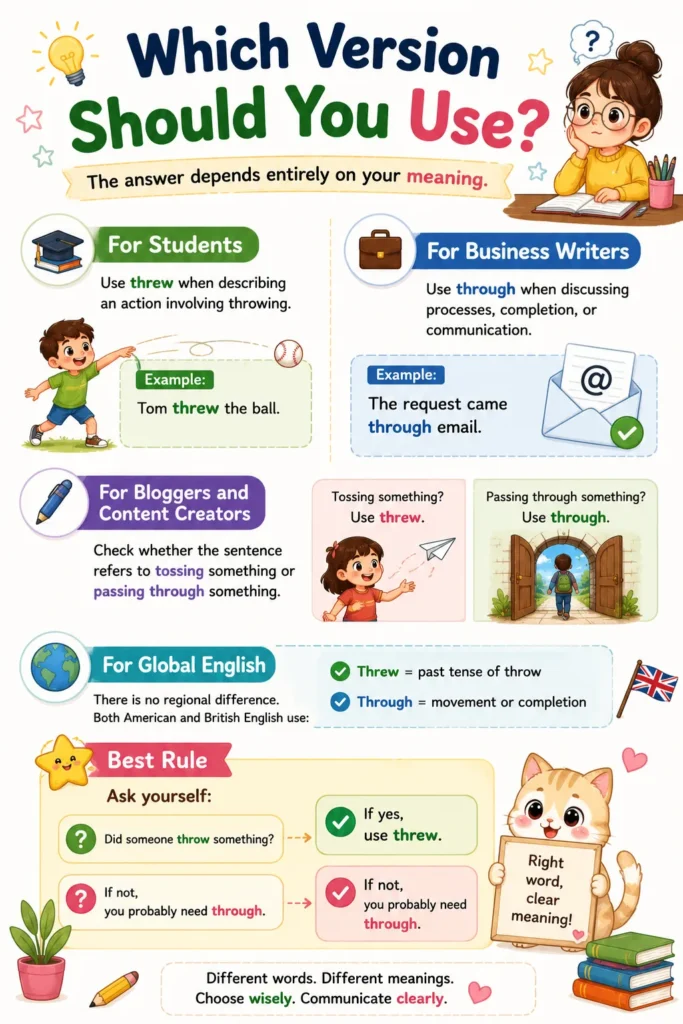
The answer depends entirely on your meaning.
For Students
Use threw when describing an action involving throwing.
Example:
- Tom threw the ball.
For Business Writers
Use through when discussing processes, completion, or communication.
Example:
- The request came through email.
For Bloggers and Content Creators
Check whether the sentence refers to tossing something or passing through something.
For Global English
There is no regional difference.
Both American and British English use:
- Threw = past tense of throw
- Through = movement or completion
Best Rule
Ask yourself:
Did someone throw something?
If yes, use threw.
If not, you probably need through.
Common Mistakes with Threw or Through
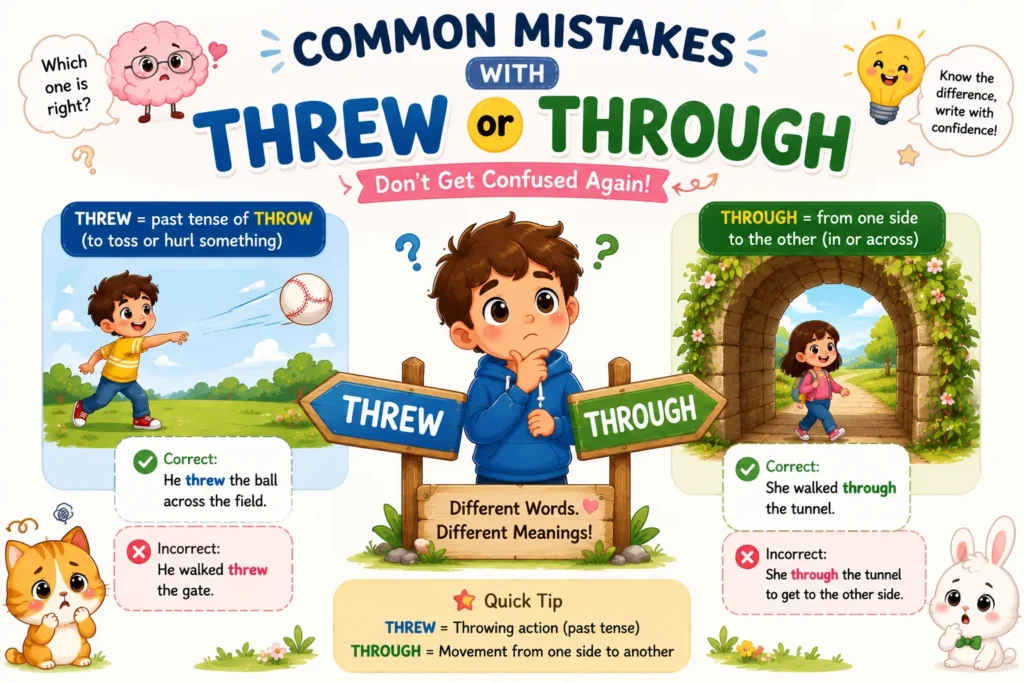
Here are mistakes people make most often.
| Mistake | Correct Version |
| He through the ball. | He threw the ball. |
| She threw the tunnel. | She went through the tunnel. |
| We threw the city. | We went through the city. |
| The email was threw the system. | The email was through the system. |
| I through my jacket on the chair. | I threw my jacket on the chair. |
Why These Errors Happen
1. Similar Pronunciation
Many people write what they hear.
2. Fast Typing
Writers often type quickly and miss spelling differences.
3. Autocorrect Issues
Spell check tools may not catch the error because both words are correctly spelled.
4. Learning English
Language learners often confuse homophones.
Threw or Through in Real-World Examples
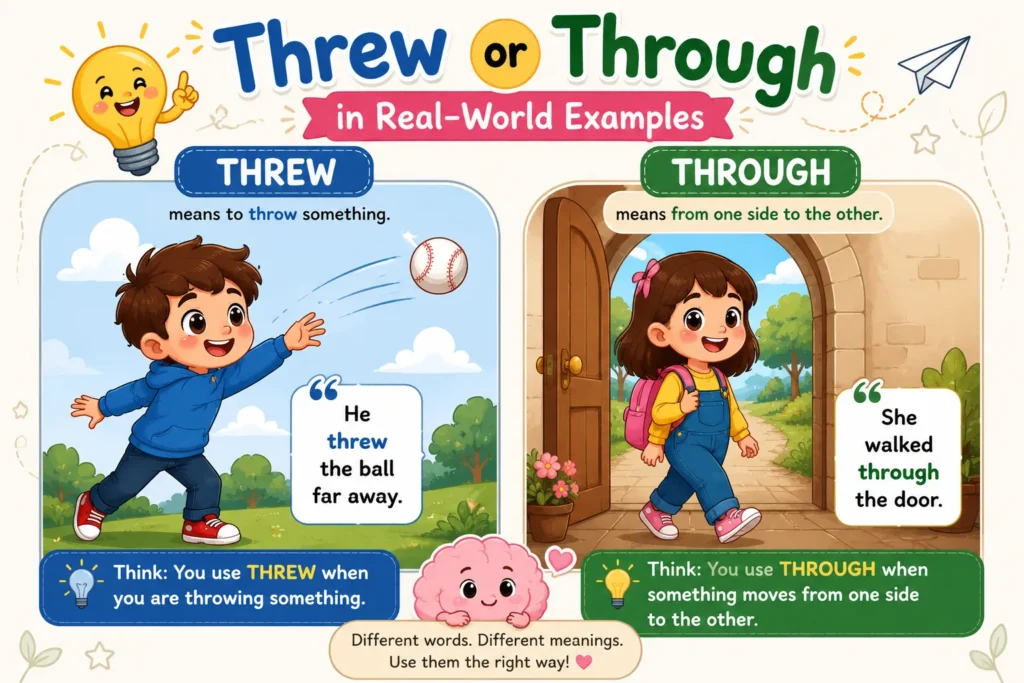
Professional Email
“Please send the document through the company portal before Friday.”
News Headline
“Quarterback threw three touchdown passes during the championship game.”
Social Media Post
“I finally made it through my exams!”
Formal Report
“The shipment moved through several distribution centers before delivery.”
Everyday Conversation
“He threw his backpack onto the couch after school.”
Threw or Through: Data, Trends & Usage
Search Intent
Primary intent:
- Informational
Users usually want to know:
- Which spelling is correct
- What each word means
- How to avoid mistakes
Who Searches Most?
- Students
- ESL learners
- Teachers
- Bloggers
- Professional writers
Regions With Strong Interest
Interest commonly comes from:
- United States
- United Kingdom
- Canada
- Australia
- India
Why It Matters Today
Digital communication has increased writing volume. People send emails, posts, reports, and messages daily. As a result, spelling mistakes become more visible than ever.
Understanding the difference between both words helps your writing appear more professional and clear.
Threw vs Through Comparison Table
| Term/Variant | Meaning | Region/Context | Best Used When |
| Threw | Past tense of throw | Universal English | Talking about tossing or launching something |
| Through | Across, within, by means of, completed | Universal English | Talking about movement, passage, or completion |
Frequently Asked Questions

Q: What does threw mean?
A: It is the past tense of the verb throw. It means tossed, launched, or sent something from one place to another.
Q: What does through mean?
A: Through means moving from one side to another, by means of something, or completing a process.
Q: How do you use threw correctly?
A: Use this when describing the past action of throwing something. Example: “She threw the ball.”
Q: How do you use through correctly?
A: Use through when referring to movement, completion, or passage. Example: “We walked through the park.”
Q: Threw vs throw, what’s the difference?
A: Throw is the present tense. Threw is the past tense.
Example:
- I throw.
- I threw.
Q: Is through acceptable in formal writing?
A: Yes. Through is completely correct in formal, academic, and professional writing.
Q: Which version is correct: threw or through?
A: Both are correct. The right choice depends on your meaning. Use threw for throwing actions and through for movement or completion.
Q: Where do these words come from?
A: Threw comes from Old English roots related to throwing. Through comes from Old English words meaning across or from end to end.
Q: Can these two words be used interchangeably?
A: No. They have different meanings and grammatical functions. Replacing one with the other creates a mistake.
Conclusion
The difference between both words is much easier than it first appears.
Remember these key points:
- Threw is the past tense of throw.
- Through means across, within, by means of, or completed.
- They sound alike but have completely different meanings.
- A quick meaning check can help you choose the correct word every time.
When you write, ask yourself one simple question: Am I talking about throwing something? If the answer is yes, use threw. If you’re talking about movement, passage, or completion, use through.
Mastering small word pairs like this can make your writing clearer, stronger, and more professional.
Now you know exactly how to use both words, go try it in your next piece of writing. Bookmark this guide so you never second-guess these words again, and share it with someone who gets them mixed up.
Read More: Soda or Pop 🥤: The Ultimate Fizzy Test!

I am an English language expert dedicated to exploring the nuances of words and their meanings. Through detailed comparisons and practical insights, I help readers understand the finer points of language and use words with accuracy and confidence.