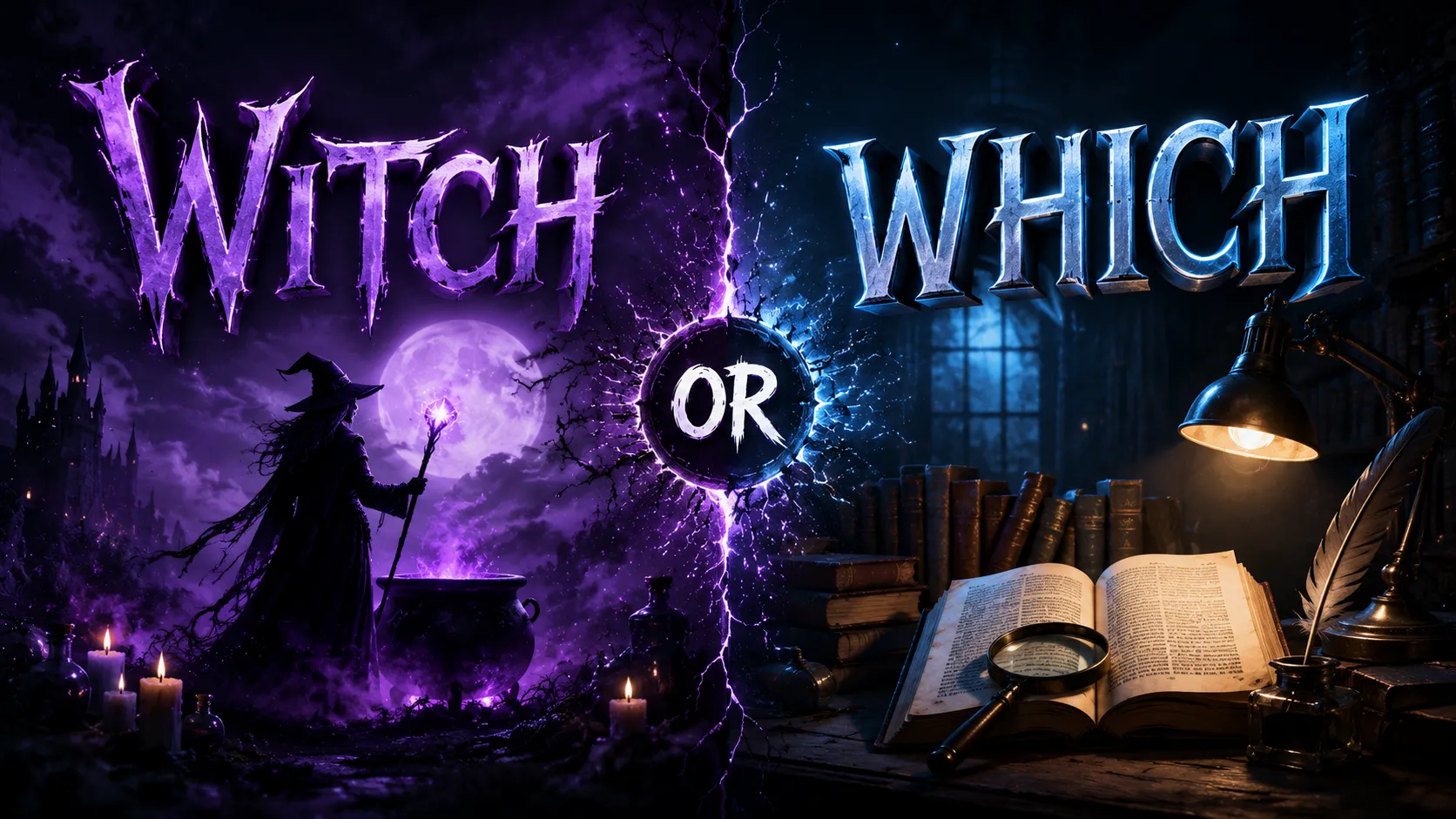
Which is used when asking questions or choosing between options. Witch means a person believed to use magic. Although they sound alike, they have very different meanings.
A few years ago, while helping a student edit an essay, I spotted a funny mistake. The sentence read: “Witch color do you like best?” The student laughed when I pointed it out. He knew the word should have been which, but because both words sound the same, the mistake slipped through.
If you’ve ever paused while writing and wondered whether to use witch or which, you’re not alone. These two words are among the most commonly confused words in English. They sound identical when spoken, yet their meanings are completely different.
Many people search for this topic because spell check does not always catch the error. If you use the wrong word, your sentence can look strange or even change meaning.
The good news is that the difference is simple once you understand it. By the end of this guide, you’ll know exactly when to use witch and when to use which, plus a few tricks to remember them forever.
Witch or Which : Quick Answer
Which is a question word. It helps you choose between options.
Examples:
- Which book do you want?
- Which road leads to the station?
Witch is a noun. It refers to a person associated with magic or supernatural powers.
Examples:
- The witch cast a spell.
- The story featured a friendly witch.
A simple rule:
- Which = choice
- Witch = magic
The Origin / Background of Witch or Which
The confusion exists because witch and which are homophones. That means they sound the same but have different meanings and spellings.
Origin of “Which”
The word which comes from Old English. It has been used for centuries to ask questions or identify something from a group.
Examples:
- Which house is yours?
- Which option should we choose?
Origin of “Witch”
The word witch also comes from Old English. Historically, it referred to a person believed to practice magic or sorcery.
Examples:
- The villagers feared the witch.
- The movie tells the story of a young witch.
Because both words developed similar pronunciations over time, many writers confuse them today.
Witch or Which Explained : Key Differences
The easiest way to understand these words is to compare them side by side.
| Term | Meaning | When to Use | Region/Context |
| Which | Used for questions or choices | When selecting from options | All English-speaking regions |
| Witch | A person associated with magic | Stories, folklore, fantasy, history | All English-speaking regions |
Examples of “Which”
- Which shirt looks better?
- Which restaurant should we visit?
- Which answer is correct?
Examples of “Witch”
- The witch flew on a broomstick.
- The children dressed as a witch for Halloween.
- The novel featured a powerful witch.
Easy Memory Trick
Which contains “h-i-c-h” and is linked to choice.
Witch contains “wit” and often appears in stories involving magic.
Which Version Should You Use?
The correct choice depends entirely on your meaning.
For Students
Use which when asking questions or comparing options.
Example:
- Which chapter is on the test?
For Writers and Bloggers
Use which in most everyday writing because it is common in questions and explanations.
Example:
- Which strategy works best?
For Fiction Writers
Use witch when talking about magical characters.
Example:
- The witch guarded the enchanted forest.
For Global and Neutral Usage
In almost every ordinary conversation, email, article, or report, you’ll probably use which far more often than witch.
If magic is not involved, the word is usually which.
Common Mistakes with Witch or Which
Here are mistakes people make all the time.
| Mistake | Correct Version |
| Witch car is yours? | Which car is yours? |
| Which cast a spell. | Witch cast a spell. |
| Witch option should I choose? | Which option should I choose? |
| The old which lived in the woods. | The old witch lived in the woods. |
| Witch one do you prefer? | Which one do you prefer? |
Why These Mistakes Happen
- The words sound exactly alike.
- Fast typing causes spelling errors.
- Spell check may not notice because both words are real.
- English learners often focus on pronunciation instead of meaning.
A good habit is to ask yourself:
Am I talking about a choice or magic?
That question usually solves the problem instantly.
Witch or Which in Real-World Examples
Professional Email
Subject: Meeting Schedule
“Could you tell me which time works best for you next week?”
News Headline
“Researchers Reveal Which Diet Produces Better Results”
Social Media Post
“Which movie should I watch tonight? Give me your recommendations.”
Formal Report
“The committee reviewed three proposals and identified which solution offered the highest value.”
Story or Novel
“The young witch discovered a hidden spellbook.”
These examples show that which appears often in daily communication, while witch appears mainly in stories, fantasy content, and folklore.
Witch or Which : Data, Trends & Usage
Search behavior shows that many English learners and native speakers look up witch or which because of spelling confusion.
Who Searches This Most?
- Students
- English learners
- Writers
- Bloggers
- Job seekers preparing documents
Search Intent
Primary intent: Informational
People want a quick answer and practical examples.
Where Is Interest Highest?
Interest is strong in countries where English is widely taught, including:
- United States
- United Kingdom
- Canada
- Australia
- India
- Pakistan
Why It Matters Today
Written communication happens everywhere. Emails, social media posts, reports, and online applications require correct spelling. Mixing up witch and which can make otherwise strong writing look careless.
Witch vs Which Comparison Table
| Term/Variant | Meaning | Region/Context | Best Used When |
| Which | Refers to a choice or selection | Everyday English worldwide | Asking questions or choosing between options |
| Witch | Person associated with magic | Fantasy, folklore, literature | Discussing magic, spells, or fictional characters |
Frequently Asked Questions
Q: What does witch or which mean?
A: Which is used when selecting between options. Witch refers to a person associated with magic or supernatural powers.
Q: How do you use which correctly?
A: Use which when asking about choices or identifying something from a group. Example: “Which book do you recommend?”
Q: Witch vs which : what’s the difference?
A: Which relates to choices and questions. Witch refers to a magical person or character.
Q: Is which acceptable in formal writing?
A: Yes. Which is commonly used in business emails, reports, academic papers, and professional communication.
Q: Which version is correct : witch or which?
A: Both are correct words. The right one depends on meaning. Use which for choices and witch for magic-related contexts.
Q: Where does the word witch come from?
A: It comes from Old English and historically referred to someone believed to practice magic or sorcery.
Q: Can witch be used in professional writing?
A: Yes, but only when discussing folklore, literature, history, fantasy, or cultural topics involving witches.
Conclusion
Understanding witch or which is easier than many people think. The key difference comes down to meaning. Which is about choices, questions, and selecting between options. Witch refers to a person connected with magic or supernatural powers.
Remember these simple takeaways:
- Which = choice
- Witch = magic
- Ask yourself what the sentence means before choosing the spelling.
- Proofread carefully because spell check may miss the error.
Once you learn this distinction, you’ll avoid one of the most common English spelling mistakes. Your writing will look clearer, more professional, and more confident.
Now you know exactly how to use witch and which—go try it in your next piece of writing. Bookmark this guide so you never second-guess witch or which again, and share it with someone who still gets them mixed up.
Read more : Sizable or Sizeable: The Complete Guide to Using the Right Spelling

SEO enthusiast focused on improving website visibility and driving organic growth through effective optimization strategies.