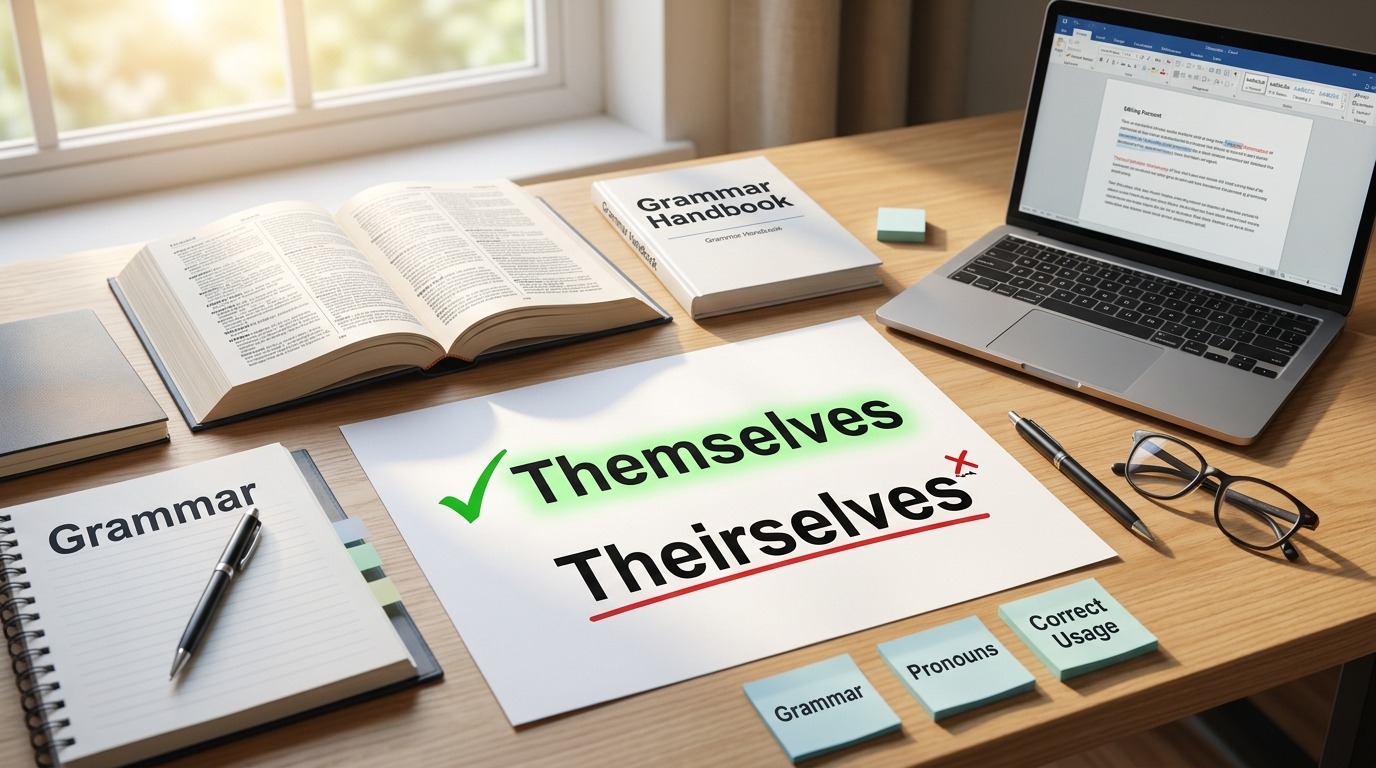
Themselves is the correct and standard English word. Theirselves is a nonstandard form that appears in some regional dialects but should be avoided in formal writing, school assignments, and professional communication.
I still remember proofreading a student’s essay that included the sentence, “They completed the project by theirselves.” At first glance, it looked understandable, but something felt wrong. The correct word was themselves, not theirselves. Many English learners and even native speakers make this mistake because words like myself, yourself, and ourselves seem to follow a pattern. It is easy to assume that theirselves should exist too.
If you’ve ever paused while writing and wondered which version is correct, you are not alone. This small grammar question confuses thousands of people every year. The good news is that the rule is simple once you understand it.
By the end of this guide, you’ll know why themselves is the standard choice, why theirselves sometimes appears in speech, and exactly when to use each word.
Themselves or Theirselves Quick Answer
Use themselves in almost every situation.
Examples:
- ✅ They taught themselves how to cook.
- ✅ The children enjoyed themselves at the party.
- ❌ They taught theirselves how to cook.
- ❌ The children enjoyed theirselves at the party.
If you are writing for school, work, business, or publishing, always choose themselves.
The Origin / Background of Themselves or Theirselves
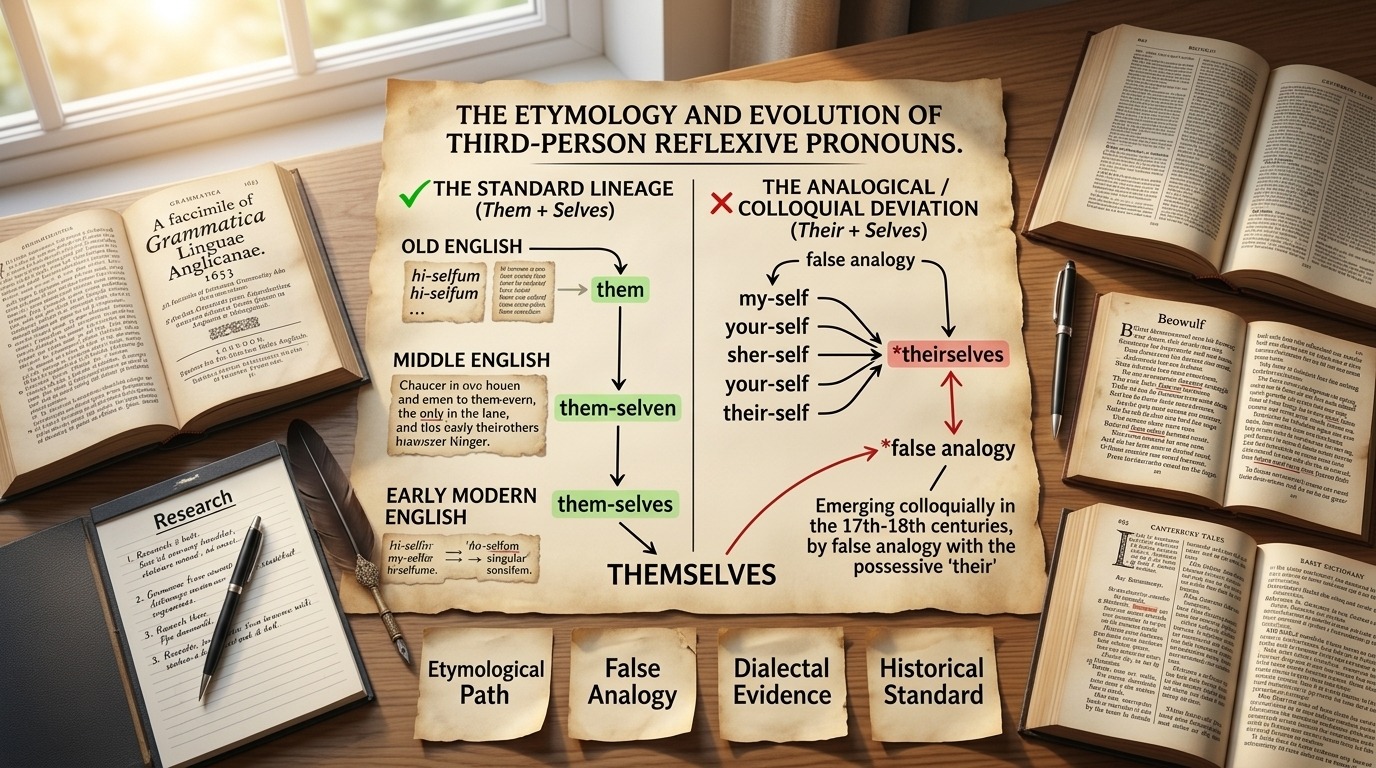
The word themselves has been part of English for hundreds of years. It developed as the accepted reflexive pronoun for they.
English reflexive pronouns usually end with -self or -selves:
- myself
- yourself
- himself
- herself
- ourselves
- yourselves
- themselves
So why do some people say theirselves?
The answer is dialect. In some regional varieties of English, speakers naturally formed theirselves because it seems to match the possessive pronoun their. Although linguistically understandable, dictionaries and grammar guides still classify it as nonstandard English.
That is why you may hear it in conversation or read it in dialogue, but you should not use it in formal writing.
Themselves Explained Key Differences
The biggest difference is not meaning. Both words attempt to refer back to they. The difference is correctness.
| Term | Meaning | When to Use | Region/Context |
|---|---|---|---|
| Themselves | Standard reflexive pronoun | Formal and informal English | Worldwide |
| Theirselves | Nonstandard dialect form | Rarely, only to reflect regional speech | Some English dialects |
Examples
Correct:
- They blamed themselves for the mistake.
- The players prepared themselves before the match.
- They introduced themselves to the audience.
Incorrect:
- They blamed theirselves.
- The players prepared theirselves.
- They introduced theirselves.
Which Version Should You Use?
The answer depends on your audience, but for almost everyone, the recommendation is the same.
Students
Always write themselves. Teachers and exams expect standard English.
Professionals
Business emails, reports, and presentations should always use themselves.
Writers
If you are writing articles, books, or blog posts, choose themselves unless a fictional character speaks in a regional dialect.
Everyday Conversations
Many people naturally say themselves. In a few local dialects, you may hear theirselves, but it is still considered nonstandard.
Common Mistakes with Themselves or Theirselves
Mistake 1
❌ They fixed theirselves.
✅ They fixed themselves.
Reason: The standard reflexive pronoun is themselves.
Mistake 2
❌ The children enjoyed theirselves.
✅ The children enjoyed themselves.
Reason: Formal English always uses themselves.
Mistake 3
❌ We introduced theirselves.
✅ They introduced themselves.
Reason: Match the pronoun with the correct reflexive form.
Mistake 4
❌ Theirselves is correct everywhere.
✅ Theirselves is only a nonstandard dialect form.
Reason: Standard English does not accept it for formal writing.
Themselves or Theirselves in Real World Examples
Professional Email
“Our team completed themselves? No. Correct sentence: Our team members completed the training themselves.”
News Headline
“Residents Protected Themselves During the Storm.”
Social Media Post
“We challenged ourselves, and they challenged themselves to finish the race.”
Formal Report
“The participants evaluated themselves before submitting the final assessment.”
Themselves or Theirselves Data, Trends & Usage
Many people search this topic because English spelling patterns can be confusing. Learners often assume theirselves follows the same pattern as ourselves or yourselves.
Search intent is mainly informational. Readers want to know which word is correct before using it in writing.
The topic is especially popular among:
- English learners
- Students
- Teachers
- Writers
- Editors
- Content creators
As online writing becomes more common, grammar questions like this continue to receive steady search interest.
Comparison Table
| Term/Variant | Meaning | Region/Context | Best Used When |
|---|---|---|---|
| Themselves | Standard reflexive pronoun | Worldwide | Every type of writing |
| Theirselves | Nonstandard dialect form | Some regional dialects | Only when representing authentic dialect in dialogue |
Frequently Asked Questions
Q: What does themselves mean?
It is the reflexive pronoun used with they or them. It refers back to the same people mentioned earlier.
Q: Is theirselves a real word?
It exists in some regional dialects, but it is considered nonstandard and is not accepted in formal English.
Q: Which is correct, themselves or theirselves?
Themselves is the correct choice in standard English.
Q: Can I use theirselves in school?
No. Teachers generally expect themselves in assignments and exams.
Q: Why do some people say theirselves?
It developed naturally in certain dialects because speakers followed a different grammatical pattern.
Q: Can authors use theirselves?
Yes, but usually only when writing dialogue to reflect a character’s regional speech.
Q: Is themselves acceptable in formal writing?
Yes. It is the standard form used in academic, professional, and published writing.
Conclusion
If you only remember one rule, remember this: themselves is the correct and standard English word. It belongs in essays, emails, reports, books, and everyday writing. Although theirselves appears in some dialects, it is not considered standard English and should generally be avoided unless you are intentionally representing regional speech in fiction.
Whenever you write about people doing something to or for themselves, choose themselves with confidence. This simple habit will make your writing clearer and more professional.
Now you know exactly how to use themselves correctly. Bookmark this guide so you never have to second-guess it again, and share it with anyone who has ever wondered whether theirselves is acceptable.
Themselves or Theirselves: Which Is Correct? The Complete Guide

I am an English language enthusiast who enjoys exploring word differences and spelling variations.
My work focuses on making confusing English terms easier to understand for everyday readers.
I believe clear language helps people communicate with confidence.