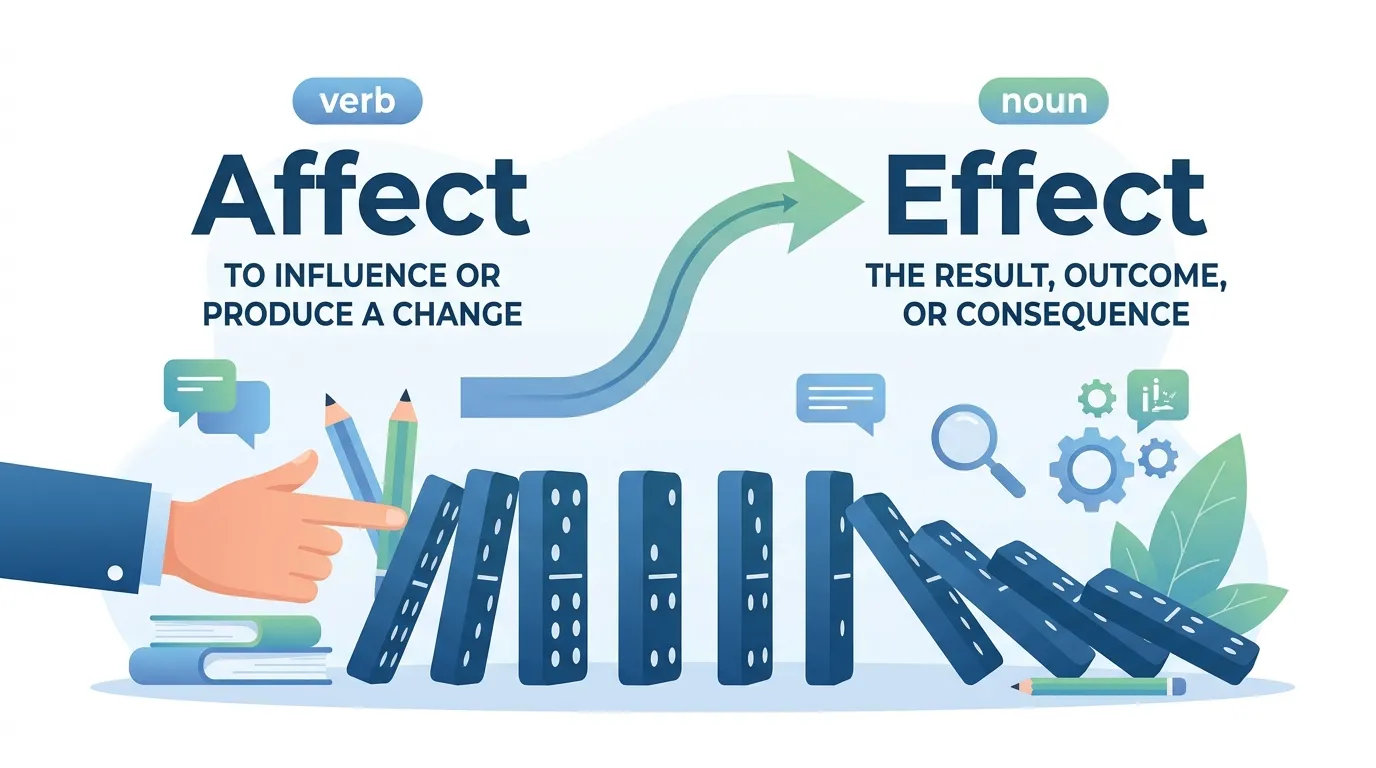
Affect is usually a verb that means to influence or change something. Effect is usually a noun that means the result or outcome of a change.
A few years ago, while reviewing a student’s essay, I noticed the same mistake appearing over and over again. The student wrote, “The new law will effect many people.” At first glance, it looked correct. Yet one small word changed the entire meaning.
If you’ve ever paused while writing and wondered whether to use affect or effect, you’re not alone. Even skilled writers, professionals, and native English speakers mix them up. The two words sound similar. Their meanings are connected. To make things trickier, each word can occasionally play a different grammar role.
That confusion sends thousands of people searching for answers every month. They want a simple way to remember the difference without memorizing complex grammar rules.
The good news is that the distinction is much easier than it seems. Once you understand a few basic patterns and see real examples, you’ll rarely second-guess yourself again.
Let’s break it down in the simplest way possible.
Affect vs Effect: Quick Answer
The easiest rule is this:
- Affect = Action (usually a verb)
- Effect = End Result (usually a noun)
Examples
- The weather affects my mood.
- The weather had a positive effect on tourism.
In the first sentence, something is causing change.
In the second sentence, we’re talking about the result of that change.
The Origin / Background of Affect vs Effect
These two words come from Latin roots.
- Affect comes from the Latin word afficere, meaning “to influence” or “to act upon.”
- Effect comes from effectus, meaning “result” or “accomplishment.”
Over time, both entered English and developed closely related meanings.
That’s why people confuse them so often.
The connection is logical:
- Something affects something else.
- An effect happens because of that influence.
Think of them as two parts of the same process.
Cause → Affect → Effect
Understanding this relationship makes remembering them much easier.
Affect vs Effect Explained: Key Differences
Most of the time:
| Term | Meaning | When to Use | Region/Context |
|---|---|---|---|
| Affect | To influence or change | As a verb | Standard English worldwide |
| Effect | A result or outcome | As a noun | Standard English worldwide |
Affect as a Verb
Use affect when talking about influence.
Examples:
- Lack of sleep can affect your health.
- Rising prices affect consumers.
- Stress can affect performance.
Effect as a Noun
Use effect when talking about a result.
Examples:
- The medicine had an immediate effect.
- The policy produced positive effects.
- Climate change has a major effect on agriculture.
Rare Exceptions
English loves exceptions.
Sometimes:
- Effect can be a verb meaning “to bring about.”
- Affect can be a noun in psychology.
Examples:
- The CEO hopes to effect change.
- The patient displayed a flat affect.
These uses are uncommon in everyday writing.
For most people, stick to:
Affect = Verb
Effect = Noun
Which Version Should You Use?
Different writers have different needs.
For Students
Use this simple memory trick:
Affect = Action
Both start with “A.”
If an action is happening, choose affect.
For Business Professionals
Ask yourself:
“Am I describing influence or a result?”
- Influence = affect
- Result = effect
For Content Writers
Use the standard rule in blogs, articles, and web content.
Readers expect:
- Affect = verb
- Effect = noun
For Global English Users
The same rule works in:
- American English
- British English
- Canadian English
- Australian English
The distinction remains consistent across major English varieties.
Common Mistakes with Affect vs Effect
Here are the mistakes people make most often.
| Mistake | Correction |
|---|---|
| The rain will effect traffic. | The rain will affect traffic. |
| The affect was noticeable. | The effect was noticeable. |
| Inflation has many affects. | Inflation has many effects. |
| The changes effected customers. | The changes affected customers. |
| The medicine had a good affect. | The medicine had a good effect. |
Why These Errors Happen
1. Similar Sound
The words sound nearly identical.
2. Related Meanings
Influence and result are connected ideas.
3. Grammar Confusion
Many people forget which word is usually a verb and which is usually a noun.
4. Rare Exceptions
Advanced uses can make the rule seem more complicated than it really is.
Affect vs Effect in Real World Examples
Professional Email
The recent software update may affect system performance during peak hours.
News Headline
New Tax Policy Has Immediate Effect on Small Businesses
Social Media Post
Poor sleep can seriously affect your energy levels.
Formal Report
The study found a significant effect on employee productivity after training.
Workplace Conversation
How will this decision affect our budget?
Academic Writing
Researchers measured the effect of exercise on memory.
These examples show how naturally the words appear in everyday communication.
Affect vs Effect: Data, Trends & Usage
Search Intent
The keyword Affect vs Effect falls into the:
Informational Search Intent category.
People want a clear explanation and usage guidance.
Who Searches for It Most?
Common audiences include:
- Students
- Teachers
- Content writers
- Business professionals
- Job seekers
- Non native English learners
Why Is It Popular?
People regularly encounter these words in:
- Emails
- Reports
- Essays
- Exams
- Articles
- Workplace communication
Interesting Insight
Grammar related searches continue growing because written communication now happens everywhere. A small mistake can affect how professional or credible your writing appears.
That makes understanding affect vs effect more valuable than ever.
Affect vs Effect Comparison Table
| Term/Variant | Meaning | Region/Context | Best Used When |
|---|---|---|---|
| Affect | To influence something | Everyday English | Describing change or influence |
| Effect | Result of an action | Everyday English | Describing an outcome |
| Effect (verb) | To bring about | Formal writing | Rare professional use |
| Affect (noun) | Emotional expression | Psychology | Academic or clinical contexts |
Frequently Asked Questions
Q: What does affect mean?
A: Affect usually means to influence, change, or impact something. It is most commonly used as a verb.
Q: What does effect mean?
A: Effect usually means the result of a change or action. It is most commonly used as a noun.
Q: How do you use affect correctly?
A: Use affect when something influences another thing. Example: “Exercise can affect your health.”
Q: Affect vs effect: what’s the difference?
A: Affect is generally the action. Effect is generally the result. Think of affect as the cause and effect as the outcome.
Q: Is affect or effect correct in formal writing?
A: Both are correct when used properly. Formal writing follows the same standard distinction: affect as a verb and effect as a noun.
Q: Which version is correct: affect or effect?
A: It depends on the sentence. If you mean “influence,” use affect. If you mean “result,” use effect.
Q: Where do affect and effect come from?
A: Both words come from Latin roots. Their historical meanings relate to influence, action, and results.
Q: Can affect and effect be used in business writing?
A: Absolutely. They appear frequently in reports, emails, presentations, and professional communication.
Conclusion
The difference between affect and effect becomes simple once you focus on their main roles.
Remember these key points:
- Affect usually means to influence.
- Effect usually means a result.
- Most writing follows the rule: Affect = Verb, Effect = Noun.
- Real world examples make the distinction easier to remember.
Whenever you’re unsure, ask yourself one question:
“Am I describing an action or an outcome?”
If it’s an action, choose affect. If it’s an outcome, choose effect.
That single check will solve the problem in most situations.
Now you know exactly how to use affect vs effect with confidence. Bookmark this guide so you never second guess these words again, and share it with someone who’s been confused by them.
Read more: Halves or Halfs: The Easy Guide to Correct Usage

I am an English language writer dedicated to creating clear, accurate, and easy-to-understand content. My goal is to help readers build confidence in their language and communication skills.