Quick Answer: Coming is the correct spelling. Comming is a misspelling and should not be used in standard English. For example, “I am coming to the meeting tomorrow” is correct
Have you ever typed a message and paused for a moment, wondering whether it should be coming or comming? You’re not alone. This is one of the most common spelling mistakes in English, especially for learners and even native speakers who rely on pronunciation when writing.
I remember proofreading a colleague’s email years ago and noticing the sentence, “I am comming to the office later.” The message was perfectly understandable, but the extra m immediately stood out. It’s an easy mistake to make because many English words double consonants when adding endings.
The confusion usually comes from spelling rules. Words like running, swimming, and stopping double a consonant before adding -ing, so people naturally wonder whether come becomes comming.
The good news is that the rule for come is simple once you understand it. In this guide, you’ll learn the correct spelling, why the confusion happens, common mistakes to avoid, and practical examples you can use in everyday writing.
Coming or Comming – Quick Answer
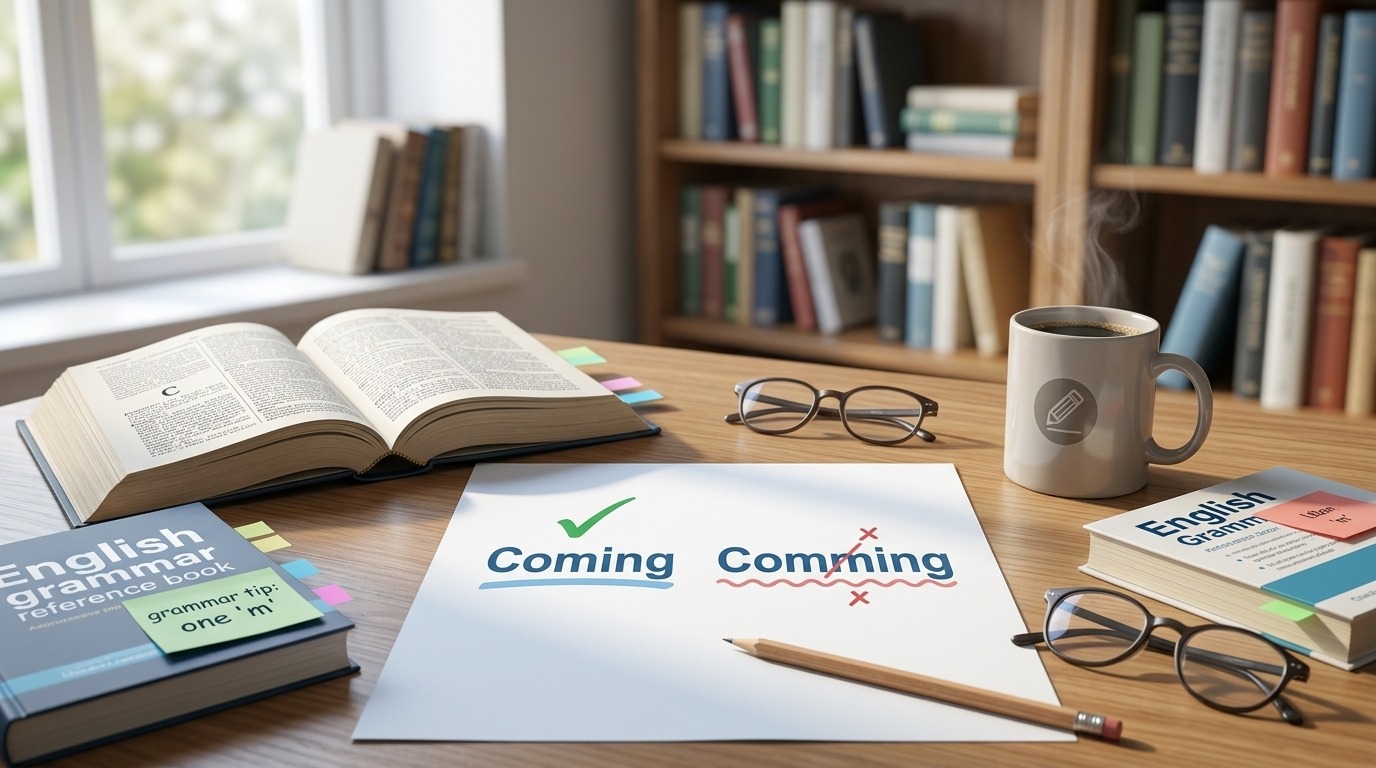
The correct spelling is coming.
❌ Comming — Incorrect
✅ Coming — Correct
Examples
- I am coming home now.
- She is coming to the party tonight.
- The package is coming tomorrow.
In every standard English context, coming is the correct form.
The Origin / Background of Coming

The word coming comes from the verb come.
When forming the -ing version of come, English drops the silent e and adds -ing.
Formula
come + ing = coming
Notice that the e is removed before adding -ing.
This follows a common English spelling rule:
- make → making
- write → writing
- drive → driving
- come → coming
Because of this rule, there is no need to add an extra m.
Why the Confusion Exists
Many English words double a consonant before adding -ing:
- run → running
- swim → swimming
- sit → sitting
This leads some writers to assume that come follows the same pattern. It does not.
Coming or Comming Explained — Key Differences
Comparison Table
| Term | Meaning | Correct? | When to Use |
|---|---|---|---|
| Coming | Moving toward a place or event | ✅ Yes | All standard English writing |
| Comming | Misspelling of coming | ❌ No | Never |
Examples
Correct
- Thank you for coming.
- Winter is coming soon.
- Are you coming with us?
Incorrect
- Thank you for comming.
- Winter is comming soon.
- Are you comming with us?
The only correct choice is coming.
Which Version Should You Use?
For Students
Always use coming.
Example:
- I am coming to class tomorrow.
For Professional Writing
Use coming in emails, reports, and presentations.
Example:
- The new software update is coming next month.
For Social Media
The spelling remains the same.
Example:
- Can’t wait! The weekend is coming.
For Global English
Whether you’re writing American English, British English, Canadian English, or Australian English, coming is always correct.
Recommendation
There is no situation where comming is the preferred spelling.
Common Mistakes with Coming
Mistake 1
| Mistake | Correction |
|---|---|
| I am comming tomorrow. | I am coming tomorrow. |
Why? The verb come drops the final e before adding -ing.
Mistake 2
| Mistake | Correction |
|---|---|
| Thank you for comming. | Thank you for coming. |
Why? No extra m is needed.
Mistake 3
| Mistake | Correction |
|---|---|
| The train is comming soon. | The train is coming soon. |
Why? Standard English spelling requires coming.
Mistake 4
| Mistake | Correction |
|---|---|
| Summer is comming. | Summer is coming. |
Why? The correct present participle is coming.
Mistake 5
| Mistake | Correction |
|---|---|
| Are you comming with us? | Are you coming with us? |
Why? The extra m creates a spelling error.
Professional Email
Thank you for coming to today’s meeting.
News Headline
Major Weather Changes Coming This Weekend
Social Media Post
Vacation is finally coming!
Formal Report
Additional funding is coming from several new investors.
Coming — Data, Trends & Usage
Search Intent
The keyword coming or comming has an informational search intent.
People typically want to know:
- Which spelling is correct
- Why comming is wrong
- How English spelling rules apply
- Whether both versions are accepted
Who Searches for This?
- English learners
- Students
- Writers
- Professionals
- Job applicants
Why This Matters
Spelling mistakes can affect credibility. Using coming correctly helps your writing appear polished and professional.
Standalone Comparison Table
| Term/Variant | Meaning | Region/Context | Best Used When |
|---|---|---|---|
| Coming | Present participle of come | All English varieties | Always |
| Comming | Misspelling | None | Never |
Frequently Asked Questions
Q: Is it coming or comming?
A: Coming is correct. Comming is a spelling mistake.
Q: Why isn’t comming correct?
A: The verb come drops its silent e before adding -ing, resulting in coming.
Q: What does coming mean?
A: It is the present participle of come, meaning moving toward a place, person, or event.
Q: Is comming ever acceptable?
A: No. Standard English dictionaries do not recognize comming as a correct spelling.
Q: How do you remember the correct spelling?
A: Think of the rule: come → drop the e → add ing = coming.
Q: Is coming used in formal writing?
A: Yes. It is completely acceptable in professional, academic, and formal writing.
Q: Do British and American English spell it differently?
A: No. Both use coming.
Conclusion
The answer is simple: coming is correct, and comming is incorrect.
Remember these key points:
- Coming is the standard English spelling.
- Comming is a common misspelling.
- The verb come drops its final e before adding -ing.
- The spelling is the same in all major forms of English.
Whenever you’re writing an email, essay, social media post, or professional document, choose coming with confidence.
Now you know exactly which spelling to use. Bookmark this guide so you never second-guess coming or comming again.
Coming or Comming: Which Spelling Is Correct?

I am an English language enthusiast who enjoys exploring word differences and spelling variations.
My work focuses on making confusing English terms easier to understand for everyday readers.
I believe clear language helps people communicate with confidence.