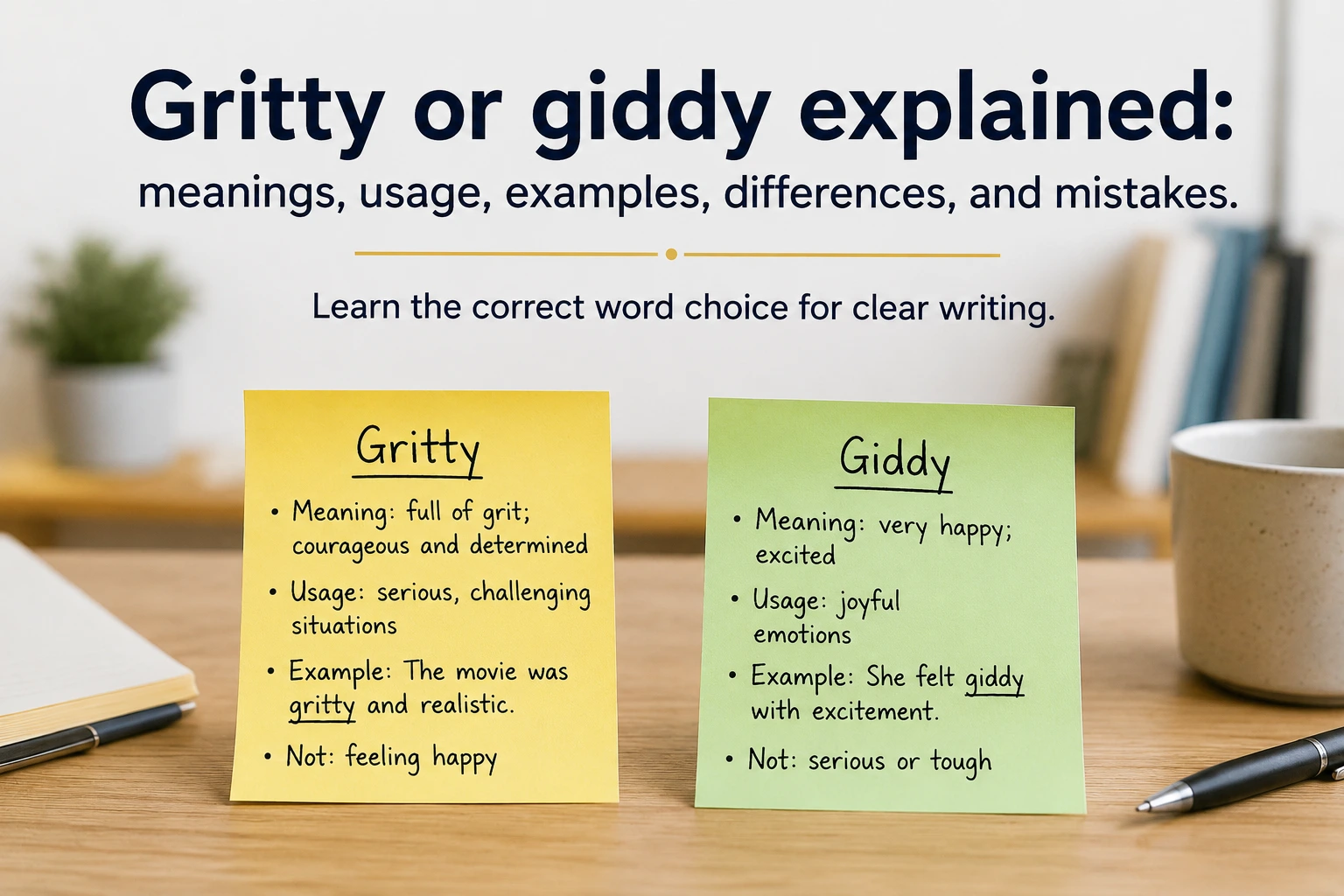
Gritty means tough, realistic, rough, or determined. Giddy means excited, happy, dizzy, or light-headed. A war movie can be gritty, while a child on a roller coaster may feel giddy.
Have you ever read the words gritty and giddy and wondered if they meant the same thing? You’re not alone. Many English learners and even native speakers mix them up because they look and sound somewhat similar.
I first noticed this confusion while editing articles written by students. One writer described a serious crime drama as “giddy.” The word felt completely wrong. They actually meant “gritty.” That small spelling mistake changed the whole meaning of the sentence.
The confusion happens often because both words are common in books, movies, news articles, and everyday conversations. Yet they describe very different feelings and situations.
If you’ve ever paused while writing and asked yourself, “Should I use gritty or giddy?” this guide will help. You’ll learn the meaning of each word, where they came from, how to use them correctly, and common mistakes to avoid.
Let’s clear up the confusion once and for all.
Gritty or Giddy – Quick Answer
Gritty and giddy have completely different meanings.
- Gritty = rough, realistic, tough, or showing determination.
- Giddy = excited, joyful, silly, or dizzy.
Examples
✅ The film showed a gritty picture of life in the city.
✅ She felt giddy after hearing the good news.
✅ The athlete showed gritty determination during the match.
✅ The children were giddy with excitement before the trip.
Remember:
- Gritty relates to toughness or realism.
- Giddy relates to excitement or dizziness.
The Origin of Gritty or Giddy
Understanding where these words came from makes them easier to remember.
Origin of Gritty
The word gritty comes from grit, which means small particles of sand or stone. Over time, the word gained a figurative meaning.
People began using grit to describe courage, perseverance, and toughness.
That is why a person with strong determination is often described as having “grit.”
Origin of Giddy
The word giddy comes from Old English. Its earliest meaning was related to dizziness or confusion.
Later, it evolved to describe someone who feels overly excited, cheerful, or emotionally overwhelmed.
Today, both meanings remain common.
Gritty or Giddy Explained :Key Differences
Although the words look similar, they belong in different situations.
| Term | Meaning | When to Use | Region/Context |
| Gritty | Tough, realistic, rough, determined | Serious topics, determination, realism | Global English |
| Giddy | Excited, joyful, dizzy, light-headed | Emotions, excitement, physical sensations | Global English |
Example Comparison
Gritty
- A gritty detective story
- A gritty performance by an athlete
- A gritty survivor who never gives up
Giddy
- Giddy with excitement
- Feeling giddy after spinning around
- Giddy laughter among friends
The easiest memory trick:
- Gritty = grit = toughness
- Giddy = giggles and excitement
Which Version Should You Use?
The correct choice depends on what you want to say.
For Students
Use gritty when describing:
- Determination
- Hard work
- Realistic stories
Use giddy when describing:
- Excitement
- Happiness
- Dizziness
For Writers and Bloggers
Choose gritty for:
- Crime stories
- War stories
- Realistic reporting
- Serious character descriptions
Choose giddy for:
- Emotional reactions
- Celebrations
- Happy moments
- Romantic excitement
For Global English
Both words are accepted worldwide.
The key is choosing the word that matches the meaning you intend.
Dying or Dyeing: The Easy Guide to Get It Right
Common Mistakes with Gritty or Giddy
Many writers accidentally swap these words.
Mistake 1
❌ The movie was giddy and realistic.
✅ The movie was gritty and realistic.
Why?
Realistic stories are usually described as gritty.
Mistake 2
❌ She felt gritty after winning the lottery.
✅ She felt giddy after winning the lottery.
Why?
Winning often creates excitement, not toughness.
Mistake 3
❌ The athlete gave a giddy performance.
✅ The athlete gave a gritty performance.
Why?
Athletic determination is gritty.
Mistake 4
❌ The children were gritty with excitement.
✅ The children were giddy with excitement.
Why?
Excitement creates giddiness.
Mistake 5
❌ The gritty room made me dizzy.
✅ The giddy feeling made me dizzy.
Why?
Dizziness relates to giddy, not gritty.
Gritty or Giddy in Real-World Examples
Professional Email
“The team showed a gritty attitude throughout the project and overcame several challenges.”
News Headline
“New Film Offers a Gritty Look at Urban Life”
Social Media Post
“I’m so giddy about my vacation next week!”
Formal Report
“The company demonstrated gritty resilience during the economic downturn.”
Everyday Conversation
“I felt giddy when I heard I got the job.”
Gritty or Giddy : Data, Trends & Usage
Searches for gritty or giddy usually come from:
- English learners
- Students
- Bloggers
- Content writers
- Editors
Search Intent
Primary intent:
Informational
People want to know:
- Which word is correct
- What each word means
- How to avoid mistakes
Regions with High Interest
- United States
- United Kingdom
- Canada
- Australia
- India
- Pakistan
Why It Matters Today
Clear communication matters more than ever. A single word can change the tone of an article, email, or social media post. Understanding the difference between gritty and giddy helps your writing sound more professional and accurate.
Comparison Table
| Term/Variant | Meaning | Region/Context | Best Used When |
| Gritty | Tough, realistic, determined | Worldwide | Discussing resilience, realism, or hard situations |
| Giddy | Excited, joyful, dizzy | Worldwide | Describing happiness, excitement, or dizziness |
Frequently Asked Questions
Q: What does gritty mean?
A: Gritty means tough, realistic, rough, or determined. It often describes people, stories, or situations that show strength and perseverance.
Q: What does giddy mean?
A: Giddy means excited, happy, silly, or dizzy. It usually describes a person’s emotional or physical state.
Q: How do you use gritty correctly?
A: Use gritty when talking about realism, toughness, courage, or determination. Example: “The runner showed gritty determination.”
Q: How do you use giddy correctly?
A: Use giddy when describing excitement, happiness, or dizziness. Example: “She felt giddy after hearing the good news.”
Q: Gritty vs Giddy — what’s the difference?
A: Gritty relates to toughness and realism. Giddy relates to excitement and dizziness. They are not interchangeable.
Q: Is gritty acceptable in formal writing?
A: Yes. It is commonly used in journalism, business writing, reviews, and academic discussions when describing determination or realism.
Q: Which version is correct — gritty or giddy?
A: Both are correct words. The right choice depends on your meaning. Use gritty for toughness and giddy for excitement.
Q: Where does gritty come from?
A: It comes from the word grit, originally referring to small grains of sand or stone and later symbolizing courage and determination.
Q: Can giddy be used in professional writing?
A: Yes, but usually when describing emotions or reactions. It is less common than gritty in formal business documents.
Memorise or Memorize: The Complete Guide to Correct Usage
Conclusion
The difference between gritty and giddy is simple once you know what each word represents.
Gritty is about toughness, realism, resilience, and determination. It often appears in discussions about challenging situations, strong personalities, and realistic stories.
Giddy is about excitement, happiness, enthusiasm, or dizziness. It describes emotional highs and joyful moments.
A helpful memory trick is this:
- Gritty = grit = strength
- Giddy = excitement and giggles
Using the correct word helps your writing sound clear and professional. Whether you’re writing a blog post, an email, a social media caption, or a school assignment, choosing between gritty and giddy becomes much easier when you focus on the feeling you want to express.
Now you know exactly how to use gritty and giddy. Bookmark this guide so you never second-guess these words again, and share it with someone who has been confused by them.

I am an English author, language explorer dedicated to analyzing words, phrases, and idioms. Through my writing, I uncover subtle language differences and help readers improve their communication skills. My content helps readers navigate English with clarity and confidence.