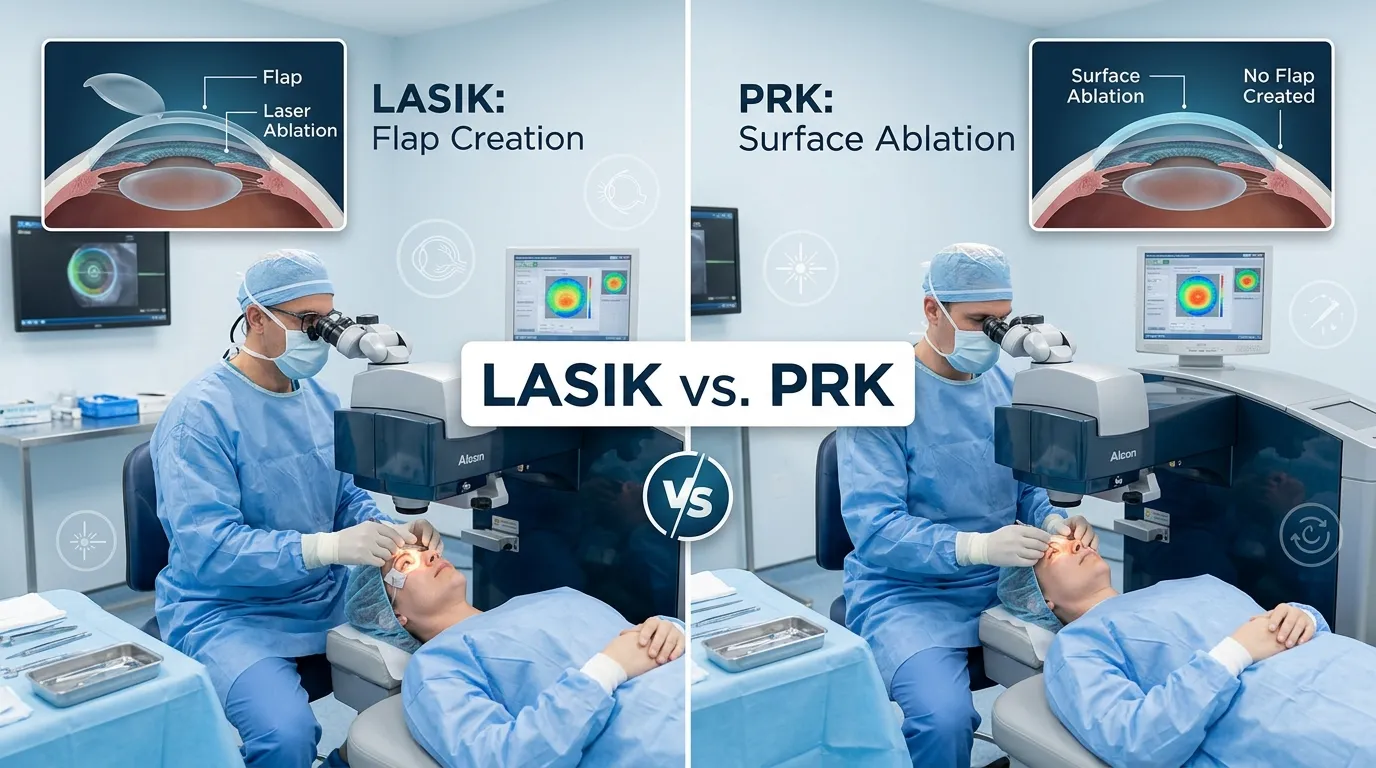
LASIK and PRK are both laser eye surgeries that correct vision problems. LASIK offers faster recovery, while PRK is often better for people with thin corneas or active lifestyles.
A few years ago, one of my friends was tired of wearing glasses every day. He wanted clear vision without contacts. After meeting with an eye surgeon, he faced a common question: LASIK or PRK?
At first, he thought they were the same procedure. Many people do. Both surgeries use a laser to reshape the cornea and improve vision. Both can reduce or even remove the need for glasses. Yet the recovery process, risks, and ideal candidates can be very different.
That is why so many people search for LASIK or PRK before making a decision. Choosing the wrong procedure could mean a longer recovery or less suitable results for your lifestyle.
The good news is that understanding the differences is easier than it seems. In this guide, you’ll learn how each procedure works, who should choose LASIK, who should choose PRK, common mistakes to avoid, and which option may fit your needs best.
Let’s start with the basics.
LASIK or PRK: Quick Answer
Both LASIK and PRK are laser vision correction procedures used to treat:
- Nearsightedness (myopia)
- Farsightedness (hyperopia)
- Astigmatism
The main difference is how the surgeon accesses the cornea.
- LASIK creates a thin flap in the cornea.
- PRK removes the outer layer of the cornea before treatment.
Real-World Examples
- A teacher who wants to return to work quickly may prefer LASIK because recovery is usually faster.
- A boxer or military member may choose PRK because there is no corneal flap that could be disturbed by impact.
The Origin / Background of LASIK or PRK
PRK came first.
PRK History
Photorefractive Keratectomy (PRK) was approved in the United States in the 1990s. It became one of the first successful laser eye surgeries.
Doctors discovered they could reshape the cornea using an excimer laser. This improved vision without glasses.
LASIK History
A few years later, Laser-Assisted In Situ Keratomileusis (LASIK) was developed.
LASIK combined laser technology with a corneal flap. This innovation reduced discomfort and shortened recovery time.
Why the Confusion Exists
Many people assume LASIK and PRK are identical because:
- Both use lasers
- Both correct similar vision problems
- Both have high success rates
The difference lies mainly in the surgical technique and healing process.
LASIK or PRK Explained: Key Differences
Understanding the differences can make your decision much easier.
| Term | Meaning | When to Use | Region/Context |
|---|---|---|---|
| LASIK | Laser surgery using a corneal flap | Fast recovery desired | Most common worldwide |
| PRK | Laser surgery without a corneal flap | Thin corneas or contact sports | Medical and military settings |
LASIK
During LASIK:
- A thin flap is created.
- The flap is lifted.
- The laser reshapes the cornea.
- The flap is returned to its position.
PRK
During PRK:
- The outer corneal layer is removed.
- The laser reshapes the cornea.
- A protective contact lens is placed on the eye.
Recovery Differences
| Factor | LASIK | PRK |
|---|---|---|
| Initial Recovery | 1–3 days | 1–2 weeks |
| Discomfort | Mild | Moderate |
| Vision Improvement | Very fast | Gradual |
| Flap Risk | Yes | No |
| Thin Corneas | Less suitable | Often preferred |
Which Version Approach Should You Use?
The right choice depends on your eyes and lifestyle.
For Office Workers
Choose LASIK because:
- Faster recovery
- Less downtime
- Quick return to daily activities
For Athletes
Choose PRK because:
- No corneal flap
- Better for contact sports
- Lower risk from eye impacts
For People with Thin Corneas
Choose PRK because:
- Preserves more corneal tissue
- Often safer for thin corneas
For Global Patients Seeking Convenience
LASIK remains the most popular option due to its rapid results and comfort.
Always follow the recommendation of a qualified eye surgeon.
Common Mistakes with LASIK or PRK
Many patients make these errors before surgery.
| Mistake | Correction |
|---|---|
| Choosing based only on price | Focus on suitability and safety |
| Assuming LASIK is always better | PRK may be safer for some eyes |
| Ignoring recovery time | Plan recovery before surgery |
| Not disclosing medical history | Share all health information |
| Expecting perfect vision instantly | Healing varies by person |
Why These Mistakes Happen
People often focus on advertisements rather than medical advice. Every eye is different. A personalized consultation is essential.
LASIK or PRK in Real World Examples
Professional Email
“After discussing my options with the surgeon, I decided that PRK was the better choice because of my thin corneas.”
News Headline
“LASIK Remains Popular as Vision Correction Demand Grows.”
Social Media Post
“One week after PRK and my vision keeps getting better every day!”
Formal Report
“The patient was evaluated for both LASIK and PRK before selecting the most appropriate treatment plan.”
LASIK or PRK: Data, Trends & Usage
Where Is This Topic Most Searched?
Interest is high in:
- United States
- Canada
- United Kingdom
- Australia
- India
Who Searches Most?
- Adults aged 20–45
- Contact lens users
- Professionals seeking convenience
- Athletes and active individuals
Search Intent Category
Primary intent:
Informational
People want to understand:
- The difference between LASIK and PRK
- Recovery expectations
- Risks and benefits
- Which surgery fits their lifestyle
Why It Matters Now
More people spend long hours on screens and want freedom from glasses. Modern laser technology has also improved safety and outcomes, increasing interest in vision correction procedures.
LASIK vs PRK Comparison Table
| Term/Variant | Meaning | Region/Context | Best Used When |
|---|---|---|---|
| LASIK | Laser surgery using corneal flap | Common worldwide | Fast recovery is important |
| PRK | Laser surgery without flap | Often used for athletes and military | Thin corneas or active lifestyle |
| LASIK Enhancement | Follow-up LASIK correction | Existing LASIK patients | Minor vision adjustment needed |
| PRK Enhancement | Follow-up PRK correction | Existing PRK patients | Additional correction needed |
Frequently Asked Questions
Q: What does LASIK or PRK mean?
A: LASIK and PRK are laser eye surgeries designed to improve vision by reshaping the cornea. They help reduce dependence on glasses or contact lenses.
Q: How do you choose between LASIK and PRK?
A: The decision depends on corneal thickness, lifestyle, eye health, and recovery preferences. An eye surgeon can determine the best option.
Q: LASIK vs PRK: what’s the main difference?
A: LASIK creates a corneal flap, while PRK removes the outer corneal layer. This leads to different recovery experiences.
Q: Is LASIK acceptable for most people?
A: Yes. Many healthy adults qualify for LASIK. However, not everyone is a suitable candidate.
Q: Which version is correct: LASIK or PRK?
A: Neither is universally better. The right choice depends on your eyes and personal needs.
Q: Where do LASIK and PRK come from?
A: PRK was developed first. LASIK evolved later to improve comfort and speed recovery.
Q: Can LASIK or PRK be used for astigmatism?
A: Yes. Both procedures can successfully correct many forms of astigmatism.
Conclusion
Choosing between LASIK or PRK is not about finding a winner. It is about finding the procedure that fits your eyes and lifestyle.
Here are the key points to remember:
- LASIK offers faster recovery and less discomfort.
- PRK may be safer for thin corneas and active lifestyles.
- Both procedures have excellent success rates.
- A professional eye evaluation is the best way to decide.
If convenience and quick healing matter most, LASIK may be ideal. If you play contact sports or have thin corneas, PRK could be the smarter choice.
Now you know exactly how to compare LASIK or PRK. Bookmark this guide so you can make a confident decision when discussing your options with an eye specialist.
Read more: Miralax or Metamucil: Which Works Best?

I am an English language writer dedicated to creating clear, accurate, and easy-to-understand content. My goal is to help readers build confidence in their language and communication skills.