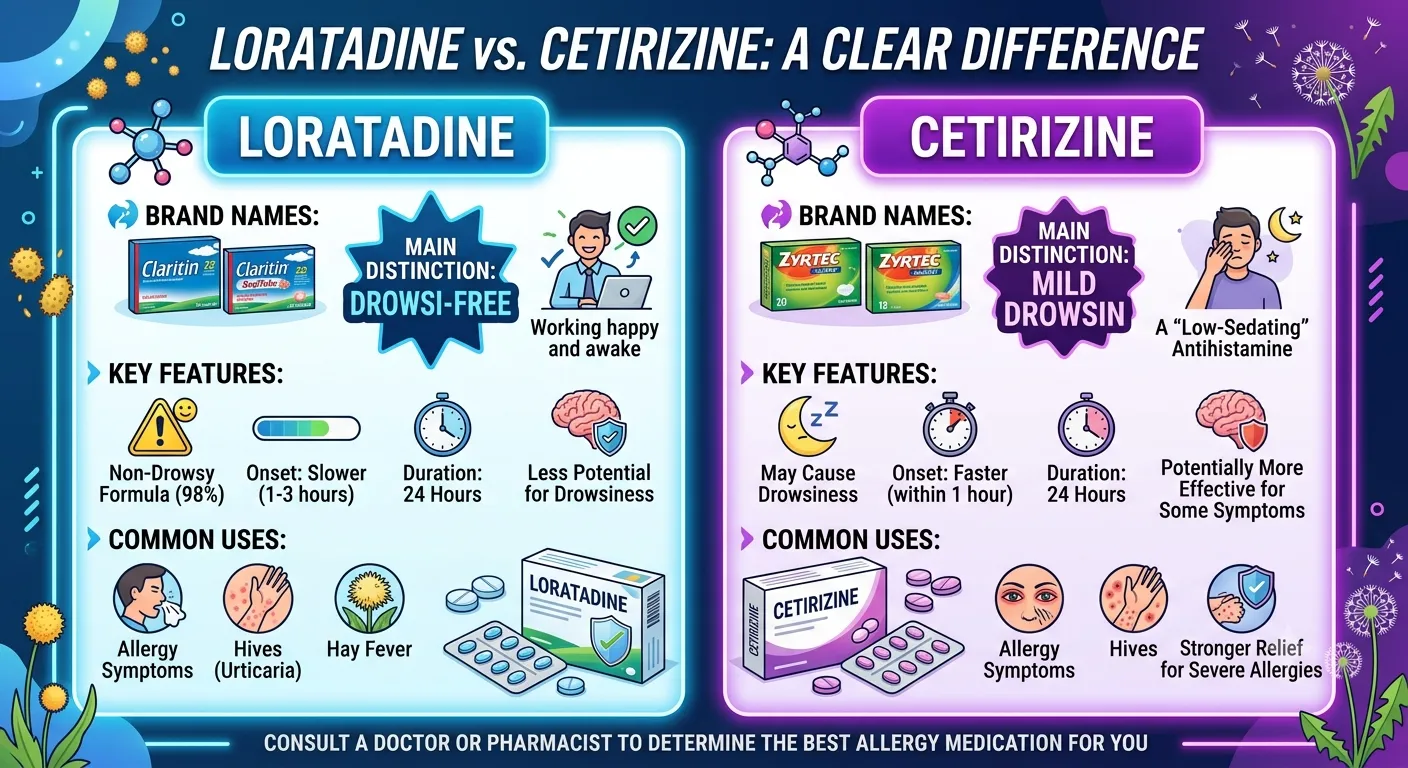
Loratadine and cetirizine are allergy medicines called antihistamines. Loratadine is less likely to make you sleepy. Cetirizine may work faster and provide stronger relief for some people.
Few things are more annoying than allergies.
One minute, you’re enjoying a sunny day. Next, you’re sneezing every few minutes. Your eyes itch. Your nose runs. You feel miserable.
I remember standing in a pharmacy during allergy season. I looked at dozens of allergy medicines. Two names kept appearing: loratadine and cetirizine.
They looked similar.
Both promised allergy relief. Both were available without a prescription. Both were trusted by millions of people.
So which one should you choose?
That’s exactly why so many people search for loratadine or cetirizine.
The answer depends on your symptoms and lifestyle.
Some people want the strongest allergy relief possible. Others want a medicine that won’t make them feel tired during work or school.
In this guide, you’ll learn:
- What loratadine is
- What cetirizine is
- Which medicine works faster
- Which causes more drowsiness
- Which is better for hives
- Which option may work best for you
Let’s start with the basics.
Loratadine or Cetirizine Quick Answer
Both medicines treat common allergy symptoms.
These include:
- Sneezing
- Runny nose
- Itchy eyes
- Itchy throat
- Hay fever
- Pet allergies
- Seasonal allergies
Choose Loratadine If You:
- Need to stay alert
- Work during the day
- Attend school
- Are sensitive to drowsiness
Choose Cetirizine If You:
- Have stronger allergies
- Need fast relief
- Get hives often
- Want powerful symptom control
For many people, loratadine is the better daytime choice.
Cetirizine is often the better choice for stronger symptoms.
What Is Loratadine?
Loratadine is an antihistamine.
It works by blocking histamine.
Histamine is a chemical your body releases during an allergic reaction.
When histamine is blocked, allergy symptoms become less severe.
Common Uses
Loratadine may help with:
- Seasonal allergies
- Hay fever
- Dust allergies
- Pet allergies
- Sneezing
- Itchy eyes
One of its biggest advantages is that it usually causes very little drowsiness.
That’s why many people take it before work or school.
What Is Cetirizine?
Cetirizine is also an antihistamine.
Like loratadine, it blocks histamine.
This helps reduce allergy symptoms.
Many people find cetirizine especially helpful during severe allergy seasons.
Common Uses
Cetirizine may help with:
- Pollen allergies
- Pet allergies
- Dust allergies
- Hives
- Skin itching
- Runny nose
Many allergy sufferers say cetirizine provides stronger relief.
Loratadine vs Cetirizine: Side-by-Side Comparison
| Feature | Loratadine | Cetirizine |
| Allergy Relief | Good | Excellent |
| Drowsiness Risk | Low | Moderate |
| Fast Relief | Good | Excellent |
| Daytime Use | Excellent | Good |
| Hives Relief | Good | Excellent |
| Once Daily | Yes | Yes |
| Available OTC | Yes | Yes |
| Duration | About 24 Hours | About 24 Hours |
Both medicines work well.
The biggest differences are strength and drowsiness.
Which Works Faster?
Many people want quick relief.
When allergies strike, nobody wants to wait all day.
Cetirizine often starts working within about one hour.
Loratadine works well too, but it may take slightly longer for some people.
Winner for Fast Relief
✅ Cetirizine
If speed matters most, cetirizine may have a small advantage.
Which Is Better for Seasonal Allergies?
Seasonal allergies can make daily life difficult.
Common symptoms include:
- Sneezing
- Watery eyes
- Itchy nose
- Runny nose
- Scratchy throat
Both medicines can help.
However, many people report stronger symptom relief with cetirizine during peak pollen season.
Best for Mild Allergies
✅ Loratadine
Best for Severe Allergies
✅ Cetirizine
Which Is Better for Hives?
Hives are itchy, raised bumps on the skin.
They can be uncomfortable and frustrating.
Both medicines may help.
However, cetirizine is often preferred for hives.
Best Choice for Hives
✅ Cetirizine
Many people notice better itch relief with cetirizine.
Which Causes More Drowsiness?
This is one of the biggest differences.
Some allergy medicines make people sleepy.
Others do not.
Loratadine
- Usually non-drowsy
- Good for daytime use
- Popular among students and workers
Cetirizine
- May cause mild sleepiness
- Some people feel tired
- Others notice no drowsiness at all
Best for Staying Awake
✅ Loratadine
If you need to focus, loratadine may be the better option.
Quick Decision Guide
Choose Loratadine if you:
- Work long hours
- Attend school
- Drive often
- Want less drowsiness
Choose Cetirizine if you:
- Have severe allergies
- Need faster relief
- Get frequent hives
- Want stronger symptom control
Easy Memory Trick
Need a simple way to remember?
Loratadine = Less Sleepy
Both start with the letter L.
Cetirizine = Can Be Stronger
Both start with the letter C.
This trick helps many people remember the difference.
Common Mistakes People Make
Mistake 1: Taking Extra Medicine
More is not always better.
Always follow the directions.
Mistake 2: Expecting Instant Results
Give the medicine time to work.
Mistake 3: Ignoring Drowsiness
Pay attention to how your body feels.
Mistake 4: Switching Too Quickly
One bad day doesn’t mean the medicine isn’t working.
Mistake 5: Assuming One Choice Fits Everyone
People react differently.
What works for your friend may not work for you.
Real-World Examples
At Work
I take loratadine before work because it doesn’t make me sleepy.
During Allergy Season
Cetirizine helps me control my pollen allergies.
At School
Loratadine helps me stay focused in class.
For Hives
My doctor suggested cetirizine for recurring hives.
Loratadine or Cetirizine Data, Trends & Usage
Search Intent
Most people searching this topic want:
- A comparison
- Allergy relief advice
- Side effect information
- Help choosing the right medicine
Popular Related Searches
People also search for:
- Loratadine vs cetirizine
- Best allergy medicine
- Hay fever treatment
- Non-drowsy antihistamine
- Allergy tablets
- Hives treatment
- Seasonal allergy relief
Why This Topic Matters
Millions of people experience allergies every year.
Choosing the right medicine can improve:
- Sleep
- Comfort
- Focus
- Productivity
- Quality of life
At-a-Glance Comparison
| Need | Better Choice |
| Less Drowsiness | Loratadine |
| Faster Relief | Cetirizine |
| Strong Allergies | Cetirizine |
| Daytime Use | Loratadine |
| Hives | Cetirizine |
| School or Work | Loratadine |
Frequently Asked Questions
Q: Which is better, loratadine or cetirizine?
A: Both work well. Loratadine causes less drowsiness, while cetirizine may provide stronger relief.
Q: Is cetirizine stronger than loratadine?
A: Many people find cetirizine stronger, especially for severe allergies and hives.
Q: Which medicine causes less drowsiness?
A: Loratadine is generally less likely to make you sleepy.
Q: Can I take loratadine every day?
A: Many people use it daily during allergy season. Follow package directions.
Q: Can I take cetirizine every day?
A: Yes, many people use it once daily for allergy control.
Q: Which medicine is best for hay fever?
A: Both can help. Cetirizine may provide stronger symptom relief for some people.
Q: Can I switch from loratadine to cetirizine?
A: Many people switch when one medicine doesn’t provide enough relief. Ask a healthcare professional if you’re unsure.
Q: Which medicine lasts longer?
A: Both usually provide relief for about 24 hours.
Conclusion
Choosing between loratadine or cetirizine doesn’t have to be difficult.
Both medicines can help relieve:
- Sneezing
- Itchy eyes
- Runny nose
- Allergy symptoms
If you want a medicine that is less likely to make you sleepy, loratadine is often the better choice.
If you want stronger or faster allergy relief, cetirizine may work better.
Everyone is different.
The best allergy medicine is the one that helps your symptoms while causing the fewest side effects.
Now you know the key differences between loratadine and cetirizine. Bookmark this guide so you can make a confident choice when allergy season arrives.
Medical Disclaimer
This article is for educational purposes only. It is not medical advice. Always consult a qualified healthcare professional about medications or health concerns.
Read More:
Clockwise or Counterclockwise: Complete Easy Guide ⏱️🔄

📚✨ I’m an English enthusiast and author dedicated to exploring word differences, spelling variations, and common language questions. By drawing on trusted dictionaries, language resources, and practical usage examples, I create clear, reliable content that helps readers learn with confidence and communicate more effectively. ✍️🌍