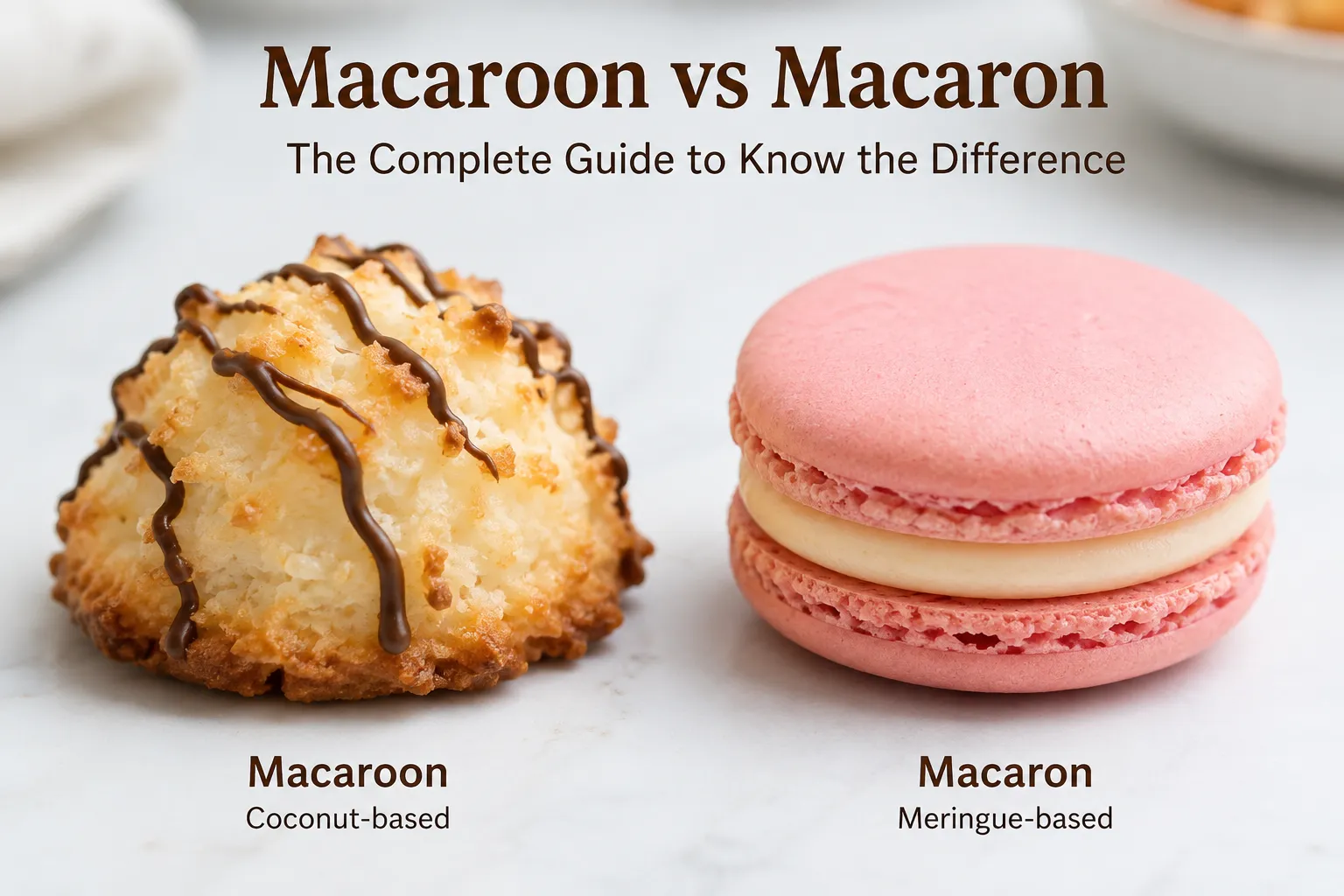
Macaroon and macaron are two different cookies. A macaroon is usually made with coconut, while a macaron is a colorful French sandwich cookie made with almond flour and a creamy filling.
Have you ever stood in a bakery and wondered why two cookies with almost the same name look completely different?
I have.
Years ago, I ordered what I thought was a fancy French macaron. Instead, I received a chewy coconut macaroon. It tasted great, but it was not what I expected. That simple mix-up taught me something many people still get wrong today.
The confusion is easy to understand. The words look almost identical. They sound similar. Many restaurants, blogs, and even bakeries sometimes use the wrong term.
If you’ve searched for “macaroon or macaron,” you’re probably trying to figure out which spelling is correct, what each cookie actually is, and when to use each word.
The good news is that the difference is simple once you know it.
By the end of this guide, you’ll know exactly what separates a macaroon from a macaron, where each comes from, how to use the terms correctly, and how to avoid common mistakes.
Let’s clear up the confusion once and for all.
Macaroon or Macaron : Quick Answer
A macaron is a delicate French cookie made from almond flour, egg whites, and sugar. It has two crisp shells with a filling in the middle.
A macaroon is a chewy cookie usually made from shredded coconut, egg whites, and sugar.
Simple Examples
- Pink raspberry sandwich cookie = macaron
- Coconut mound cookie = macaroon
A quick trick:
One “o” = fancy French sandwich cookie.
Two “o’s” = coconut cookie.
The Origin / Background of Macaroon or Macaron
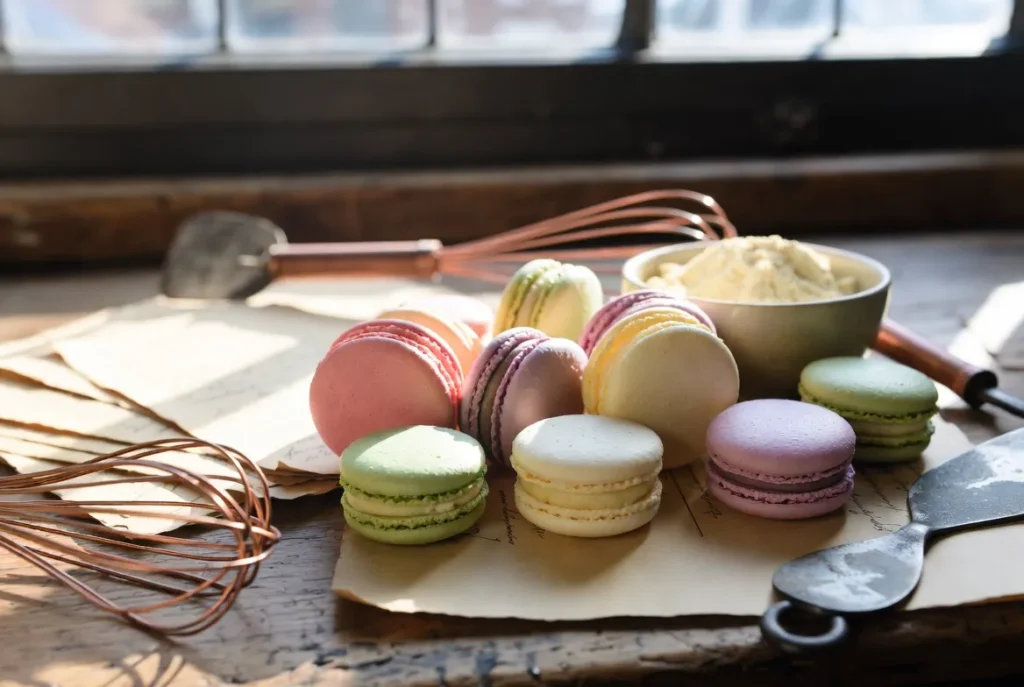
The story begins centuries ago.
Both words come from the Italian word “maccarone.” The term referred to a paste made from ground almonds.
Over time, the recipe spread across Europe.
In France, bakers refined the almond cookie into what became the modern macaron. Later, French pastry chefs added fillings between two shells, creating the colorful treat people know today.
In other regions, especially in English-speaking countries, a coconut version became popular. That cookie became known as the macaroon.
Why the Confusion Exists
Several reasons cause confusion:
- The names are nearly identical.
- Both cookies contain egg whites and sugar.
- Both share a distant historical origin.
- Many people rarely see both side by side.
As a result, the terms are often mixed up online and in everyday conversation.
Macaroon or Macaron Explained : Key Differences
While the names are similar, the cookies are very different.
| Term | Meaning | When to Use | Region/Context |
| Macaron | French sandwich cookie made with almond flour | When referring to colorful filled cookies | France and international bakeries |
| Macaroon | Coconut-based chewy cookie | When referring to coconut desserts | United States and many English-speaking countries |
What Is a Macaron?
A macaron typically includes:
- Almond flour
- Egg whites
- Sugar
- Buttercream, ganache, or jam filling
Characteristics:
- Crisp exterior
- Soft center
- Bright colors
- Elegant appearance
What Is a Macaroon?
A macaroon typically includes:
- Shredded coconut
- Egg whites
- Sugar
Characteristics:
- Dense texture
- Chewy bite
- Rustic appearance
- Strong coconut flavor
Side-by-Side Comparison
| Feature | Macaron | Macaroon |
| Main Ingredient | Almond flour | Coconut |
| Texture | Light and delicate | Chewy and dense |
| Shape | Sandwich cookie | Mound-shaped cookie |
| Filling | Usually yes | Usually no |
| Origin | France | Coconut adaptation of older recipes |
| Appearance | Colorful and smooth | Rustic and textured |
Which Version Should You Use?
The correct term depends on what you’re describing.
For Bakery Customers
Use macaron if you’re talking about colorful French sandwich cookies.
Example:
“I bought six pistachio macarons.”
For Home Bakers
Use macaroon if your recipe centers on coconut.
Example:
“My grandmother makes chocolate-dipped macaroons.”
For Food Bloggers
Always use the exact cookie name.
This helps readers and improves search accuracy.
For General Conversations
When in doubt:
- Coconut cookie = macaroon
- French sandwich cookie = macaron
That rule works almost every time.
Common Mistakes with Macaroon or Macaron
Many people make the same errors.
Mistake #1
| Mistake | Correct |
| “French macaroons” | “French macarons” |
Why?
French sandwich cookies are macarons, not macaroons.
Mistake #2
| Mistake | Correct |
| Calling coconut cookies macarons | Calling coconut cookies macaroons |
Why?
Macaroons are coconut-based.
Mistake #3
| Mistake | Correct |
| Assuming they are the same cookie | Understanding they are different desserts |
Why?
Their ingredients and textures are completely different.
Mistake #4
| Mistake | Correct |
| Using the words interchangeably | Using the proper term for each cookie |
Why?
Food professionals treat them as separate desserts.
Mistake #5
| Mistake | Correct |
| Ordering a macaron expecting coconut | Ordering a macaroon for coconut flavor |
Why?
The names can easily trick first-time buyers.
Macaroon or Macaron in Real-World Examples
Here is how the terms appear naturally in different situations.
Professional Email
We would like to add a seasonal macaron collection to our dessert menu next month.
News Headline
Local Bakery Wins Award for Best French Macaron Selection
Social Media Post
Just tried salted caramel macarons and they’re amazing!
Formal Report
Consumer demand for premium French macarons increased during the holiday season.
Bakery Menu
Chocolate Coconut Macaroons : Freshly baked daily.
These examples show how the words are used in real settings.
Macaroon or Macaron : Data, Trends & Usage
Interest in both cookies has grown over the last decade.
Most Popular Searches
People often search:
- Macaroon vs macaron
- What is a macaron?
- What is a macaroon?
- French macaron recipe
- Coconut macaroon recipe
Regions With Strong Interest
Macaron popularity:
- France
- United States
- Canada
- United Kingdom
- Australia
Macaroon popularity:
- United States
- Canada
- Jewish baking communities
- Home baking audiences
Search Intent Category
Primary intent:
Informational
People want to understand:
- Meaning
- Spelling
- Differences
- Correct usage
Secondary intent:
Recipe and buying research
Why This Matters Today
Social media has made colorful French macarons more visible than ever. As their popularity grows, more people encounter the word and wonder whether it is the same as a macaroon.
That curiosity keeps search interest strong.
Standalone Comparison Table
| Term/Variant | Meaning | Region/Context | Best Used When |
| Macaron | French almond-flour sandwich cookie | French pastry shops and modern bakeries | Discussing colorful filled cookies |
| Macaroon | Coconut-based chewy cookie | Home baking and traditional dessert recipes | Discussing coconut cookies |
| French Macaron | Specific style of macaron | French pastry culture | Emphasizing authentic French dessert |
| Coconut Macaroon | Specific style of macaroon | Baking recipes worldwide | Highlighting coconut ingredients |
Frequently Asked Questions
Q: What does macaroon or macaron mean?
A: They refer to two different cookies. A macaron is a French sandwich cookie made with almond flour, while a macaroon is a chewy coconut cookie.
Q: How do you use macaron correctly?
A: Use “macaron” when talking about the colorful French pastry with a filling between two shells.
Q: Macaron vs macaroon : what’s the difference?
A: Macarons use almond flour and fillings. Macaroons use coconut and usually have no filling.
Q: Is macaron acceptable in formal writing?
A: Yes. Food writers, journalists, chefs, and restaurants commonly use the term macaron in formal and professional writing.
Q: Which version is correct : macaroon or macaron?
A: Both are correct. The right choice depends on the dessert you mean.
Q: Where does the word macaron come from?
A: The word traces back to Italian roots connected to almond paste recipes that later evolved in France.
Q: Can macaroon or macaron be used in restaurant menus?
A: Absolutely. Restaurants use both terms regularly, provided the correct dessert is being described.
Conclusion
The debate over macaroon or macaron becomes simple once you know the key difference.
A macaron is the elegant French sandwich cookie made with almond flour and filling. A macaroon is the chewy coconut cookie many people enjoy with coffee or tea.
Remember these takeaways:
- Macaron = French almond cookie.
- Macaroon = Coconut cookie.
- Both words are correct.
- The right choice depends on the dessert you mean.
Knowing the difference helps you order confidently, write accurately, and avoid a very common mistake.
Next time you visit a bakery, you’ll know exactly what you’re getting.
Bookmark this guide so you never second-guess macaroon or macaron again, and share it with anyone who’s still mixing them up.
Leopard or Jaguar: Spotting the Difference 🐆

“I am a dedicated and hardworking individual with a passion for learning and personal growth. I am committed to achieving goals and continuously improving my skills.”