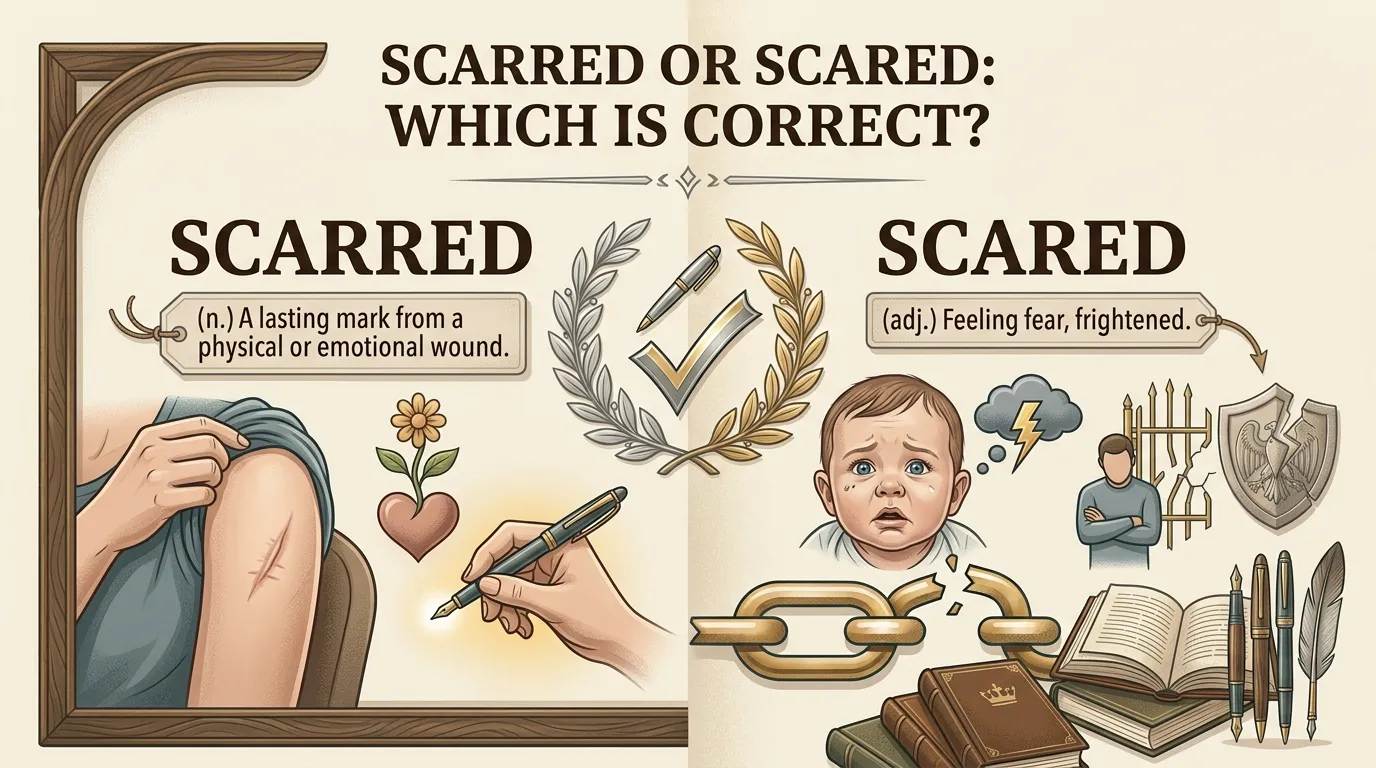
Use scared for fear. Use scarred for a mark from injury or trauma.
People often search for “scarred or scared” because the words look and sound alike, yet they mean very different things. This confusion can lead to mistakes in emails, essays, and social posts. The fix is simple once you know the rule.
This guide gives you a quick answer, clear examples, and pro tips so you can choose the right word every time. You will also learn where the words come from, how they behave in US and UK English, and which spelling to use for your audience.
Scarred or Scared Quick Answer
Use scared when you mean afraid or frightened. Use scarred when you mean marked by a scar on skin or in the mind.
- Scared means feeling fear. Example: The child was scared of the dark.
- Scarred means having a scar from injury or trauma. Example: The fire left him scarred for life.
Tip: If you can swap in afraid, use scared. If you can swap in marked or wounded, use scarred.
The Origin of Scarred or Scared
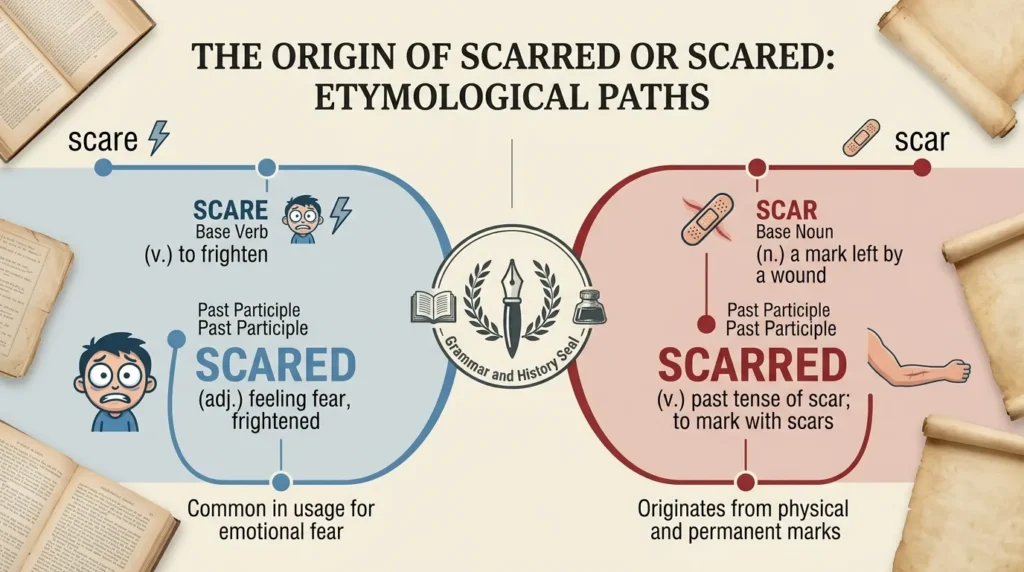
- Scared comes from the verb scare (to frighten). It entered English from Old Norse skirra (to frighten) and related Germanic roots.
- Scarred comes from the noun scar (a mark after a wound). It traces back to Late Latin eschara and Greek eskhara (hearth, scab), via Old French escarre.
Why the spelling difference exists: the extra r in scarred shows the base word scar plus the past tense ending ed. In scared, the base is scare, and we drop the final e before adding d.
Pronunciation also differs in careful speech:
- scared ≈ /skerd/ (US), /skeəd/ (UK)
- scarred ≈ /skɑrd/ (US), /skɑːd/ (UK)
British English vs American English Spelling
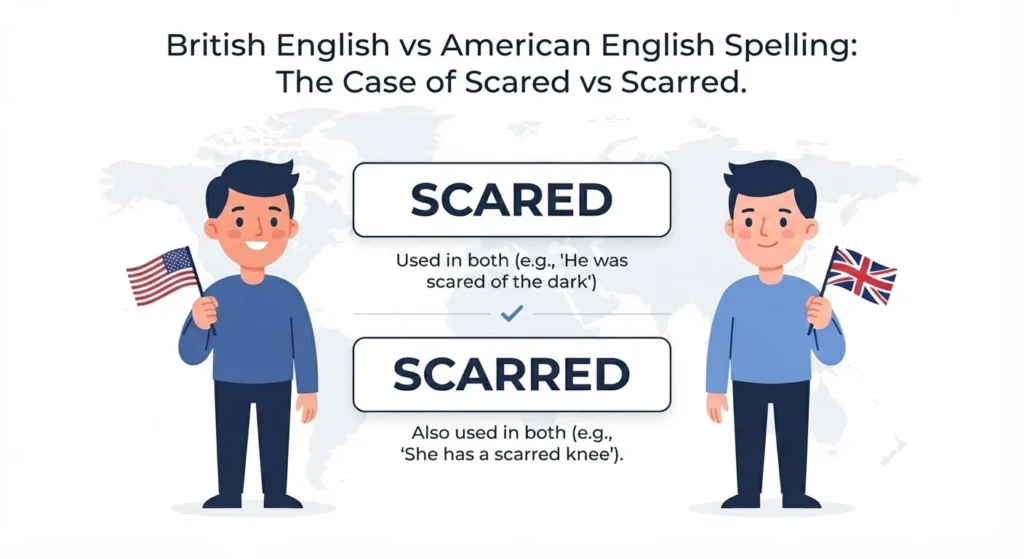
Good news: scared and scarred are spelled the same in US and UK English. There is no regional spelling split like color or colour.
What does change by region is pronunciation and some usage patterns, not the spelling itself.
| Word | Meaning | US spelling | UK spelling | Example |
|---|---|---|---|---|
| scared | afraid, frightened | scared | scared | She was scared of the storm. |
| scarred | marked by a scar | scarred | scarred | His arm was scarred after the burn. |
Which Spelling Should You Use
Pick the word by meaning, not by country. Both US and UK writers use scared for fear and scarred for marks.
- US audience: Use scared for fear. Use scarred for physical or emotional marks.
- UK or Commonwealth audience: Same rule. Spelling does not change.
- Global or SEO content: Use the meaning based rule above. Add context so readers in all regions understand.
Style tip: In formal writing, prefer precise verbs and adjectives (for example frightened, traumatized, disfigured) when they fit better than scared or scarred.
Read more 👉: Breech or Breach: Spell It Right in Contracts and Data Breaches
Common Mistakes with Scarred or Scared
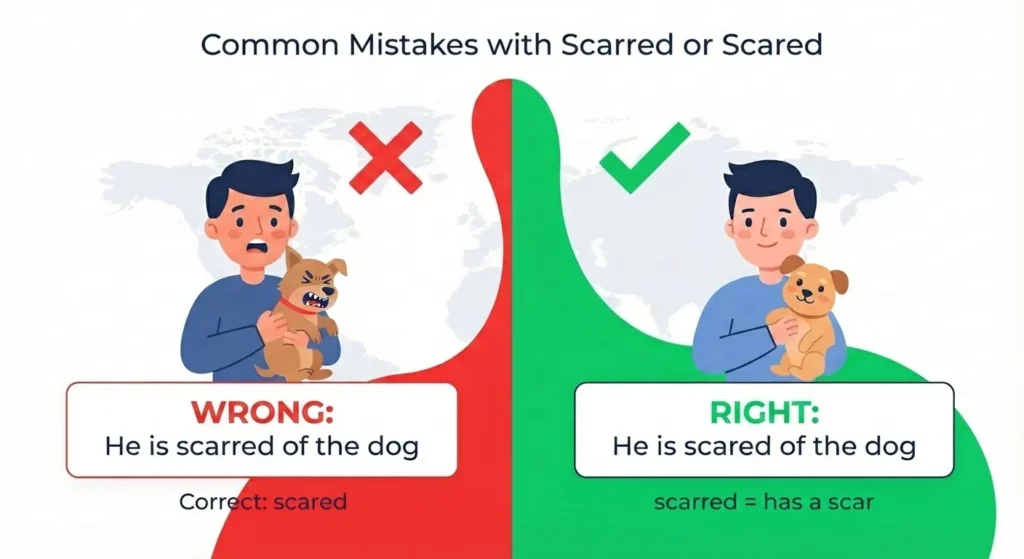
- Writing scarred when you mean afraid.
- Wrong: I was scarred of the dog.
- Right: I was scared of the dog.
- Writing scared when you mean marked by a scar.
- Wrong: The accident left him scared for life.
- Right: The accident left him scarred for life.
- Mixing up the base words: scar becomes scarred. scare becomes scared.
- Overusing scared in formal prose. Try fearful, alarmed, or anxious when suitable.
Quick fix: Read the sentence with afraid. If it fits, use scared. If not, and you mean a mark, use scarred.
Scarred or Scared in Everyday Examples
- Emails: I was scared I would miss the deadline. vs The incident left the team scarred.
- News: Residents were scared by the blast. vs Survivors were scarred by the fire.
- Social media: So scared before my exam! vs This hike left me scarred (literally).
- Formal writing: Participants reported feeling scared during the simulation. vs Patients remained scarred after surgery.
Scarred or Scared Google Trends and Usage Data
Search interest for scared is much higher than for scarred, because fear is a common daily topic (movies, news, safety). Scarred spikes around health, trauma, and celebrity stories about injuries.
By country, both terms follow similar patterns in the US, UK, Canada, and Australia, with scared leading overall. Context matters: scared pairs with of, very, movie, while scarred pairs with for life, emotionally, burn, surgery.
Comparison Table Keyword Variations Side by Side
| Form | Base word | Part of speech | Core meaning | Example |
|---|---|---|---|---|
| scare | scare | verb | to frighten | The noise scared me. |
| scared | scare | adj or verb (past) | afraid | I am scared of heights. |
| scary | scare | adj | causing fear | That movie is scary. |
| scar | scar | noun | mark after wound | He has a scar on his chin. |
| scarred | scar | adj or verb (past) | marked by a scar | Her knee is scarred. |
FAQs
1) Is scarred or scared a US vs UK spelling issue?
No. Both US and UK English spell them the same: scared (afraid), scarred (marked).
2) Can scarred mean emotional damage?
Yes. Scarred can be physical or emotional (for example scarred by the trauma).
3) Which is correct: I was scared of failing or I was scarred of failing?
I was scared of failing is correct. You mean fear, not a mark.
4) Do scared and scarred rhyme?
They are close, but not exact in careful speech. Scared has an air sound. Scarred has an ar sound.
5) Is scared only for people?
No. Animals and even things can be described as scared in informal use (for example a scared cat, a scared look).
6) Can I use scarred for objects?
Yes, in a figurative sense (for example a scarred landscape, a scarred reputation).
7) What is a simple test to pick the right word?
Try afraid. If it fits, use scared. If you mean marked, use scarred.
Conclusion
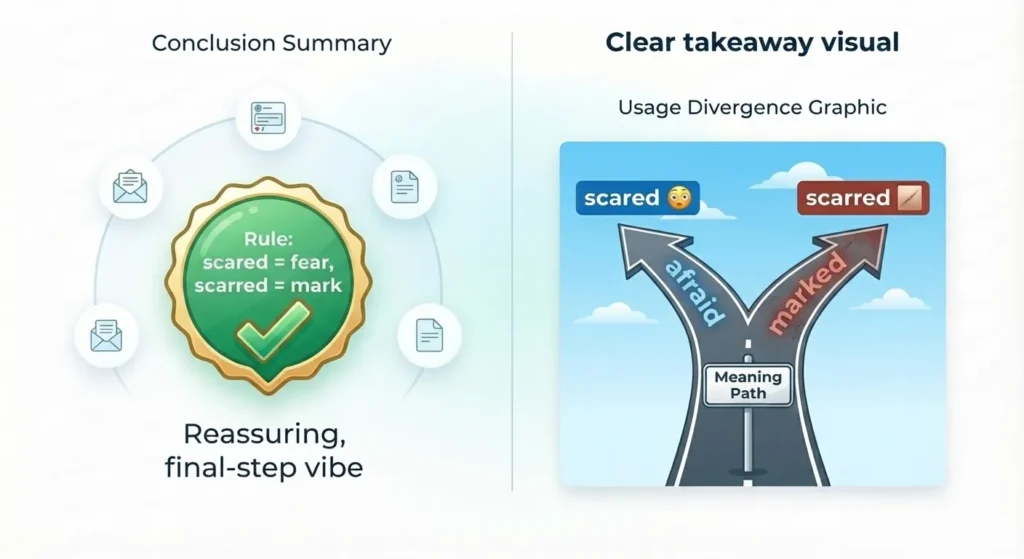
Scarred or scared is a common mix up because the words look and sound alike. The rule is simple: use scared for fear and scarred for marks from injury or trauma. This holds in US, UK, and global English.
To avoid mistakes, test your sentence with afraid. If it fits, choose scared. If you mean a lasting mark (on skin or in the mind), choose scarred. With this clear rule and the examples above, you can write with confidence in emails, posts, and formal work.



1 thought on “Scarred or Scared: Which Is Correct?”