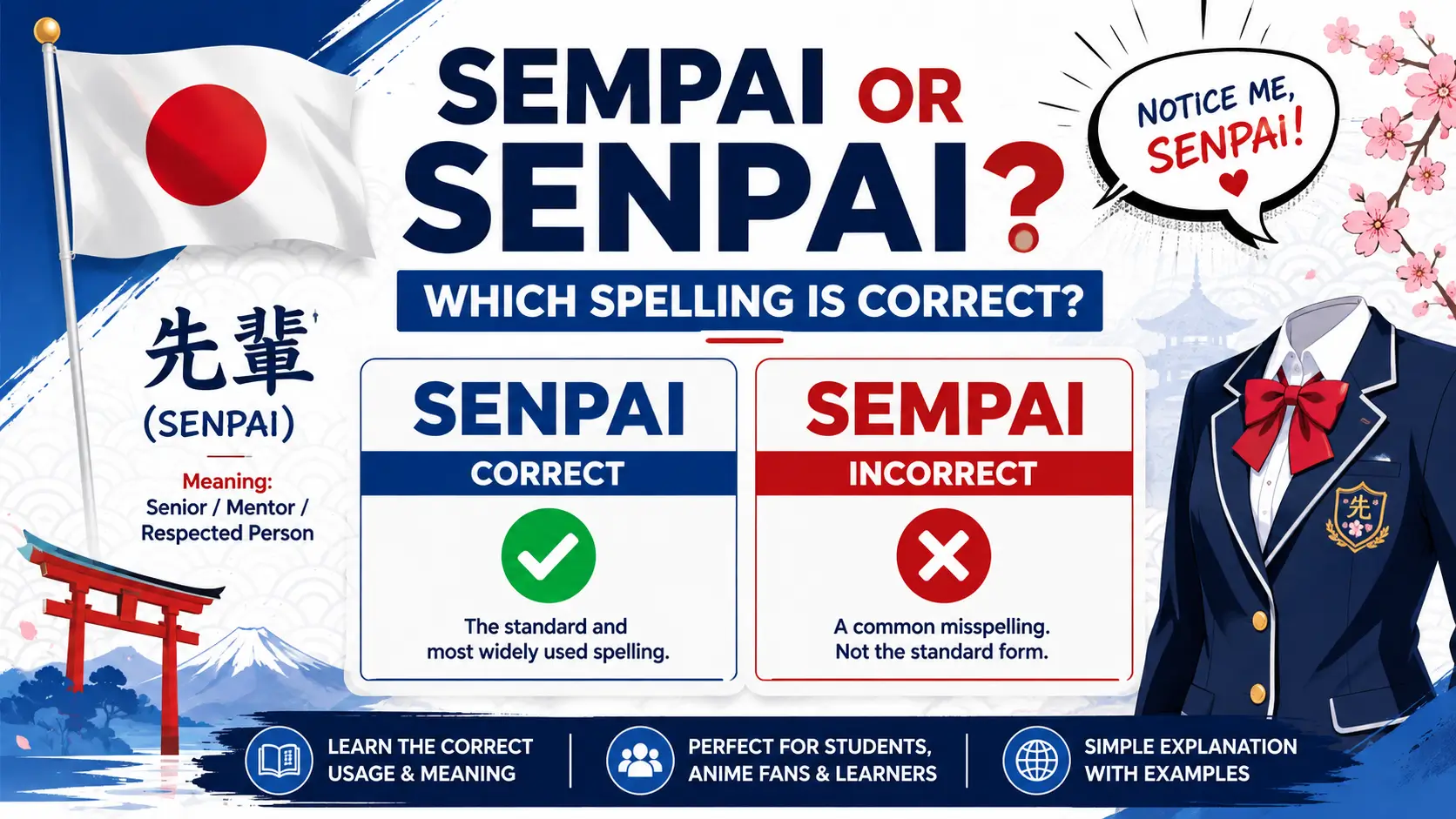
Senpai is the standard and most common spelling of the Japanese word for a senior or experienced person.
Sempai is an alternative spelling, but senpai is the better choice for everyday writing.
Have you ever seen “sempai” and “senpai” and wondered which one is correct? You are not alone. Many English speakers come across this word in anime, manga, Japanese culture, social media, and online discussions. The two spellings look almost the same, so it is easy to think they are simply different versions of the same English word.
The correct and standard spelling is senpai. It comes from the Japanese word 先輩, which refers to a senior person, upperclassman, or more experienced member of a group. Sempai is also found in English, and dictionaries recognize it as an alternative form, but senpai is the usual spelling in Japanese romanization.
This guide explains sempai or senpai, including the meaning, origin, spelling difference, common mistakes, everyday examples, and usage in English. By the end, you will know which spelling to use in school, work, social media, and formal writing.
Sempai or Senpai: Quick Answer
Senpai is the preferred spelling.
Senpai is a Japanese word for someone who is older, more experienced, or senior in a group. It is commonly used in schools, workplaces, sports clubs, martial arts, and other groups.
Sempai is an alternative spelling. It appears in English sources and dictionaries, but senpai is the standard romanized form.
Simple examples
- Correct/preferred: My senpai helped me learn the new skills.
- Alternative: My sempai helped me learn the new skills.
- Anime: “Notice me, senpai!”
- Work: She asked her senpai for advice.
So, if you are unsure, use senpai.
The Origin of Sempai or Senpai
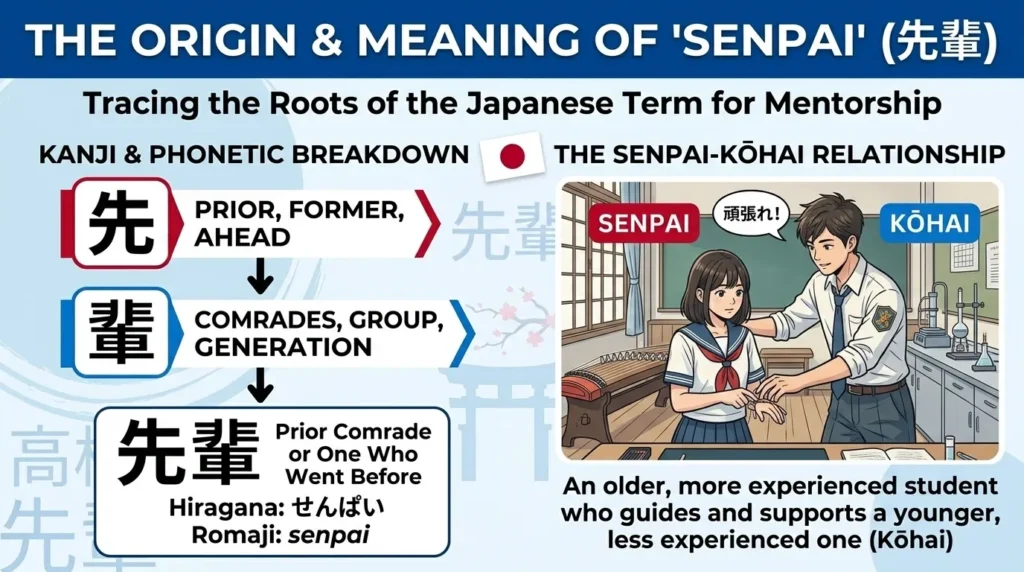
The word senpai comes from Japanese 先輩 and is written as せんぱい in hiragana. It describes someone who entered a school, workplace, club, or group before another person.
The word is not limited to age. A senpai is usually someone who has more experience or seniority because they joined earlier.
For example, in a school:
- A second-year student can be a senpai to a first-year student.
- The first-year student is called a kohai.
- A student can become a senpai when they move into a higher year.
The word is also used in workplaces, sports teams, martial arts, and other groups.
Why does “sempai” exist?
The difference comes mainly from pronunciation. In Japanese, the word is written せんぱい, which is romanized as senpai. However, the n sound before p can sound closer to an m sound when spoken. This makes sempai feel natural to some English speakers.
That is why both spellings can be found in English.
British English vs American English Spelling
There is no major British-versus-American spelling difference for this word.
British English and American English generally use senpai. The spelling does not change in the way some words do, such as colour/color or centre/center.
| Feature | British English | American English |
| Preferred spelling | senpai | senpai |
| Alternative spelling | sempai | sempai |
| Meaning | Senior or experienced member | Senior or experienced member |
| Origin | Japanese | Japanese |
| Formal recommendation | senpai | senpai |
| Common anime usage | senpai | senpai |
The important point is that senpai is not a British spelling and sempai is not an American spelling. Both forms have appeared in English, regardless of regional variety. Merriam-Webster also lists sempai as an alternative spelling of senpai.
Comparison of the two spellings
| Word | Status | Meaning | Best use |
| Senpai | Standard/preferred | Senior, upperclassman, experienced member | Formal and general writing |
| Sempai | Alternative form | Same meaning | Informal or quoted usage |
| Kohai | Related Japanese word | Junior or less experienced member | When contrasting with senpai |
Which Spelling Should You Use?
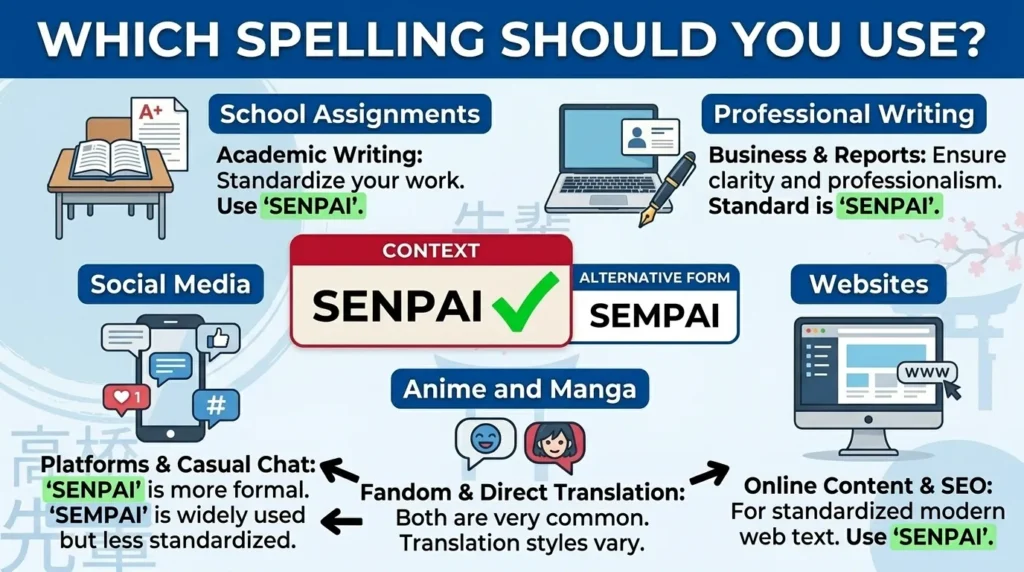
For most readers, senpai is the best choice.
For American English
Use senpai in schoolwork, articles, websites, and professional writing.
Example:
My senpai helped me understand the project.
For British and Commonwealth English
Use senpai as well. There is no special British spelling that requires sempai.
For global English
Senpai is the best choice because it is the common Japanese spelling in English. It is widely used and easy to recognize.
For anime and manga fans
You will see both senpai and sempai online. However, senpai is still the preferred spelling.
If you are writing an SEO article, school assignment, educational page, or formal document, choose senpai.
Common Mistakes with Sempai or Senpai
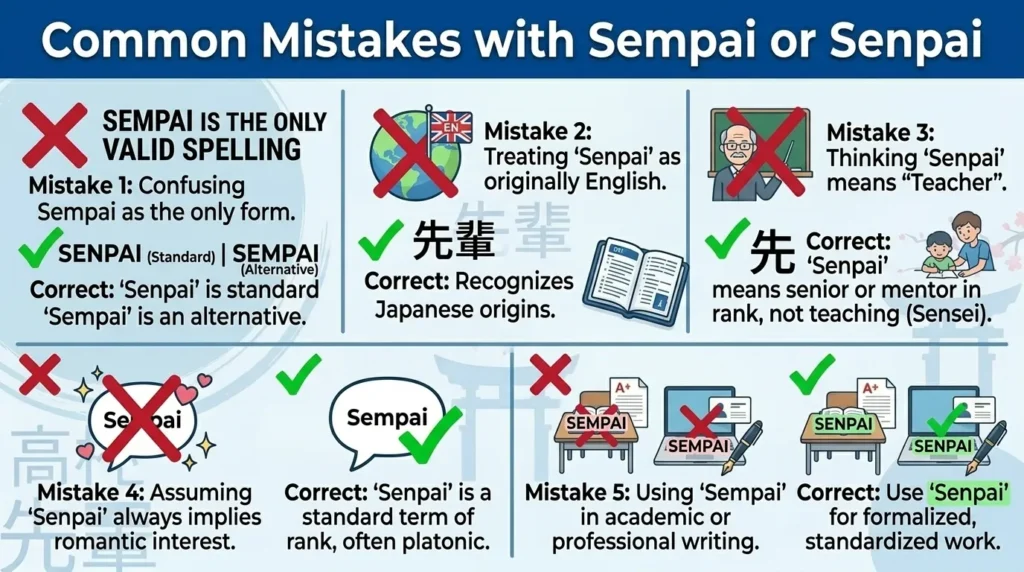
Here are some common mistakes to avoid.
1. Thinking “sempai” is the only correct spelling
Incorrect idea: Sempai is the only correct spelling.
Better: Senpai is the preferred spelling, while sempai is an established alternative form.
2. Treating senpai as an English word
Senpai is a Japanese loanword. Its original Japanese form is 先輩.
Better:
Senpai is a Japanese term for a senior or experienced member.
3. Thinking senpai means “teacher”
A senpai can guide or mentor a junior person, but senpai does not simply mean teacher. The Japanese word sensei is commonly used for teacher or instructor.
4. Thinking senpai always means a romantic interest
Anime and internet memes often use senpai in playful or romantic contexts. However, the original meaning is much broader. It refers to a senior or someone who joined a group earlier.
5. Using “sempai” in formal writing without checking the context
Because sempai is recognized as an alternative form, it is not meaningless. Still, senpai is usually the safer choice for formal English writing.
Sempai or Senpai in Everyday Examples
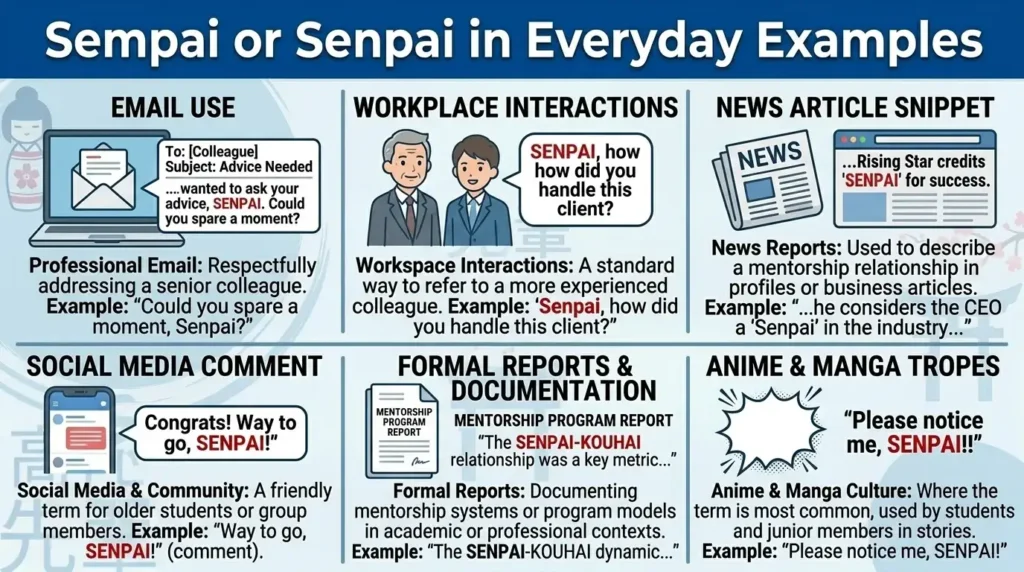
The word senpai appears in many different settings today.
In Emails
Could you please ask your senpai for help with the training?
This is understandable in a workplace or Japanese cultural context.
In the Workplace
My senpai showed me how to use the new system.
Here, senpai refers to a more experienced colleague.
In News and Articles
The senpai-kohai relationship is an important part of many Japanese social settings.
This type of sentence is suitable for articles about Japanese culture.
On Social Media
Notice me, senpai!
This is a famous internet and anime-style expression. Its popularity helped introduce the word to many English-speaking internet users.
In Formal Writing
The senpai-kohai relationship can describe senior and junior roles within a group.
When writing for a general audience, it is helpful to explain the word the first time you use it.
In Anime and Manga
Yuki-senpai helped the new student.
In Japanese usage, senpai can also appear after a person’s name as a form of address.
Sempai or Senpai: Google Trends & Usage Data
People often search for senpai because they see it in Japanese culture, anime, manga, games, and online communities. The word became very popular through anime, especially because of the phrase “Notice me, senpai.”
When people search “sempai or senpai,” they are often checking which spelling is correct. Searches for sempai can therefore reflect spelling uncertainty rather than a different meaning.
Most dictionaries and language sources use senpai as the main spelling. Sempai is also used, but it is considered an alternative spelling.
Usage also differs by context:
- Anime and manga: Very common
- Japanese culture: Common
- Social media: Common
- Gaming communities: Common
- General English: Less common
- Formal English: Usually needs context or explanation
Google Trends can show changes in search interest over time, but it does not by itself prove that one spelling is grammatically “correct.” For spelling advice, dictionary and Japanese-language sources are more useful.
Sempai vs Senpai: Quick Comparison
| Point | Senpai | Sempai |
| Japanese origin | Yes | Yes |
| Japanese romanization | Standard | Alternative English form |
| Meaning | Senior or experienced member | Same |
| Used in anime | Very common | Also seen |
| Used in formal writing | Preferred | Less preferred |
| Used in social media | Very common | Common |
| British spelling | Yes | Alternative |
| American spelling | Yes | Alternative |
| Recommended choice | Yes | Only when context calls for it |
FAQs About Sempai or Senpai
1. Is senpai or sempai correct?
Senpai is the preferred spelling. Sempai is also an established alternative form in English.
2. What does senpai mean?
Senpai means a senior or more experienced member of a group. It can refer to a senior student, colleague, team member, or practitioner.
3. Is sempai a misspelling?
Not exactly. Sempai is recognized as an alternative English form of senpai. However, senpai is the safer and more standard choice.
4. Why is senpai sometimes spelled sempai?
The n sound before p can sound similar to m in pronunciation. This helps explain why some English speakers write sempai.
5. Is senpai a Japanese word?
Yes. Senpai comes from Japanese 先輩 (せんぱい).
6. Is senpai the same as teacher?
No. A senpai is a senior or experienced person. A sensei is commonly a teacher or instructor.
7. Which spelling should I use in an article?
Use senpai. It is the clearest choice for SEO content, educational writing, professional articles, and general readers.
Conclusion
When choosing between sempai or senpai, the best answer is senpai. Senpai is the standard English spelling of the Japanese word 先輩. It means a senior, upperclassman, or more experienced person in a group, such as at school, work, sports, clubs, or martial arts.
Sempai is not simply a random spelling mistake. It is an alternative form that appears in English sources and dictionaries. The spelling likely feels natural because of the way the n sound changes before p in pronunciation.
There is also no special British-versus-American spelling rule for this word. Both varieties generally use senpai. For school assignments, websites, professional writing, and SEO content, senpai is the safest choice.
If you are unsure, remember this simple rule: Use “senpai” as the main spelling. “Sempai” is an alternative spelling.
See Also: Nineth or Ninth? The Correct Spelling Explained with Examples

Ali Hassan is an English language writer and educator who specializes in grammar, spelling, and commonly confused words. He creates simple and easy-to-understand content to help students, writers, and English learners improve their English with confidence.