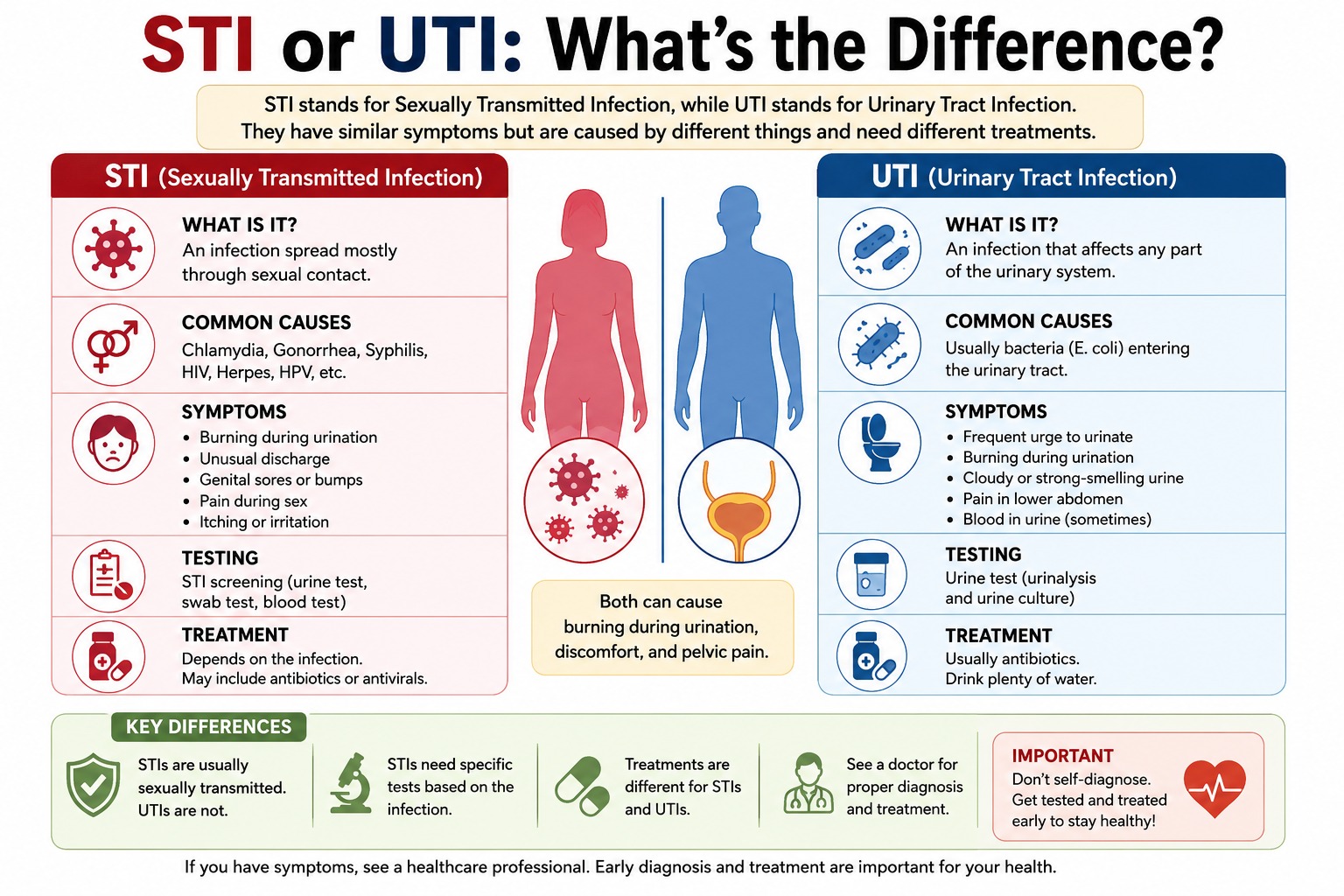
STI stands for Sexually Transmitted Infection, while UTI stands for Urinary Tract Infection. They can cause similar symptoms, but they are different conditions with different causes, treatments, and health risks.
A few years ago, a friend called me in a panic. She had pain while urinating and immediately feared she had an STI. After visiting her doctor, she learned it was actually a UTI.
This situation is very common.
Many people confuse STIs and UTIs because the symptoms can look alike. Burning during urination, pelvic discomfort, and frequent bathroom trips can happen with both conditions. That overlap causes worry and often leads people to search online for answers.
The good news is that understanding the difference is easier than you might think.
In this guide, you’ll learn what STI and UTI mean, how they differ, what symptoms to watch for, and when you should see a healthcare professional. By the end, you’ll know exactly how to tell them apart and what steps to take next.
STI or UTI Quick Answer
An STI is an infection usually spread through sexual contact.
A UTI is an infection that affects the urinary system, including the bladder, urethra, kidneys, or ureters.
Simple Examples
- A person develops chlamydia after unprotected sex. This is an STI.
- A person gets a bacterial infection in the bladder. This is a UTI.
Both can cause discomfort during urination, but their causes are different.
The Origin / Background of STI or UTI
What Is an STI?
The term STI replaced the older term STD (Sexually Transmitted Disease).
Healthcare experts prefer STI because a person can carry an infection without showing symptoms. Infection comes before disease.
Common STIs include:
- Chlamydia
- Gonorrhea
- Syphilis
- HIV
- Genital herpes
- Human papillomavirus (HPV)
What Is a UTI?
A UTI occurs when bacteria enter the urinary tract and multiply.
Most UTIs are caused by bacteria naturally found around the digestive system. The most common culprit is E. coli.
UTIs are not usually spread through sexual contact, although sexual activity can increase the risk.
Why the Confusion Exists
The confusion happens because both conditions may cause:
- Burning during urination
- Pelvic discomfort
- Frequent urination
- Irritation in the genital area
Without testing, it can be difficult to know which condition is causing symptoms.
STI or UTI Explained Key Differences
Understanding the differences can help you seek the right treatment quickly.
| Term | Meaning | When to Use | Region/Context |
| STI | Sexually Transmitted Infection | Infections spread through sexual contact | Medical and public health settings |
| UTI | Urinary Tract Infection | Infections affecting the urinary system | Medical and everyday healthcare settings |
Main Differences
| Feature | STI | UTI |
| Cause | Viruses, bacteria, or parasites spread sexually | Usually bacteria entering urinary tract |
| Transmission | Sexual contact | Not usually sexually transmitted |
| Symptoms | Genital sores, discharge, pain during sex, burning urination | Frequent urination, bladder pressure, burning urination |
| Testing | STI screening | Urine testing |
| Treatment | Depends on infection type | Usually antibiotics |
Example
If you have unusual genital discharge, an STI may be more likely.
If you constantly feel the urge to urinate and have bladder pressure, a UTI may be more likely.
Which Version or Approach Should You Use?
The right approach depends on your symptoms and situation.
For People With Urinary Symptoms
Consider a UTI evaluation if you have:
- Frequent urination
- Bladder pain
- Cloudy urine
- Strong-smelling urine
For Sexually Active Adults
Consider STI testing if you have:
- New sexual partners
- Unprotected sex
- Genital sores
- Unusual discharge
For Anyone Unsure
The safest choice is to see a healthcare professional.
Many clinics can test for both conditions during the same visit.
Best General Advice
Never diagnose yourself based only on internet searches.
Testing provides the clearest answer.
Common Mistakes With STI or UTI
Many people make the same errors.
| Mistake | Correction |
| Assuming burning urination always means a UTI | It can also be an STI |
| Ignoring symptoms because they seem mild | Get tested when symptoms appear |
| Taking leftover antibiotics | Only use prescribed treatment |
| Thinking STIs always cause symptoms | Many STIs have no symptoms |
| Delaying medical care | Early treatment prevents complications |
Why These Mistakes Happen
People often focus on one symptom and ignore the bigger picture.
Because STI and UTI symptoms overlap, guessing can lead to the wrong treatment.
STI or UTI in Real-World Examples
Professional Email
“I have been experiencing symptoms that may indicate a UTI and would like to schedule an appointment.”
News Headline
“Health Experts Encourage Regular STI Screening Among Young Adults.”
Social Media Post
“Don’t ignore burning during urination. It could be a UTI or an STI. Get checked.”
Formal Medical Report
“The patient underwent testing for both UTI and STI causes due to overlapping symptoms.”
STI or UTI Data, Trends & Usage
Search Interest
People frequently search:
- STI vs UTI
- UTI symptoms
- STI symptoms
- Burning when peeing
- Difference between STI and UTI
Most Interested Audiences
- Young adults
- Sexually active individuals
- College students
- Women’s health audiences
- Healthcare information seekers
Search Intent
The primary search intent is informational.
People want to understand symptoms and determine whether they should seek testing.
Why This Matters Today
Awareness about sexual health continues to grow.
More people are seeking accurate information before visiting a healthcare provider, making clear education more important than ever.
STI vs UTI Comparison Table
| Term/Variant | Meaning | Region/Context | Best Used When |
| STI | Sexually Transmitted Infection | Healthcare and sexual health discussions | Discussing infections spread through sexual contact |
| STD | Sexually Transmitted Disease | Older medical terminology | Referring to established disease caused by infection |
| UTI | Urinary Tract Infection | General healthcare | Discussing urinary system infections |
| Bladder Infection | Type of UTI | Everyday language | Referring specifically to bladder involvement |
Frequently Asked Questions
Q: What does STI mean?
A: STI stands for Sexually Transmitted Infection. It refers to infections spread mainly through sexual contact.
Q: What does UTI mean?
A: UTI stands for Urinary Tract Infection. It occurs when bacteria infect parts of the urinary system.
Q: How do you use STI or UTI correctly?
A: Use STI when discussing infections transmitted sexually. Use UTI when discussing infections affecting the urinary tract.
Q: STI vs UTI — what’s the difference?
A: STIs are usually spread through sexual contact. UTIs are generally caused by bacteria entering the urinary tract and are not usually sexually transmitted.
Q: Is STI or UTI more serious?
A: Both deserve medical attention. Some untreated STIs can cause long-term health complications, while severe UTIs can spread to the kidneys.
Q: Where do STIs come from?
A: STIs are caused by bacteria, viruses, or parasites transmitted through sexual activity.
Q: Can a UTI turn into an STI?
A: No. A UTI cannot become an STI. They are different conditions with different causes.
Q: Can an STI feel like a UTI?
A: Yes. Some STIs cause symptoms that closely resemble a UTI, including burning during urination and pelvic discomfort.
Conclusion
Understanding STI or UTI is important because the two conditions can look very similar at first.
Remember these key points:
- STIs are usually spread through sexual contact.
- UTIs affect the urinary system and are commonly caused by bacteria.
- Both conditions may cause painful urination.
- Proper testing is often the only reliable way to know the difference.
If symptoms appear, avoid guessing. Early diagnosis leads to faster treatment and better health outcomes.
Now you know exactly how to understand the difference between STI or UTI. Bookmark this guide so you never second-guess these terms again, and share it with someone who may find it helpful.
Plain or Plane: Easy Guide to Use the Right Word

I am an English language enthusiast who enjoys exploring word differences and spelling variations.
My work focuses on making confusing English terms easier to understand for everyday readers.
I believe clear language helps people communicate with confidence.