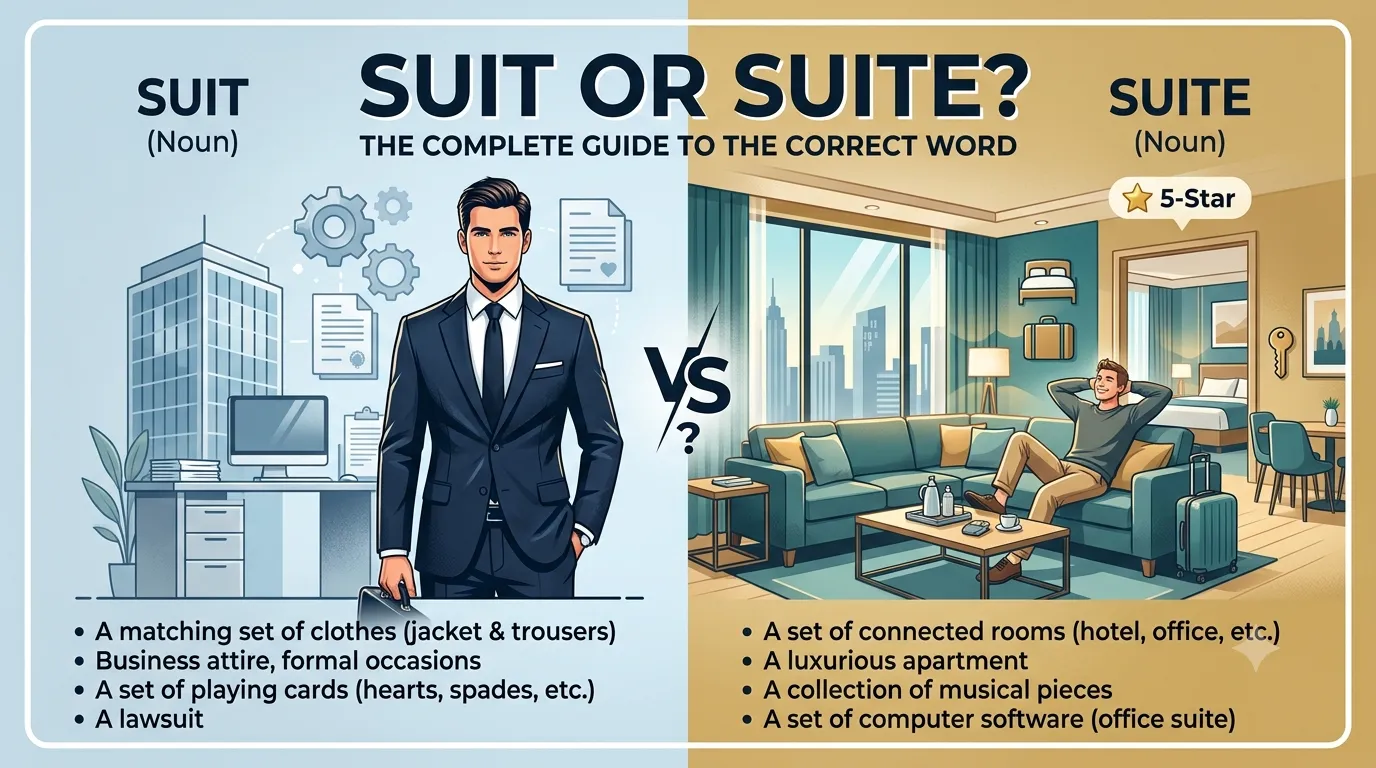
Suit usually means a set of clothes or something that fits a purpose. Suite refers to a group of connected rooms, software programs, or musical compositions. Despite sounding alike, they have very different meanings.
I once reviewed a hotel advertisement that promised guests a “luxury suit with ocean views.” The offer sounded strange. After all, who would rent clothing with a balcony?
The writer meant suite, not suit.
That small spelling mistake changed the meaning of the entire sentence. It is a common error because both words sound almost identical. Many people type one when they mean the other. The confusion appears in emails, business documents, travel websites, and even professional marketing materials.
If you have ever paused before writing suit or suite, you are not alone. Thousands of students, writers, and professionals search for the difference every year.
The good news is that the distinction is easy once you know what each word means. In this guide, you will learn the definitions, origins, examples, common mistakes, and practical tips that will help you choose the right word every time.
Suit or Suite: Quick Answer
The difference is simple.
- Suit = clothing or something that fits a purpose.
- Suite = a set of rooms, software package, or collection of related things.
Examples
✅ He wore a black suit to the wedding.
✅ We booked a hotel suite for our vacation.
❌ We booked a hotel suit.
❌ She wore a beautiful suite to the interview.
The context tells you which word is correct.
The Origin / Background of Suit or Suite
These words share a common historical connection.
The word suit comes from Old French and originally meant “to follow” or “pursue.” Over time, it gained meanings related to clothing, legal actions, and things that fit a need.
The word suite also comes from French. It originally referred to a sequence or group of connected things. That meaning remains today.
This shared background explains why the words sound so similar.
However, English gave them different purposes.
- Suit became linked to clothing and suitability.
- Suite became linked to groups, collections, and connected spaces.
Because they are pronounced almost the same, many people confuse them when writing.
Suit or Suite Explained: Key Differences
The key difference is meaning.
| Term | Meaning | When to Use | Region/Context |
| Suit | Clothing or something appropriate | Fashion, business, legal, general use | Worldwide |
| Suite | Connected rooms or collection of items | Hotels, software, music | Worldwide |
Suit
Use suit when discussing:
- Formal clothing
- Something that fits a purpose
- Legal cases
Examples:
- The blue suit looked professional.
- This schedule does not suit me.
Suite
Use suite when discussing:
- Hotel accommodations
- Software packages
- Collections of related items
Examples:
- They stayed in a luxury suite.
- She uses an office suite for work.
Which Version Should You Use?
Your audience and topic determine the correct choice.
For Students
Use suit for clothing and suitability.
Use suite for hotel rooms and software programs.
For Business Professionals
Choose suit when discussing dress codes or requirements.
Choose suite when referring to office software or executive accommodations.
For Travel Writers
You will often need suite because hotels commonly advertise suites.
For Job Seekers
You will often need suit when discussing interview attire.
For Global Readers
Follow the meanings rather than regional preferences. Both words are accepted worldwide.
Best Recommendation
Ask yourself one question:
Am I talking about clothing or suitability?
If yes, use suit.
Am I talking about rooms, software, or a collection?
If yes, use suite.
Common Mistakes with Suit or Suite
Here are mistakes people make frequently.
| Mistake | Correction |
| We booked a luxury suit. | We booked a luxury suite. |
| He wore a nice suite. | He wore a nice suit. |
| The software suit includes spreadsheets. | The software suite includes spreadsheets. |
| This option does not suite me. | This option does not suit me. |
| She stayed in a hotel suit. | She stayed in a hotel suite. |
Why These Errors Happen
- The words sound nearly identical.
- Spell-check may not notice.
- Writers focus on pronunciation instead of meaning.
- Both words are commonly used in business settings.
Suit or Suite in Real-World Examples
Professional Email
“Please wear a business suit for tomorrow’s client meeting.”
News Headline
“Luxury Hotel Opens New Presidential Suite“
Social Media Post
“Just checked into an amazing ocean-view suite!”
Formal Report
“The software suite improved team productivity by 25 percent.”
These examples show how context determines the correct spelling.
Suit or Suite: Data, Trends & Usage
Search Intent
Most searches for “suit or suite” are informational.
People want to know:
- Which spelling is correct
- What each word means
- When each should be used
Popular Audiences
- Students
- Business professionals
- Travel writers
- Job seekers
- English learners
Common Contexts
Suit appears frequently in:
- Fashion
- Interviews
- Business communication
- Legal writing
Suite appears frequently in:
- Hotels
- Travel websites
- Technology
- Software marketing
Usage Trend Insight
The rise of software products has increased the use of suite in recent years. Terms like “productivity suite” and “office suite” appear across modern workplaces.
Suit vs Suite: Comparison Table
| Term/Variant | Meaning | Region/Context | Best Used When |
| Suit | Formal clothing | Fashion and business | Discussing attire |
| Suit | Appropriate or suitable | General English | Discussing fit or preference |
| Suite | Group of hotel rooms | Travel and hospitality | Discussing accommodations |
| Suite | Collection of software tools | Technology | Discussing software packages |
| Suite | Collection of related works | Music and arts | Discussing compositions |
Frequently Asked Questions
Q: What does suit mean?
A: Suit usually refers to formal clothing or something that fits a particular purpose. It can also refer to a legal case.
Q: What does suite mean?
A: Suite usually means a group of connected rooms, a software package, or a collection of related items.
Q: How do you use suit correctly?
A: Use suit when discussing clothing or suitability. Example: “That schedule does not suit my needs.”
Q: How do you use suite correctly?
A: Use suite when discussing hotel rooms, software packages, or related collections. Example: “We stayed in a luxury suite.”
Q: Is suit acceptable in formal writing?
A: Yes. Suit is widely accepted in formal, academic, legal, and professional writing.
Q: Which is correct: suit or suite?
A: Both are correct words. The correct choice depends on the meaning of your sentence.
Q: Can suite be used in technology?
A: Yes. Software companies often use suite to describe a collection of related applications that work together.
Conclusion
The difference between suit and suite becomes simple once you focus on meaning.
Remember these key points:
- Suit refers to clothing or something that fits a purpose.
- Suite refers to connected rooms, software packages, or collections.
- The words sound alike but serve different roles.
- Context is the easiest way to choose the correct spelling.
When discussing business attire, interviews, or suitability, use suit. When discussing hotels, technology, or collections of related items, use suite.
A single extra letter changes the entire meaning of a sentence. Learning this distinction helps you write more clearly and professionally.
Now you know exactly how to use suit or suite correctly. Bookmark this guide so you never second-guess these words again. Share it with someone who still mixes them up.
See More: Ninth or Nineth: Which One Is Correct?

I am an English language expert dedicated to exploring the nuances of words and their meanings. Through detailed comparisons and practical insights, I help readers understand the finer points of language and use words with accuracy and confidence.