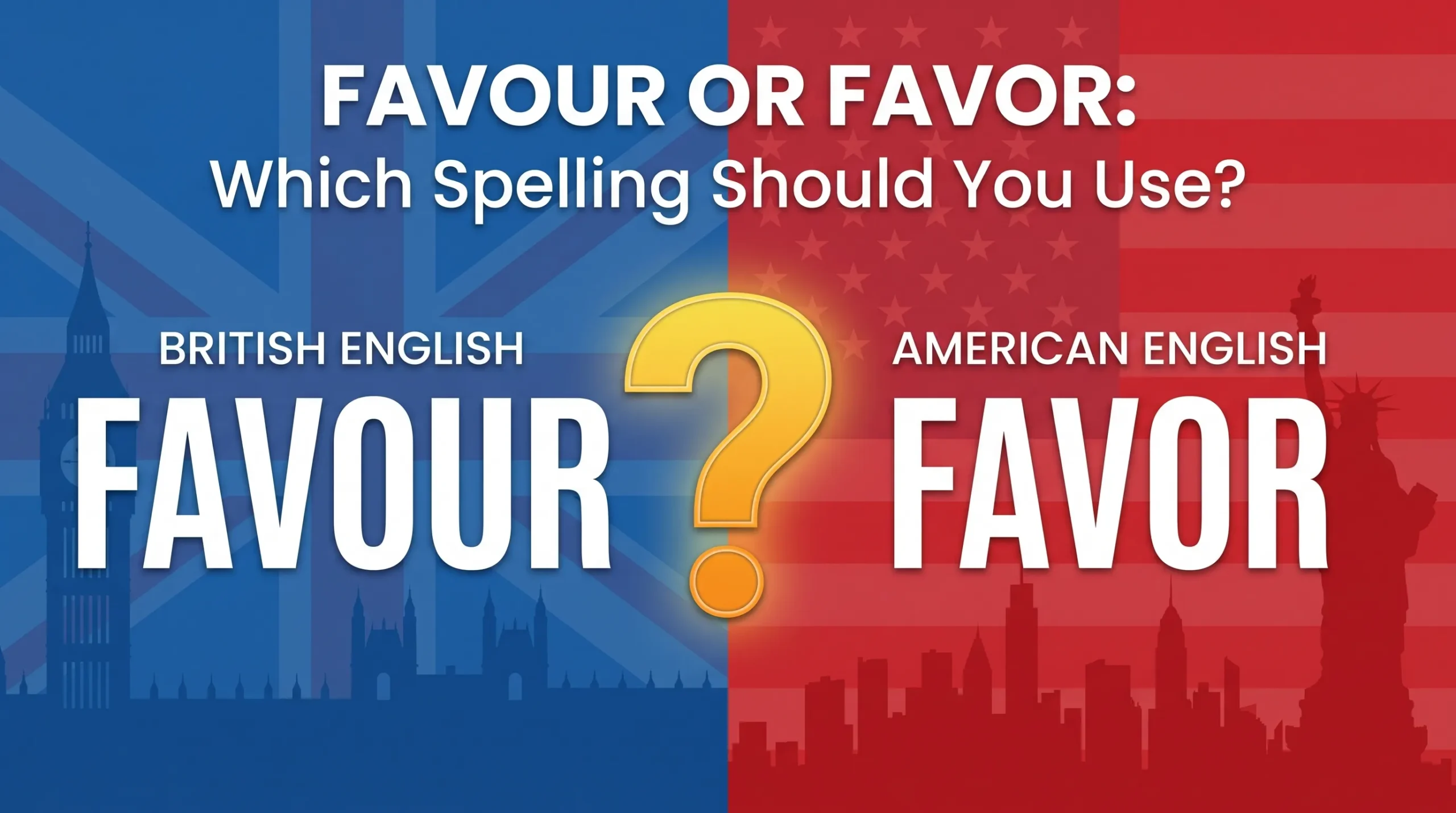
“Favor” is the American English spelling, while “favour” is the British English spelling. Both words have the same meaning. Use “favor” when writing for U.S. audiences and “favour” when writing for readers in the UK, Australia, and other countries that follow British English.
| Feature Comparison | Favour | Favor |
|---|---|---|
| English Style | British English | American English |
| Meaning | Kind act, support, preference | Kind act, support, preference |
| Countries | UK, Australia, New Zealand | United States |
| Example | Could you do me a favour? | Could you do me a favor? |
| Best Used When | Writing for UK audiences | Writing for US audiences |
Is It Favour or Favor?
Both spellings are correct. “Favour” is used in British English, while “favor” is used in American English. The meaning remains exactly the same. The only difference is the regional spelling convention.
A few years ago, I was helping a student edit an essay when we noticed something interesting. In one paragraph, she wrote “favor,” and in the next, she wrote “favour.” She stopped and asked, “Which one is actually correct?”
If you have ever asked yourself the same question, you are not alone.
Many English learners, students, and writers get confused by favour or favor because both spellings appear online, in books, and in everyday writing. The confusion becomes even bigger when you read content from different countries.
The good news is that both spellings are correct. The difference comes from the type of English being used. Understanding this spelling difference can help you write more clearly and professionally.
In this guide, you will learn the meaning of both words, where they came from, how British English and American English use them, common mistakes to avoid, and which spelling you should choose in different situations.
By the end, you will never wonder about favour or favor again.
The Origin of Favour and Favor

The word comes from the Latin word favor, which meant goodwill, support, or kindness.
Later, the word entered Old French and then became part of English. For many years, English spelling was not fully standardized, so writers often used different spellings.
The spelling favour became common in Britain because many British spellings kept the French-inspired “ou” pattern.
In the United States, spelling changed during the early 1800s. One important person behind these changes was Noah Webster, the creator of influential American dictionaries.
Webster believed that American spelling should be simpler and more consistent. As a result:
- favour became favor
- colour became color
- honour became honor
- labour became labor
This is why both spellings exist today.
Easy Trick to Remember

Think of the letter “U.”
- The United Kingdom keeps the “u” in favour.
- The United States removes the “u” and uses favor.
This simple trick can help you remember which spelling to use.
Favour vs Favor Explained
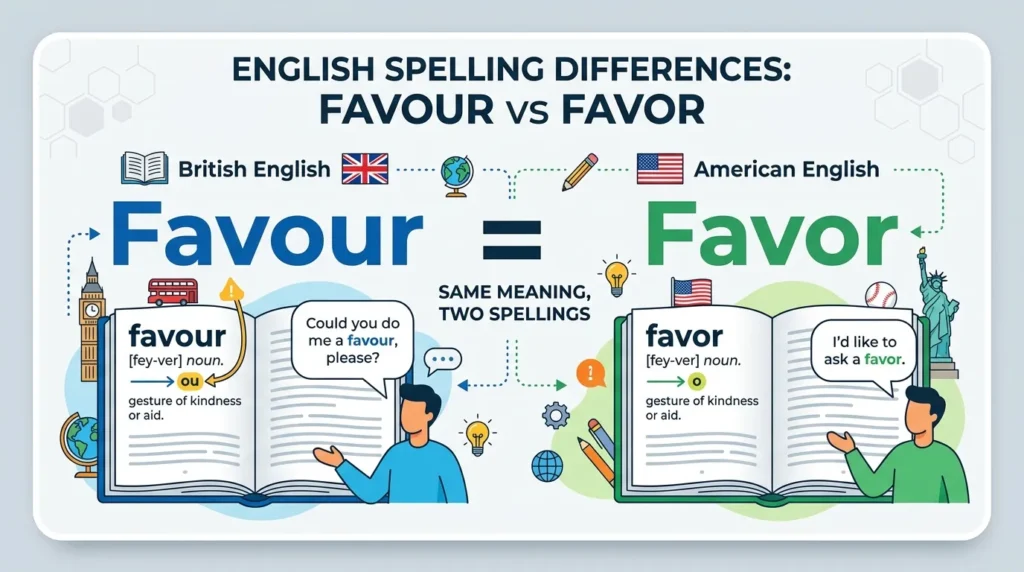
The difference between favour and favor lies in the spelling only, with favour used in British English and favor used in American English.
Although the spelling is different, the meaning remains exactly the same.
| Term | Meaning | When to Use | Region |
|---|---|---|---|
| Favour | Kind act, support, preference | British English writing | UK, Australia, New Zealand |
| Favor | Kind act, support, preference | American English writing | United States |
Example Sentences
Favour
- She did me a great favour yesterday.
- The decision was made in his favour.
- Could you please do me a favour?
Favor
- She did me a great favor yesterday.
- The decision was made in his favor.
- Could you please do me a favor?
Notice that only the spelling changes.
British English vs American English
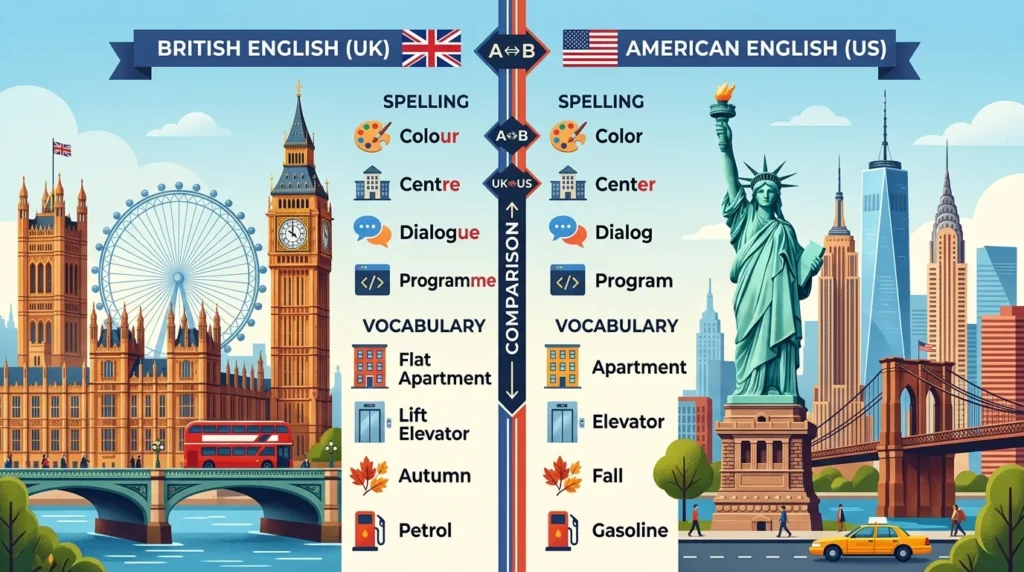
The difference between favour and favor follows a common pattern in English spelling.
British English
British English keeps the “ou” spelling.
The favour spelling remains the preferred choice in most countries that follow British English conventions.
Examples:
- Thank you for your favour.
- She asked for a favour.
- The judge ruled in her favour.
Countries that commonly use this spelling include:
- United Kingdom
- Australia
- New Zealand
- Ireland
American English
American English removes the “u”.
Examples:
- Thank you for your favor.
- She asked for a favor.
- The judge ruled in her favor.
This spelling is standard in the United States.
The important thing to remember is that the meaning never changes.
Which Spelling Should You Use?
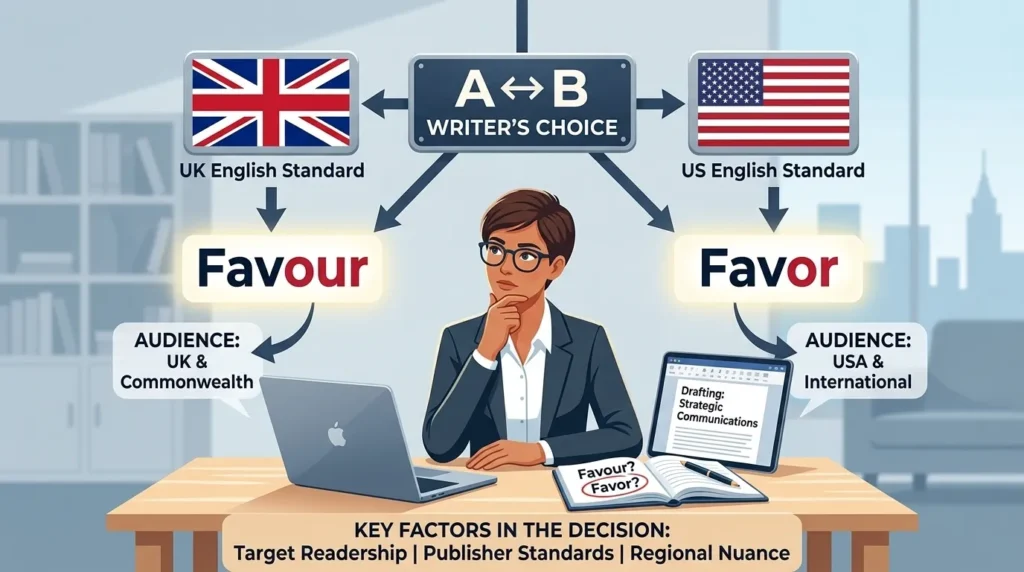
The spelling of favour is generally preferred in British English, whereas American writers use favor.
The best choice depends on your audience.
Use “favour” if:
- You study in the UK
- You write for British readers
- Your school follows British English
- Your organization uses British spelling
Use “favor” if:
- You study in the United States
- You write for American readers
- Your publication follows American English
- Your company uses American spelling
For International Audiences
Follow your style guide.
Many international organizations choose either British English or American English and use it consistently throughout all content.
For Academic Writing
Consistency is very important.
Choose one spelling style and use it throughout your entire document.
Mixing styles can make your writing look less professional.
Common Mistakes with Favour and Favor

Writers often make small mistakes when using these words.
| Mistake | Correct Form | Why |
|---|---|---|
| Mixing favour and favor in one article | Choose one style | Consistency matters |
| Using favor in UK assignments | favour | British spelling required |
| Using favour in US publications | favor | American spelling required |
More Tips
- Check your audience before writing.
- Follow your school’s language rules.
- Use spell-check settings that match your chosen English version.
- Stay consistent from beginning to end.
Real World Examples

Professional Email
“Could you do me a favour and review this report before Friday?”
“Could you do me a favor and review this report before Friday?”
News Headline
“Local Charity Receives Public Favour After Community Event”
“Local Charity Gains Public Favor Following Community Support”
Social Media Post
“Thanks for the favour today. I really appreciate your help!”
“Thanks for the favor today. I really appreciate your help!”
Business Report
“The proposal received strong favour among stakeholders.”
“The proposal received strong favor among stakeholders.”
Frequently Asked Questions

1. What does favour mean?
Favour means a kind act, support, assistance, or preference for something.
2. Is favour correct?
Yes. Favour is the correct spelling in British English.
3. Is favor correct?
Yes. Favor is the correct spelling in American English.
4. Which spelling is used in America?
Americans use favor.
5. Which spelling is used in Britain?
British writers use favour.
6. Can I use both spellings together?
It is better not to. Choose one style and stay consistent.
7. Why do British and American spellings differ?
Many differences developed over time, especially after American spelling reforms promoted by Noah Webster.
8. Is favour used in Canada?
Canadian English often follows British spelling conventions, so “favour” is commonly used.
9. How do you spell favor or favour?
Favor is the American spelling, while favour is the British spelling of the same word.
Key Takeaways
✓ Both spellings are correct.
✓ Favour = British English.
✓ Favor = American English.
✓ The meaning stays the same.
✓ Choose the spelling based on your audience.
Conclusion

Understanding the difference between favour or favor is actually quite simple. Both words have the same meaning and can be used to describe a kind act, support, help, or preference.
The main difference is location and writing style. Favour is the preferred spelling in British English, while favor is the standard spelling in American English. Neither spelling is more correct than the other.
When choosing which version to use, think about your audience. If you are writing for readers in the United Kingdom, Australia, or New Zealand, use favour. If you are writing for readers in the United States, use favor.
Most importantly, stay consistent throughout your writing. Using one spelling style from beginning to end will make your work look polished and professional.
The next time you see favour or favor, you will know exactly why both exist and when to use each one.
Bookmark this guide so you never confuse favour and favor again.
Read More: Glamour or Glamor: Which Spelling Should You Use?

I am an English language writer dedicated to creating clear, accurate, and easy-to-understand content. My goal is to help readers build confidence in their language and communication skills.