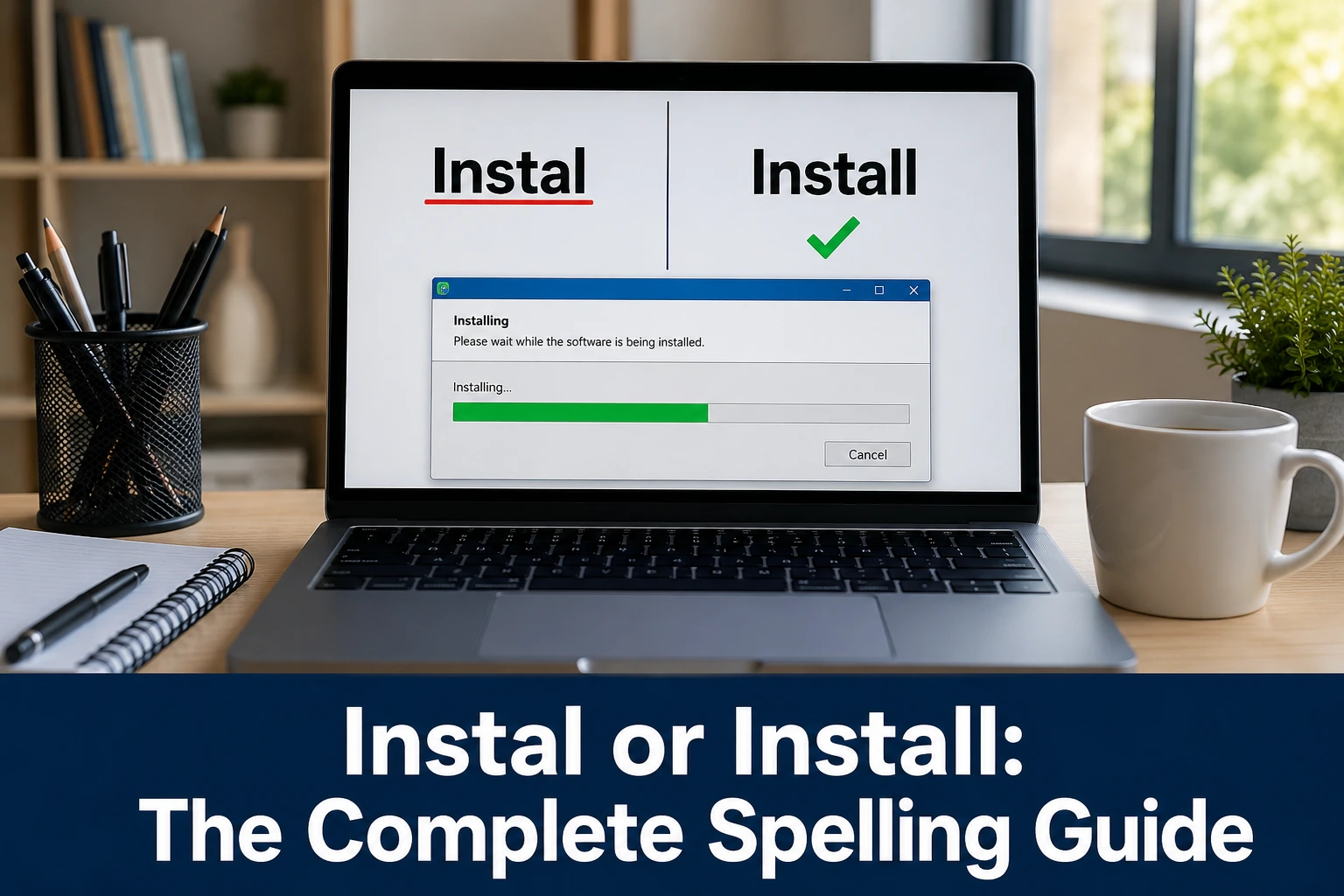
Install is the correct spelling in modern English. Instal is usually a misspelling when used as a verb. Write “Please install the software,” not “Please instal the software.”
A few years ago, I was reviewing a website for a software company when I noticed something surprising. Their download page said, “Click here to instal the program.”
At first glance, it looked harmless. After all, the words instal and install seem almost identical. Yet that single missing “l” made the page look less professional.
Many people face the same confusion. You might see install in software guides, technical manuals, app stores, and business documents. Then you come across instal somewhere online and wonder whether both spellings are correct.
That uncertainty leads thousands of people to search for “instal or install” every month.
The good news is that the answer is simple. However, there is a small historical detail that makes the topic more interesting than it first appears.
This guide will explain the correct spelling, the origin of the word, common mistakes, real-world examples, and when you might occasionally encounter the spelling instal.
Let’s settle the confusion once and for all.
Instal or Install : Quick Answer
The correct spelling for the verb is install.
It means:
To put something in place so it can be used.
Examples
✅ Install a new app.
✅ Install a security system.
✅ Install the latest update.
❌ Instal a new app.
❌ Instal the latest update.
In everyday writing, professional communication, and formal documents, install is the correct choice.
The Origin: Background of Instal or Install

The word install comes from older French and Latin roots related to placing someone in a position or setting something in place.
Originally, the word was often used when officially placing someone into an office or role.
For example:
- Install a king
- Install a bishop
- Install an official
As technology advanced, the meaning expanded.
Today, people commonly use install when discussing:
- Software
- Applications
- Hardware
- Equipment
- Home appliances
Why Does “Instal” Exist?
Historically, some dictionaries recognized instal as a variant spelling, especially in British English.
However, modern English overwhelmingly prefers install.
As a result, most people should use install in nearly every situation.
Instal or Install Explained : Key Differences
The distinction is simple.
| Term | Meaning | When to Use | Region/Context |
| Install | Correct modern spelling | All situations | Global English |
| Instal | Rare variant spelling | Occasionally historical usage | Rarely used today |
What Does Install Mean?
The word install can mean:
- Put software onto a device.
- Place equipment in position.
- Set up a system for use.
- Officially place someone into a role.
Examples
- Install a printer.
- Install new windows.
- Install antivirus software.
- Install a company director.
In modern writing, install is the standard form.
Which Version Should You Use?
For almost everyone, the answer is easy.
For Students
Use install.
Schools, colleges, and universities expect the standard spelling.
For Professionals
Use install.
Business documents should follow modern spelling conventions.
For Technical Writers
Use install.
Software documentation almost always uses this version.
For Website Owners
Use install.
It appears more professional and familiar to readers.
For Global Audiences
Always choose install.
Most readers may view instal as a spelling mistake.
Common Mistakes with Instal or Install
Mistake 1: Dropping the Final “L”
❌ Please instal the application.
✅ Please install the application.
Why it happens: Writers assume a single “l” is sufficient.
Mistake 2: Confusing It with Installer
❌ The installer will install the software automatically.
✅ This sentence is correct.
Why it happens: People mix up the verb and noun forms.
Mistake 3: Using Instal in Professional Writing
❌ Instal the new security update immediately.
✅ Install the new security update immediately.
Why it happens: The writer has seen the rare variant spelling online.
Mistake 4: Misspelling Related Words
❌ Instalation
✅ Installation
Why it happens: The spelling pattern carries into related words.
Mistake 5: Ignoring Spell Check Warnings
❌ Leaving “instal” unchanged.
✅ Correcting it to “install.”
Why it happens: Writers rush through proofreading.
Instal or Install in Real-World Examples
Professional Email
“Please install the latest software update before tomorrow’s meeting.”
News Headline
“Company Plans to Install New Solar Panels Across City Buildings”
Social Media Post
“Just finished installing my new gaming setup. Easy to install and works perfectly!”
Formal Report
“The contractor will install the equipment during the next phase of the project.”
Instal or Install: Data, Trends & Usage

The keyword “instal or install” attracts users who want spelling clarification.
Who Searches This Topic?
- Students
- English learners
- Software users
- Technical writers
- Business professionals
Search Intent
Primary intent:
Informational
Users want to know which spelling is correct.
Why People Search It
Common reasons include:
- Similar-looking spellings
- Exposure to rare variants
- Technical documentation needs
- Professional writing concerns
Why It Matters Today
Technology plays a major role in daily life. Since people frequently install apps, software, devices, and updates, this word appears constantly in written communication.
Using the correct spelling helps maintain professionalism and clarity.
Standalone Comparison Table
| Term/Variant | Meaning | Region/Context | Best Used When |
| Install | Standard modern spelling | Global English | Always |
| Instal | Rare alternative spelling | Historical or uncommon usage | Rarely |
| Installation | Process of installing | Technical and business writing | Describing setup |
| Installer | Software or person that installs | Technology contexts | Referring to setup tools |
| Installed | Past tense form | Everyday English | Describing completed setup |
Frequently Asked Questions
Q: What does install mean?
A: Install means to place, set up, or prepare something for use. It is commonly used for software, equipment, and systems.
Q: How do you use install correctly?
A: Use install as a verb when describing the act of setting up something. For example, “Install the application before using it.”
Q: Instal vs install — what’s the difference?
A: Install is the standard modern spelling. Instal is a rare variant that is generally avoided in contemporary writing.
Q: Is install acceptable in formal writing?
A: Yes. Install is widely accepted in professional, academic, technical, and business writing.
Q: Which spelling is correct — instal or install?
A: Install is the preferred and correct spelling for nearly all modern writing situations.
Q: Where does the word install come from?
A: It comes from older French and Latin words related to placing someone or something into position.
Q: Can install be used for software and equipment?
A: Absolutely. It is commonly used for apps, operating systems, printers, security systems, and many other products.
Conclusion
The confusion between instal and install is understandable because the words look very similar.
Fortunately, the rule is straightforward.
Remember these key points:
- Install is the standard modern spelling.
- Instal is a rare alternative form.
- Professional, academic, and technical writing should use install.
- Related words include installation, installer, and installed.
If you are writing emails, software guides, reports, blog posts, or school assignments, choosing install will keep your writing accurate and professional.
The next time you see both spellings, you won’t need to guess.
Now you know exactly how to use install correctly. Bookmark this guide so you never second-guess the spelling again, and share it with someone who has wondered whether instal is correct.
Skies or Skys: The Real Answer

I am an English author, language explorer dedicated to analyzing words, phrases, and idioms. Through my writing, I uncover subtle language differences and help readers improve their communication skills. My content helps readers navigate English with clarity and confidence.