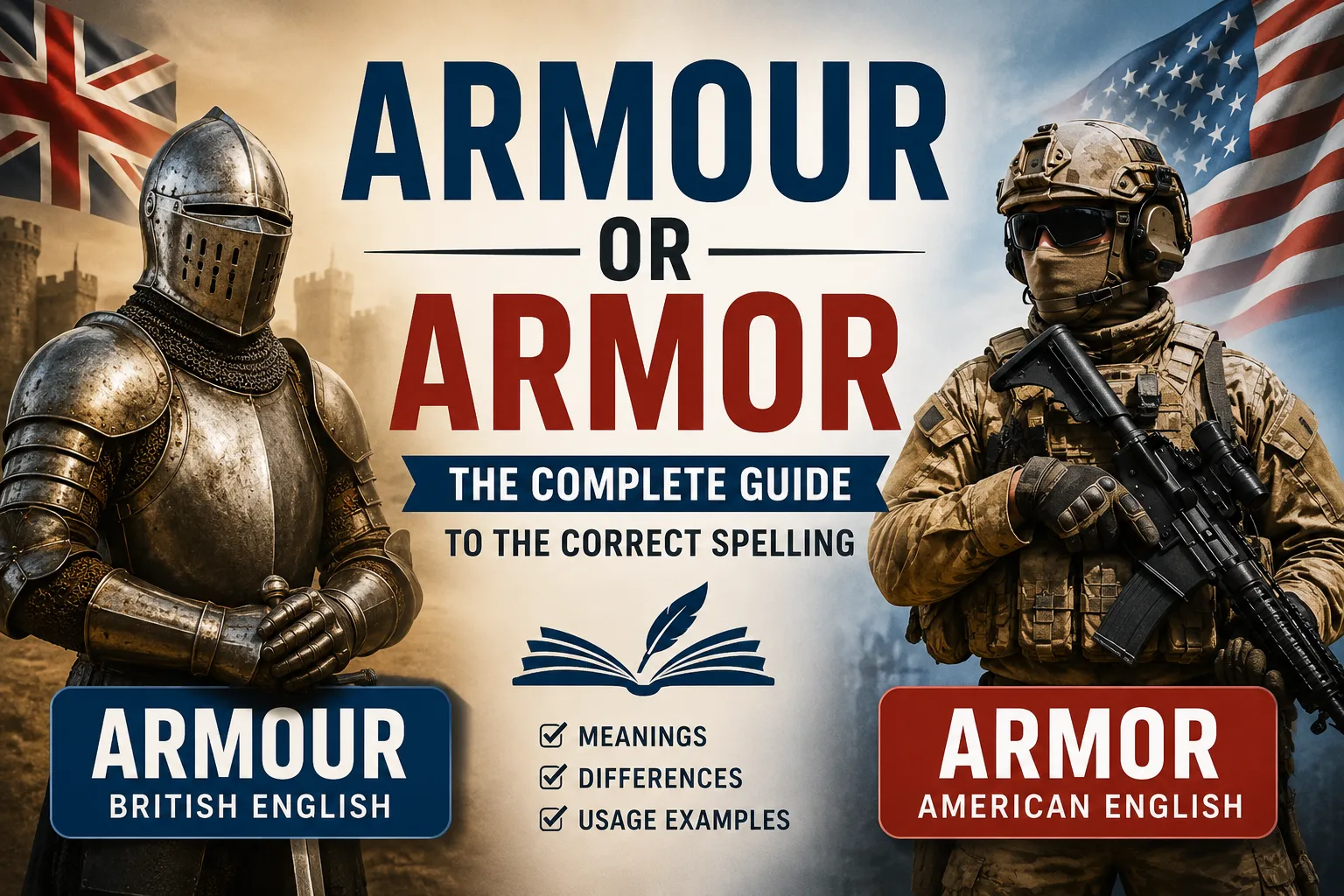
Armour and armor have the same meaning. Armour is the preferred spelling in British English, while armor is the standard spelling in American English.
A few years ago, I was editing content for two different websites. One targeted readers in the United Kingdom. The other focused on readers in the United States.
Both articles discussed medieval knights and protective gear. Yet one editor kept changing armor to armour, while another changed armour back to armor.
Who was right?
The answer surprised some writers. Both spellings were correct.
This is one of those English words that often creates confusion. You may see armour in British books and newspapers. Then you might open an American website and find armor everywhere.
If you’re writing an essay, blog post, product description, game review, or historical article, choosing the right spelling matters. Using the wrong version can make your writing look inconsistent or out of place for your audience.
The good news is that the difference is simple once you understand it.
By the end of this guide, you’ll know exactly when to use armour and when to use armor, along with examples, common mistakes, and practical writing tips.
Armour or Armor: Quick Answer
Both armour and armor refer to protective clothing, equipment, or covering designed to prevent injury or damage.
The only real difference is regional spelling.
- Armour = British English
- Armor = American English
Examples
✅ The knight wore heavy armour into battle. (British English)
✅ The knight wore heavy armor into battle. (American English)
Both sentences are correct.
The Origin / Background of Armour or Armor
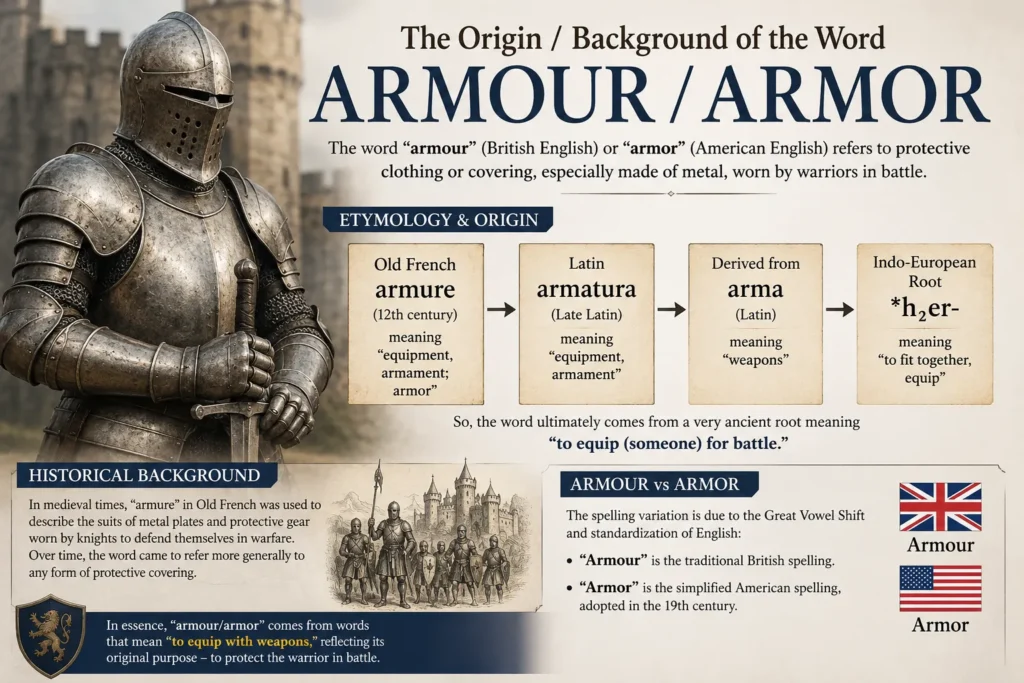
The word comes from Old French and Latin roots connected to weapons and military equipment.
Centuries ago, the spelling varied across different regions.
As English evolved, British and American spelling systems developed separately. Many words ended up with two accepted forms.
Some common examples include:
- Colour / Color
- Honour / Honor
- Favourite / Favorite
- Armour / Armor
British English usually keeps the “u” in words ending with “our“.
American English often removes the “u” to create a shorter spelling.
That is why both armour and armor exist today.
The meaning never changed. Only the spelling did.
Armour or Armor Explained: Key Differences
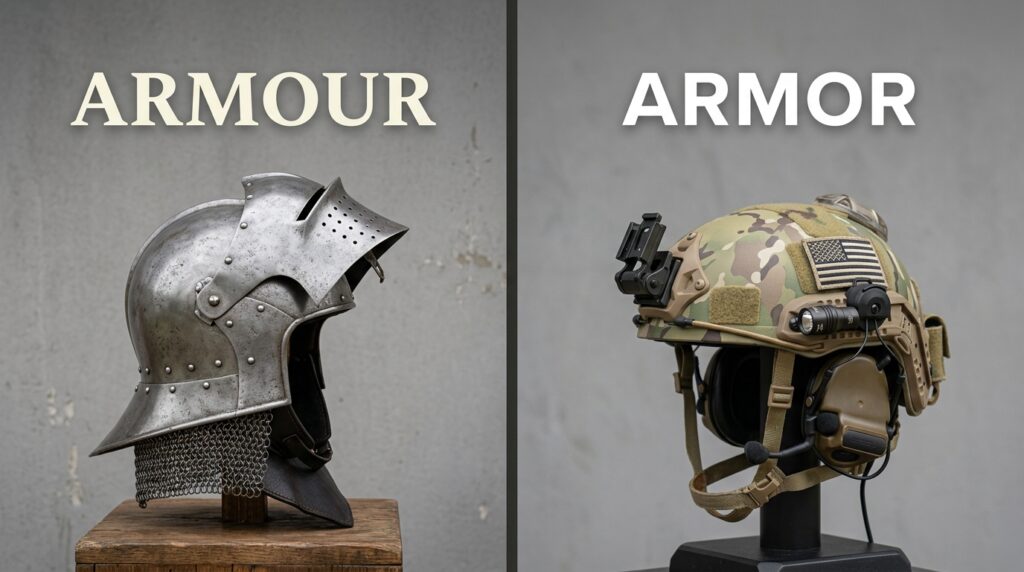
The difference is not about meaning.
It is about audience and location.
| Term | Meaning | When to Use | Region/Context |
| Armour | Protective equipment or covering | British writing | UK, Australia, New Zealand |
| Armor | Protective equipment or covering | American writing | United States |
| Armoured | Equipped with armour | British English | UK and Commonwealth countries |
| Armored | Equipped with armor | American English | United States |
British English Example
“The soldiers traveled in an armoured vehicle.”
American English Example
“The soldiers traveled in an armored vehicle.”
Key Point
Neither spelling is more correct.
The best choice depends on your audience.
Which Version Should You Use?
Choosing the right spelling is easier than many people think.
For Students in the UK
Use armour.
Most schools and universities follow British spelling rules.
For Students in the US
Use armor.
American educational institutions expect American spelling.
For Bloggers
Match your target audience.
If most readers are British, use armour.
If most readers are American, use armor.
For Businesses
Keep spelling consistent across your website and marketing materials.
Mixing both versions can confuse readers.
For Global Audiences
Either spelling works.
However, many international brands choose one style and use it everywhere.
Final Recommendation
Follow the spelling style of your audience and stay consistent throughout your content.
Common Mistakes with Armour or Armor
Many writers make the same mistakes.
| Mistake | Correction |
| Using armour and armor in the same article | Choose one style |
| Using armour for American audiences | Use armor |
| Using armor for British academic work | Use armour |
| Mixing armoured and armored | Follow one regional style |
| Assuming one spelling is wrong | Both are correct |
Why These Mistakes Happen
1. Mixing English Styles
Writers often read content from different countries.
As a result, both spellings appear in their writing.
2. Following Spell Check Blindly
Some writing tools default to American English.
Others use British English.
3. Not Knowing the Audience
Many people choose a spelling before deciding who will read the content.
4. Copying Multiple Sources
Articles written from several references may accidentally mix spellings.
5. Confusing Correctness with Preference
One spelling is not better than the other.
The difference is regional.
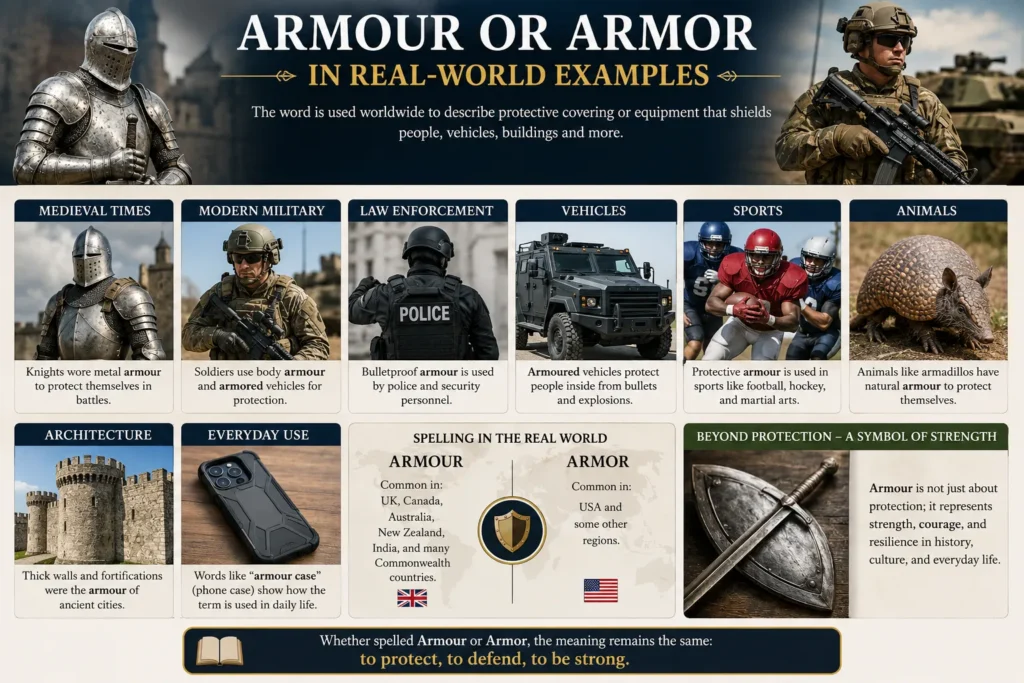
Armour or Armor in Real-World Examples
Professional Email
Our supplier has delivered new armour plating for the security vehicles. (British English)
Our supplier has delivered new armor plating for the security vehicles. (American English)
News Headline
Military Tests Advanced Armor Systems for Combat Vehicles
Social Media Post
The knight’s armour design in this game looks amazing.
Formal Report
The vehicle includes reinforced armor protection against external threats.
Gaming Example
Players can upgrade their character’s armor to improve defense.
Armour or Armor: Data, Trends & Usage
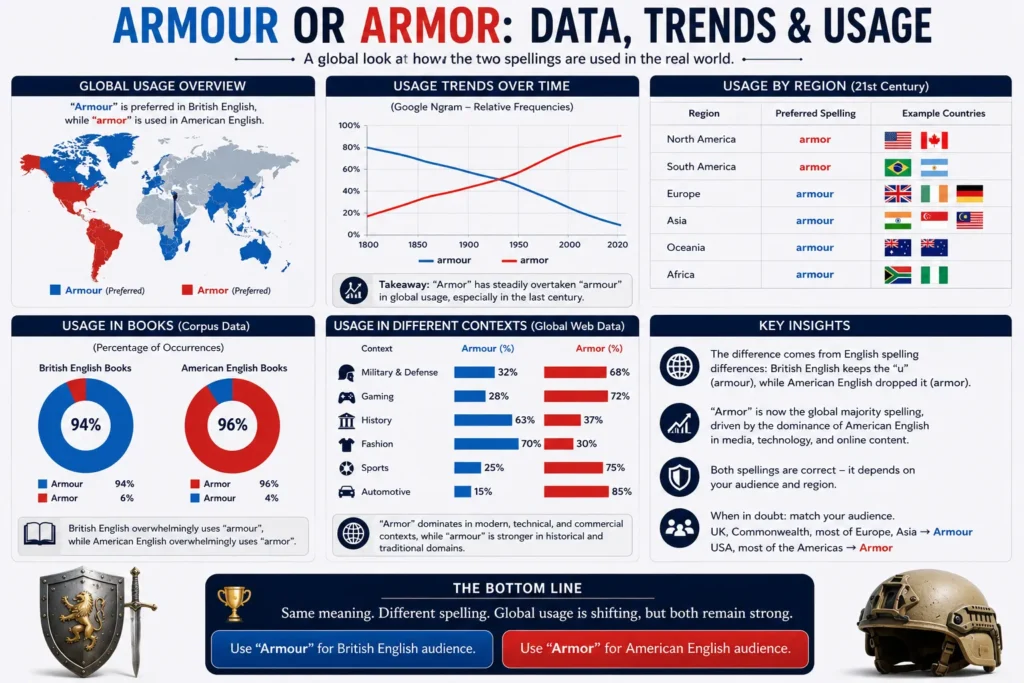
Searches for armour or armor are common among writers, students, gamers, and English learners.
People often search this topic when:
- Writing essays
- Editing articles
- Creating game content
- Studying English spelling differences
- Preparing academic assignments
Search Intent
The main search intent is:
Informational
Users want to know:
- Which spelling is correct
- Whether there is a difference in meaning
- Which version they should use
Regions Most Interested
Armor is searched more often in the United States.
Armour receives more interest in:
- United Kingdom
- Australia
- New Zealand
- Canada
Why It Matters Today
Global communication has increased dramatically.
Writers now create content for audiences across different countries. Understanding regional spelling helps improve credibility and user experience.
Armour vs Armor Comparison Table
| Term/Variant | Meaning | Region/Context | Best Used When |
| Armour | Protective equipment or covering | British English | Writing for UK audiences |
| Armor | Protective equipment or covering | American English | Writing for US audiences |
| Armoured | Equipped with protective armour | British English | UK publications |
| Armored | Equipped with protective armor | American English | US publications |
| Armoury | Place where weapons are stored | British English | UK writing |
| Armory | Place where weapons are stored | American English | US writing |
Frequently Asked Questions

Q: What does armour mean?
A: Armour refers to protective clothing, equipment, or covering designed to protect a person, vehicle, or object from damage.
Q: What does armor mean?
A: Armor has the same meaning as armour. It is simply the American English spelling.
Q: Armour vs armor, what’s the difference?
A: The difference is regional spelling. British English uses armour, while American English uses armor.
Q: Which version is correct, armour or armor?
A: Both are correct. Choose the version that matches your audience and writing style.
Q: Is armour acceptable in formal writing?
A: Yes. It is the standard spelling in British English and is widely accepted in formal documents.
Q: Where do armour and armor come from?
A: Both spellings come from the same historical word rooted in Old French and Latin terms related to military protection.
Q: Can armour or armor be used in gaming and fantasy writing?
A: Absolutely. Both spellings are common in games, novels, role-playing content, and fantasy settings. The choice depends on the language style you prefer.
Conclusion
The debate between armour and armor is not about right versus wrong.
Both spellings are correct. They share the same meaning and refer to protective equipment, clothing, or covering. The real difference comes down to regional English.
Remember these key points:
- Armour is the British English spelling.
- Armor is the American English spelling.
- Both words mean exactly the same thing.
- Consistency matters more than the spelling itself.
If you’re writing for a British audience, choose armour. If you’re writing for an American audience, use armor. Once you pick a style, stick with it throughout your content.
Now you know exactly how to use armour and armor. Bookmark this guide so you never second-guess the spelling again, and share it with someone who still wonders which version is correct.
Read More: Aline or Align: The Complete Guide to the Right Choice

I am an English language expert dedicated to exploring the nuances of words and their meanings. Through detailed comparisons and practical insights, I help readers understand the finer points of language and use words with accuracy and confidence.