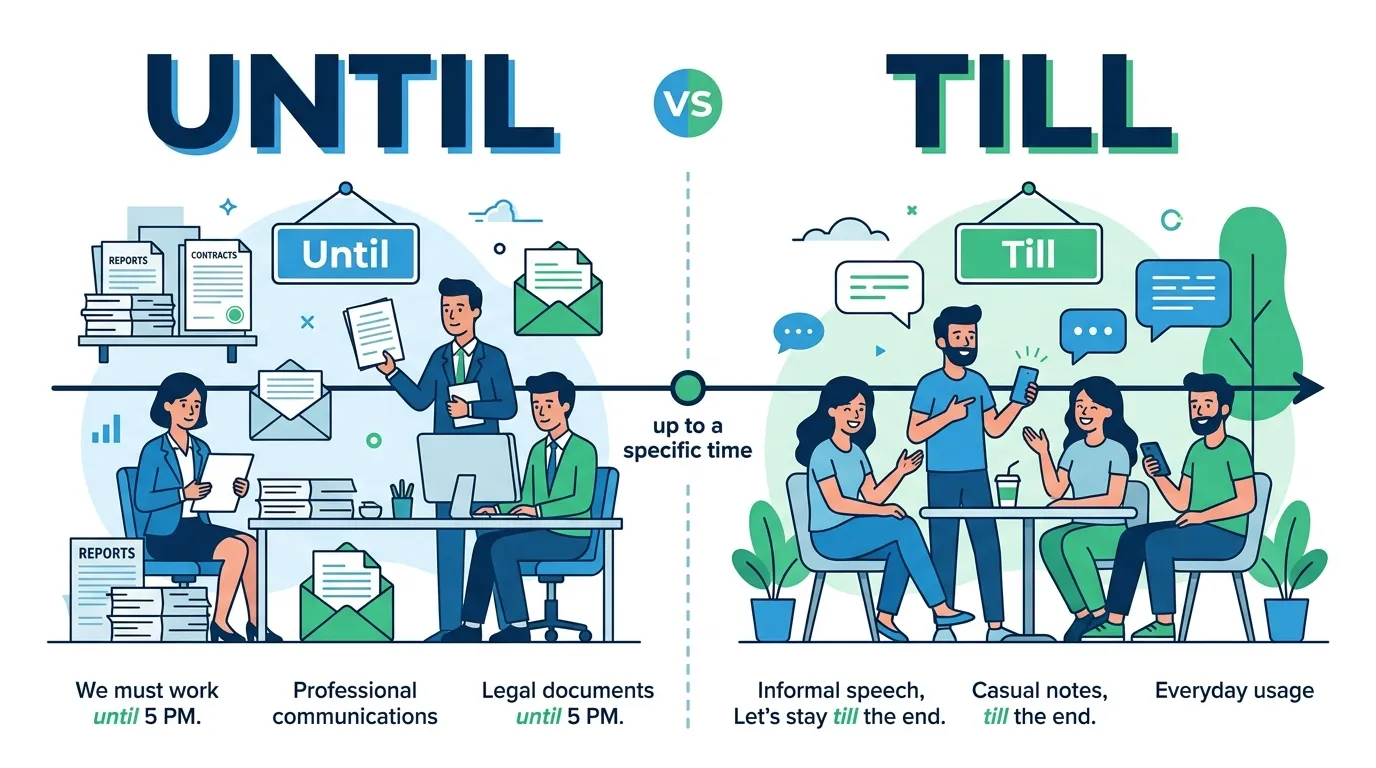
Until and till mean the same thing. Both show that something continues up to a certain time. Until is more common in formal writing, while till is often used in everyday speech and informal writing.
A few years ago, I was editing an article for a client when I noticed something interesting. The writer used till in one paragraph and until in the next. The client immediately asked, “Which one is correct?”
That question comes up more often than you might think.
Many people believe till is just a shortened form of until. Others think till is informal and wrong. Some avoid using it altogether because they are not sure which option sounds more professional.
The truth is much simpler.
Both words are correct. Both have been part of English for centuries. Yet each has situations where it feels more natural.
If you have ever wondered whether you should write until or till, this guide will clear up the confusion. You’ll learn their meaning, history, differences, common mistakes, and how to choose the best option for your writing.
Until or Till: Quick Answer
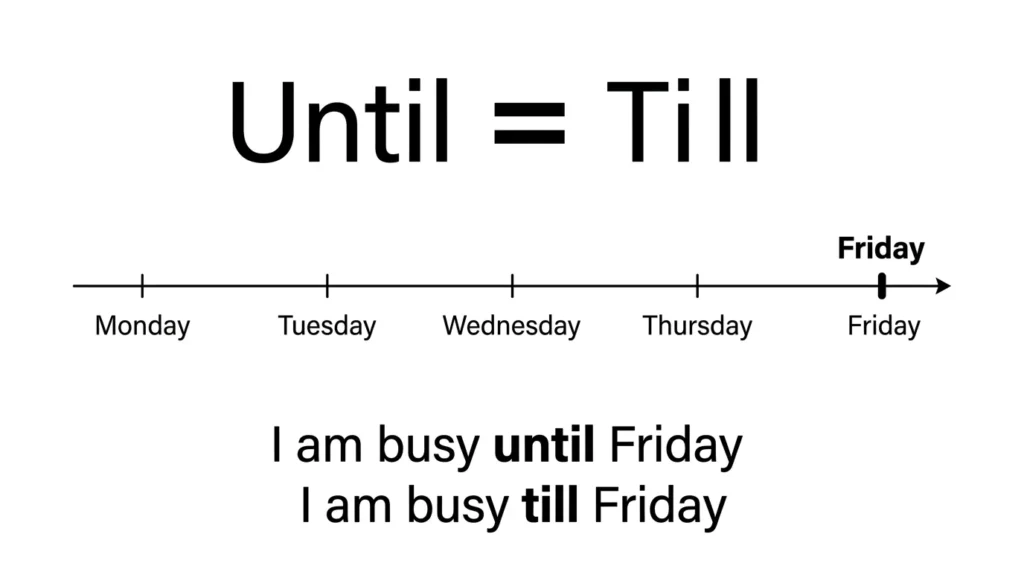
Both until and till mean “up to a particular time.”
Examples:
- I will stay until Friday.
- I will stay till Friday.
Both sentences mean exactly the same thing.
In most cases, you can replace one with the other without changing the meaning. The main difference is tone and style rather than meaning.
The Origin / Background of Until or Till
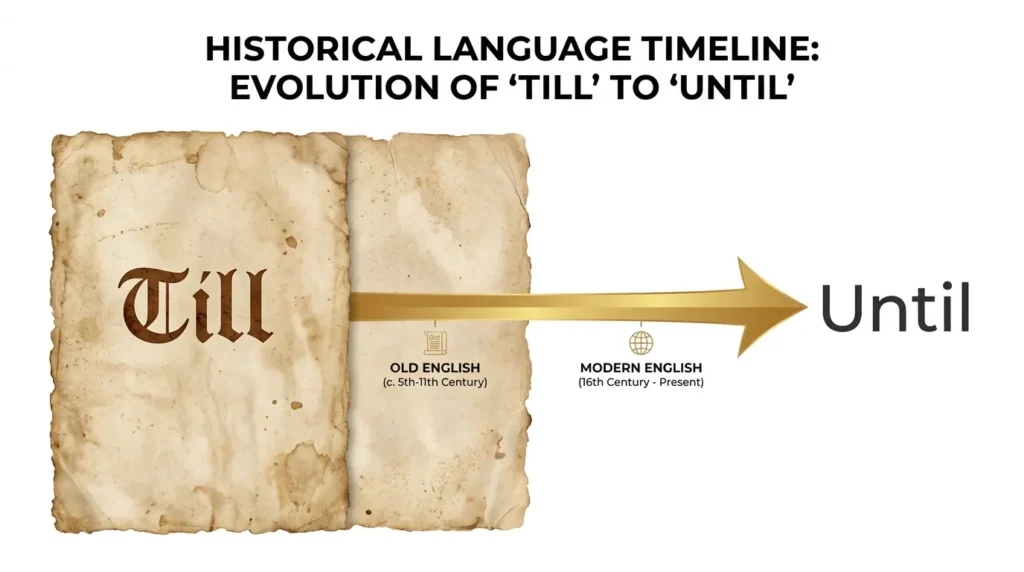
Many people assume till came from shortening until.
Surprisingly, the opposite is closer to the truth.
The word till existed in English before until appeared. It comes from Old English and has been used for hundreds of years.
Later, speakers began adding prefixes, and until developed as another form. Over time, both versions remained in use.
This history explains why till is not a mistake.
Why does confusion exist today?
- Many people think shorter words are less formal.
- Some teachers prefer until in academic writing.
- Informal speech often uses till, making it seem less professional.
Despite these beliefs, major dictionaries accept both forms as correct English.
Until or Till Explained: Key Differences
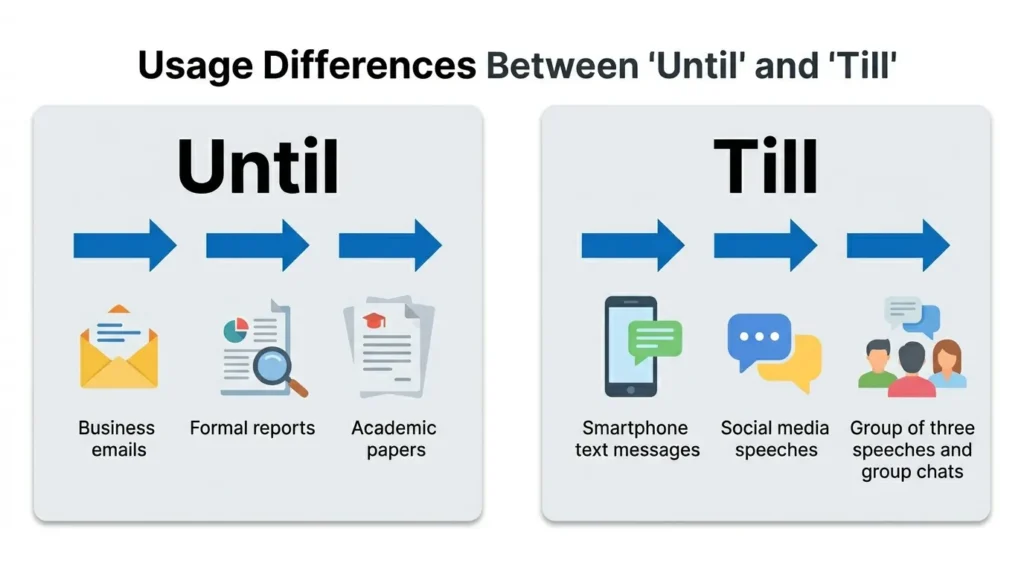
Although they share the same meaning, they differ slightly in style and usage.
| Term | Meaning | When to Use | Region/Context |
| Until | Up to a specific time | Formal and informal writing | Worldwide |
| Till | Up to a specific time | Casual speech and informal writing | Worldwide |
| ‘Til | Informal contraction of until | Creative or conversational writing | Limited use |
Using Until
Until often appears in:
- Business emails
- Academic writing
- Reports
- Professional communication
Example:
- The office will remain closed until Monday.
Using Till
Till sounds more conversational.
Example:
- Wait till I get home.
Using ‘Til
Many people write ’til as a shortened version.
Example:
- I’ll be here ’til noon.
While accepted in some contexts, it is less common in professional writing.
Which Version Should You Use?
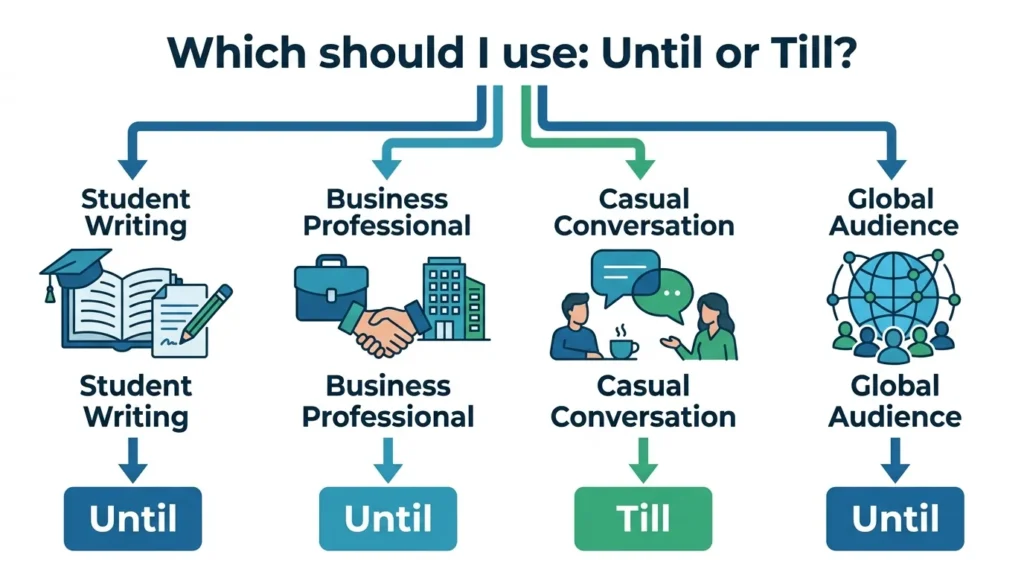
The best choice depends on your audience.
For Students
Use until in essays and assignments.
Reason:
- It looks more formal.
- Teachers often prefer it.
For Business Professionals
Use until in reports, proposals, and official emails.
Reason:
- It fits professional communication.
For Casual Writing
Use till if you want a friendly and natural tone.
Reason:
- It sounds relaxed and conversational.
For Global Audiences
Choose until.
Reason:
- It is universally recognized and works in every context.
Quick Recommendation
If you are unsure, use until.
It is the safest option for almost every situation.
Common Mistakes with Until or Till
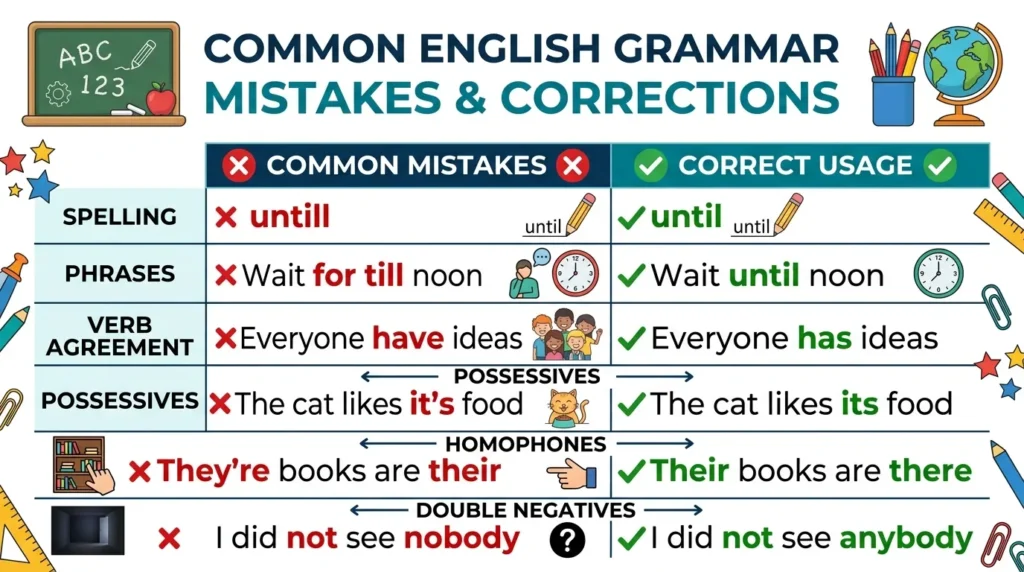
Here are some mistakes people often make.
| Mistake | Correct Version | Why It’s Wrong |
| I’ll stay till until noon. | I’ll stay until noon. | Do not use both together. |
| Till not tomorrow. | Not until tomorrow. | Word order is incorrect. |
| Untill Friday. | Until Friday. | Wrong spelling. |
| Tilll Monday. | Till Monday. | Extra letter added. |
| The meeting ends until 5 PM. | The meeting lasts until 5 PM. | Wrong sentence structure. |
Error 1
❌ I worked till until midnight.
✅ I worked until midnight.
Error 2
❌ Untill next week.
✅ Until next week.
Error 3
❌ The sale finishes until Friday.
✅ The sale runs until Friday.
Until or Till in Real World Examples
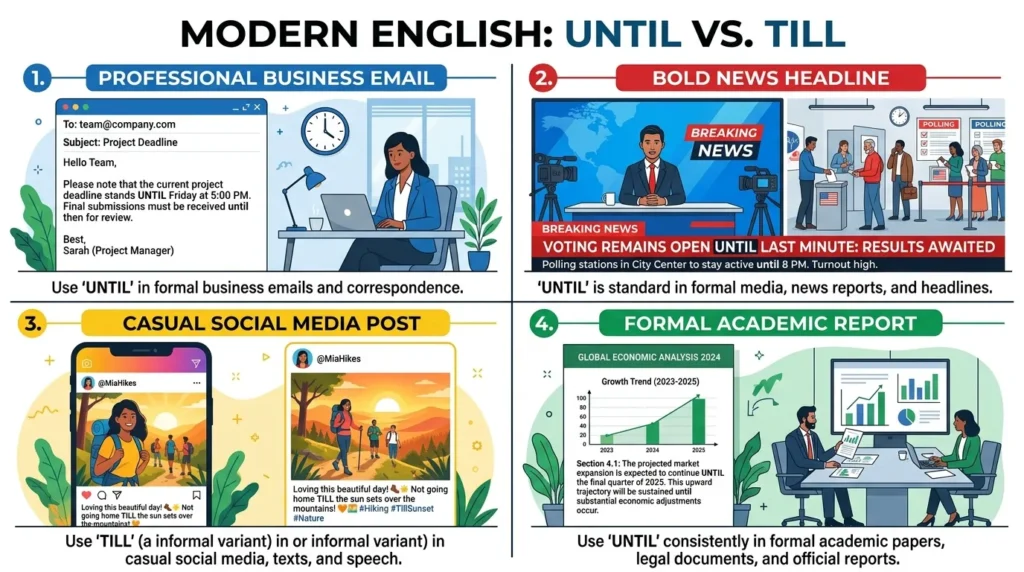
Let’s see how these words appear in everyday communication.
Professional Email
Please submit your documents until Friday afternoon to avoid delays.
News Headline
Storm warnings remain active until midnight.
Social Media Post
Can’t wait! Only two days till vacation starts.
Formal Report
Production levels remained stable until the third quarter.
These examples show that until often appears in formal contexts, while till feels more natural in casual communication.
Until or Till: Data, Trends & Usage
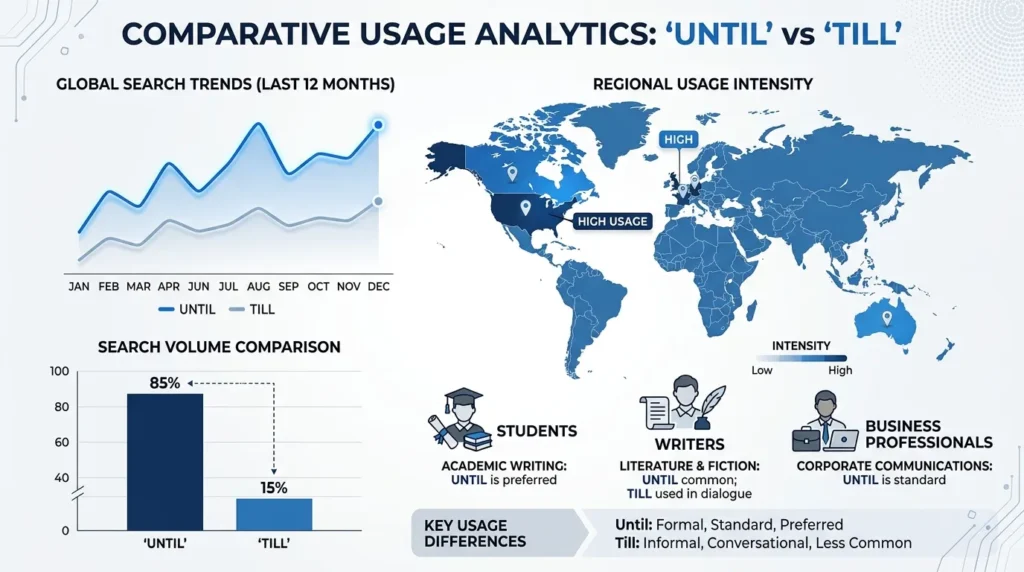
Search interest around until or till remains steady because English learners and writers often want to know which word is correct.
Search Intent
The primary search intent is:
Informational
Users want answers to questions such as:
- Is till correct English?
- Which is more formal?
- Can they be used interchangeably?
- What is the difference between until and till?
Who Searches Most?
The topic is popular among:
- Students
- English learners
- Content writers
- Bloggers
- Business professionals
Why It Matters Today
Online writing has become more important than ever.
People send emails, write articles, publish social posts, and communicate with global audiences every day. Choosing the right word helps create a clear and professional message.
Until vs Till Comparison Table
| Term/Variant | Meaning | Region/Context | Best Used When |
| Until | Up to a certain time | Formal and informal English | Professional or academic writing |
| Till | Up to a certain time | Informal English | Casual conversations and everyday writing |
| ‘Til | Shortened form of until | Informal and creative writing | Dialogue, social media, or creative content |
Frequently Asked Questions
Q: What does until mean?
A: Until means something continues up to a specific time or event. It marks the endpoint of an action or situation.
Q: How do you use until correctly?
A: Use until before a time, date, or event. For example: “The store is open until 9 PM.”
Q: Until vs till: what’s the difference?
A: The meaning is the same. The main difference is style. Until sounds more formal, while till sounds more conversational.
Q: Is till acceptable in formal writing?
A: Yes. Till is a real English word and is grammatically correct. However, many writers prefer until in formal documents.
Q: Which version is correct: until or till?
A: Both are correct. Neither is more accurate than the other. Your choice depends on the tone you want.
Q: Where does till come from?
A: Till comes from Old English and actually existed before until became common.
Q: Can till be used in business emails?
A: Yes, but until is usually a better choice because it sounds slightly more professional and polished.
Conclusion
The debate between until and till is much simpler than many people think. Both words are correct. Both mean the same thing. Both have been used in English for centuries.
The biggest difference is tone.
Until feels more formal and professional. Till feels relaxed and conversational. Neither choice is wrong.
If you are writing an academic paper, business email, or professional report, until is usually the safer option. If you are chatting with friends, posting on social media, or writing casually, till works perfectly well.
The key is consistency. Pick the version that matches your audience and stick with it throughout your writing.
Now you know exactly how to use until or till. Bookmark this guide so you never second-guess these words again, and share it with someone who has been confused about them.
Read more: Brake or Break: The Simple Trick to Never Mix Them Up Again

I am an English language writer dedicated to creating clear, accurate, and easy-to-understand content. My goal is to help readers build confidence in their language and communication skills.