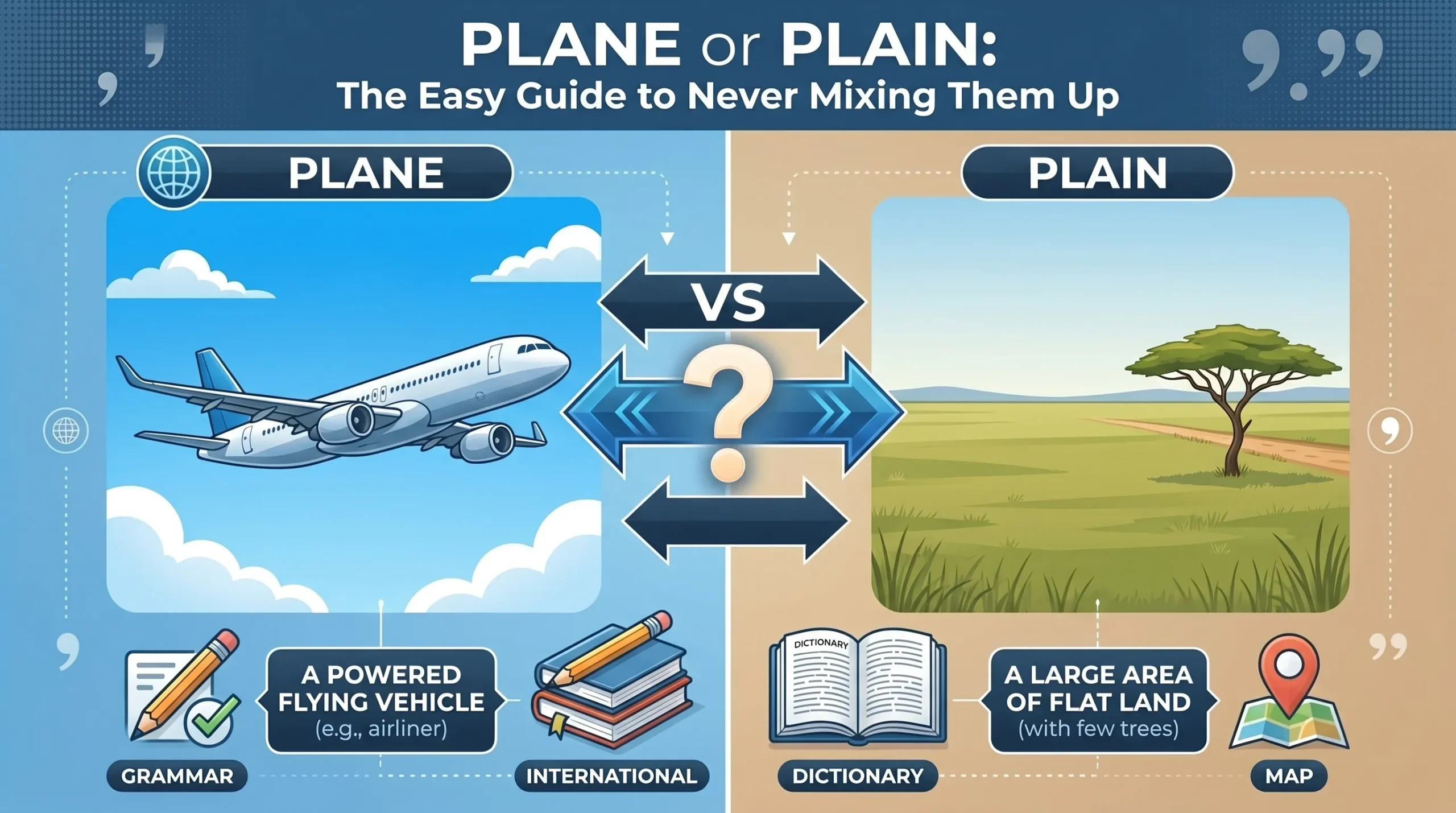
Plane and plain are different words with different meanings. Plane often refers to an aircraft or a flat surface, while plain means simple, clear, or a large area of flat land.
A few years ago, I was helping a student edit an English essay. Everything looked good until I found this sentence: “The plain flew across the sky.” We both laughed when we noticed the mistake.
Many English learners confuse plane and plain because they sound exactly the same. They are homophones, which means they share the same pronunciation but have different meanings and spellings.
This mix-up happens in school assignments, emails, social media posts, and even professional writing. A small spelling mistake can completely change the meaning of a sentence.
If you have ever stopped while writing and wondered whether to use plane or plain, you are not alone. The good news is that the difference is easy to understand once you learn the meanings and see a few examples.
By the end of this guide, you will know exactly when to use each word and how to avoid common mistakes.
Plane or Plain: Quick Answer
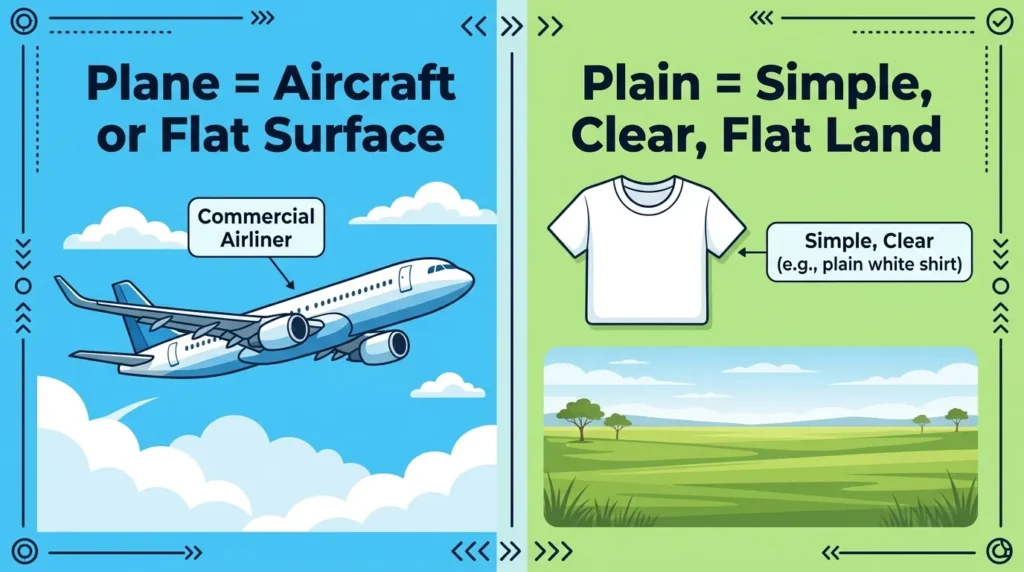
Plane refers to an aircraft or a flat surface, while plain means simple, clear, or a large area of flat land.
The simplest way to remember the difference is this:
- Plane = aircraft or flat surface
- Plain = simple, clear, or flat land
Examples
✅ The plane arrived on time.
✅ The table has a flat plane surface.
✅ She wore a plain white shirt.
✅ The farmers worked on the open plain.
If you are talking about flying, use plane.
If you mean simple or not decorated, use plain.
The Origin / Background of Plane or Plain
Although these words sound alike today, they come from different origins.
Origin of Plane
The word plane comes from Latin planum, meaning “flat surface.” Over time, English speakers used it to describe flat areas, geometric surfaces, and later aircraft.
The aircraft meaning became popular in the early 1900s after the invention of airplanes.
Origin of Plain
The word plain comes from the Latin word planus, meaning “flat” or “clear.”
Over the years, its meaning expanded to include:
- Simple
- Easy to understand
- Not decorated
- Open flat land
Because both words share similar historical roots, they developed similar sounds, which is why people often confuse them today.
Plane or Plain: Key Differences
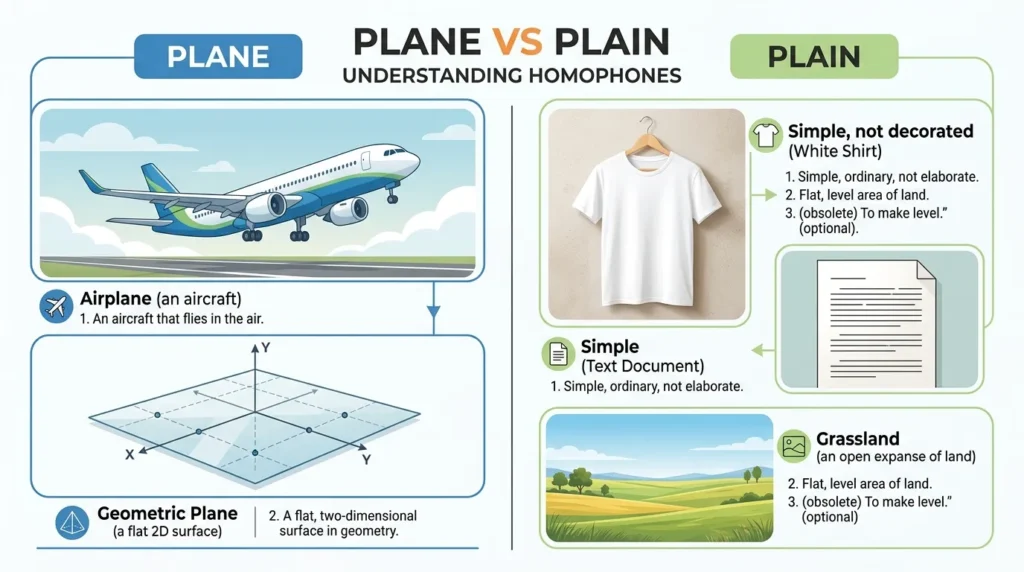
The biggest difference is meaning.
| Term | Meaning | When to Use | Region/Context |
|---|---|---|---|
| Plane | Aircraft, flat surface, geometric level | Travel, science, math | Worldwide |
| Plain | Simple, clear, not fancy, flat land | Everyday English, geography | Worldwide |
Plane Examples
- The plane took off at noon.
- Our plane was delayed by bad weather.
- Draw a line on the horizontal plane.
Plain Examples
- Please use plain language.
- She prefers plain clothing.
- The animals crossed the grassy plain.
Easy Memory Trick
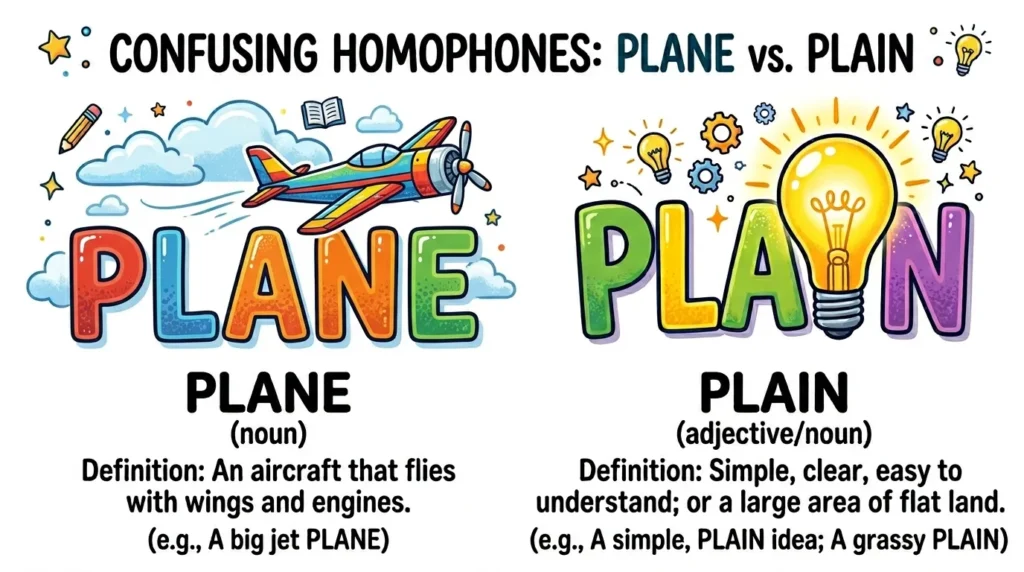
Think of the letter E in plane as standing for engine.
Think of the letter I in plain as standing for simple idea.
This trick helps many students remember the correct spelling.
Which Version Should You Use?
The right choice depends entirely on what you mean.
For Students
Use plane when discussing:
- Air travel
- Geometry
- Science
Use plain when describing:
- Simple writing
- Basic clothing
- Clear communication
For Business Writers
Choose plain when you want language that readers can easily understand.
Example:
- Use plain English in customer emails.
For Travelers
Choose plane when talking about flights.
Example:
- My plane leaves at 9 AM.
For General Writing
Ask yourself one question:
Am I talking about flying or a flat surface?
If yes, use plane.
If not, and you mean simple or clear, use plain.
Common Mistakes with Plane or Plain
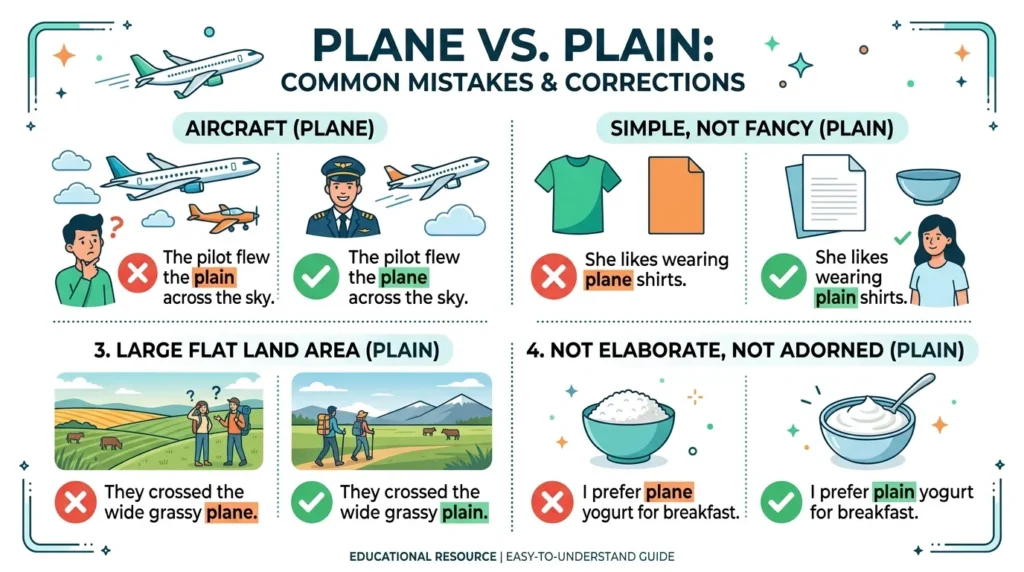
Here are mistakes people make most often.
| Mistake | Correct Version |
|---|---|
| The plain landed safely. | The plane landed safely. |
| Please write in plane English. | Please write in plain English. |
| We boarded the plain. | We boarded the plane. |
| She likes plane clothes. | She likes plain clothes. |
| The plane answer was easy to understand. | The plain answer was easy to understand. |
Why These Mistakes Happen
People confuse these words because:
They sound identical.
Spell-check tools may not catch the error because both are real English words.
Both words have historical connections to the idea of flatness.
Writers sometimes choose the spelling based on pronunciation rather than meaning.
Always check the meaning before choosing the correct spelling.
Plane or Plain in Real World Examples
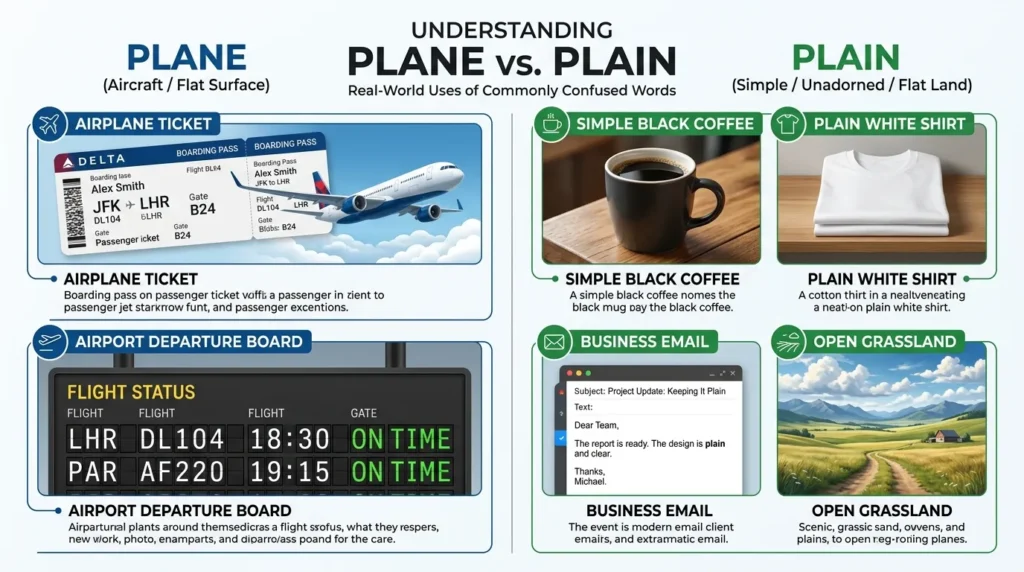
Professional Email
Plane
“Your plane ticket has been confirmed for Monday’s flight.”
News Headline
Plane
“Passenger Plane Makes Emergency Landing After Storm”
Social Media Post
Plain
“I love plain black coffee in the morning.”
Formal Report
Plain
“The document should be written in plain language to improve readability.”
Everyday Conversation
Plane
“Our plane arrives at sunset.”
Everyday Conversation
Plain
“The room looked plain but very clean.”
Plane or Plain: Data, Trends & Usage
The keyword plane or plain is commonly searched by:
- English learners
- Students
- Writers
- Teachers
- Job applicants
Search Intent
The primary search intent is:
Informational
People want to know:
- Which spelling is correct
- What each word means
- How to avoid mistakes
Regions with High Interest
Searches often come from:
- United States
- United Kingdom
- Canada
- Australia
- India
- Pakistan
Why This Matters Today
Clear communication is more important than ever. A single spelling mistake in an email, report, or social media post can create confusion. Understanding the difference between plane and plain helps you write with confidence.
Comparison Table
| Term/Variant | Meaning | Region/Context | Best Used When |
|---|---|---|---|
| Plane | Aircraft | Travel | Discussing flights |
| Plane | Flat surface | Math, science | Describing geometry |
| Plain | Simple or basic | Everyday English | Describing something not fancy |
| Plain | Easy to understand | Writing, communication | Referring to clear language |
| Plain | Flat area of land | Geography | Describing landscapes |
Frequently Asked Questions
Q: What does plane mean?
A: Plane usually means an aircraft. It can also mean a flat surface or level in mathematics and science.
Q: What does plain mean?
A: Plain means simple, clear, basic, or not decorated. It can also refer to a large flat area of land.
Q: How do you use plane correctly?
A: Use plane when talking about flying, aircraft, geometry, or flat surfaces. Example: The plane landed safely.
Q: How do you use plain correctly?
A: Use plain when describing something simple or easy to understand. Example: Please use plain language.
Q: Plane vs Plain: What’s the Difference?
A: Plane relates to aircraft or flat surfaces. Plain relates to simplicity, clarity, or flat land.
Q: Is plain acceptable in formal writing?
A: Yes. In fact, many organizations encourage plain language because it is easier for readers to understand.
Q: Which Spelling Is Correct: Plane or Plain?
A: Both are correct words. The correct choice depends on the meaning you want to express.
Q: Where do plane and plain come from?
A: Both words have roots in Latin and originally related to the idea of flatness. Over time, their meanings developed in different directions.
Q: Can plain be used in geography?
A: Yes. A plain is a large area of flat land, often used for farming or grazing animals.
Conclusion
The difference between plane and plain is easier than many people think. Plane refers to an aircraft or a flat surface. Plain means simple, clear, basic, or a flat stretch of land.
Remember these key points:
- Use plane for flying and geometry.
- Use plain for simplicity and clear communication.
- Check the meaning before choosing the spelling.
- Practice with real-world examples to build confidence.
These two words may sound identical, but their meanings are very different. Once you understand the distinction, you are much less likely to make mistakes.
Now you know exactly how to use plane or plain correctly. Bookmark this guide so you never second-guess these words again, and share it with someone who often mixes them up.
Read more: Brake or Break: The Simple Trick to Never Mix Them Up Again

I am an English language writer dedicated to creating clear, accurate, and easy-to-understand content. My goal is to help readers build confidence in their language and communication skills.