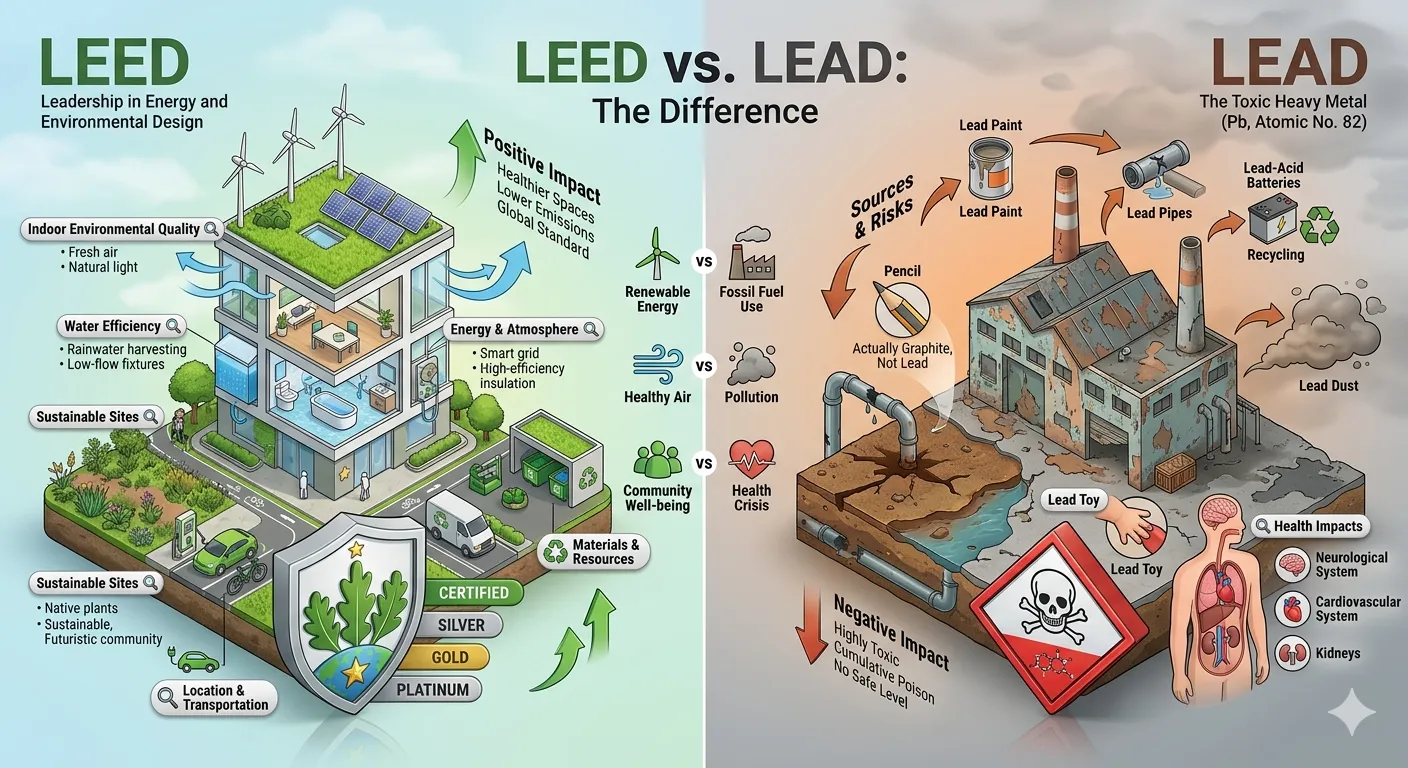
Lead is the correct English word in almost all situations. Leed is generally a misspelling and is not recognized as a standard English word. If you’re choosing between lead and leed, use lead.
English contains many words that sound similar, look similar, or are easy to mistype. One common spelling question is lead or leed. At first glance, both words seem possible. After all, English contains words like seed, feed, and need, so it’s natural to wonder whether leed might also be correct.
I first encountered this confusion while editing a business article. The writer repeatedly used “leed generation” instead of “lead generation.” The content was excellent, but that one spelling mistake made the article appear less professional.
Many people search for lead or leed because they see both spellings online. Some encounter the term in marketing, sales, business writing, or everyday English. Others simply want to know whether leed is a real word.
The good news is that the answer is straightforward. In standard English, lead is the correct spelling. However, the word itself has several meanings and pronunciations, which can create confusion.
This guide explains the difference between lead and leed, the meanings of lead, its pronunciation, common mistakes, real-world examples, and the correct form to use in every situation.
✅ Lead or Leed Quick Answer
The correct spelling is:
Lead ✅
The incorrect spelling is:
Leed ❌
Examples
✅ She will lead the team.
✅ The company generated new sales leads.
✅ This pipe contains lead.
❌ She will leed the team.
❌ The company generated new sales leeds.
In standard English writing, lead is almost always the correct choice.
📚 The Origin / Background of Lead or Leed
The word lead has existed in English for hundreds of years and comes from Old English.
Interestingly, lead has multiple meanings:
- To guide or direct.
- A person in first place.
- A potential customer in marketing.
- A soft metal called lead.
Because the word can function as a noun, verb, and adjective, it appears frequently in everyday communication.
The spelling leed likely developed because many English words with a long “ee” sound use ee.
Examples include:
- Need
- Feed
- Speed
- Seed
As a result, some writers incorrectly assume that lead should be spelled leed.
🔍 Lead Explained Different Meanings
One reason people become confused is that lead has several meanings.
1. Lead as a Verb
Meaning: To guide, direct, or be in charge.
Examples:
✅ She will lead the project.
✅ He hopes to lead the organization.
✅ Our teacher will lead the discussion.
2. Lead as a Noun (Person in Front)
Meaning: First place or an advantage.
Examples:
✅ The team took the lead.
✅ She maintained a comfortable lead.
✅ Our company has the market lead.
3. Lead in Marketing
Meaning: A potential customer.
Examples:
✅ We generated 200 new leads.
✅ Sales teams follow up with qualified leads.
✅ Lead generation is important for business growth.
4. Lead as a Metal
Meaning: A dense metallic element.
Examples:
✅ Older buildings sometimes contain lead paint.
✅ The pipe was made of lead.
This version is pronounced differently from the verb.
🔤 Lead Pronunciation Explained
The word lead has two common pronunciations.
| Meaning | Pronunciation | Example |
| To guide | LEED | Lead the team |
| Metal | LED | Lead pipe |
Examples
✅ “I will lead the group.” (LEED)
✅ “The pipe contains lead.” (LED)
This difference often surprises English learners.
🔍 Lead or Leed Explained Key Differences
| Term | Meaning | Correct? | Context |
| Lead | Standard English word | ✅ Yes | All contexts |
| Leed | Misspelling | ❌ No | Avoid |
Correct Usage
✅ Lead generation
✅ Team leader
✅ Lead role
✅ Lead the project
Incorrect Usage
❌ Leed generation
❌ Leed role
❌ Leed the project
🎯 Which Version Should You Use?
For Students
Always use lead in assignments and exams.
For Business Professionals
Use lead in reports, presentations, and emails.
For Marketers
Use lead when referring to potential customers.
For Writers
Choose lead in articles, blogs, and content.
Recommended Choice
✔ Lead
✖ Avoid leed
💼 Lead in Business and Marketing
One of the most searched uses of the word appears in marketing.
What Is a Lead?
A lead is a person who has shown interest in a product or service.
Examples:
- Filling out a contact form
- Downloading a guide
- Requesting a quote
- Signing up for a newsletter
Types of Leads
Marketing Qualified Lead (MQL)
Someone who has shown interest in marketing content.
Sales Qualified Lead (SQL)
Someone ready for direct sales contact.
Warm Lead
A prospect familiar with your brand.
Cold Lead
A prospect with little interaction.
Businesses spend significant resources generating and nurturing leads.
⚠️ Common Mistakes with Lead or Leed
| Mistake | Correction |
| Leed generation | Lead generation |
| She will leed the team | She will lead the team |
| He is the leed actor | He is the lead actor |
| New sales leed | New sales lead |
Why These Mistakes Happen
1. Pronunciation Confusion
Many people hear “lead” pronounced like “leed” and assume the spelling should match.
2. Similar English Words
Words such as:
- Need
- Feed
- Seed
encourage incorrect spelling patterns.
3. Fast Typing
Typing quickly often leads to spelling errors.
🌎 Lead in Real-World Examples
Professional Email
“Our manager will lead tomorrow’s meeting.”
News Headline
“Technology Company Takes Market Lead”
Marketing Report
“The campaign generated 500 qualified leads.”
Job Description
“We are looking for a Lead Developer to join our team.”
Social Media Post
🚀 “Our team generated record-breaking sales leads this month!”
📈 Lead or Leed D ata, Trends & Usage
The search term lead or leed is popular because people encounter the word in many industries.
Who Searches This Topic?
- Students
- Writers
- Marketers
- Sales professionals
- Job seekers
- English learners
Search Intent
Informational
Most users want to know:
- Which spelling is correct
- Whether leed is a real word
- How lead is pronounced
- How lead is used in business
Why It Matters
Correct spelling improves:
- Professional credibility
- Business communication
- Academic writing
- SEO performance
📊 Standalone Comparison Table
| Term/Variant | Meaning | Region/Context | Best Used When |
| Lead | Guide, advantage, customer, metal | Global English | All situations |
| Leed | Misspelling | None | Avoid |
| Leads | Plural of lead | Business & general English | Multiple leads |
| Leader | Person who leads | Global English | Leadership contexts |
| Leading | Guiding or directing | Global English | Ongoing actions |
Frequently Asked Questions
Q: Is lead or leed correct?
A: Lead is correct. Leed is generally a misspelling.
Q: Is leed a real English word?
A: No. It is not recognized as a standard English word.
Q: Why is lead pronounced like leed?
A: English spelling and pronunciation do not always match. The verb lead is pronounced “leed” even though it is spelled lead.
Q: What is a sales lead?
A: A sales lead is a potential customer who may be interested in a product or service.
Q: What does lead generation mean?
A: Lead generation is the process of attracting potential customers for a business.
Q: Is lead acceptable in formal writing?
A: Yes. It is a standard English word used in academic, business, and professional communication.
Q: What is the past tense of lead?
A: The past tense is led.
Example:
✅ She led the team to victory.
🎯 Conclusion
The choice between lead and leed is simple once you know the rule. Lead is the correct spelling in standard English, while leed is generally considered a misspelling.
Key takeaways:
- Lead is correct.
- Leed is incorrect.
- Lead can mean guide, advantage, customer, or metal.
- The verb lead is pronounced “leed.”
- The past tense of lead is led.
Whether you’re writing a school assignment, creating marketing content, drafting a business report, or improving your English skills, using lead correctly will make your writing more accurate and professional.
Now you know exactly when to use lead and why leed should be avoided. Bookmark this guide so you never second-guess lead or leed again.
Read More:
Hawk or Eagle: Easy Guide to Spot the Difference 🦅

📚✨ I’m an English enthusiast and author dedicated to exploring word differences, spelling variations, and common language questions. By drawing on trusted dictionaries, language resources, and practical usage examples, I create clear, reliable content that helps readers learn with confidence and communicate more effectively. ✍️🌍