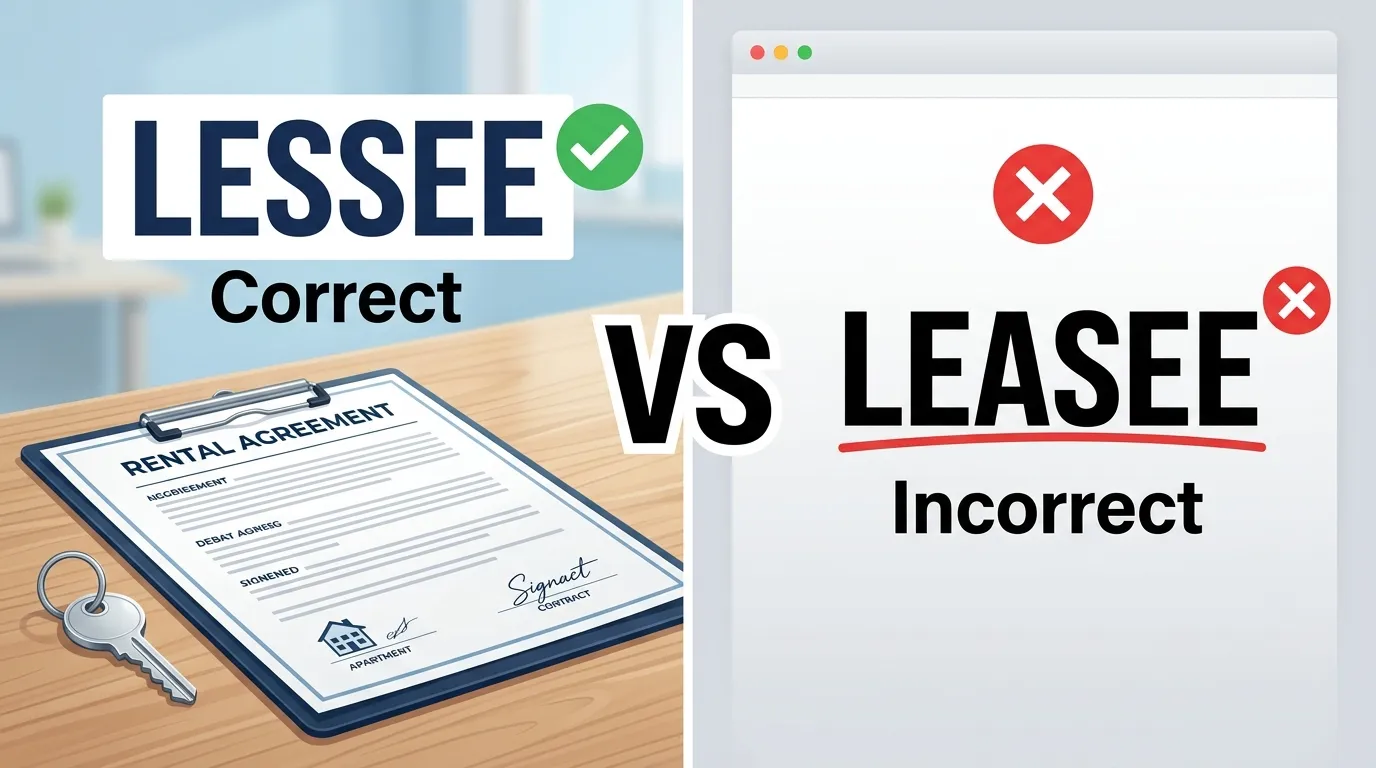
Leasee or lessee refers to a person involved in a lease agreement. The correct legal and standard English term is lessee, while leasee is usually considered a misspelling.
A few years ago, I was helping someone review a rental agreement. Everything looked fine until I noticed the word leasee written several times throughout the document. At first glance, it seemed correct because it looked related to the word “lease.” However, something felt off.
Many people face the same confusion. When writing about renting property, apartments, offices, or equipment, they often wonder whether they should use leasee or lessee. The two words look very similar, but only one is accepted in standard English and legal writing.
This confusion happens because the word lease naturally leads people to assume that leasee must be correct. In reality, English follows a different pattern for this term.
If you have ever questioned which spelling to use, you are in the right place. By the end of this guide, you will know the correct term, understand why the confusion exists, and learn how to use the word confidently in everyday and professional situations.
Leasee or Lessee : Quick Answer
Lessee is the correct word. It refers to a person who receives the right to use property under a lease agreement.
Leasee is generally considered a spelling mistake and should be avoided in formal, legal, and professional writing.
Examples:
- The lessee agreed to pay rent on the first day of each month.
- The apartment was leased to the lessee for one year.
The Origin and Background of Leasee or Lessee
To understand the difference, it helps to look at the history of the word.
The term lessee comes from legal language that developed through French and English legal traditions. In legal terminology, many words ending in ee describe a person who receives something.
For example:
- Employee receives employment.
- Payee receives payment.
- Grantee receives a grant.
- Lessee receives a lease.
Because the base word is lease, many writers assume the receiver should be called a leasee. That assumption seems logical, but English legal usage established lessee as the standard form long ago.
As a result, courts, legal documents, contracts, landlords, and property managers use lessee, not leasee.
Leasee or Lessee Explained : Key Differences and Variations
The most important difference is simple.
| Term | Meaning | When to Use | Region/Context |
| Leasee | Common misspelling of lessee | Generally avoid | Informal mistakes |
| Lessee | Person who rents or leases property | Legal and standard writing | Worldwide |
| Lessor | Person who grants the lease | Legal and business writing | Worldwide |
Example of Leasee
Incorrect:
“The leasee must pay rent before the due date.”
Example of Lessee
Correct:
“The lessee must pay rent before the due date.”
Understanding the Relationship
In a lease agreement:
- The lessor owns the property.
- The lessee rents the property.
Remembering this relationship makes the terms easier to use correctly.
Which Version Should You Use?
The answer is straightforward.
For Students
Use lessee in assignments, reports, and essays. It is the accepted spelling.
For Legal Professionals
Always use lessee. Contracts and legal documents require the correct term.
For Property Managers
Use lessee in lease agreements, notices, and communication with tenants.
For Business Owners
If you lease equipment, vehicles, or office space, use lessee in all official documents.
For Global Audiences
Lessee is the universally recognized term and should be your default choice.
Common Mistakes with Leasee or Lessee
Many writers make the same errors.
| Mistake | Correction |
| Writing leasee instead of lessee | Use lessee |
| Confusing lessee with lessor | Lessee rents, lessor owns |
| Assuming leasee is a modern variant | It is usually a misspelling |
| Using leasee in contracts | Replace it with lessee |
| Mixing lessee and tenant incorrectly | A tenant is often a lessee under a lease |
Why These Mistakes Happen
Several factors cause confusion:
- The word lease naturally suggests leasee.
- Many people rarely encounter legal vocabulary.
- Spell checkers do not always catch every context.
- Similar legal terms can be difficult for beginners.
A simple memory trick can help.
Think of lessee as the person who receives the lease.
Leasee or Lessee in Real World Examples
Professional Email
“Please note that the lessee is responsible for utility payments during the lease period.”
News Headline
“Commercial Lessee Signs Ten Year Office Agreement”
Social Media Post
“Our new lessee moved into the property this weekend.”
Formal Document or Report
“The lessee shall maintain the premises in good condition throughout the lease term.”
These examples show that lessee is the standard choice across different forms of communication.
Leasee or Lessee : Data, Trends & Usage
Searches for leasee or lessee are usually made by people checking spelling, legal terminology, or contract language.
The topic is popular among:
- Students
- Landlords
- Tenants
- Property managers
- Real estate professionals
- Business owners
Search Intent
The primary search intent is informational.
Users want to know which spelling is correct and how to use it properly.
Regions with High Interest
Interest commonly comes from:
- United States
- United Kingdom
- Canada
- Australia
- India
Why This Matters Today
More people are signing rental agreements, equipment leases, and business contracts than ever before. Using the correct legal term helps avoid confusion and improves professionalism.
Leasee vs Lessee Comparison Table
| Term/Variant | Meaning | Region/Context | Best Used When |
| Leasee | Misspelling of lessee | Informal errors | Avoid using |
| Lessee | Person receiving a lease | Legal and business contexts | Always use |
| Lessor | Person granting a lease | Legal agreements | Referring to property owner |
| Tenant | Person occupying rented property | Rental situations | General housing discussions |
FAQs
Q: What does leasee or lessee mean?
A: The phrase compares two spellings. Lessee is the correct term for a person who rents property under a lease agreement, while leasee is usually a misspelling.
Q: How do you use lessee correctly?
A: Use lessee when referring to the person receiving the lease. It is commonly used in contracts, rental agreements, and legal documents.
Q: Leasee vs lessee. What is the difference?
A: The main difference is correctness. Lessee is the accepted word, while leasee is generally considered incorrect.
Q: Is lessee acceptable in formal writing?
A: Yes. It is the standard legal and professional term used in contracts, court documents, and business agreements.
Q: Which version is correct, leasee or lessee?
A: Lessee is correct. Most dictionaries, legal references, and style guides recognize lessee as the proper spelling.
Q: Where does the word lessee come from?
A: The term developed through legal English and French legal traditions. It has been used in lease agreements for many years.
Q: Can lessee be used outside property rentals?
A: Yes. A lessee can lease equipment, vehicles, machinery, office space, and other assets, not just real estate.
Conclusion
The confusion between leasee or lessee is common because both spellings seem reasonable at first glance. However, only one is correct in standard English and legal writing.
The key takeaway is simple. Lessee is the person who receives the lease. Leasee is generally treated as a spelling mistake and should be avoided.
Remember these important points:
- Lessee is the correct term.
- Leasee is usually incorrect.
- A lessor grants the lease.
- A lessee receives the lease.
Using the right word makes your writing clearer and more professional. Whether you are signing a contract, writing a report, or discussing rental agreements, you can confidently choose lessee every time.
Now you know exactly how to use leasee or lessee correctly. Bookmark this guide so you never second guess the term again.
Read More: Eery or Eerie: The Complete Guide to the Correct Spelling📖✍️

Professional content writer delivering insightful, accurate, and reader-friendly articles across multiple niches with a focus on quality and value.