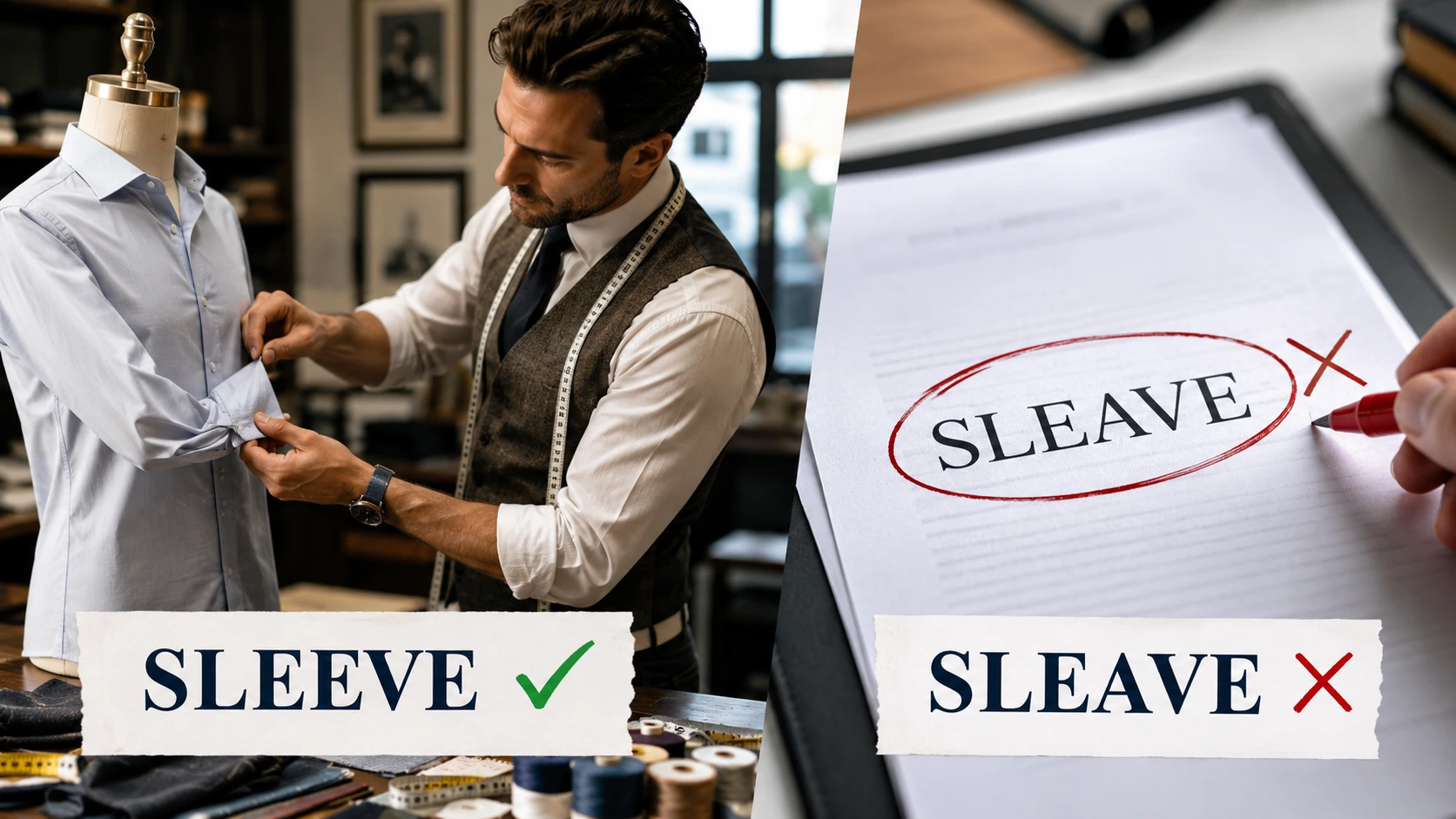
Sleeve is the correct spelling for the part of a shirt, jacket, or garment that covers the arm. Sleave is an old and very rare English word that is almost never used today.
Have you ever typed “sleave” and wondered if it was just another spelling of “sleeve”? You’re not alone.
A few years ago, while proofreading articles for a client in the fashion industry, I noticed this mistake several times. Writers accidentally replaced sleeve with sleave, thinking the words were interchangeable. Spell-check tools sometimes failed to catch the issue because sleave is technically a real word, although it is rarely used.
This confusion often happens because both words look nearly identical. Just one letter changes. Yet their meanings are completely different.
If you’re writing about clothing, fashion, uniforms, sportswear, or everyday garments, using the wrong word can make your writing look unprofessional. Readers may become confused, and search engines may not understand your content as clearly.
The good news is that the difference is simple once you understand it. By the end of this guide, you’ll know exactly when to use sleeve, what sleave actually means, and how to avoid one of the most common spelling mistakes in English writing.
Sleeve or Sleave : Quick Answer
For almost all modern writing, sleeve is the correct word.
A sleeve is the part of a garment that covers the arm.
A sleave is an old English word that refers to fine silk fibers or untwisted silk thread. Most English speakers never use it.
Examples
✅ She rolled up her sleeves.
✅ The jacket has long sleeves.
✅ The tailor shortened the sleeves.
❌ The jacket has long sleaves.
In modern English, choose sleeve nearly every time.
The Origin of Sleeve or Sleave
The history behind these words explains why they cause confusion.
Origin of Sleeve
The word sleeve comes from Old English sliefe. It has been used for hundreds of years to describe the arm-covering part of clothing.
As fashion evolved, the word remained largely unchanged.
Today, it appears in:
- Clothing descriptions
- Fashion magazines
- Retail websites
- Everyday conversations
Origin of Sleave
The word sleave comes from older forms of English and Scottish usage.
Historically, it referred to:
- Fine silk fibers
- Untwisted silk thread
- Delicate textile material
The word survives mainly in historical texts and literary works.
One famous example appears in Shakespeare’s Macbeth, where the phrase “the sleave of care” is often discussed by literature students.
Because sleave is so uncommon today, many people mistakenly assume it is a misspelling of sleeve.
Sleeve or Sleave Explained : Key Differences
Although the words look similar, their meanings are very different.
| Term | Meaning | When to Use | Region/Context |
| Sleeve | Part of clothing that covers the arm | Modern English | Worldwide |
| Sleave | Fine silk fiber or thread | Historical and literary English | Rare |
Examples of Sleeve
- The shirt has short sleeves.
- She pulled down her sleeves.
- The tailor adjusted the sleeves.
Examples of Sleave
- The old text mentioned silk sleave.
- Scholars study the word in Shakespeare’s works.
Most people will never need to use sleave in normal writing.
Which Version Should You Use?
The answer is straightforward.
For Students
Use sleeve.
School assignments, essays, and reports almost always require the modern word.
For Bloggers and Writers
Use sleeve when discussing:
- Clothing
- Fashion
- Uniforms
- Sewing
- Textiles
For Literature Students
You may encounter sleave when reading:
- Shakespeare
- Historical literature
- Older English texts
For Global English
Choose sleeve.
It is universally understood and accepted.
Common Mistakes with Sleeve or Sleave
Here are the errors writers make most often.
Mistake 1
❌ The coat has long sleaves.
✅ The coat has long sleeves.
Why it happens: People spell the word based on pronunciation.
Mistake 2
❌ Roll up your sleaves.
✅ Roll up your sleeves.
Why it happens: The incorrect spelling appears frequently online.
Mistake 3
❌ The tailor shortened the sleaves.
✅ The tailor shortened the sleeves.
Why it happens: Writers assume “ea” follows the pronunciation.
Mistake 4
❌ Sleeve is an old silk thread.
✅ Sleave is an old word for silk thread.
Why it happens: The meanings get mixed up.
Mistake 5
❌ Sleave is the arm part of a shirt.
✅ Sleeve is the arm part of a shirt.
Why it happens: The words are visually similar.
Sleeve or Sleave in Real-World Examples
Professional Email
“Please ensure the uniform sleeves meet the company dress code requirements.”
News Headline
“Designer Introduces Jacket With Adjustable Sleeves“
Social Media Post
“Love this sweater! The oversized sleeves make it super comfortable.”
Formal Report
“The protective garment includes reinforced sleeves for additional safety.”
Literature Discussion
“The word sleave appears in historical English texts and is rarely used in modern communication.”
Sleeve or Sleave : Data, Trends & Usage
People usually search for sleeve or sleave because they:
- Want the correct spelling
- Need help with writing
- Are studying English
- Encountered the word in literature
Search Intent
Primary search intent:
Informational
Users want to know:
- Which spelling is correct
- Whether both words are valid
- How to use each word properly
Who Searches Most?
- Students
- Writers
- Bloggers
- English learners
- Literature enthusiasts
Why This Matters Today
Clear spelling improves credibility. A simple mistake like writing sleave instead of sleeve can make content appear less professional and may confuse readers.
Comparison Table
| Term/Variant | Meaning | Region/Context | Best Used When |
| Sleeve | Part of clothing covering the arm | Modern English worldwide | Writing about clothing or fashion |
| Sleave | Fine silk fiber or thread | Historical and literary English | Discussing older texts or literature |
Frequently Asked Questions
Q: What does sleeve mean?
A: A sleeve is the part of a garment that covers all or part of the arm. It is commonly found on shirts, jackets, dresses, and coats.
Q: What does sleave mean?
A: Sleave is a rare and old English word that refers to fine silk fibers or thread. It is rarely used in modern writing.
Q: Which spelling is correct: sleeve or sleave?
A: For clothing and everyday English, sleeve is correct. Sleave is only used in historical or literary contexts.
Q: Is sleave a real word?
A: Yes. It is a legitimate English word, but it is very rare and largely obsolete in modern usage.
Q: Can I use sleave instead of sleeve?
A: No. They have different meanings. Using sleave when you mean sleeve is considered a mistake.
Q: Is sleeve acceptable in formal writing?
A: Yes. Sleeve is standard English and is appropriate in both formal and informal writing.
Q: Where does the word sleeve come from?
A: The word comes from Old English and has been used for centuries to describe the arm-covering part of clothing.
Q: Why do people confuse sleeve and sleave?
A: The words differ by only one letter and sound similar. Many people assume they are alternative spellings when they are actually different words.
Conclusion
The choice between sleeve and sleave is easier than many people think.
Sleeve is the standard modern English word. It refers to the part of clothing that covers the arm. You’ll see it in fashion articles, product descriptions, school essays, and everyday conversations.
Sleave, on the other hand, is a rare historical word connected to silk fibers and older literature. Most writers will never need to use it outside of literary discussions.
Remember these key points:
- Sleeve is the correct spelling for clothing.
- Sleave is an old and uncommon word.
- They are not interchangeable.
- Modern writing almost always requires sleeve.
When in doubt, choose sleeve. It is the word your readers expect and understand.
Now you know exactly how to use sleeve and sleave. Bookmark this guide so you never second-guess these words again, and share it with someone who has made the same mistake.
Realises or Realizes: The Complete Guide to Getting It Right.

I am an English author, language explorer dedicated to analyzing words, phrases, and idioms. Through my writing, I uncover subtle language differences and help readers improve their communication skills. My content helps readers navigate English with clarity and confidence.