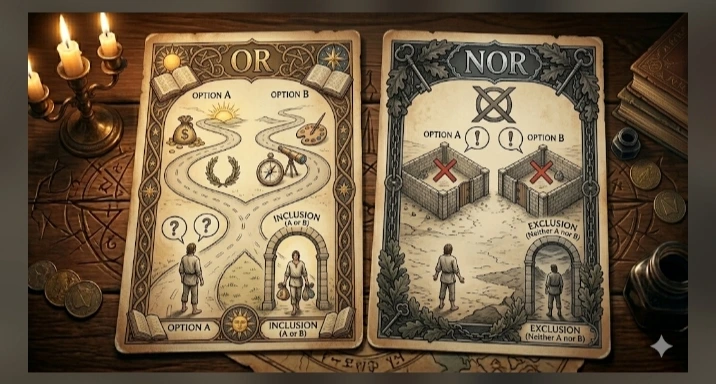
Or is used to show a choice, option, or alternative. Nor is used with negative statements to mean “and not” or “also not.” For example, “Would you like tea or coffee?” but “She likes neither tea nor coffee.”
I once edited an article written by a bright college student. The grammar was excellent, the ideas were clear, and the structure was strong. Yet one small issue kept appearing throughout the piece. The writer used or and nor interchangeably.
One sentence read:
“He doesn’t like pizza or burgers.”
Another read:
“She neither called or texted.”
The second sentence sounded wrong immediately. It should have been neither called nor texted.
This confusion is extremely common. Many people understand how to use or, but nor feels more formal and less familiar. As a result, writers often avoid it or use it incorrectly.
The challenge becomes even greater because both words connect ideas. At first glance, they seem similar. Yet they serve different purposes and follow different grammar rules.
If you’ve ever paused while writing and wondered whether to choose or or nor, you’re not alone.
This guide will explain everything in simple language. You’ll learn the meanings of both words, their origins, key differences, common mistakes, real-world examples, practical usage tips, and easy memory tricks.
By the end, you’ll know exactly when to use or and when nor is the better choice.
Or vs Nor Quick Answer
The simplest difference is this:
- Or introduces a choice or alternative.
- Nor continues a negative idea and usually means “and not.”
Examples of Or
- Do you want pizza or pasta?
- Call me or send a text.
- You can study today or tomorrow.
Examples of Nor
- She likes neither pizza nor pasta.
- He neither called nor emailed.
- The movie was neither funny nor exciting.
A helpful rule:
Use OR for choices. Use NOR after a negative idea.
The Origin / Background of Or vs Nor
Understanding where these words came from helps explain why they work differently.
The History of Or
The word or comes from Old English oththe.
Its meaning has always been similar:
- One thing or another
- An alternative
- A choice
For centuries, English speakers have used or to connect options.
Examples:
- Coffee or tea
- Today or tomorrow
- Win or lose
The purpose remains the same: presenting alternatives.
The History of Nor
The word nor developed from the phrase “neither” and an old negative particle.
Historically, it meant:
- And not
- Also not
- Not this and not that
This negative meaning remains today.
Examples:
- Neither rain nor snow
- Neither rich nor famous
- Neither called nor wrote
Because modern English uses fewer double negatives than older English, nor appears less frequently than or, making it feel more formal.
Why the Confusion Exists
People confuse these words because:
- Both connect ideas.
- Both appear between words and phrases.
- Many speakers rarely use nor in conversation.
- Informal speech often replaces nor with or.
Understanding the role of negativity solves most confusion.
Or vs Nor Explained Key Differences
Although they look similar, their jobs are very different.
| Term | Meaning | When to Use | Context |
| Or | Choice or alternative | Presenting options | Everyday English |
| Nor | And not / also not | Continuing a negative statement | Formal and standard English |
| Either…or | One of two possibilities | Choices | Common speech and writing |
| Neither…nor | Not one and not the other | Negative choices | Formal and informal writing |
Understanding Or
Use or when giving alternatives.
Examples:
- Red or blue
- Coffee or tea
- Morning or evening
Sentences:
- Would you like coffee or tea?
- You may pay by cash or card.
- We can leave today or tomorrow.
Understanding Nor
Use nor when continuing a negative statement.
Examples:
- Neither hot nor cold
- Neither happy nor sad
- Neither here nor there
Sentences:
- She likes neither coffee nor tea.
- He neither apologized nor explained.
- The book was neither interesting nor useful.
Which Version Should You Use?
The right choice depends on the sentence meaning.
Use Or for Choices
If the sentence offers options, use or.
Examples:
- Tea or coffee?
- Train or bus?
- Yes or no?
Correct:
- Do you prefer summer or winter?
- We can meet Monday or Tuesday.
Use Nor After Neither
Whenever you use neither, use nor.
Correct:
- Neither rain nor snow.
- Neither John nor Sarah.
- Neither easy nor difficult.
Incorrect:
- Neither rain or snow.
- Neither John or Sarah.
Use Nor After Negative Statements
Sometimes nor follows a negative clause.
Examples:
- She didn’t call, nor did she text.
- He wasn’t ready, nor was he willing.
This structure is more formal but perfectly correct.
For Everyday Writing
Most everyday situations require or because people frequently discuss choices and alternatives.
Use nor when the sentence contains a negative relationship.
Common Mistakes with Or vs Nor
Many writers make the same errors repeatedly.
| Mistake | Correction |
| Neither tea or coffee. | Neither tea nor coffee. |
| Neither John or Mike attended. | Neither John nor Mike attended. |
| He didn’t call or did he text. | He didn’t call, nor did he text. |
| Neither hot or cold. | Neither hot nor cold. |
| She neither sang or danced. | She neither sang nor danced. |
Mistake #1: Using Or After Neither
Incorrect:
- Neither apples or oranges.
Correct:
- Neither apples nor oranges.
Why?
Because neither pairs naturally with nor.
Mistake #2: Forgetting the Negative Connection
Incorrect:
- She neither smiled or laughed.
Correct:
- She neither smiled nor laughed.
The sentence contains a negative structure.
Mistake #3: Avoiding Nor Completely
Some writers replace every nor with or.
While this may sound natural in casual speech, it is not always grammatically correct.
Mistake #4: Incorrect Inversion
Incorrect:
- He didn’t arrive, nor he called.
Correct:
- He didn’t arrive, nor did he call.
After nor, formal grammar often requires inversion.
Or vs Nor in Real-World Examples
Professional Email
Please respond by email or phone before Friday.
Business Report
The company neither increased prices nor reduced services.
News Headline
The storm caused neither injuries nor major damage.
Social Media Post
Pizza or burgers tonight? Help me decide!
Formal Document
Neither party shall transfer nor assign these rights without approval.
Academic Writing
The experiment produced neither expected nor unexpected results.
Everyday Conversation
Would you like water or juice?
Formal Speech
He was not discouraged, nor was he afraid.
These examples show how both words naturally appear in different forms of communication.
Or vs Nor Data, Trends & Usage
The phrase or vs nor is searched frequently because many English learners struggle with conjunctions.
Who Searches This Topic?
The most common audiences include:
- Students
- English learners
- Teachers
- Writers
- Editors
- Test-takers
- Professionals
Search Intent
The primary search intent is:
Informational
People want answers to questions like:
- When should I use nor?
- Is neither or correct?
- What’s the difference between or and nor?
- Can nor replace or?
Why This Matters Today
Clear writing matters more than ever.
People communicate daily through:
- Emails
- Text messages
- Reports
- Academic papers
- Social media posts
- Business documents
Using the correct conjunction improves clarity and professionalism.
A small word like or or nor can change the meaning of an entire sentence.
Comparison Table: Or vs Nor
| Term/Variant | Meaning | Region/Context | Best Used When |
| Or | Choice or alternative | Global English | Presenting options |
| Either…or | One of two possibilities | Formal and informal English | Offering choices |
| Nor | And not | Global English | Continuing a negative idea |
| Neither…nor | Not one and not the other | Formal and standard English | Expressing negative alternatives |
| Nor did | Negative continuation | Formal writing | Connecting negative clauses |
| Or not | Alternative outcome | Everyday English | Discussing possibilities |
Frequently Asked Questions
Q: What does or mean?
A: Or introduces alternatives, choices, or possibilities. It tells the reader that one option can be chosen from multiple options.
Q: What does nor mean?
A: Nor means “and not” or “also not.” It is usually used to continue a negative idea.
Q: Or vs nor — what’s the difference?
A: Or presents choices. Nor continues a negative statement. One deals with alternatives, while the other deals with negative connections.
Q: Is it neither or or neither nor?
A: The correct expression is neither nor. Example: “Neither the manager nor the employees attended.”
Q: Can nor be used without neither?
A: Yes. Example: “She didn’t call, nor did she send a message.” This usage is common in formal writing.
Q: Is nor too formal for everyday writing?
A: Not at all. While it appears more often in formal writing, it is still correct and useful in everyday English.
Q: How can I remember the difference between or and nor?
A: Remember this simple rule: Or = choice. Nor = negative. If the sentence contains a negative idea, nor may be the correct option.
Conclusion
The difference between or and nor becomes simple once you focus on the role each word plays.
Here are the key points to remember:
- Or introduces choices and alternatives.
- Nor continues a negative idea.
- Use either…or for positive choices.
- Use neither…nor for negative choices.
- Remember that nor often means “and not.”
When you’re writing, ask yourself a simple question:
Am I offering a choice or continuing a negative statement?
If it’s a choice, use or. If it’s a negative connection, use nor.
Mastering this small distinction can make your writing clearer, more accurate, and more professional. Whether you’re writing an email, a report, a school paper, or a social media post, you’ll now know exactly which word belongs in your sentence.
Bookmark this guide so you never confuse or and nor again, and share it with someone who still writes “neither or” by mistake.
Read More:
Plain or Plane: Easy Guide to Use the Right Word

📚✨ I’m an English enthusiast and author dedicated to exploring word differences, spelling variations, and common language questions. By drawing on trusted dictionaries, language resources, and practical usage examples, I create clear, reliable content that helps readers learn with confidence and communicate more effectively. ✍️🌍