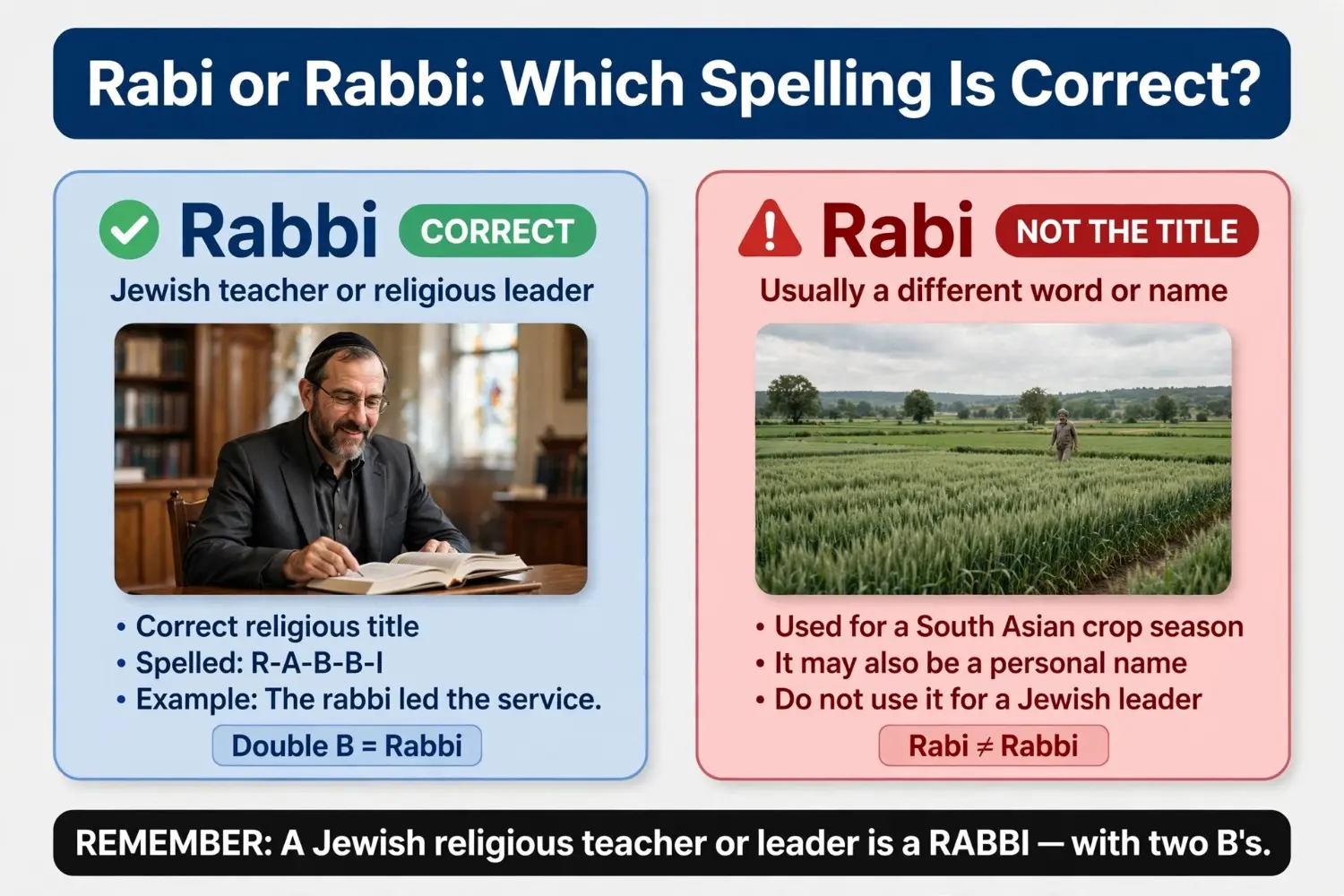
Rabbi is the correct spelling for a Jewish religious teacher or spiritual leader. Rabi is usually a misspelling, though it may be used as a name or have other meanings in different contexts.
Have you typed “Rabi” into a search bar and then paused, unsure if you spelled it right? You are not alone. Thousands of people search this exact question every month. Some are writing an email to a religious leader. Some are reading about Jewish traditions. Some are confusing the word with a totally different term. This mix-up is common, and it deserves a clear answer.
The confusion happens for a simple reason. The word “Rabbi” has a double “b.” Many people drop one letter by accident, especially when typing fast or when English is not their first language. Others have seen the word “Rabi” used somewhere else, like a farming season in South Asia or a person’s name, and assume it is the same word.
This article gives you the quick answer first. Then it digs into the history, the spelling rules, and the real-world examples you need. By the end, you will never second-guess this spelling again.
Rabi or Rabbi – Quick Answer
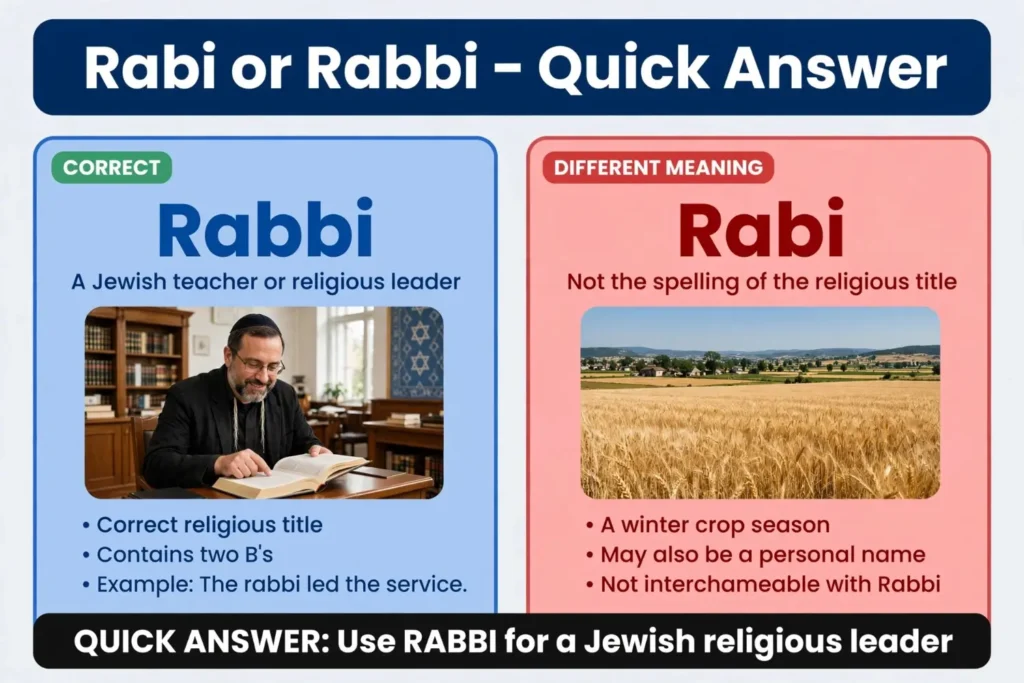
“Rabbi” is the correct spelling. It is a Jewish title for a teacher or religious leader. The word has two “b” letters, not one.
- Correct: The rabbi led the service on Saturday.
- Incorrect: The rabi led the service on Saturday.
“Rabi” is not a misspelled version of an English word with regional differences. It is simply a common typo. In rare cases, “Rabi” is a real word, but it means something else entirely:
- Rabi crop season: In South Asian agriculture, “Rabi” refers to crops planted in winter and harvested in spring.
- I. I. Rabi: A famous physicist who won the Nobel Prize in 1944.
- Rabi Island: A small island in Fiji.
- A given name: Used in some cultures, especially Arabic and South Asian naming traditions.
If you are writing about a Jewish religious leader, always use “Rabbi.”
The Origin of Rabbi
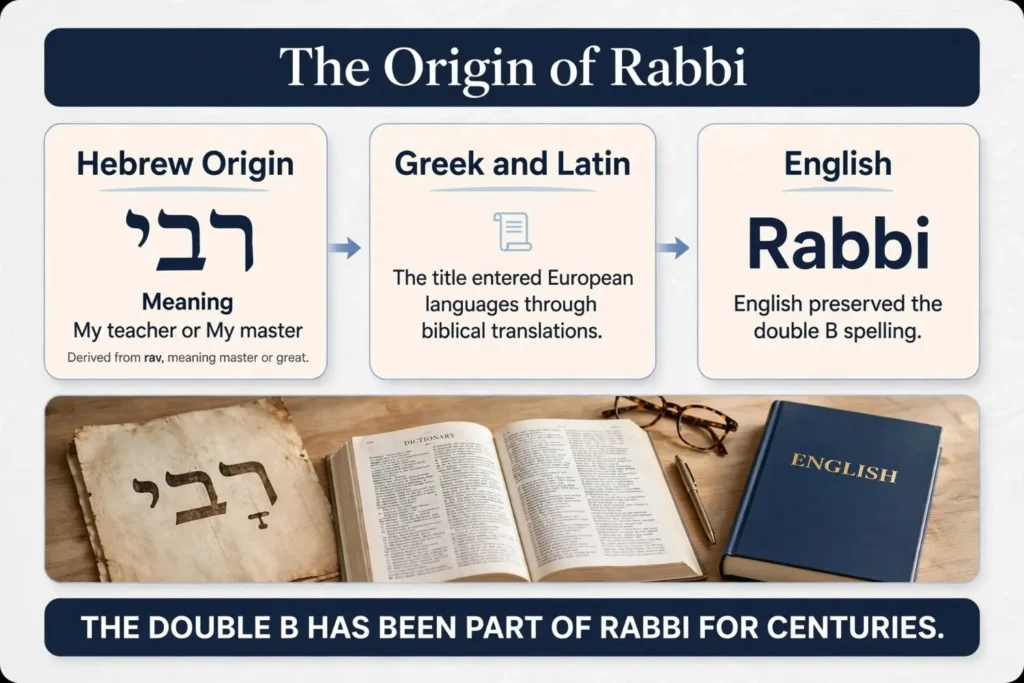
The word “Rabbi” comes from the Hebrew word rabbi (רַבִּי), which means “my master” or “my teacher.” It comes from the root rav, meaning “great” or “master.” Jewish communities have used this title for centuries to honor teachers of Jewish law and tradition.
The word entered English through Greek and Latin translations of the Bible. Over time, English spelling settled on the double “b” form: Rabbi. This spelling has stayed the same for hundreds of years across all English-speaking countries.
There is no historical split where one region dropped a letter and another kept it. The double “b” has always been part of the word. This is different from words like “color” and “colour,” which really did split between American and British English over time. “Rabbi” never went through that kind of change.
British English vs American English Spelling
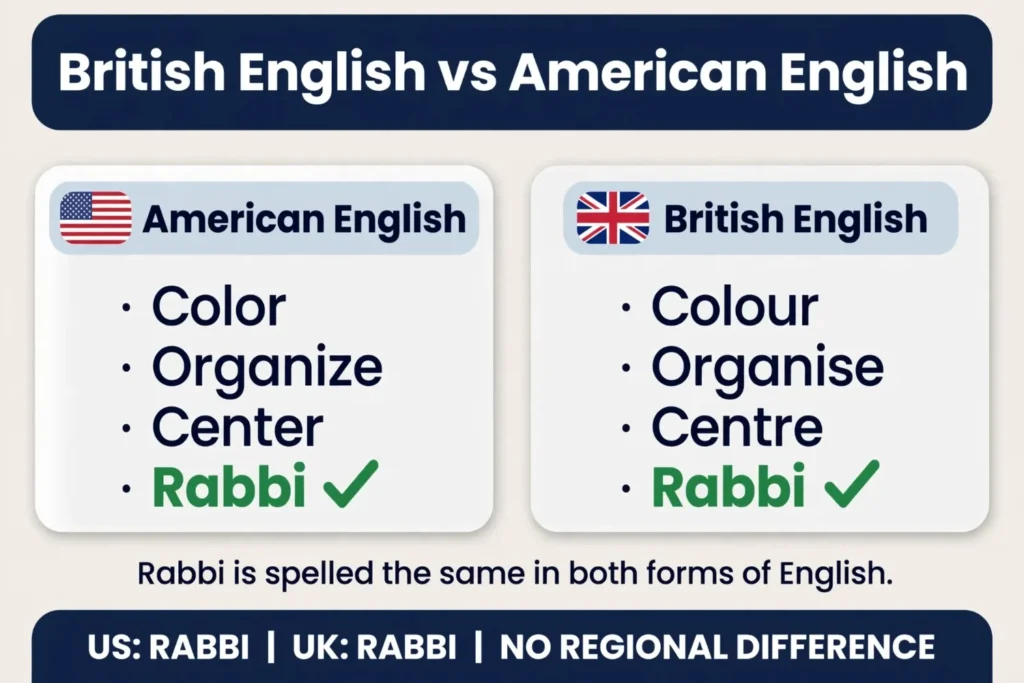
Here is the key fact many people miss: “Rabbi” is spelled the same way in British English and American English. There is no regional variation, unlike many other English words.
Compare it to real spelling differences:
| Word Type | American English | British English |
|---|---|---|
| Color words | Color | Colour |
| -ize/-ise words | Organize | Organise |
| -er/-re words | Center | Centre |
| Religious title | Rabbi | Rabbi |
As you can see, “Rabbi” does not follow the usual American vs. British pattern. Both regions, along with Canada, Australia, India, and every other English-speaking country, use the same spelling: R-A-B-B-I.
So if you searched “Rabi or Rabbi” hoping to find a regional rule, the answer is simple. There is no rule to remember. Just use “Rabbi” everywhere.
Which Spelling Should You Use?
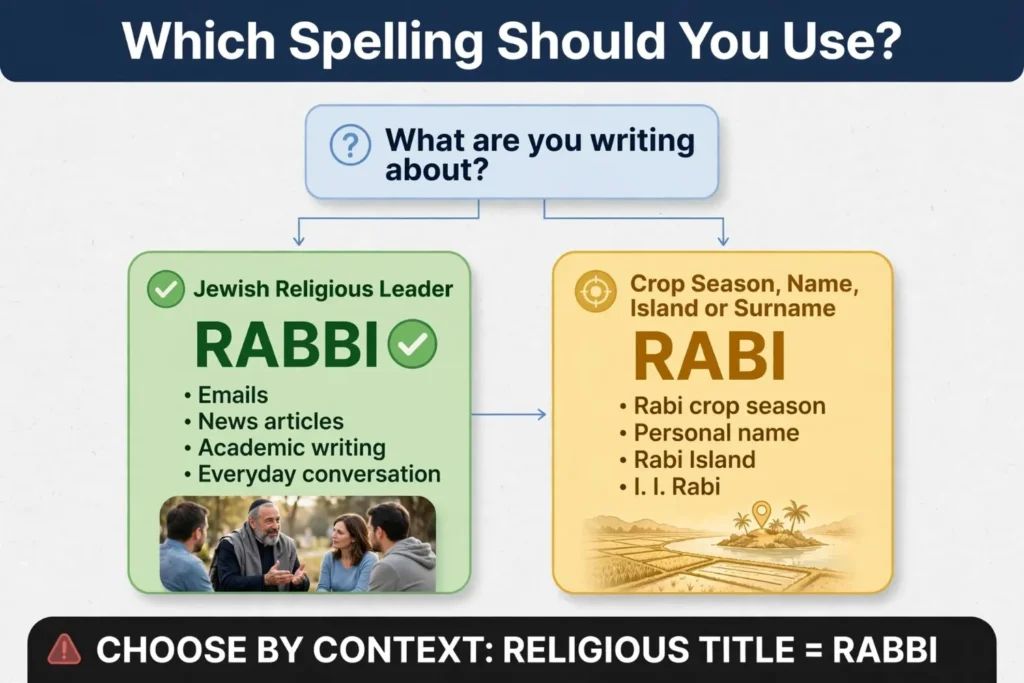
Since spelling does not change by country, your choice is easy. Here is guidance based on who you are writing for:
- US writers: Use “Rabbi.” No exceptions.
- UK and Commonwealth writers: Use “Rabbi.” No exceptions.
- Global or academic writers: Use “Rabbi” for the religious title. Use “Rabi” only when you mean the crop season, the physicist, the island, or a personal name.
- Students and non-native English speakers: Practice the double “b.” A helpful trick is to remember “Rabbi” rhymes with “cabby,” which also has a double letter.
The only real decision you face is context, not region. Ask yourself: am I talking about a religious leader, or something else entirely?
Common Mistakes with Rabbi
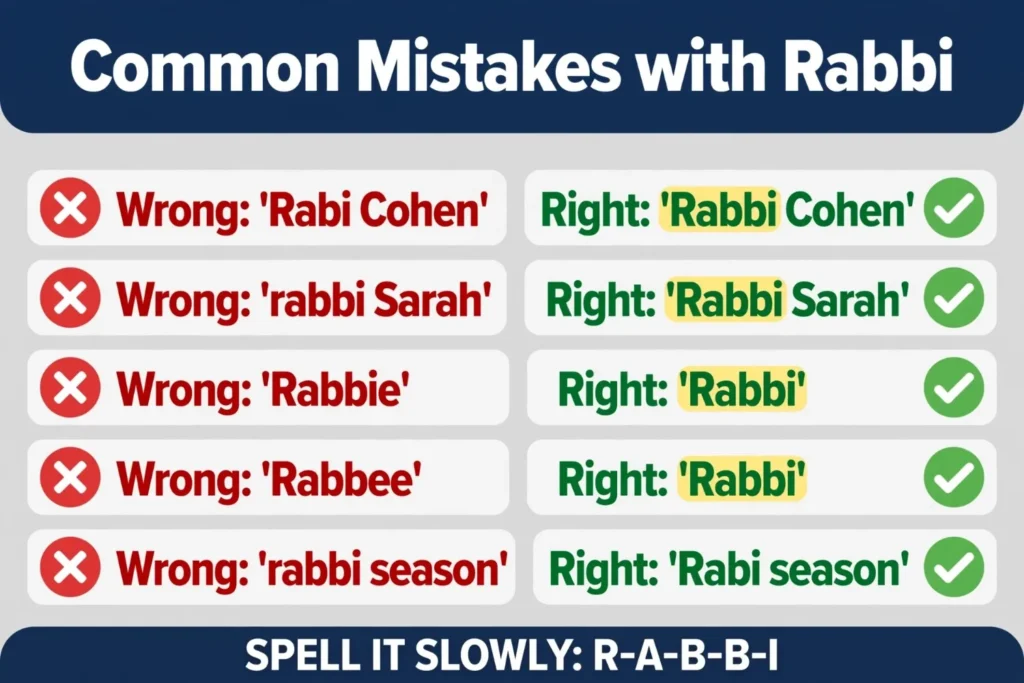
People make a few repeat errors with this word. Here are the most common ones, with corrections:
- Dropping the second “b.”
- Wrong: Rabi Cohen gave a sermon.
- Right: Rabbi Cohen gave a sermon.
- Confusing it with the crop season.
- Wrong: The rabbi season begins in October.
- Right: The Rabi season begins in October.
- Wrong capitalization before a name.
- Wrong: rabbi Sarah spoke at the event.
- Right: Rabbi Sarah spoke at the event.
- Adding an extra letter.
- Wrong: Rabbie or Rabbee
- Right: Rabbi
- Mixing it up with similar-sounding titles.
- Wrong: The rabi blessed the couple. (should be a religious title, not the crop word)
- Right: The rabbi blessed the couple.
A simple proofreading habit fixes most of these: read the word slowly and count the letters. R-A-B-B-I has five letters, with two “b” letters in the middle.
Rabbi in Everyday Examples
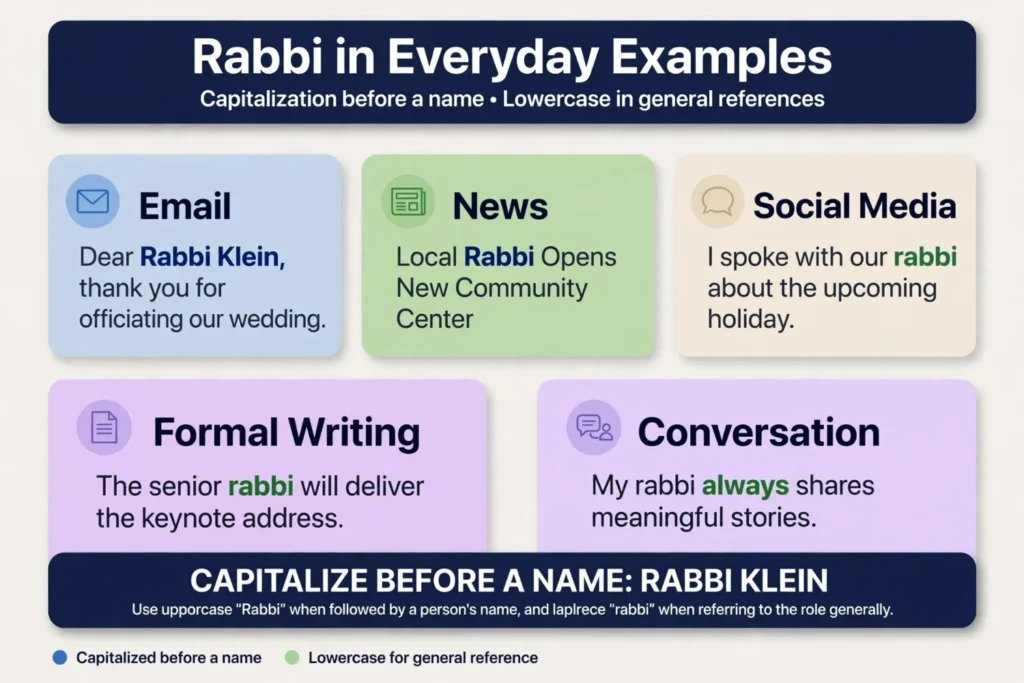
Seeing the word in real contexts helps lock in the correct spelling.
In emails: “Dear Rabbi Klein, thank you for officiating our wedding last weekend.”
In news headlines: “Local Rabbi Opens New Community Center for Interfaith Dialogue”
In social media posts: “Had an amazing conversation with our rabbi today about the upcoming holiday. #Judaism #Faith”
In formal writing: “The synagogue’s senior rabbi will deliver the keynote address at this year’s conference on religious education.”
In casual conversation: “My rabbi always has the best stories during Friday night services.”
Notice that “Rabbi” stays the same in every setting, formal or casual, written or spoken. Consistency is the whole point.
Read More: Gases or Gasses: Which Spelling Is Correct?
Rabbi – Google Trends & Usage Data
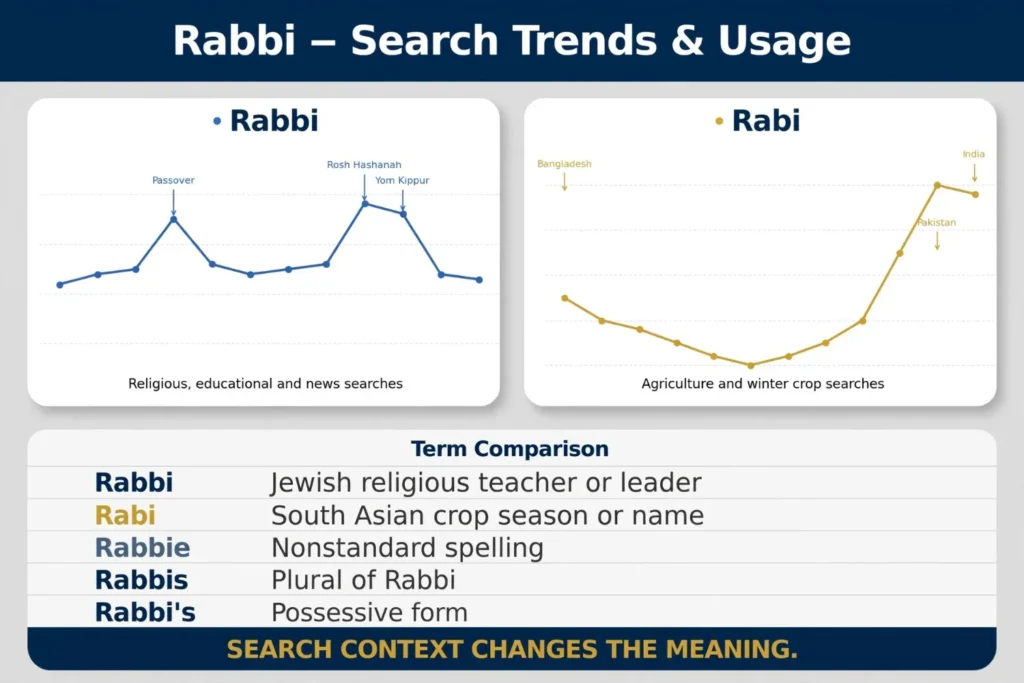
Search data shows steady interest in the word “Rabbi” year-round, with spikes around major Jewish holidays like Rosh Hashanah, Yom Kippur, and Passover. Interest also rises during news events involving religious leaders or interfaith topics.
The misspelling “Rabi” shows a different search pattern. It spikes in South Asian countries like India, Pakistan, and Bangladesh, tied closely to farming seasons and agricultural news. This confirms that “Rabi” searches often have nothing to do with the religious title at all. They reflect a completely separate use of the word.
Globally, “Rabbi” remains the dominant and expected spelling in religious, educational, and news content across English-speaking countries.
Keyword Variation Comparison
| Term | Meaning | Correct Context |
|---|---|---|
| Rabbi | Jewish religious teacher or leader | Religion, community, titles |
| Rabi | Crop season in South Asia | Agriculture |
| Rabi | Given name | Names, biographies |
| Rabbie | Not a standard word | Common misspelling |
| Rabbi’s | Possessive form of Rabbi | “The rabbi’s sermon” |
| Rabbis | Plural form of Rabbi | “Three rabbis attended” |
FAQs
1. Is “Rabi” ever correct instead of “Rabbi”? Yes, but only in specific contexts, like the Rabi crop season or as a personal name. For the religious title, always use “Rabbi.”
2. Why do so many people misspell “Rabbi”? The double “b” is easy to miss when typing quickly, and some people confuse it with the unrelated word “Rabi.”
3. Is there a British spelling of “Rabbi”? No. “Rabbi” is spelled the same in British English, American English, and every other major English dialect.
4. What is the plural of “Rabbi”? The plural is “Rabbis.” For example: “The two rabbis led the ceremony together.”
5. How do you pronounce “Rabbi”? It is pronounced “RAB-eye,” with stress on the first syllable.
6. Is “Rabbi” always capitalized? Capitalize it when it comes before a name, like “Rabbi Cohen.” When used generally, like “the rabbi spoke,” it stays lowercase.
7. What is the difference between a Rabbi and a Cantor? A rabbi teaches Jewish law and leads religious guidance. A cantor leads musical and liturgical parts of a service. Both roles differ in focus, though they often work together.
Conclusion
The debate between “Rabi or Rabbi” comes down to one clear fact: “Rabbi” is the correct spelling for the Jewish religious title, and it never changes between American, British, or any other form of English. There is no regional rule to memorize here, unlike words such as “color” and “colour.” The only real distinction to remember is context. “Rabbi” refers to a teacher or leader in Judaism. “Rabi,” without the second “b,” usually points to something unrelated, like a farming season, a name, or a physicist’s surname.
If you take one habit away from this guide, let it be this: double-check for the double “b” whenever you write “Rabbi.” Whether you are writing a formal email, a news article, or a quick social media post, this small check keeps your writing accurate and professional. Now that you know the origin, the spelling rules, and the common mistakes, you can write with full confidence every time.

Hi, I’m Shafqat Rehman. I write easy-to-follow guides about spelling differences, grammar, commonly confused words, comparison keywords, and British and American English variations. I enjoy breaking down confusing language topics and explaining them with clear examples. My aim is to help readers understand English differences and use the right words naturally and confidently.