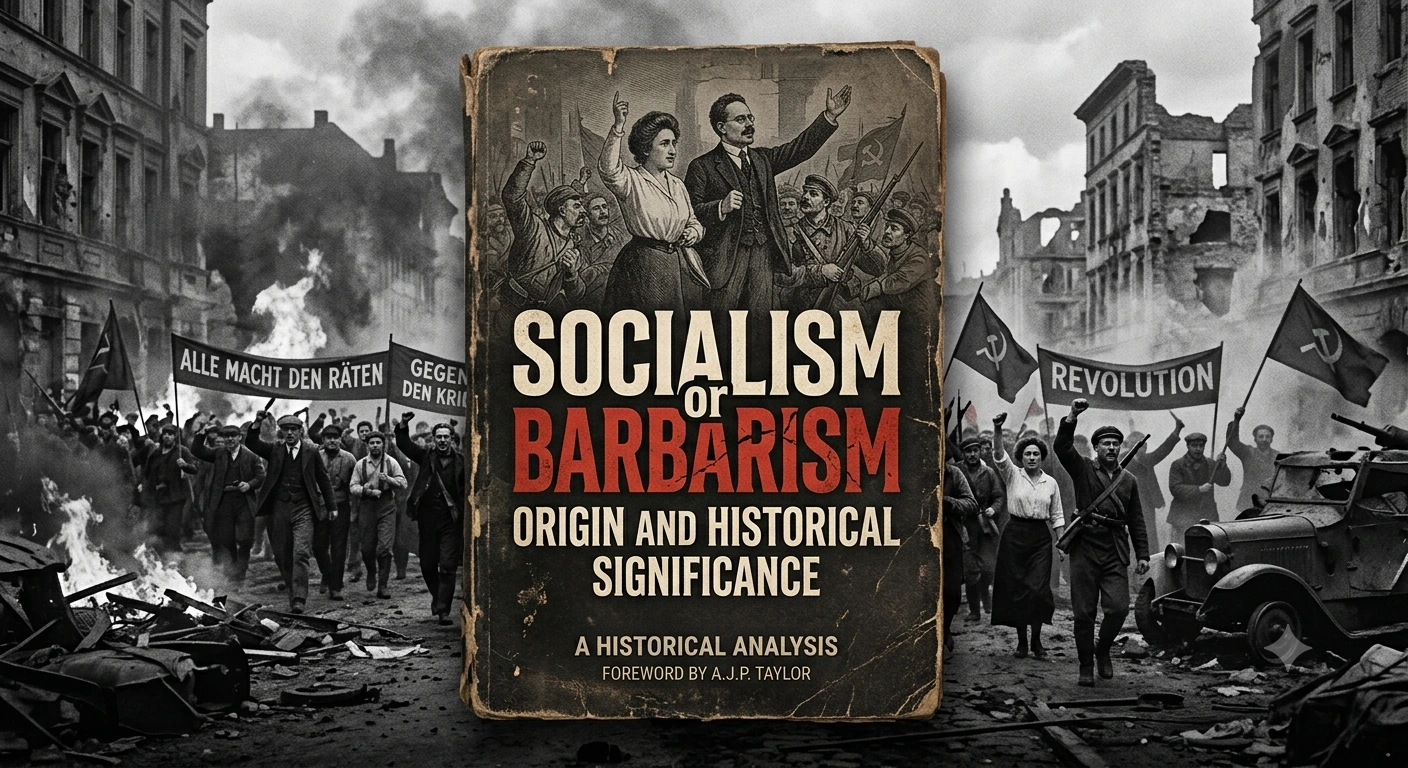
Socialism or Barbarism is a phrase that contrasts two possible futures: a society built on social equality and cooperation, or one shaped by violence, inequality, and decline. It is commonly used in political and economic discussions.
“Socialism or barbarism” is a powerful political phrase that has shaped debates about society, economics, and human progress for more than a century. Many people search for this term because they encounter it in history books, political discussions, social media posts, or academic articles. They often want to know what it means, where it came from, and why it remains relevant today.
The phrase presents a stark choice. It suggests that societies must either move toward a fairer and more cooperative system (socialism) or face social collapse, conflict, and suffering (barbarism). Because the phrase is translated from other languages and used in different political traditions, people may also wonder whether there are alternative spellings or meanings.
This guide explains the meaning, origin, historical background, and modern use of “socialism or barbarism.” It also compares language usage, highlights common mistakes, and provides practical examples. Whether you are a student, writer, researcher, or simply curious, this article will help you understand the phrase clearly and use it correctly.
Socialism or Barbarism: Quick Answer
“Socialism or barbarism” is a political slogan that argues society faces two possible paths:
- Socialism: A system based on social ownership, equality, and cooperation.
- Barbarism: Social decline, war, exploitation, or chaos.
Examples
- “The activist argued that climate change makes the choice one of socialism or barbarism.”
- “Many political thinkers have used the phrase socialism or barbarism to warn about social crises.”
The phrase is usually used in political, historical, and academic discussions.
📚The Origin of Socialism or Barbarism
The phrase is most closely linked to Rosa Luxemburg, a Marxist thinker and revolutionary.
In the early 20th century, Luxemburg argued that modern society faced a choice between moving toward socialism or falling into barbarism through war and social destruction. The idea became especially influential during and after World War I.
The phrase later inspired political movements, books, journals, and intellectual groups around the world. Over time, it became a shorthand expression for major social and economic choices facing humanity.
Why Different Versions Exist
Unlike many spelling debates, “socialism or barbarism” does not have competing spellings. Differences usually come from:
- Translation from other languages
- Capitalization choices
- Punctuation variations
Examples include:
- Socialism or Barbarism
- socialism or barbarism
- Socialism, or Barbarism?
The meaning remains largely the same.
British English vs American English Spelling📖
Unlike words such as “colour/color” or “organise/organize,” the phrase “socialism or barbarism” is spelled the same in both British and American English.
Comparison Table
| British English | American English | Meaning |
| Socialism or Barbarism | Socialism or Barbarism | Same meaning |
| socialism or barbarism | socialism or barbarism | Same meaning |
| Socialism, or Barbarism? | Socialism, or Barbarism? | Same meaning |
Key Point
There is no major spelling difference between British and American English for this phrase.
Which Spelling Should You Use?
Because there is only one standard spelling, the choice is simple.
For US Audiences
Use:
Socialism or Barbarism
For UK and Commonwealth Audiences
Use:
Socialism or Barbarism
For Global Audiences
Use the standard phrase exactly as written:
Socialism or Barbarism
The main decision is whether to capitalize the words based on your writing style.
⚠️Common Mistakes with Socialism or Barbarism
Here are some common errors.
| Incorrect | Correct |
| Socialism and Barbarism | Socialism or Barbarism |
| Socialist or Barbarism | Socialism or Barbarism |
| Socialism vs Barbarism (when quoting historical slogan) | Socialism or Barbarism |
| Barbarism or Socialism | Socialism or Barbarism |
| socialism and barbarism | socialism or barbarism |
Tips
- Use “or”, not “and.”
- Keep the historical wording intact when quoting the slogan.
- Avoid changing the phrase unless discussing a variation.
Socialism or Barbarism in Everyday Examples
In Emails
“Several scholars discussed the concept of socialism or barbarism during the conference.”
In News Writing
“Commentators revived the phrase socialism or barbarism while discussing economic inequality.”
On Social Media
“Climate action is becoming a modern socialism or barbarism debate.”
In Academic Writing
“The slogan socialism or barbarism reflects concerns about social and political crises.”
In Formal Reports
“The report referenced socialism or barbarism as a framework for understanding systemic change.”
Socialism or Barbarism: Google Trends & Usage Data
The phrase is searched most often by:
- Students studying political history
- Researchers exploring socialism
- Readers interested in Marxist theory
- People discussing global crises
Popular Regions
Interest is commonly found in:
- United States
- United Kingdom
- Canada
- Germany
- France
- Australia
Common Search Contexts
People often search for:
- Socialism or barbarism meaning
- Socialism or barbarism quote
- Rosa Luxemburg socialism or barbarism
- Socialism or barbarism history
- Socialism or barbarism today
Interest usually rises during periods of economic, political, or environmental debate.
See more: Parties or Party’s: Easy Guide to Stop Grammar Mistakes (2026)
Comparison Table: Socialism or Barbarism Variations
| Variation | Usage | Recommended |
| Socialism or Barbarism | Standard historical phrase | Yes |
| socialism or barbarism | Lowercase style | Yes |
| Socialism, or Barbarism? | Rhetorical form | Yes |
| Socialism and Barbarism | Incorrect historical phrase | No |
| Socialism vs Barbarism | Informal adaptation | Limited use |
FAQs About Socialism or Barbarism
1. What does socialism or barbarism mean?
It means society faces a choice between a more cooperative social system and social decline or crisis.
2. Who created the phrase socialism or barbarism?
The phrase is most strongly associated with Rosa Luxemburg.
3. Is socialism or barbarism a quote?
Yes. It became a famous political slogan and historical expression.
4. Is there a British spelling and an American spelling?
No. Both varieties of English use the same spelling.
5. Why is socialism or barbarism still discussed today?
People use it to discuss issues such as inequality, war, environmental challenges, and economic systems.
6. Can I use socialism or barbarism in academic writing?
Yes. It is commonly used in political science, history, sociology, and economics.
7. Should the phrase be capitalized?
Capitalize it in titles and headings. Lowercase is acceptable within normal sentences.
🎯Conclusion
The phrase “socialism or barbarism” remains one of the most influential political expressions in modern history. It presents a dramatic choice between social cooperation and social decline, making it a powerful tool for discussing economic systems, political change, and global challenges. Although the phrase originated in early socialist thought, it continues to appear in academic research, public debates, and modern activism.
One important fact is that there is no significant spelling difference between British and American English. The phrase remains the same across both language varieties, making it easy to use for international audiences. Writers mainly need to decide whether to capitalize the words based on style guidelines.
If you are quoting historical sources, academic works, or political discussions, use the standard form “socialism or barbarism.” Avoid changing the wording, as the original phrase carries specific historical meaning. By understanding its origin, context, and correct usage, you can confidently use this important expression in both formal and informal writing.
See more: Envelop or Envelope: The Easy Way to Tell Them Apart

I am an English author, language explorer dedicated to analyzing words, phrases, and idioms. Through my writing, I uncover subtle language differences and help readers improve their communication skills. My content helps readers navigate English with clarity and confidence.