Tyre and tire mean the same thing when referring to the rubber covering on a wheel. Tyre is the preferred spelling in British english while tire is used in American English.
A few years ago, I was helping a friend write product descriptions for an online auto parts store. Everything looked perfect until we noticed something strange. Half the pages used tyre, while the other half used tire.
Was one wrong?
Not at all.
The answer depended on who would read the content.
This small spelling difference confuses thousands of people every month. Students wonder which spelling to use in essays. Business owners worry about SEO. Travelers see both words online and think they have different meanings.
The confusion is understandable because both words refer to the same thing: the rubber outer part of a wheel.
The real difference comes from geography and language conventions.
In this guide, you’ll learn the meaning of tyre and tire, where each spelling comes from, when to use them, common mistakes to avoid, and which version works best for your audience.
Let’s clear up the confusion once and for all.
Tyre or Tire: Quick Answer
Both tyre and tire refer to the rubber covering fitted around a wheel.
The difference is simple:
- Tyre = British English
- Tire = American English
Examples
- UK: “My car needs a new tyre.”
- US: “My car needs a new tire.”
Neither spelling is wrong. The correct choice depends on the audience you are writing for.
The Origin / Background of Tyre or Tire
The word originally appeared as tire.
In the early days of motor vehicles, both Britain and America commonly used the spelling tire.
Later, British English adopted tyre specifically for vehicle wheels. This helped distinguish it from the verb tire, which means to become tired or exhausted.
American English kept the original spelling tire for both meanings.
That is why today:
- Americans use tire for wheels.
- Britons use tyre for wheels.
- Both use tire as a verb meaning “to become weary.”
The difference is historical rather than grammatical.
Prioritise or Prioritize: The Complete Usage Guide
Tyre or Tire Explained : Key Differences
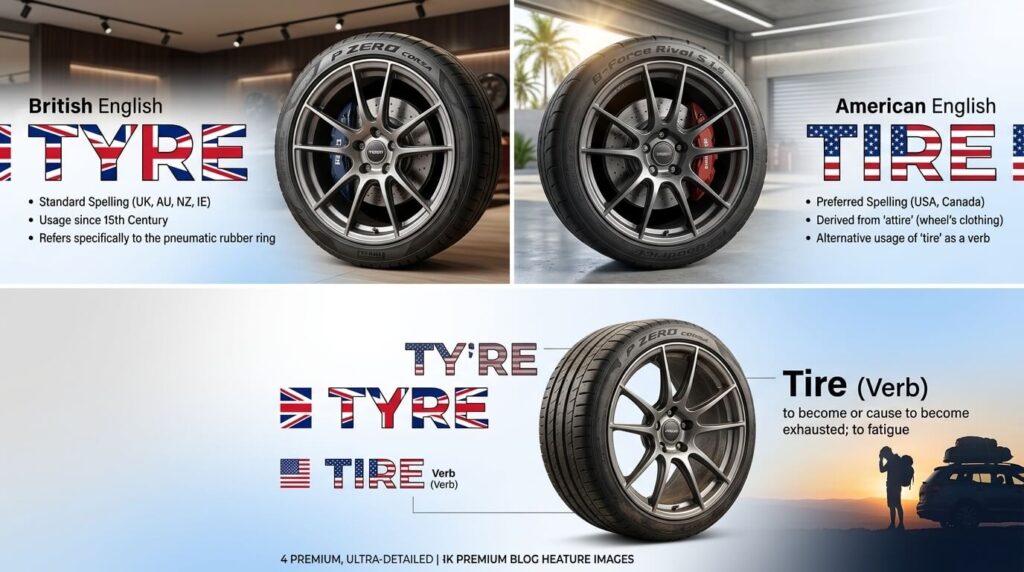
Although the meanings are identical, the preferred spelling changes by region.
Tires or tyres: Both words are the plural form of the rubber coverings used on vehicle wheels, with “tyres” used in British English and “tires” used in American English.
| Term | Meaning | When to Use | Region/Context |
|---|---|---|---|
| Tyre | Rubber covering on a wheel | British writing | UK, Australia, New Zealand |
| Tire | Rubber covering on a wheel | American writing | United States |
| Tire | To become exhausted | Everywhere | Global English |
Example Sentences
Tyre
- The mechanic replaced the damaged tyre.
- Check your tyre pressure before a long trip.
Tire
- The mechanic replaced the damaged tire.
- My car needs four new tires.
Tire (verb)
- Long meetings can tire employees.
- Running ten miles may tire beginners.
The context usually makes the meaning clear.
Which Version Should You Use?
Choosing the right spelling is easy once you know your audience.
Tire or tyre: Both terms have the same meaning and refer to the wheel covering on a vehicle, but the spelling depends on regional language preferences
For UK Readers
Use tyre.
This matches British English standards and looks natural to UK readers.
For US Readers
Use tire.
American audiences expect this spelling.
For Students
Follow your school’s preferred style guide.
If you write in British English, use tyre. If you write in American English, use tire.
For Businesses and SEO
Match the spelling to your target market.
Examples:
- UK tire shop website → tyre
- US automotive website → tire
For Global Audiences
Either spelling works.
Just stay consistent throughout your content.
Common Mistakes with Tyre or Tire

Many people make simple mistakes when using these words.
Mistake 1
❌ My car needs a new tire. (British article)
✅ My car needs a new tyre.
Why?
British English prefers tyre.
Mistake 2
❌ My car needs a new tyre. (American article)
✅ My car needs a new tire.
Why?
American English uses tire.
Mistake 3
❌ The long journey tyre me out.
✅ The long journey tired me out.
Why?
The verb form always uses tire, not tyre.
Mistake 4
❌ Mixing both spellings in one document.
✅ Choose one spelling style and stay consistent.
Why?
Consistency improves readability and professionalism.
Mistake 5
❌ Thinking they have different meanings.
✅ Both mean the same wheel component.
Why?
The difference is regional spelling, not meaning.
Tyre or Tire in Real-World Examples
Professional Email
“Please inspect the front tyres before delivering the vehicle.”
UK version.
“Please inspect the front tires before delivering the vehicle.”
US version.
News Headline
“Winter Tyre Demand Increases Across Britain”
UK publication.
“Winter Tire Sales Rise Across the United States”
US publication.
Social Media Post
“Just got four new tires. The ride feels amazing!”
American user.
“Finally replaced my worn tyres before the road trip.”
British user.
Formal Report
“The vehicle’s rear tyres showed signs of uneven wear.”
British report.
“The vehicle’s rear tires showed signs of uneven wear.”
American report.
Tyre or Tire :Data, Trends & Usage
Search interest for tyre or tire remains strong because many people encounter both spellings online.
Tyres or tires: The only difference between these words is spelling style, as British English uses “tyres” and American English uses “tires.
Most Interested Regions
Tyre
- United Kingdom
- Australia
- New Zealand
- South Africa
Tire
- United States
- Canada
- Parts of Latin America using American English resources
Search Intent
The keyword is primarily:
- Informational
- Educational
- Language-learning related
- SEO research related
Why It Matters Today
Businesses increasingly serve international customers.
Using the correct spelling can improve:
- User trust
- Search visibility
- Content relevance
- Brand professionalism
A UK customer often searches for tyres, while a US customer searches for tires. Knowing the difference helps websites reach the right audience.
Tyre or Tire Comparison Table
| Term/Variant | Meaning | Region/Context | Best Used When |
|---|---|---|---|
| Tyre | Rubber wheel covering | British English | Writing for UK audiences |
| Tire | Rubber wheel covering | American English | Writing for US audiences |
| Tire (verb) | Become exhausted | Global English | Talking about fatigue |
| Tyres | Plural of tyre | British English | Multiple wheel coverings |
| Tires | Plural of tire | American English | Multiple wheel coverings |
Frequently Asked Questions
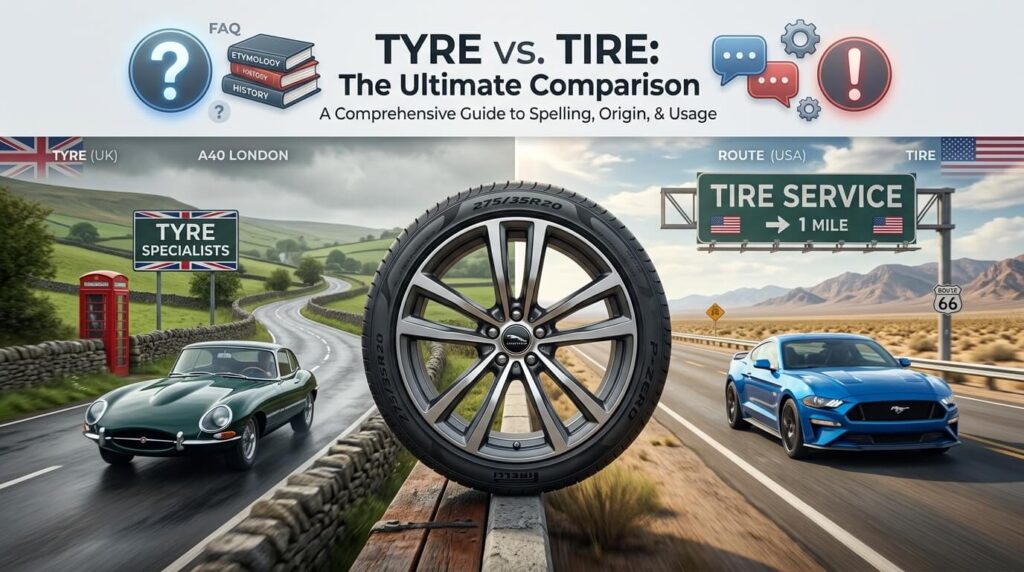
Q: What does tyre or tire mean?
A: Both words refer to the rubber covering fitted around a vehicle wheel. They have the same meaning.
Q: Which spelling is correct, tyre or tire?
A: Both are correct. Tyre is British English, while tire is American English.
Q: How do you use tyre correctly?
A: Use tyre when writing for British, Australian, or New Zealand audiences.
Q: Is tire acceptable in formal writing?
A: Yes. It is the standard spelling in American English and appears in formal documents, reports, and academic writing.
Q: What is the difference between tyre and tire?
A: The only difference is regional spelling. The meaning remains the same.
Q: Where does the word come from?
A: The original spelling was tire. British English later adopted tyre to distinguish the wheel component from the verb meaning “to become tired.”
Q: Can tyre and tire be used interchangeably?
A: Yes, but only if you are not following a specific language style. For professional writing, match the spelling to your audience.
Conclusion
Tyre vs tire: There is no difference in meaning between tyre and tire because both describe the same vehicle wheel component.
The debate over tyre or tire is much simpler than many people think.
Both words describe the same part of a vehicle wheel. The key difference is location. British English uses tyre, while American English uses tire.
Remember these takeaways:
- Tyre is standard in the UK and many Commonwealth countries.
- Tire is standard in the United States.
- Both mean exactly the same thing.
- The verb meaning “to become exhausted” is always spelled tire.
- Consistency matters more than the spelling itself.
If you’re writing for a specific audience, choose the spelling they expect. Doing so makes your content look natural and professional.
Now you know exactly how to use tyre or tire—go try it in your next piece of writing. Bookmark this guide so you never second-guess the spelling again, and share it with someone who has wondered about the difference.
Tyre or tire explained with meaning, spelling differences, usage examples, regional preferences, and common mistakes to avoid today.
Harbor or Harbour: Complete Spelling Guide

As an English language enthusiast, I love diving into the tricky details of word differences and spelling variations. My mission is to explain confusing terms and make them accessible to everyone, helping readers to communicate with clarity and confidence.