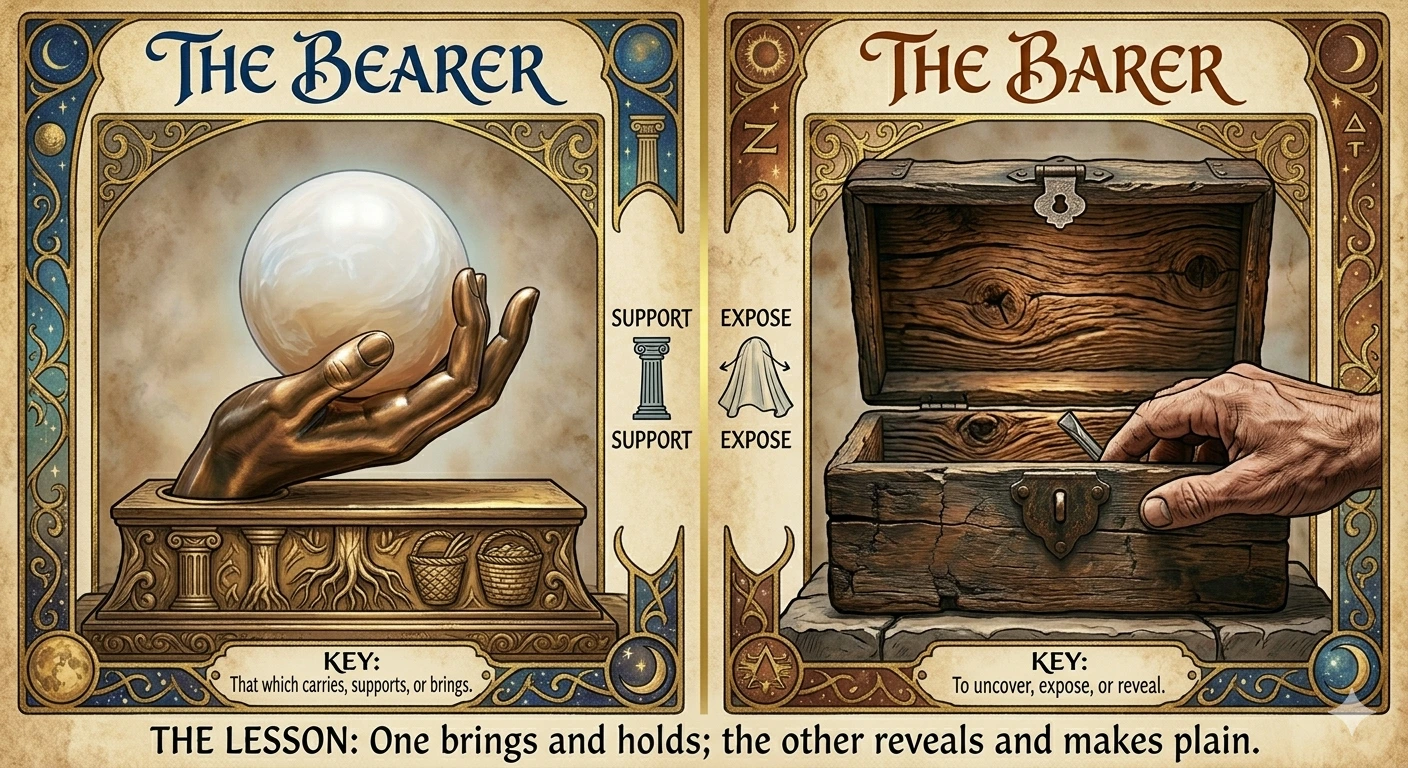
Bearer or barer are two different words. Bearer means a person who carries or holds something. Barer means something more open, uncovered, or “more bare.”
I once saw a formal letter that started with the line: “To the barer of this document.” It looked professional at first glance. But something felt off.
A student sitting next to me whispered, “Ma’am, is that even correct?”
That moment stayed with me because it shows how one small spelling difference can change meaning—or create confusion. Many English learners mix up bearer and barer because they sound almost identical. They also look very close.
When I first started teaching grammar, I noticed this mistake again and again in exams, letters, and job applications. Most people simply guess the spelling.
But here’s the good news: once you understand the meaning of each word, the confusion disappears forever.
In this guide, you’ll learn bearer vs barer in a very simple way. We’ll cover meanings, usage, grammar, mistakes, real-life examples, and memory tricks so you never forget them again.
Bearer or Barer Quick Answer
Bearer means a person who carries, holds, or delivers something.
Barer means something more open or less covered (from “bare”).
Simple examples:
- He is the bearer of good news.
- The tree leaves are barer in winter.
One is about carrying responsibility or items. The other is about being uncovered or exposed.
The Origin / Background of Bearer and Barer
Both words come from Old English roots, but they developed very different meanings.
Bearer
- Comes from the verb “bear”
- “Bear” means to carry or hold
- So bearer = one who bears (carries)
Historically, a bearer could be:
- A message carrier
- A flag holder
- A person carrying goods or documents
Even today, it is used in formal and legal language.
Barer
- Comes from the adjective “bare”
- “Bare” means uncovered, plain, or exposed
- Barer = more bare (comparative form)
It is less common in modern writing but still grammatically correct.
Why confusion happens
People confuse these words because:
- They sound almost identical
- Spellings differ by only one letter
- “Barer” looks like “bearer” without meaning difference at first glance
But meaning changes completely.
Bearer or Barer Explained Key Differences
Let’s make it crystal clear.
| Word | Meaning | Part of Speech | When to Use | Context |
| Bearer | A person who carries or holds something | Noun | Formal writing, legal documents | Responsibility, delivery |
| Barer | More bare or uncovered | Adjective (comparative) | Describing exposure or simplicity | Appearance, condition |
Easy Real-Life Comparison
- A bearer of a gift → someone carrying a gift
- A barer landscape → a more empty or exposed landscape
Which Version Should You Use?
Choosing the right word depends on meaning.
For students and writers:
- Use bearer in formal or exam writing
- It is more common and important
For descriptive writing:
- Use barer only when comparing something that is bare or empty
For global communication:
- Bearer is far more common in modern English
Simple rule:
- If someone is carrying something → bearer
- If something is more empty or exposed → barer
Common Mistakes with Bearer or Barer
Let’s fix the most frequent errors.
1. Wrong spelling in formal letters
❌ To the barer of this document
✔️ To the bearer of this document
2. Using barer instead of bearer in legal context
❌ Bearer cheque → barer cheque
✔️ Bearer cheque (correct banking term)
3. Confusing meaning in descriptions
❌ The bearer sky looked empty
✔️ The barer sky looked empty
4. Overusing barer in modern English
❌ Using barer in formal writing
✔️ Prefer clearer words like “empty,” “plain,” or “bare”
5. Mixing pronunciation assumptions
❌ Thinking both mean the same because they sound similar
✔️ Always check meaning, not sound
Bearer or Barer in Real-World Examples
📧 Professional Email
Dear Sir,
Please hand over the document to the bearer upon arrival.
📰 News Headline
The bearer of peace talks arrived in the capital today.
📱 Social Media Post
Feeling like a barer version of myself after moving to a quiet town.
📄 Formal Document
This cheque is payable to the bearer on demand.
🏫 Academic Sentence
In literature, the hero is often the bearer of truth and justice.
Bearer or Barer Data, Trends & Usage
Where these words appear most:
- Banking and financial documents (bearer cheque)
- Legal agreements
- Literature and poetry (especially “barer”)
- Academic English writing
Search intent:
Most users search this topic because they:
- Prepare for exams
- Write formal letters
- Confuse spelling in documents
- Learn English grammar rules
Why it matters:
- “Bearer” is still widely used in real-world systems
- “Barer” is rare but useful in descriptive writing
- Mistakes can change meaning in legal contexts
Standalone Comparison Table
| Term/Variant | Meaning | Region/Context | Best Used When |
| Bearer | One who carries something | Formal, legal, financial English | Documents, roles, responsibility |
| Barer | More bare or uncovered | Literary/descriptive English | Describing exposure or emptiness |
FAQs
Q: What does bearer or barer mean?
A: Bearer means someone who carries something. Barer means something more bare or uncovered.
Q: How do you use bearer correctly?
A: Use bearer when talking about someone who holds or delivers something, like a document or responsibility.
Q: What is the difference between bearer and barer?
A: Bearer is a noun for a carrier. Barer is a comparative adjective meaning more bare or exposed.
Q: Is barer correct English?
A: Yes, but it is rarely used in modern writing. “Bare” or “empty” is more common.
Q: Which is correct in formal writing?
A: Bearer is correct and widely used in formal, legal, and financial contexts.
Q: Can bearer and barer be used interchangeably?
A: No, they have completely different meanings and cannot replace each other.
Q: What is a bearer cheque?
A: A bearer cheque is a type of cheque payable to whoever holds it physically.
Conclusion
The difference between bearer and barer is small in spelling but big in meaning.
One word is powerful in formal life. The other is descriptive and rarely used.
Here’s the final takeaway:
- Bearer = carries or holds something
- Barer = more bare or exposed
- Context decides everything
If you remember just one thing, remember this: bearer is the word you will see most in real life, especially in banking, legal, and formal English.
Now you can confidently use both words without confusion. The next time you see them, you’ll instantly know the difference.
Read More:
Emigrate or Immigrate: What’s the Difference?

📚✨ I’m an English enthusiast and author dedicated to exploring word differences, spelling variations, and common language questions. By drawing on trusted dictionaries, language resources, and practical usage examples, I create clear, reliable content that helps readers learn with confidence and communicate more effectively. ✍️🌍