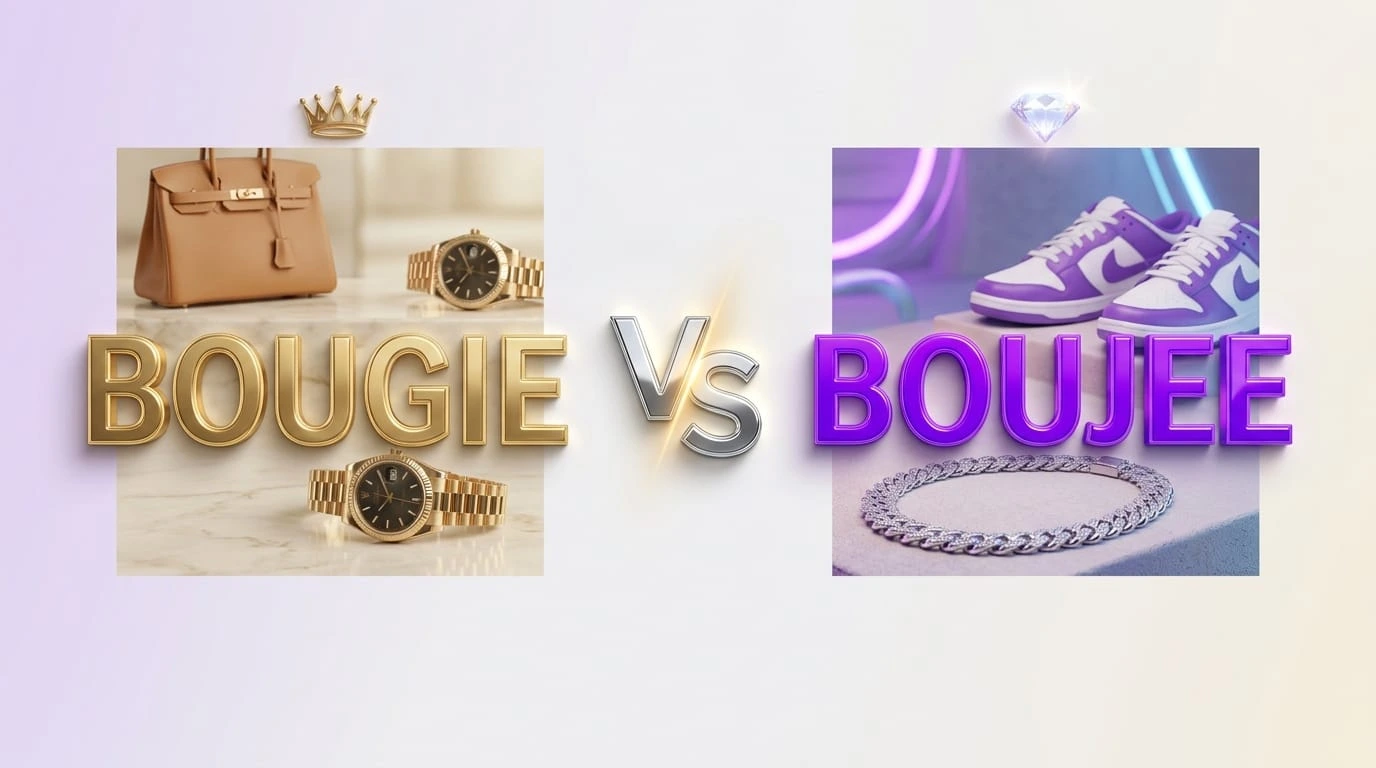
Bougie and boujee are both slang terms, but they are not exactly the same. Bougie usually describes someone who enjoys expensive or luxurious things, while boujee is a modern pop-culture spelling with a trendier, hip-hop-inspired meaning.
A few years ago, I noticed something funny while scrolling through Instagram. One person commented, “That’s so bougie,” while another wrote, “You’re looking boujee today.” At first, I thought they were simply different spellings of the same word. After digging into their history and how people actually use them, I realized there’s a small but important difference.
Many English learners, students, and even native speakers wonder whether they should write bougie or boujee. Social media, music lyrics, and everyday conversations have made both words popular, but dictionaries and style guides don’t always explain the difference clearly.
If you’ve ever paused before typing one of these words, you’re in the right place. By the end of this guide, you’ll know what each term means, where it came from, when to use it, and which version works best in different situations.
Bougie or Boujee: Quick Answer
Bougie and boujee are closely related, but they are used a little differently.
- Bougie usually describes someone or something that enjoys luxury, expensive tastes, or a fancy lifestyle.
- Boujee is a newer spelling that became popular through hip-hop culture and social media. It often means someone who is stylish, successful, and enjoys the finer things in life.
Examples
- She only drinks imported coffee. She’s so bougie.
- Their vacation photos look incredibly boujee.
In everyday conversation, many people use the two words interchangeably. However, bougie is the older and more widely recognized spelling.
You can add this section to your article.
Pronunciation of Bougie and Boujee
Although bougie and boujee look different, they are pronounced almost the same.
| Word | IPA Pronunciation | Simple Pronunciation |
| Bougie | /ˈbuːʒi/ | BOO-zhee |
| Boujee | /ˈbuːʒi/ | BOO-zhee |
Examples
- Bougie → “That café is so BOO-zhee.”
- Boujee → “She has a BOO-zhee style.”
Tip: Both words rhyme with “Fuji” (the mountain name) and are pronounced BOO-zhee. The difference is mainly in spelling, tone, and usage, not pronunciation.
The Origin of Bougie or Boujee
The story of these words begins with the French word bourgeois, which originally referred to the middle class. Over time, the meaning changed in English.
During the 20th century, bourgeois was often used to describe people who cared too much about money, social status, or material possessions.
Eventually, English speakers shortened the word to bougie. Instead of sounding negative all the time, it became a playful way to describe someone who likes luxury or acts a little fancy.
Later, the spelling boujee appeared in African American Vernacular English (AAVE), music, and internet culture. It became especially popular after the 2016 hit song “Bad and Boujee” by the rap group Migos.
Today, both spellings are common online, but they carry slightly different vibes.
- Bougie → Traditional slang spelling.
- Boujee → Modern, trendy, and influenced by pop culture.
Bougie or Boujee Explained: Key Differences
Although many people treat them as the same word, there are subtle differences.
| Term | Meaning | When to Use | Region/Context |
| Bougie | Fancy, classy, or enjoying luxury | Casual conversation, blogs, lifestyle writing | General English |
| Boujee | Trendy luxury with hip-hop or social media influence | Social media, pop culture, music | Modern internet slang |
Bougie
People often use bougie when talking about someone who prefers expensive brands, gourmet food, or luxury experiences.
Examples
- He bought a designer coffee machine because he’s bougie.
- That rooftop restaurant feels very bougie.
Boujee
Boujee has a more fashionable and playful tone.
It often describes someone who enjoys luxury while also embracing modern style and confidence.
Examples
- Her birthday party looked so boujee.
- They rented a private yacht for the weekend because they wanted a boujee vacation.
Are They Interchangeable?
Yes, in casual conversations, many people use them as if they mean the same thing.
However, if you want to match common usage:
- Choose bougie for general writing.
- Choose boujee when discussing music, pop culture, fashion, or internet slang.
Which Version Should You Use?
The best choice depends on your audience and purpose.
For students and English learners
Use bougie.
It is easier to recognize and appears more often in dictionaries and language discussions.
For bloggers and lifestyle writers
Use bougie unless you’re specifically talking about modern internet culture.
It feels more natural to a wider audience.
For social media creators
Use boujee if you’re aiming for a trendy, youthful tone.
Many younger audiences associate it with fashion, luxury, and hip-hop culture.
For professional or academic writing
Avoid both words unless you’re explaining slang.
Instead, use clearer alternatives like:
- luxurious
- upscale
- high-end
- affluent
- sophisticated
For a global audience
Bougie is usually the safer option.
It is more widely understood and doesn’t rely as heavily on pop-culture references.
Common Mistakes with Bougie or Boujee
Even though bougie and boujee are common slang words, people often misuse them. Here are the mistakes to avoid.
| ❌ Mistake | ✅ Correct |
| Using bougie in a formal business report | Use luxurious or high-end instead. |
| Thinking bougie and boujee always mean exactly the same thing | They are similar, but boujee has stronger pop-culture roots. |
| Assuming the words are insults | Today, they are often compliments or playful descriptions. |
| Using either word in academic writing | Choose standard English vocabulary instead. |
| Confusing bougie with bourgeois | Bourgeois is the original French-derived word with a broader historical meaning. |
Why These Mistakes Happen
Most confusion comes from social media. People hear the words in songs or online videos and assume they have identical meanings in every situation. In reality, the context matters.
Bougie or Boujee in Real-World Examples
Professional Email
Our hotel offers a luxurious experience rather than a bougie atmosphere, making it suitable for every guest.
(Notice that formal writing avoids slang.)
News Headline
Influencers Turn Everyday Cafés into Bougie Destinations.
Social Media Post
This rooftop brunch is so boujee! ✨🥂
Lifestyle Blog
You don’t need a million dollars to create a bougie bedroom on a budget.
Conversation
Person A: “You bought another designer candle?”
Person B: “I know. I’m getting a little bougie.”
Bougie or Boujee: Data, Trends & Usage
Search Intent
Primary Search Intent: Informational
People usually search because they want to know:
- Is it bougie or boujee?
- Do they mean the same thing?
- Which spelling is correct?
- When should I use each one?
- Is one more formal than the other?
Where They’re Most Popular
Both words are commonly searched in:
- United States
- Canada
- United Kingdom
- Australia
Searches often increase after:
- Viral TikTok videos
- Fashion trends
- Celebrity interviews
- Popular music releases
- Lifestyle content
Who Searches Most?
- Students
- English learners
- Social media users
- Bloggers
- Content creators
- Fashion enthusiasts
Why It Matters Today
Modern English changes quickly. Social media introduces new slang every year, and words like bougie and boujee have become part of everyday conversations. Understanding the difference helps you sound natural while choosing the right word for your audience.
Comparison Table
| Term/Variant | Meaning | Region/Context | Best Used When |
| Bougie | Someone who enjoys luxury or expensive tastes | General English | Casual writing and conversation |
| Boujee | Trendy luxury with hip-hop influence | Pop culture and social media | Informal online content |
| Bourgeois | Middle-class or relating to capitalism | Historical, political, academic | Formal discussions |
Frequently Asked Questions
Q: What does bougie mean?
A: Bougie is slang for someone who enjoys luxury, expensive products, or a fancy lifestyle. It can be playful, complimentary, or slightly teasing depending on the context.
Q: What does boujee mean?
A: Boujee is a trendy spelling popularized by hip-hop culture. It describes someone who enjoys stylish, luxurious living with a modern vibe.
Q: Are bougie and boujee the same?
A: They have very similar meanings. However, bougie is the older and more widely recognized spelling, while boujee has stronger ties to music, fashion, and internet culture.
Q: Which spelling is correct; bougie or boujee?
A: Both spellings are considered acceptable in informal English. Choose bougie for general use and boujee when referring to modern slang or pop culture.
Q: Can I use bougie in formal writing?
A: No. Since it is slang, it is better to use words like luxurious, upscale, or high-end in formal documents.
Q: Where did bougie come from?
A: It comes from the French word bourgeois, which originally referred to the middle class. Over time, English speakers shortened it to bougie.
Q: Is boujee in the dictionary?
A: Some modern dictionaries include boujee, while others focus on bougie. Both are widely recognized in contemporary English, especially in informal contexts.
Conclusion
Understanding bougie or boujee is easier than it first appears. Both words describe people, places, or things connected with luxury, style, and expensive tastes. The biggest difference is their tone and background. Bougie is the older, more established spelling that works well in everyday conversations and general writing. Boujee, on the other hand, reflects modern pop culture and has become especially popular through music and social media.
If you’re writing for a broad audience, bougie is usually the safest choice. If you’re discussing fashion, internet culture, or hip-hop, boujee may sound more natural. Neither word belongs in formal or academic writing, where standard English alternatives are more appropriate.
Now you know exactly when to use bougie and boujee with confidence. Bookmark this guide so you never second-guess these trendy slang terms again, and share it with someone who’s still wondering which one is correct.
Suit or Suite? The Complete Guide to the Correct Word🏨

As an English language enthusiast, I love diving into the tricky details of word differences and spelling variations. My mission is to explain confusing terms and make them accessible to everyone, helping readers to communicate with clarity and confidence.