Past or Passed: What’s The Difference?
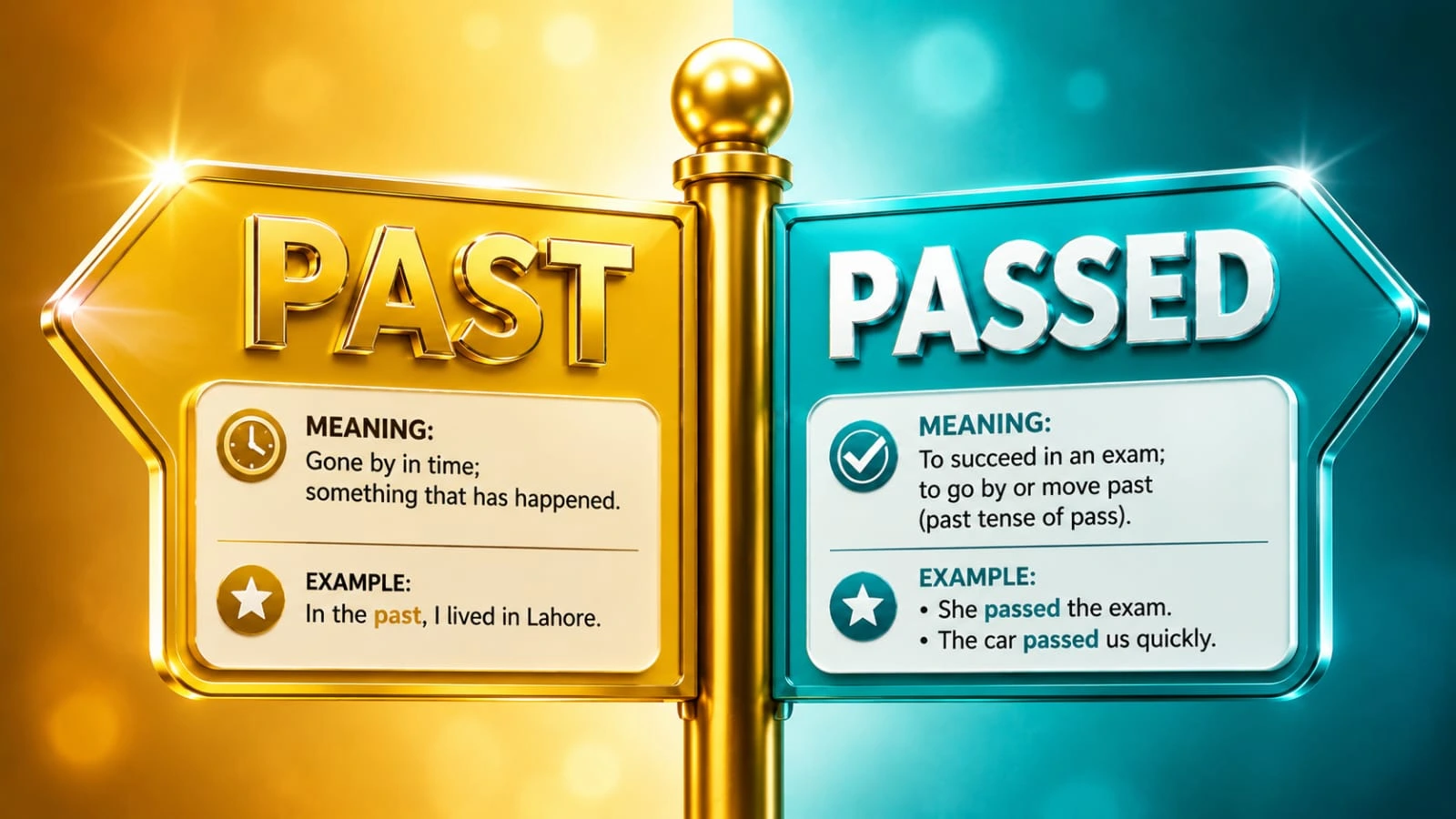
Past usually refers to an earlier time or something that happened before. Passed is the past tense of pass, meaning ...
Read more
There or Their: The Easy Way to Get It Right
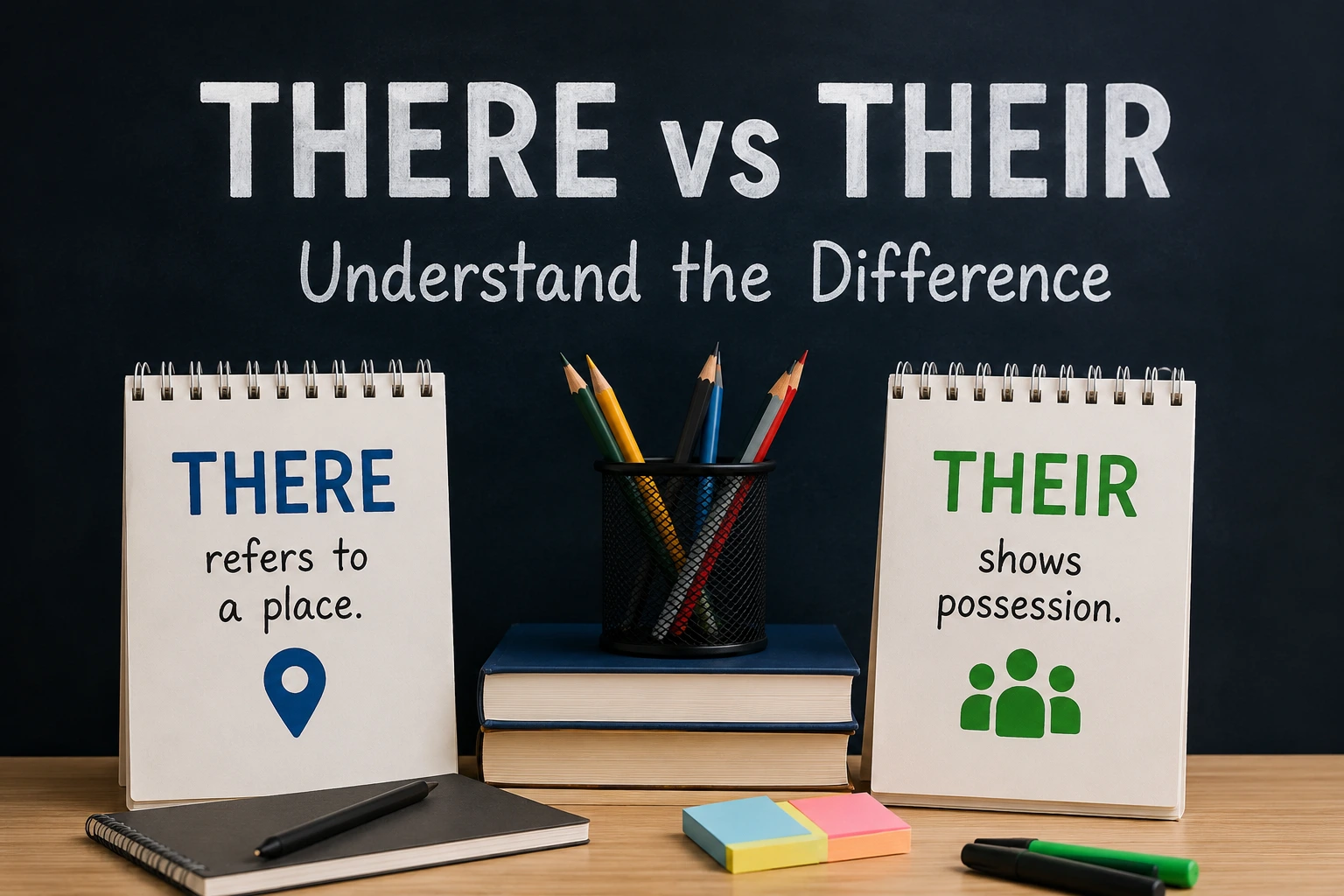
There refers to a place or introduces something, while their shows that something belongs to them.Example: “Put the books there.” ...
Read more
Chose or Choose: The Correct Word Explained

"Choose" means to select something, used in the present or future tense. "Chose" is the past tense of "choose," describing ...
Read more
Whomever or Whoever: Which One Is Grammatically Correct?
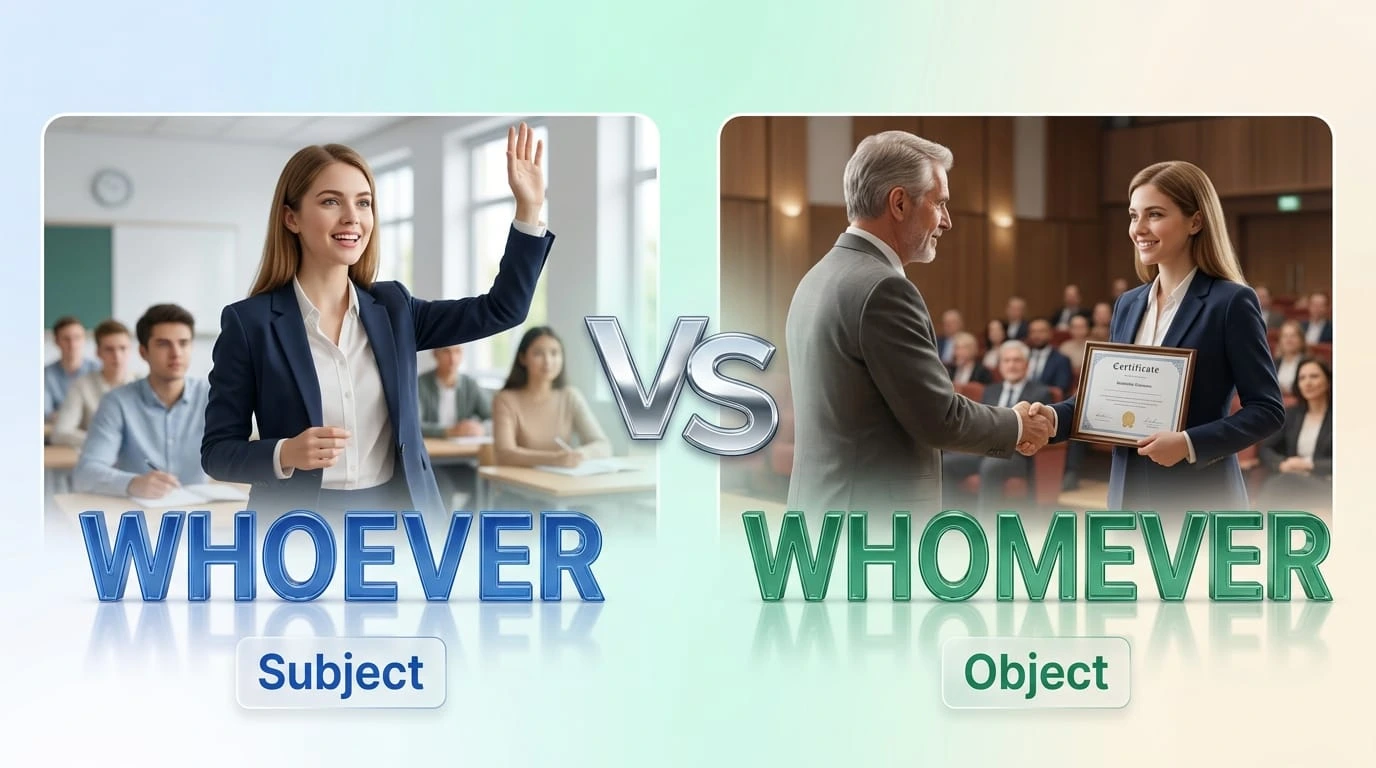
Whomever and whoever are both correct, but they are used differently. Whoever acts as the subject of a clause, while ...
Read more
Worse or Worst: What’s The Difference?
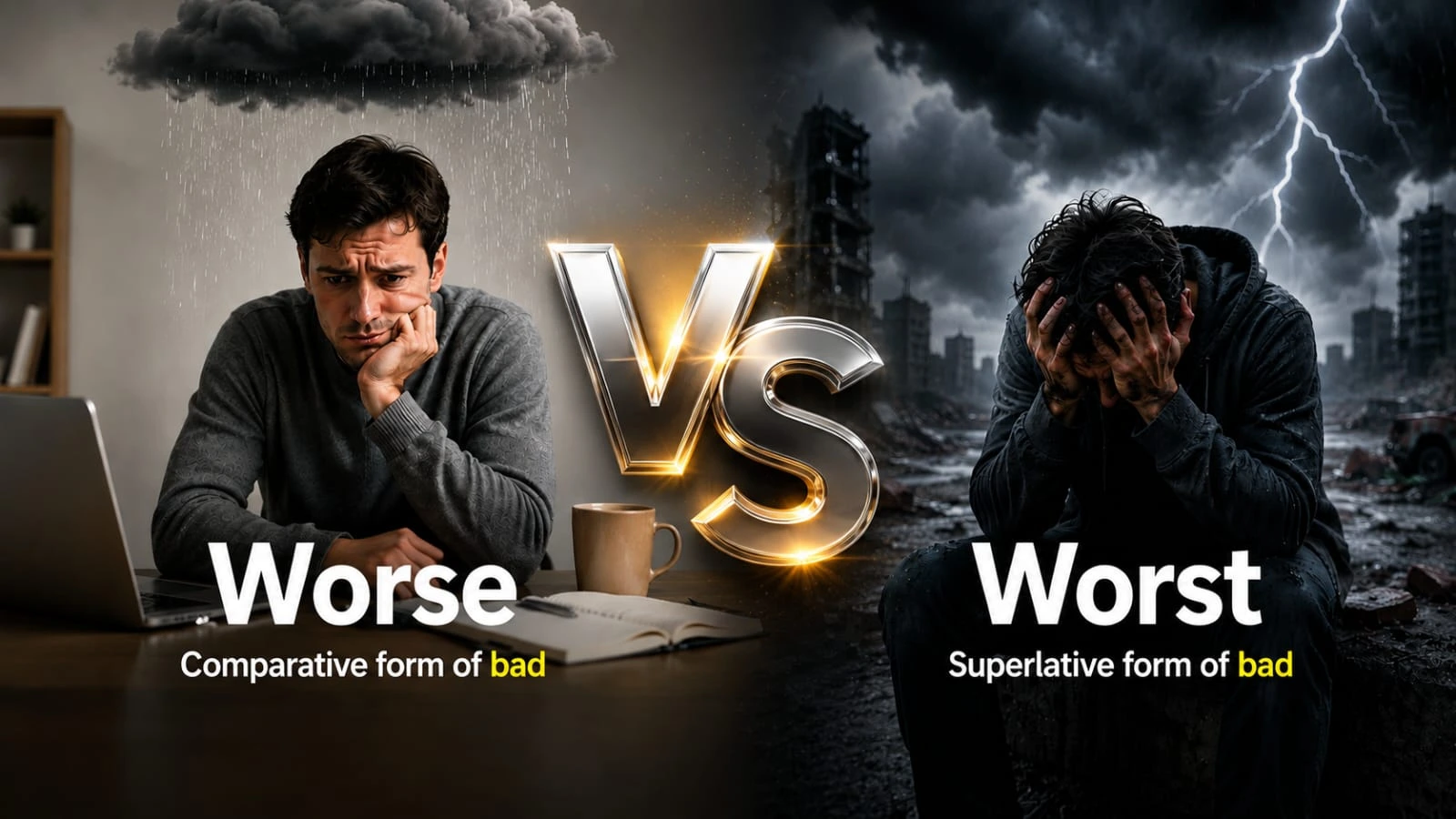
"Worse compares two things and means more bad. Worst means the most bad and is used when something is at ...
Read more
Whose or Who’s: The One Trick That Ends the Confusion
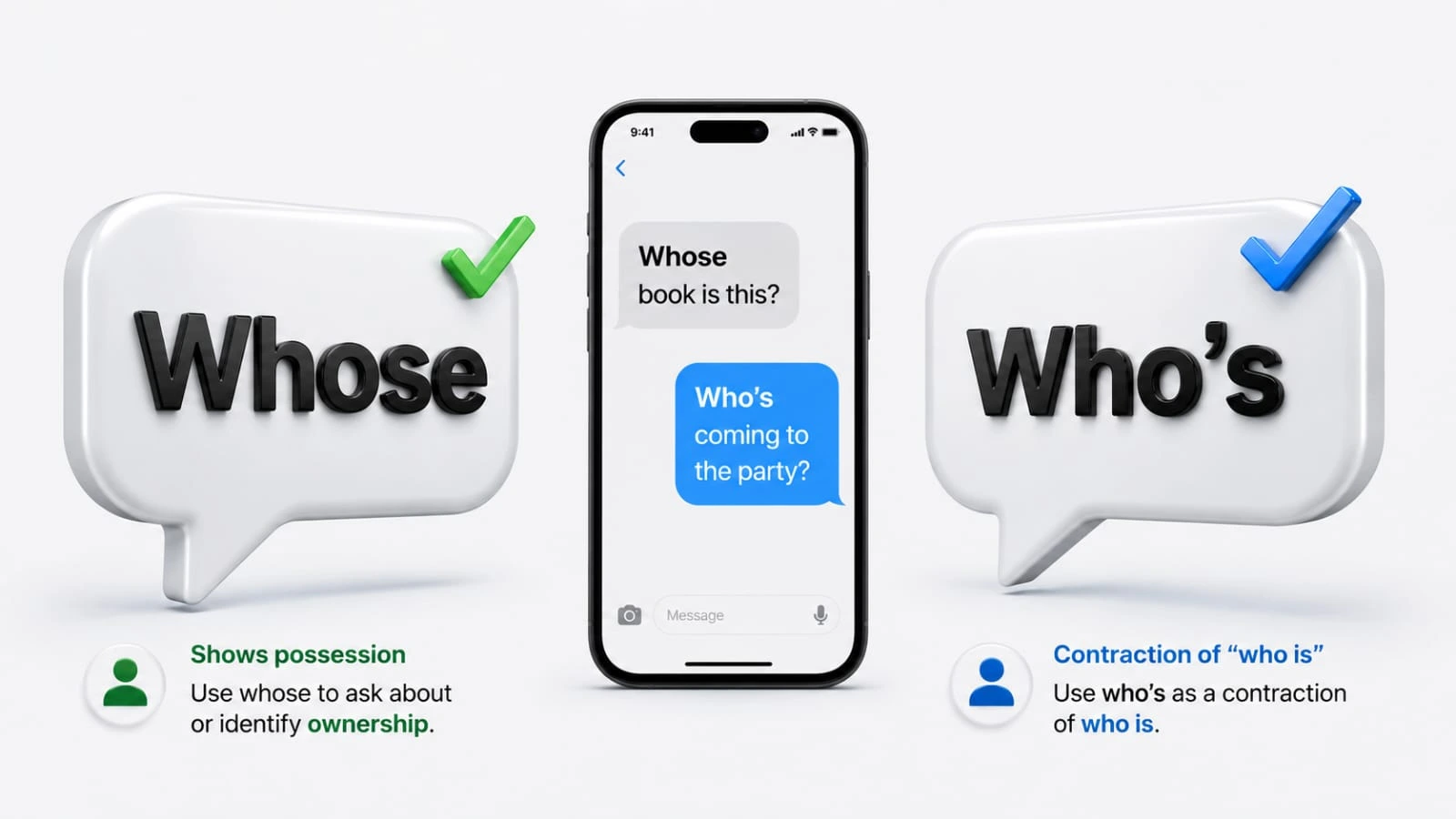
“Whose” shows possession, meaning “belonging to whom.” “Who’s” is a contraction of “who is” or “who has.” They are two ...
Read more
Lead or Led: Meaning, Difference & Examples

Lead is the present tense of the verb lead, while led is the past tense. Use lead for actions happening ...
Read more
Parties or Party’s: Easy Guide to Stop Grammar Mistakes (2026)

Parties is the plural form of party, which means more than one party. Party’s is possessive and shows that something ...
Read more
Envelop or Envelope: The Easy Way to Tell Them Apart

Envelope is a noun the paper packet you mail a letter in. Envelop is a verb it means to wrap, ...
Read more
Everything or Nothing: Meaning, Usage, Examples (2026)
Everything or nothing describes a situation where there are only two possible outcomes: complete success or complete failure. There is ...
Read more