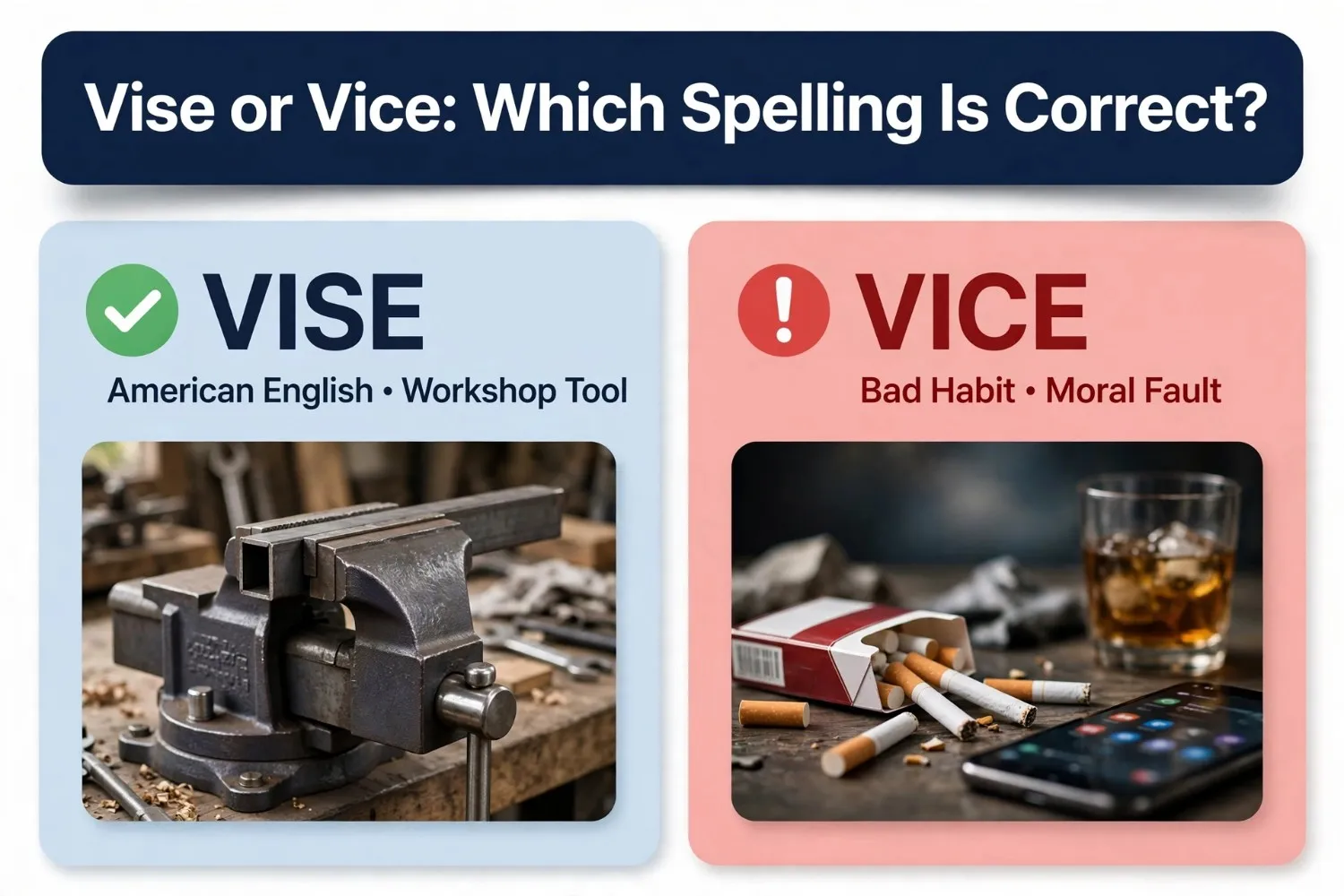
“Vise” and “vice” are both correct spellings, but they have different meanings and uses. Use vise for the workshop tool, while vice refers to immoral behavior or a bad habit.
If you have ever typed “vise or vice” and stopped to check the spelling, you are not alone. These two words look and sound similar, but they have very different meanings. One is a tool used to hold an object firmly. The other usually means an immoral habit or a bad practice. The correct spelling depends on what you want to say.
This confusion is also linked to British and American English. In American English, the workshop tool is usually called a vise. In British English, it is normally spelled vice. However, vice has a different meaning in both varieties of English: a fault, bad habit, or immoral behavior.
Knowing the difference helps you avoid mistakes in emails, schoolwork, product descriptions, technical guides, and everyday writing. In this guide, you will learn the meanings, origins, regional spelling rules, common mistakes, and real-world examples of vise or vice. By the end, choosing the right word should be simple.
Vise or Vice – Quick Answer
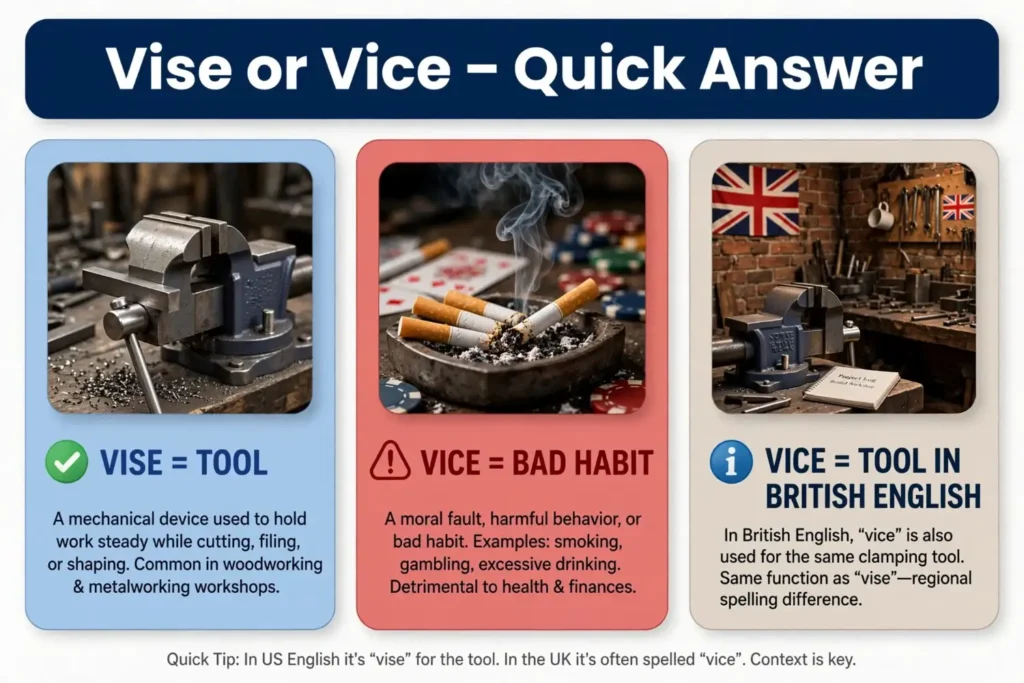
Both vise and vice can be correct, but they do not always mean the same thing.
- Vise = a tool that holds an object tightly while you work on it.
- Vice = a bad habit, moral fault, or harmful behavior.
- Vice = also the British spelling for the workshop tool.
Examples
American English:
Clamp the metal in the vise before cutting it.
British English:
Clamp the metal in the vice before cutting it.
Moral meaning:
Smoking was once considered a common vice.
Quick Comparison
| Word | Meaning | Main Use |
| Vise | A tool that holds an object | American English |
| Vice | A bad habit or fault | All major varieties of English |
| Vice | A tool that holds an object | British English |
So, if you mean the workshop tool, vise is standard in American English, while vice is standard in British English.
The Origin of Vise or Vice
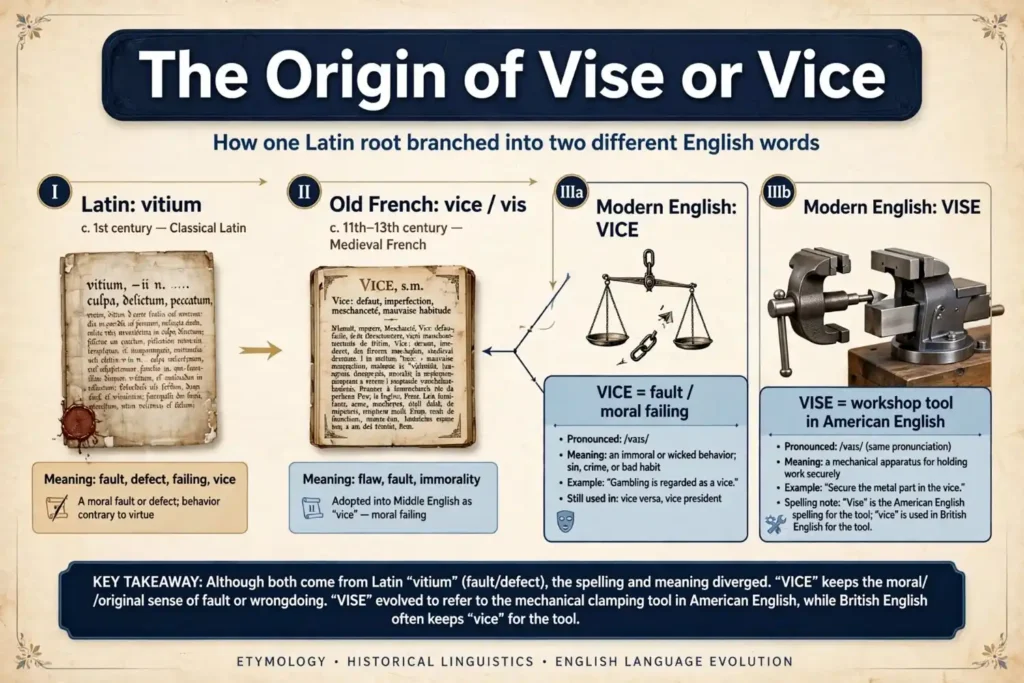
The spelling difference comes from the long history of English.
The word for the clamping tool is related to the Latin word vitium, meaning a fault or defect, but the tool’s history developed through French and English forms. Over time, English speakers used different spellings for the tool.
The moral word vice also comes from Latin vitium, meaning a fault, defect, or moral failing. It entered English through Old French.
Because English developed from many languages, spelling was not always fixed. Different regions adopted different forms.
This is why vise became common in American English for the workshop tool, while vice remained common in British English.
The two words now have distinct meanings in standard modern English:
- vise → a clamping tool in American English
- vice → a bad habit or moral weakness
- vice → a clamping tool in British English
The spelling therefore depends on both meaning and regional English.
British English vs American English Spelling
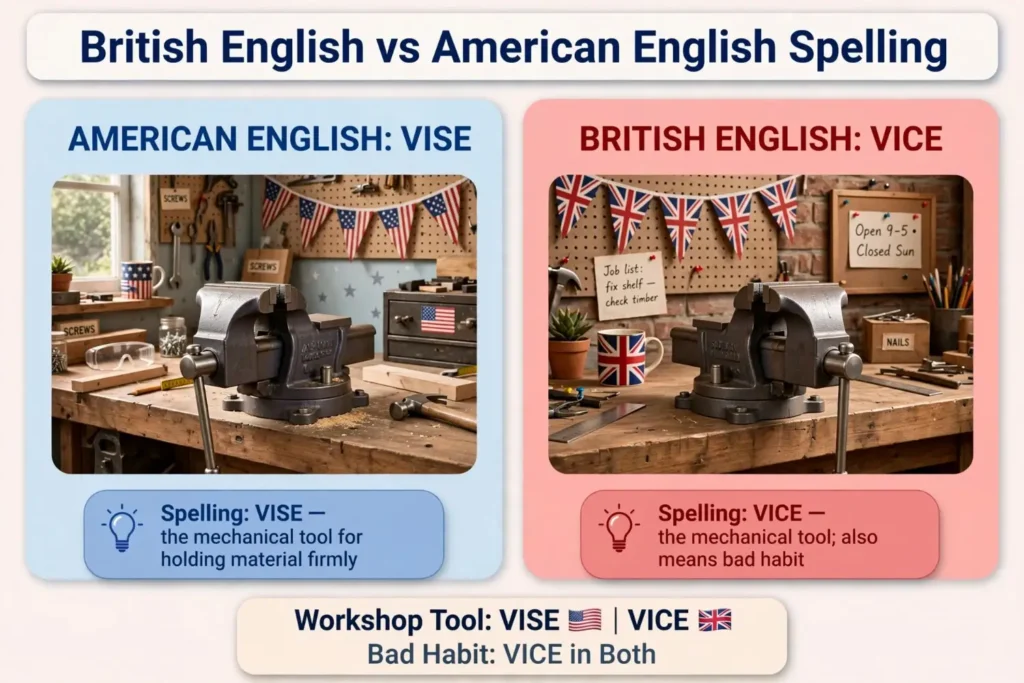
The biggest spelling difference appears when talking about the workshop tool.
American English
American English usually uses vise.
Examples:
- bench vise
- machine vise
- pipe vise
- woodworking vise
- drill press vise
Example:
I bought a new bench vise for my workshop.
British English
British English normally uses vice for the same tool.
Examples:
- bench vice
- machine vice
- engineer’s vice
- woodworking vice
Example:
I bought a new bench vice for my workshop.
However, vice still has its moral meaning in British English.
Gambling can become a serious vice.
Comparison Table
| Meaning | American English | British English |
| Workshop tool | Vise | Vice |
| Bad habit | Vice | Vice |
| Moral fault | Vice | Vice |
| Bench tool | Bench vise | Bench vice |
| Tool used for clamping | Vise | Vice |
This is an important point: vise and vice are not simply American and British versions in every context. When vice means a bad habit, the spelling remains vice.
Which Spelling Should You Use?
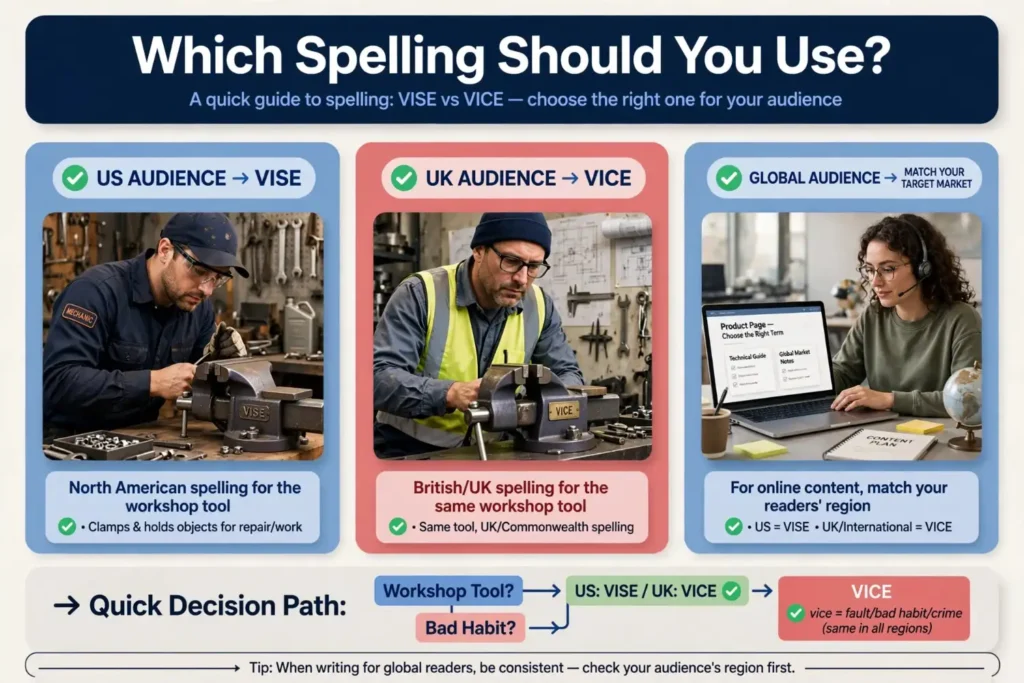
Your choice depends on your audience and the meaning of the word.
For American English
Use vise when you mean the workshop tool.
The mechanic placed the part in the vise.
Use vice when you mean a bad habit.
Laziness can become a serious vice.
For British English
Use vice for both the workshop tool and the moral meaning.
The engineer tightened the vice.
Greed is a common vice.
For Global or International Writing
If your audience is international, use the spelling that matches your target market.
For a US audience:
bench vise
For a UK audience:
bench vice
This matters for product pages, technical guides, catalogs, and search-focused content. Using the local spelling can make your writing feel more natural to readers.
Common Mistakes with Vise or Vice
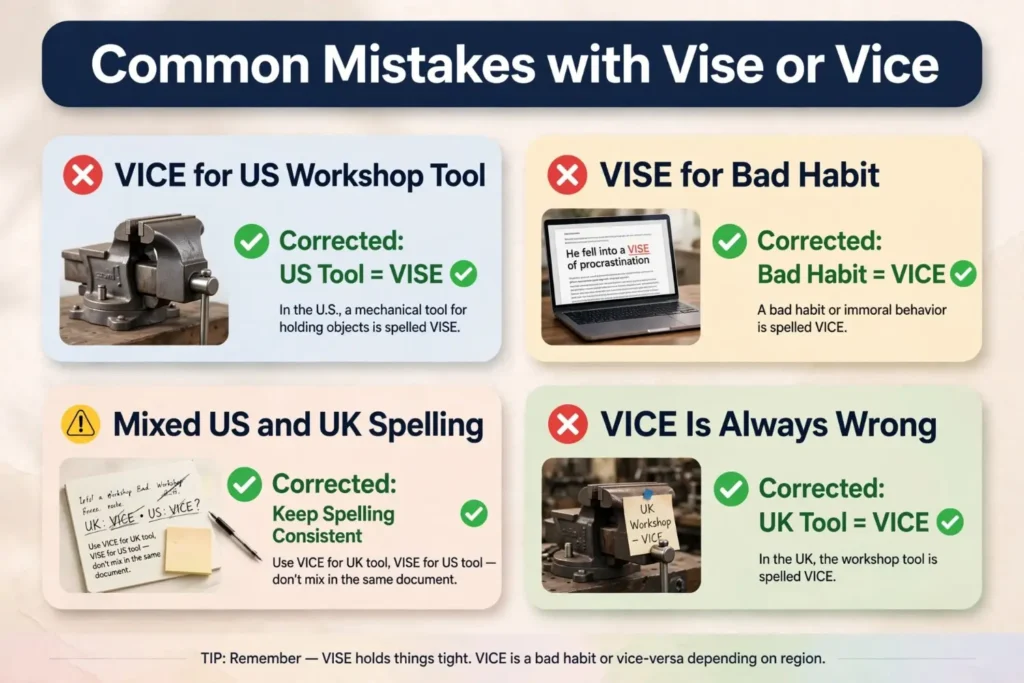
Many errors happen because the two words sound similar.
Mistake 1: Using “vice” for an American workshop tool
Incorrect for standard American English:
Put the metal in the vice.
Better:
Put the metal in the vise.
Mistake 2: Using “vise” for a bad habit
Incorrect:
Smoking is a common vise.
Correct:
Smoking is a common vice.
Mistake 3: Mixing British and American spelling
A US-focused product page may use bench vise, while a UK-focused page may use bench vice.
Try to keep your spelling consistent throughout the same piece of content.
Mistake 4: Assuming “vice” is always wrong
This is not true. Vice is the correct spelling for a bad habit in both American and British English.
Easy Memory Tip
Think:
Vise = tool
Vice = bad habit
For British English, remember that vice can also mean the tool.
Read Also: Knifes or Knives: Which Spelling Is Correct?
Vise or Vice in Everyday Examples
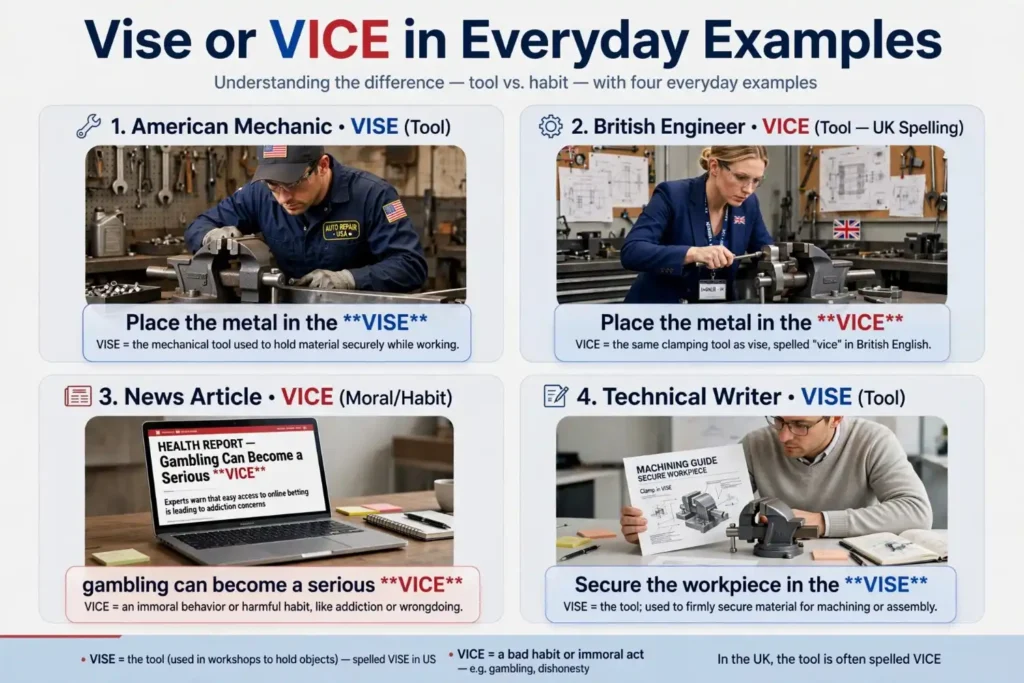
Seeing the words in context makes the difference easier to understand.
In Emails
American English:
Please place the metal part in the vise before drilling.
British English:
Please place the metal part in the vice before drilling.
In News Writing
Experts warned that gambling can become a serious vice.
Here, vice means a harmful habit.
On Social Media
Finally upgraded my workshop with a heavy-duty bench vise!
Here, vise refers to a tool in American English.
In Technical Writing
Secure the workpiece firmly in the vise before machining.
For British readers:
Secure the workpiece firmly in the vice before machining.
In Formal Writing
The report examined how addiction can develop into a destructive vice.
Here, vice refers to a harmful habit or moral weakness.
Vise or Vice – Google Trends & Usage Data

Search interest for vise and vice can be misleading because vice has more than one meaning.
People may search for vice because they want information about:
- bad habits
- morality
- the workshop tool
- British spelling
- technical equipment
By contrast, searches for vise are more strongly connected with tools and workshops, especially in American English.
Search behavior also changes by country. US users are more likely to search for terms such as bench vise, woodworking vise, and pipe vise. UK users commonly search for bench vice, engineer’s vice, and similar terms.
Google Trends can help content creators compare regional interest, but it should be interpreted carefully. Search volume can change over time, and the word vice has several meanings.
For SEO, the best approach is to match the spelling to your target audience and search intent. If you sell workshop tools in the United States, bench vise is usually the natural keyword. For the UK market, bench vice is more appropriate.
Vise vs Vice: Side-by-Side Comparison
| Feature | Vise | Vice |
| Workshop tool in US English | Yes | Usually no |
| Workshop tool in UK English | Usually no | Yes |
| Bad habit | No | Yes |
| Moral fault | No | Yes |
| Common US spelling | Yes | Yes, for moral meaning |
| Common UK spelling | No | Yes |
| Example | Bench vise | Bench vice |
| Example of bad habit | — | Gambling is a vice |
The simplest rule is:
Vise = tool in American English
Vice = bad habit
Vice = tool in British English
FAQs About Vise or Vice
Is “vise” or “vice” correct?
Both can be correct. Vise is the usual American spelling for the workshop tool. Vice is the British spelling for the same tool and is also the standard spelling for a bad habit.
Is a bench vise or bench vice correct?
Both are correct, depending on the English variety. Bench vise is standard American English, while bench vice is standard British English.
Is “vice” always a bad habit?
No. In British English, vice can also refer to the workshop tool. In American English, it usually means a bad habit when used as a noun.
What is the difference between vise and vice?
Vise usually means a tool that holds an object firmly. Vice usually means a bad habit or moral fault. In British English, vice can also mean the tool.
Which spelling should I use in the US?
Use vise when talking about the workshop tool.
Example:
The mechanic tightened the part in the vise.
Which spelling should I use in the UK?
Use vice for the workshop tool.
Example:
The mechanic tightened the part in the vice.
Are vise and vice pronounced the same?
Yes. In standard English, vise and vice are pronounced the same. Their meanings and spelling are what separate them.
Conclusion
The difference between vise or vice becomes easy once you focus on meaning and audience. Vise is the standard American English spelling for a workshop tool that holds an object firmly. In British English, the same tool is usually called a vice.
However, vice has another meaning that applies across major forms of English. It means a bad habit, fault, or immoral behavior. For example, gambling or greed can be described as a vice.
If you are writing for American readers, choose vise for tools and vice for bad habits. If you are writing for British readers, vice can refer to either meaning. For websites, product pages, technical guides, and SEO content, always consider your target market before choosing the spelling.
The key rule is simple: vise = American workshop tool, vice = bad habit, and vice = British workshop tool. Once you remember this, choosing the right spelling is straightforward.

Hi, I’m Shafqat Rehman. I write easy-to-follow guides about spelling differences, grammar, commonly confused words, comparison keywords, and British and American English variations. I enjoy breaking down confusing language topics and explaining them with clear examples. My aim is to help readers understand English differences and use the right words naturally and confidently.